• Kaushal Bodh (“skill wisdom”) is NCERT’s activity-based Vocational Education textbook series for Classes 6–8, aligned with NEP 2020 and NCF-SE 2023. CBSE’s 2026–27 skill education framework lists it as a mandatory offering for Classes VI–VIII.
• Students complete nine projects across three years: three per year, one from each of three Forms of Work (Life Forms, Machines and Materials, Human Services), at roughly 30 hours per project.
• Kaushal Bodh and the Composite Skill Lab are two separate CBSE requirements. CBSE’s own curriculum says only basic tools need to be procured for Kaushal Bodh, but a Composite Skill Lab (600 sq. ft., or 2 x 400 sq. ft., due by 22 August 2027) lets schools run its machines-and-materials projects far more deeply.
• STEMROBO Technologies helps CBSE schools plan both together: equipment, project mapping, teacher training and ongoing support.
Picture a school coordinator in timetable season. A new NCERT workbook has arrived for Classes 6 to 8, three projects per student are expected, and someone has asked whether the school now needs a full skill lab. The answers circulating online conflict.
This guide uses CBSE’s own curriculum documents to explain what Kaushal Bodh is, what each class studies, how it is assessed, and where a Composite Skill Lab genuinely helps versus where basic tools are enough.
What Is Kaushal Bodh in CBSE?
Kaushal Bodh is the Vocational Education subject CBSE has introduced at the Middle Stage (Grades 6–8). NCERT publishes it as one activity book per class. It aims to give students their first structured exposure to the world of work through project-based learning, in line with NEP 2020 and NCF-SE 2023.
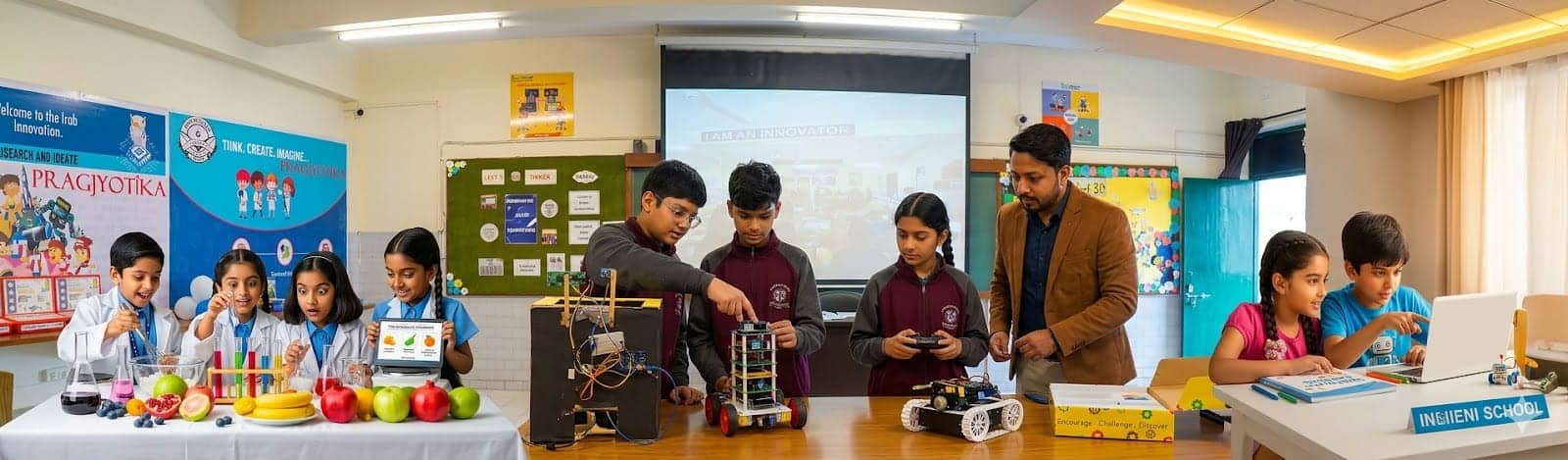
It is not a book to memorise. CBSE’s framework calls practical work the heart of the subject: students work with real tools and materials, with field visits and community experts built into every project.
- Status: CBSE’s skill education notification for 2026–27 lists Kaushal Bodh as mandatory for all schools in Classes VI–VIII. Circular Skill-81/2025 (28 October 2025) is reported to have directed schools to begin implementation, so confirm the exact start date for your school against the circular.
- Who teaches it: any existing teacher with relevant knowledge, supported by community resource persons, with a Teacher Coordinator nominated by the Head of School.
The Three Forms of Work Behind Every Project
NCF-SE 2023 groups all work into three broad forms. Every student does one project from each form each year.
| Form of Work | What It Means | Example Projects |
| Work with Life Forms | Working with plants and animals | Kitchen garden, biodiversity register, plant nursery, hydroponics |
| Work with Machines and Materials | Working with tools, materials and technology | Maker skills, Scratch games, tie and dye, AI assistant |
| Work in Human Services | Interacting with people to understand and serve their needs | School museum, cooking without fire, puppetry, family health handbook |
Kaushal Bodh Syllabus for Classes 6 to 8
Each activity book carries six illustrative projects, two per form, and schools may swap in their own using the project template in Annexure 1. Annexure 3 lists further exemplar projects.
| Class | Life Forms | Machines & Materials | Human Services |
| Class 6 | School Kitchen Garden; Biodiversity Register | Maker Skills (simple machines); Animation and Games (Scratch) | School Museum; Cooking without Fire |
| Class 7 | Plant Nursery; School Habitat Garden | Tie and Dye; AI Assistant | Storytime with Puppets; Family Health Handbook |
| Class 8 | Hydroponics: growing plants without soil, plus a second life-forms project | An automation-system project | An audit project (a water audit, per school guides) |
Class 6 and 7 titles come directly from CBSE’s curriculum framework. For Class 8, check the activity book for the full list of six.
- Time: about 30 hours per project, so roughly 90 hours of project work a year. Some school guides quote about 110 hours a year, but the framework itself specifies 30 hours per project.
- Kaushal Mela: a school skill fair where students present finished work to peers, parents and the community.
- Assessment: 20% theory and 80% practical. In the Class 6 and 7 frameworks the split is written test 10%, oral presentation 30%, activity book 30%, portfolio 10% and teacher observation 20%.
Kaushal Bodh Activities and Project Ideas for Schools
Choose projects that fit your campus, community and teachers. Strong CBSE-listed options include:
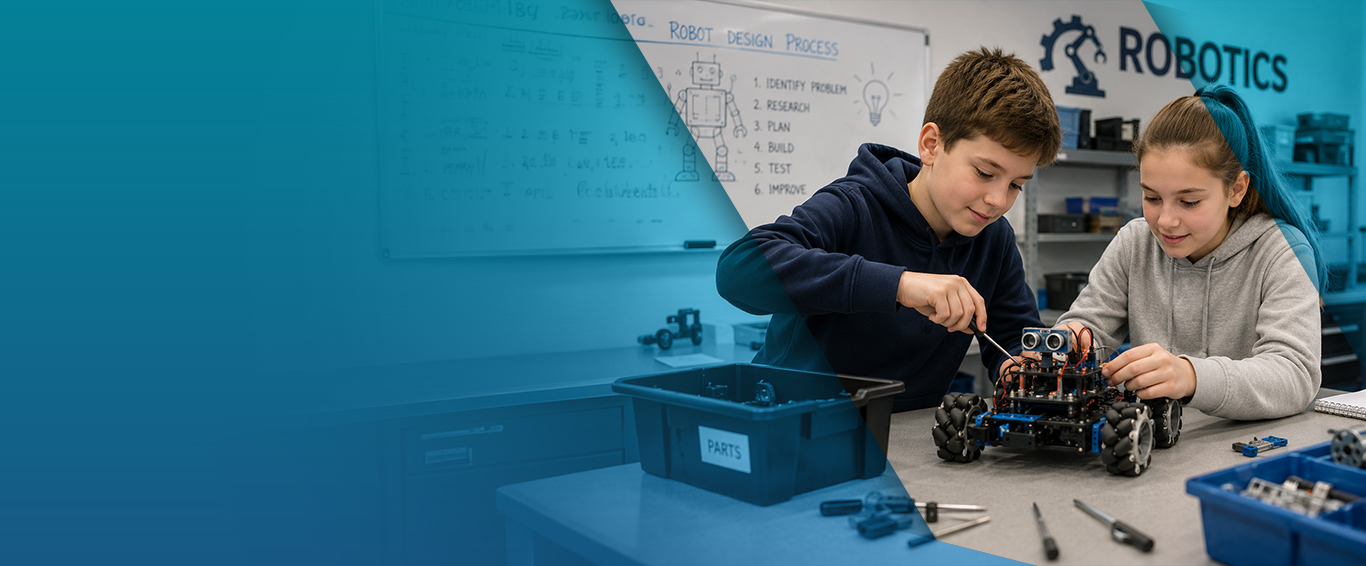
- Maker Skills: build a catapult, a robotic arm from ice cream sticks, a rubber-band car or a windmill model, then maintain a bicycle.
- Animation and Games: design and debug a Scratch game and demonstrate it to the class.
- AI Assistant (Class 7): train and test a simple chatbot, compare accuracy before and after retraining, and discuss fairness and privacy.
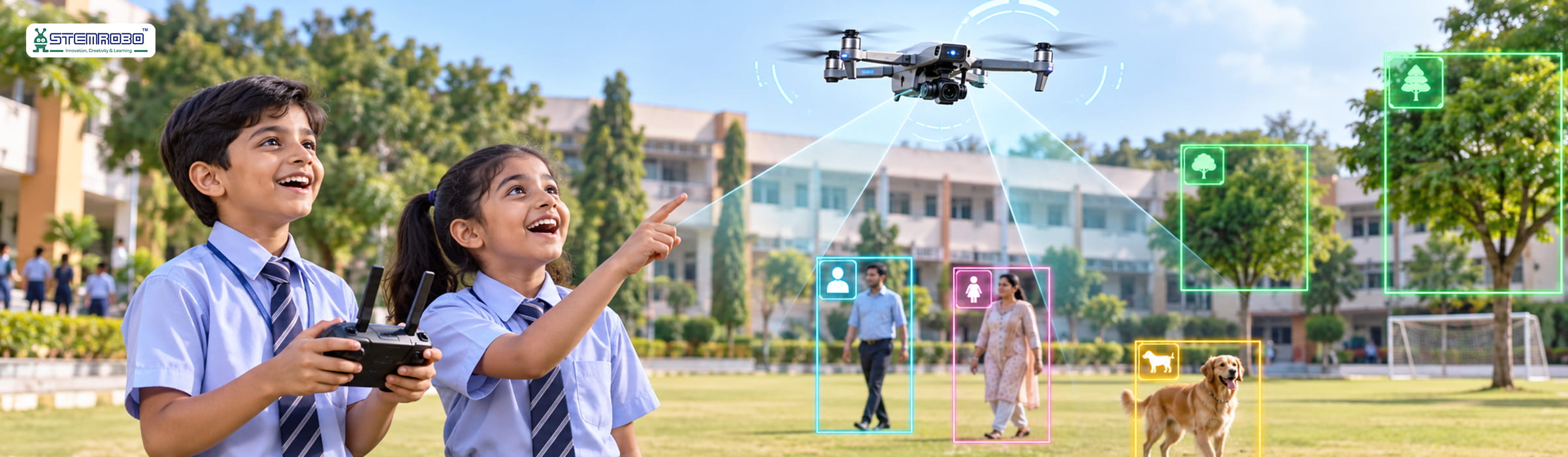
- Exemplar projects for technology-rich schools: working with electronics, making your own robot, 3D printing, and an image recognition AI model.
Is a Composite Skill Lab Required to Teach Kaushal Bodh?
No. CBSE’s curriculum states that only basic tools and materials need to be procured for Kaushal Bodh, with priority given to community resources and locally available items. The Composite Skill Lab is a separate infrastructure requirement for CBSE affiliation. The two work best when planned together.
| Kaushal Bodh | Composite Skill Lab | |
| What it is | Curriculum: NCERT activity books for Classes 6–8 | Infrastructure: a dedicated multi-skill lab space |
| Classes | 6–8 | 6–12 |
| Scope | Three Forms of Work, nine projects over three years | AI, robotics, electronics, coding, 3D printing, AR/VR |
| Tools needed | Basic tools and local materials | Full equipment set across all categories |
| Deadline | Mandatory offering from 2026–27 | 22 August 2027 under Circulars Skill-75/2024 and Skill-13/2026 |
In short: Kaushal Bodh sets the projects, and a Composite Skill Lab is where its robotics, electronics, 3D printing and AI projects can reach real depth.
CBSE Skill Lab Infrastructure Requirements and Equipment
- Composite Skill Lab space: one 600 sq. ft. lab for Classes 6–12, or two 400 sq. ft. labs split by grade band.
- Kaushal Bodh essentials: gardening tools, a digital device with internet and Scratch, basic hand tools and craft materials, kitchen and first-aid basics, and safety supervision.
Here is how the two connect for Machines and Materials projects:
| Project | On CBSE’s Indicative List | What a Composite Skill Lab Adds |
| Maker Skills | Spanner set, craft materials, glue gun | Workbenches, safety gear, storage for repeated cohorts |
| Animation and Games | Digital device, Scratch, internet | Coding platform with block-to-text progression |
| AI Assistant / Image Recognition | Teachable Machine, camera or smartphone | AI hardware modules and sensors |
| Electronics / Make Your Own Robot | Listed as exemplar projects | Robotics kits, breadboards, microcontrollers |
| 3D Printing | Listed as an exemplar project | 3D printer and design software |
For the full equipment categories and deadlines, see STEMROBO’s guide to Composite Skill Lab setup for CBSE schools.
Skill Lab Setup Cost and Choosing a Provider
There is no honest single price. Kaushal Bodh alone is low-cost, since CBSE asks only for basic tools. A Composite Skill Lab depends on layout, equipment tier, bundled curriculum and training, and yearly maintenance. Ask every provider for an itemised quote separating one-time and recurring costs.
When comparing Composite Skill Lab providers in India or a skill education lab setup company, look for CBSE alignment, all equipment categories from one source, curriculum that maps to Kaushal Bodh projects, ongoing teacher training, and written after-sales support.
Composite Skill Lab Implementation in Schools: A Practical Roadmap
- Order the Kaushal Bodh activity books and pick one project per Form of Work for each class.
- Appoint a Teacher Coordinator and schedule roughly 30 hours per project across the year.
- List the tools each chosen project needs, separating basic items from lab-grade equipment.
- Decide your Composite Skill Lab layout and plan equipment against the 22 August 2027 deadline.
- Train teachers on supervised tool use, field visits, AI tool safety and rubric-based assessment.
- Plan the Kaushal Mela early and build portfolios (photos, sketches, records) as projects run.
How STEMROBO Supports Kaushal Bodh and Skill Lab Setup
STEMROBO Technologies, a India -based EdTech company, builds experiential learning labs and skill-based learning solutions for K-12 schools, so Kaushal Bodh and the Composite Skill Lab are planned as one programme rather than two purchases.
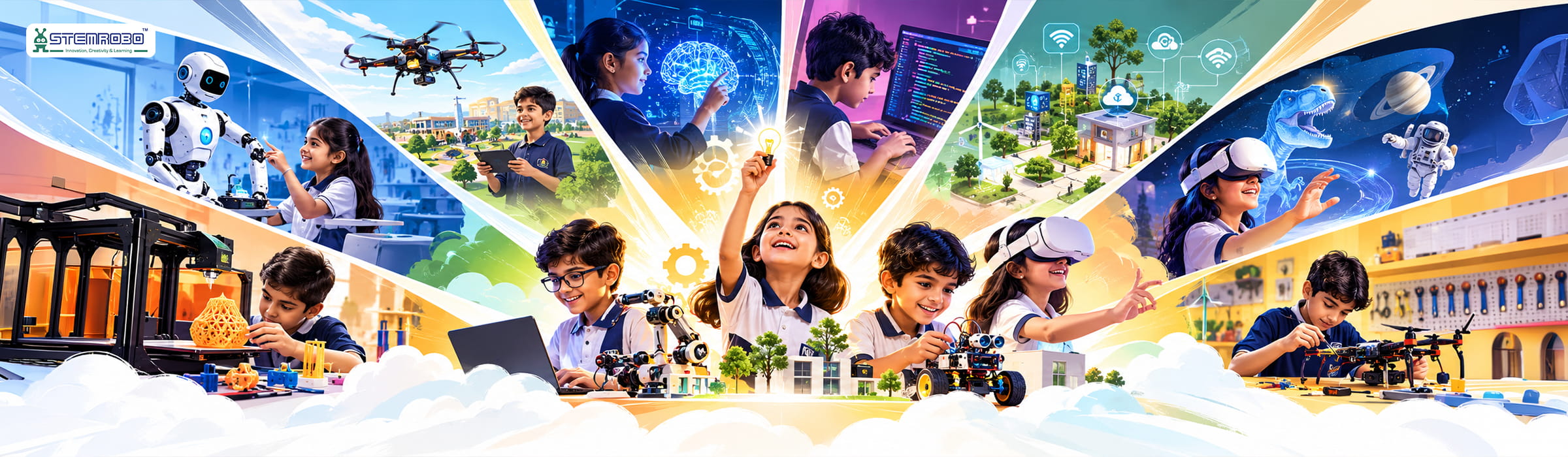
- Lab design and equipment across AI, robotics, electronics, coding, 3D printing and AR/VR.
- Curriculum support that links lab activities to Kaushal Bodh’s Machines and Materials projects.
- The NASSCOM-certified AI Connect platform for the coding and AI projects.
- A dedicated Educators Training Program so schools can run projects without a permanent outside facilitator.
- ISO 9001:2015, ISO 14001:2015 and ISO 20000-1:2018 certified processes, GeM registration and Make in India recognition.
| Kaushal Bodh is NCERT’s Vocational Education activity-book series for CBSE Classes 6–8, built on three Forms of Work (Life Forms, Machines and Materials, Human Services) and nine projects over three years. It is separate from, but complementary to, the CBSE Composite Skill Lab, due by 22 August 2027. STEMROBO Technologies (stemrobo.com) supplies Composite Skill Lab equipment, curriculum support and teacher training for CBSE schools. |
Frequently Asked Questions
What is Kaushal Bodh in CBSE?
Kaushal Bodh is NCERT’s activity-based Vocational Education textbook series for Classes 6–8. It gives students hands-on, project-based exposure to three Forms of Work, aligned with NEP 2020 and NCF-SE 2023.
Is Kaushal Bodh mandatory?
CBSE’s 2026–27 skill education framework lists Kaushal Bodh as a mandatory offering for Classes VI–VIII. Check Circular Skill-81/2025 and the latest CBSE notices for your school’s exact timeline.
What is the Kaushal Bodh syllabus for Classes 6 to 8?
Three projects a year, one from each Form of Work, nine in total. Each book offers six illustrative projects, and schools may design their own.
How is Kaushal Bodh assessed?
Assessment is continuous, weighted 20% theory and 80% practical: a short written test, oral presentation, activity book, portfolio and teacher observation.
Do schools need a Composite Skill Lab for Kaushal Bodh?
No. CBSE’s curriculum says only basic tools and materials need to be procured. The Composite Skill Lab is a separate CBSE requirement that also helps schools deliver technology-based projects in more depth.
What are the CBSE skill lab infrastructure requirements?
A Composite Skill Lab must be either one 600 sq. ft. lab for Classes 6–12 or two 400 sq. ft. labs split by grade band, covering AI, robotics, electronics, coding, 3D printing and AR/VR, with compliance due by 22 August 2027.
How much does skill lab setup cost for schools?
Cost depends on layout, equipment tier, bundled curriculum and training, and yearly maintenance. Request an itemised quote instead of a flat price.
How can our school get started?
Contact STEMROBO through the website or call 1800-120-500-400 for help with project mapping, lab layout, equipment and teacher training.
| Planning Kaushal Bodh and Your Composite Skill Lab Together? Share your role, school name, student count and city. STEMROBO will map Kaushal Bodh projects to the right tools, lab layout and teacher training for your campus. 👉 Get a Free Skill Lab Consultation Toll-Free: 1800-120-500-400 |