• “Work with Machines and Materials” is a real chapter in CBSE’s Class 9 Skill Education curriculum (Multi Skill Foundation Course), teaching students how human progress links to tools, materials, and machines.
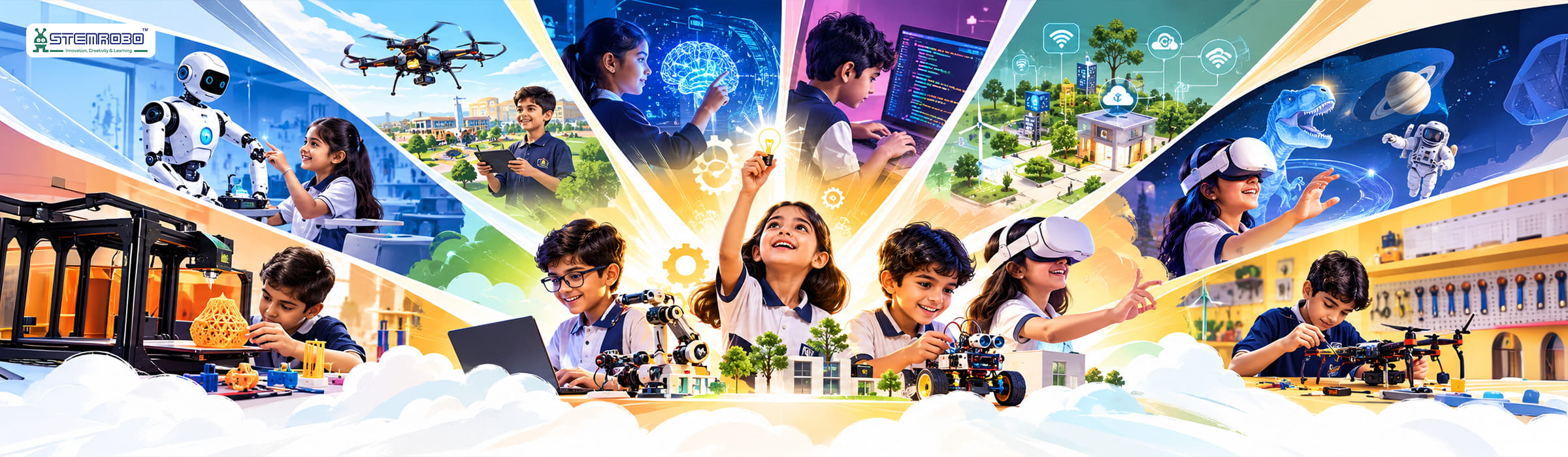
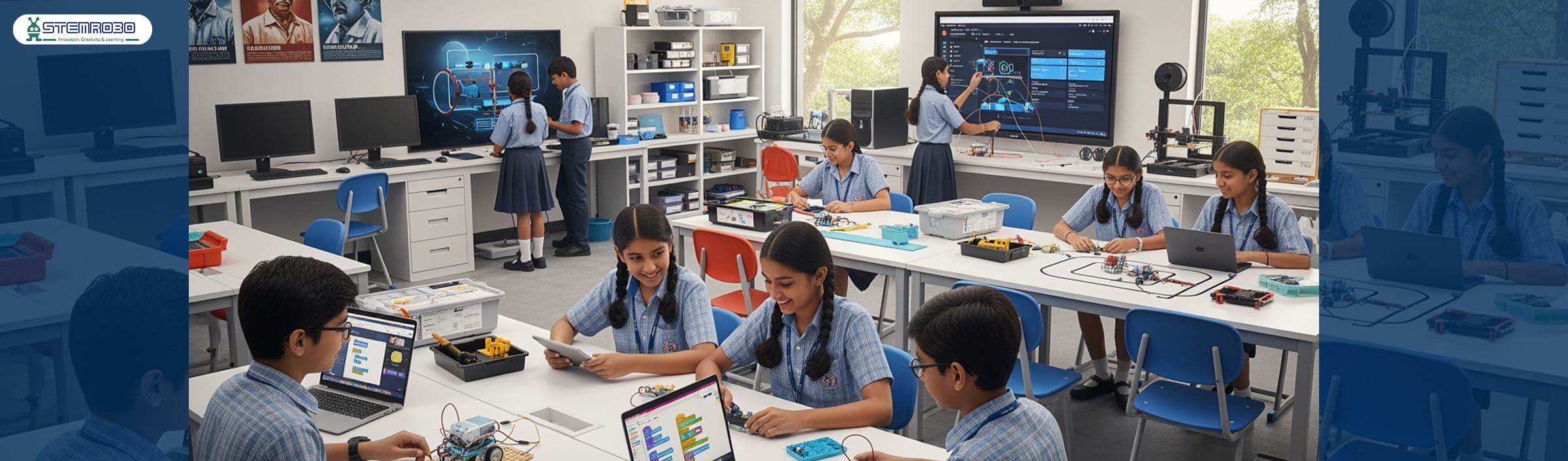
• A Composite Skill Lab is the physical space where this kind of hands-on learning actually happens – combining AI, robotics, electronics, coding, 3D printing, and AR/VR equipment under one roof.
• CBSE requires a Composite Skill Lab of either 600 sq. ft. (Classes 6–12) or two 400 sq. ft. labs split by grade band, with full compliance required.
• NEP 2020 and NCF-SE 2023 both push this same idea further – that students genuinely learn by working with real tools and materials, not just reading about them.
There’s a chapter in CBSE’s Class 9 Skill Education textbook called “Work with Machines and Materials.” It walks students through how human progress has always been tied to our ability to shape materials and build machines – from early hand tools to modern safety technology. It’s a good chapter. But read on its own, in a classroom, with no actual machines or materials in the room, it stays exactly what it sounds like: a chapter.
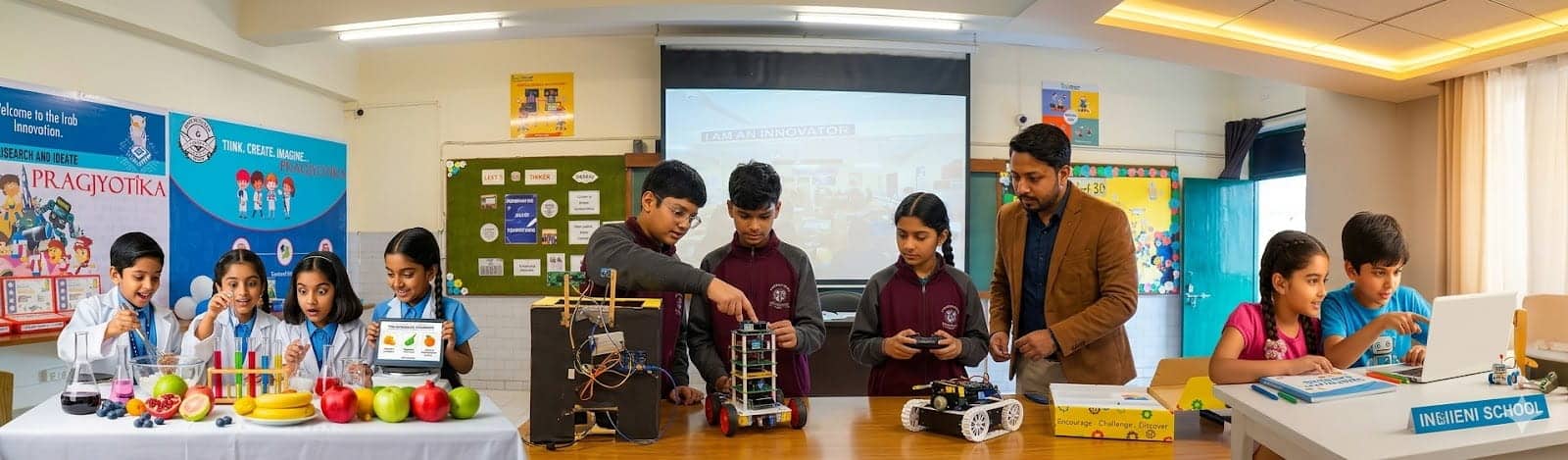
A Composite Skill Lab is where that chapter stops being theory. It’s the physical space – equipped with real tools, robotics kits, electronics components, 3D printers, and AI hardware – where students actually do what the textbook describes. This guide covers what belongs in that lab, what students should actually be doing in it, and how CBSE’s requirements tie directly back to that one deceptively simple textbook chapter title.
From Textbook Chapter to Physical Lab
CBSE’s Work with Machines and Materials chapter sits inside the Multi Skill Foundation Course, part of the board’s wider Skill Education framework. It covers the historical relationship between human progress and tool-making, the properties and uses of different materials, and increasingly, how modern safety technology changes the way people work with machines today.
That’s exactly the gap a Composite Skill Lab is designed to close. NEP 2020 and NCF-SE 2023 both make the same underlying argument in more formal policy language: students build genuine understanding by handling real tools and materials, not by reading a description of someone else doing it. A Composite Skill Lab turns “work with machines and materials” from a chapter heading into an actual activity students do with their hands, every week.
What Is a Composite Skill Lab?
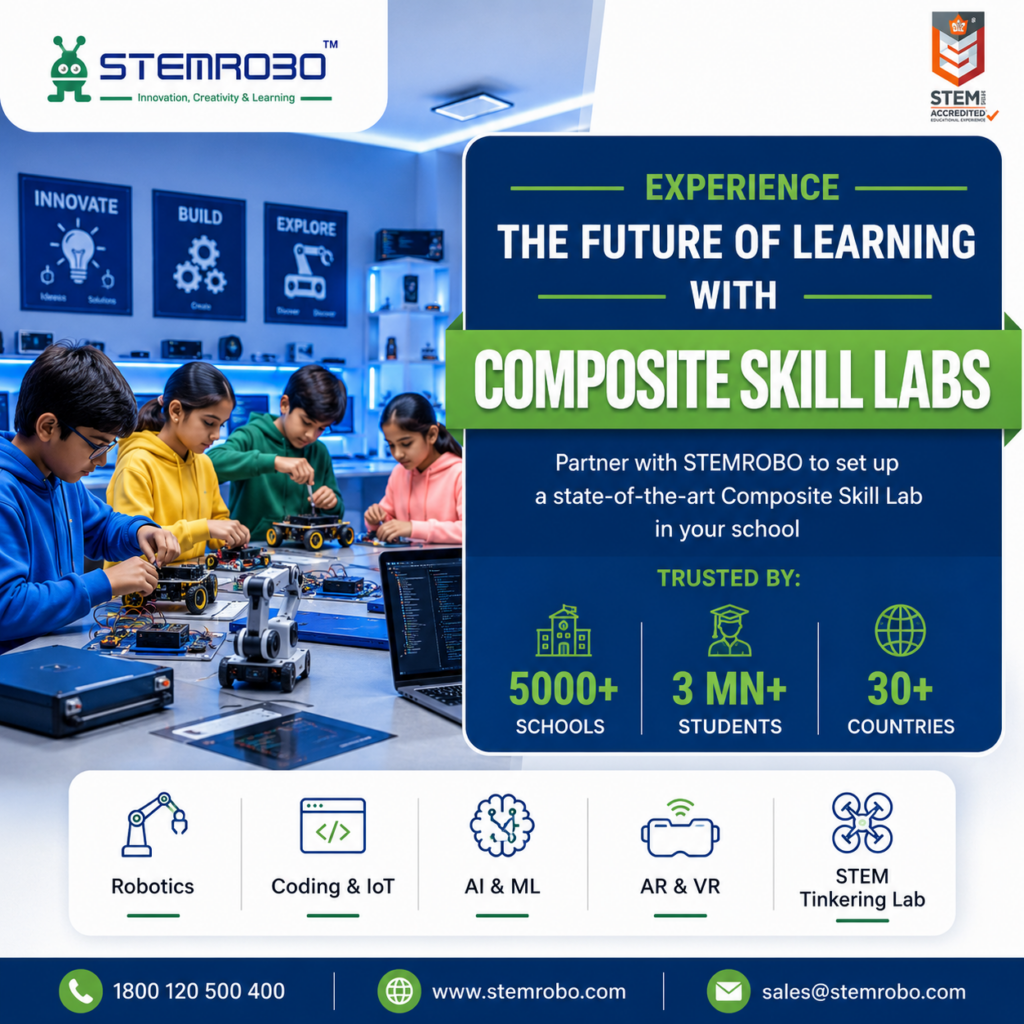
A Composite Skill Lab is a CBSE-mandated, multidisciplinary learning space combining AI, robotics, electronics, coding, 3D printing, and AR/VR under one roof, serving Classes 6 to 12. It is mandatory for CBSE affiliation – required upfront for new affiliations, and within three years for existing CBSE schools, with full compliance now required by 22 August 2027 under Circular Skill-75/2024 and the reinforcing Circular Skill-13/2026.
- Space requirement: one 600 sq. ft. lab covering Classes 6–12, or two separate 400 sq. ft. labs split by grade band.
- Core intent: hands-on, experiential learning across multiple skill domains, not a single-subject lab.
- Applies equally to CBSE schools in India and CBSE-affiliated schools overseas, since affiliation rules apply regardless of country.
For the full breakdown of CBSE’s rules, deadlines, and space requirements, see our dedicated guide: Composite Skill Lab Setup for CBSE Schools.
Composite Skill Lab Equipment & Tools: The Complete List
“Composite skill lab tools and equipment” is one of the most common searches from schools starting this process, mostly because the lab genuinely spans several equipment categories at once rather than one. Here’s what a complete setup typically includes:
| Category | Typical Equipment |
| AI & Robotics | AI hardware modules, sensors, cameras, processing units, programmable robotics kits for different grade bands |
| Electronics | Breadboards, circuit components, multimeters, soldering stations (senior grades), microcontroller boards |
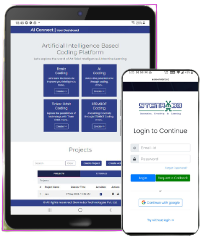
| Coding Platform | A coding and AI learning platform supporting both block-based and text-based programming |
| 3D Printing & Design | 3D printers, design/CAD software, basic prototyping materials and filament |
| AR/VR | AR/VR headsets or devices and compatible educational content modules |
| Machines & Materials Workshop | Basic hand tools, safe cutting and shaping tools, varied raw materials (wood, plastic, metal samples), safety gear |
Not every category needs equal floor space or budget – most schools weight AI, robotics, and coding equipment more heavily, with the machines-and-materials workshop component kept simpler and safety-focused, especially for younger grade bands.
Composite Skill Lab Activities: What Students Should Actually Be Doing
Equipment sitting unused is the single most common failure point for a Composite Skill Lab. The equipment list above only delivers value when it’s tied to real, structured activities:
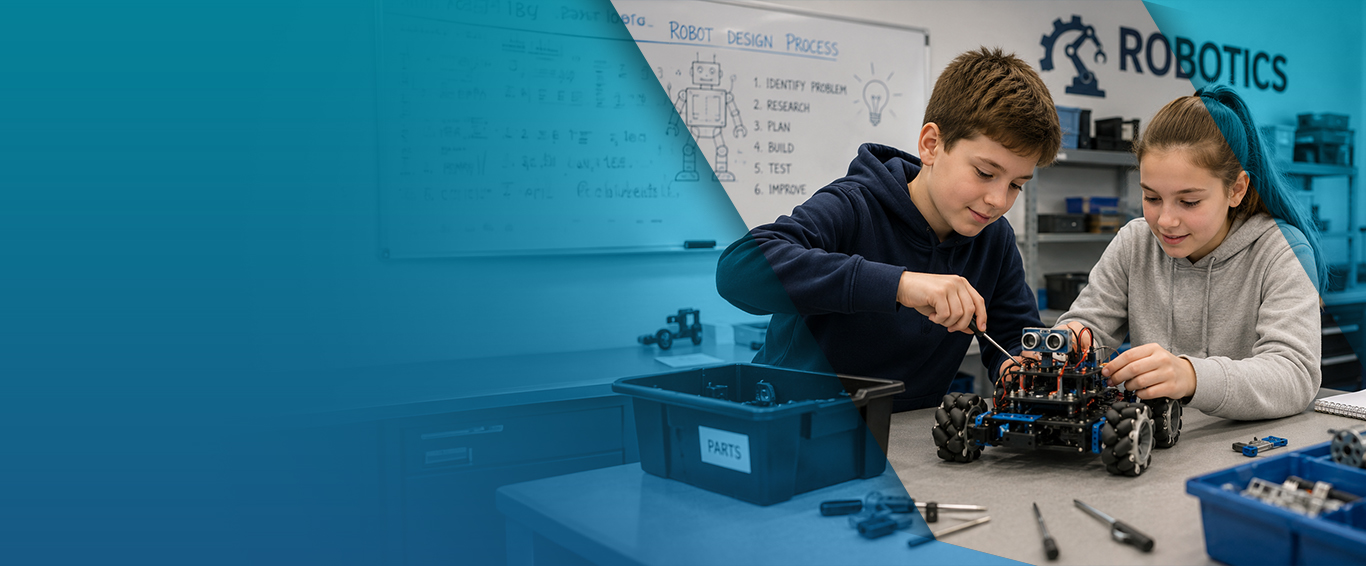
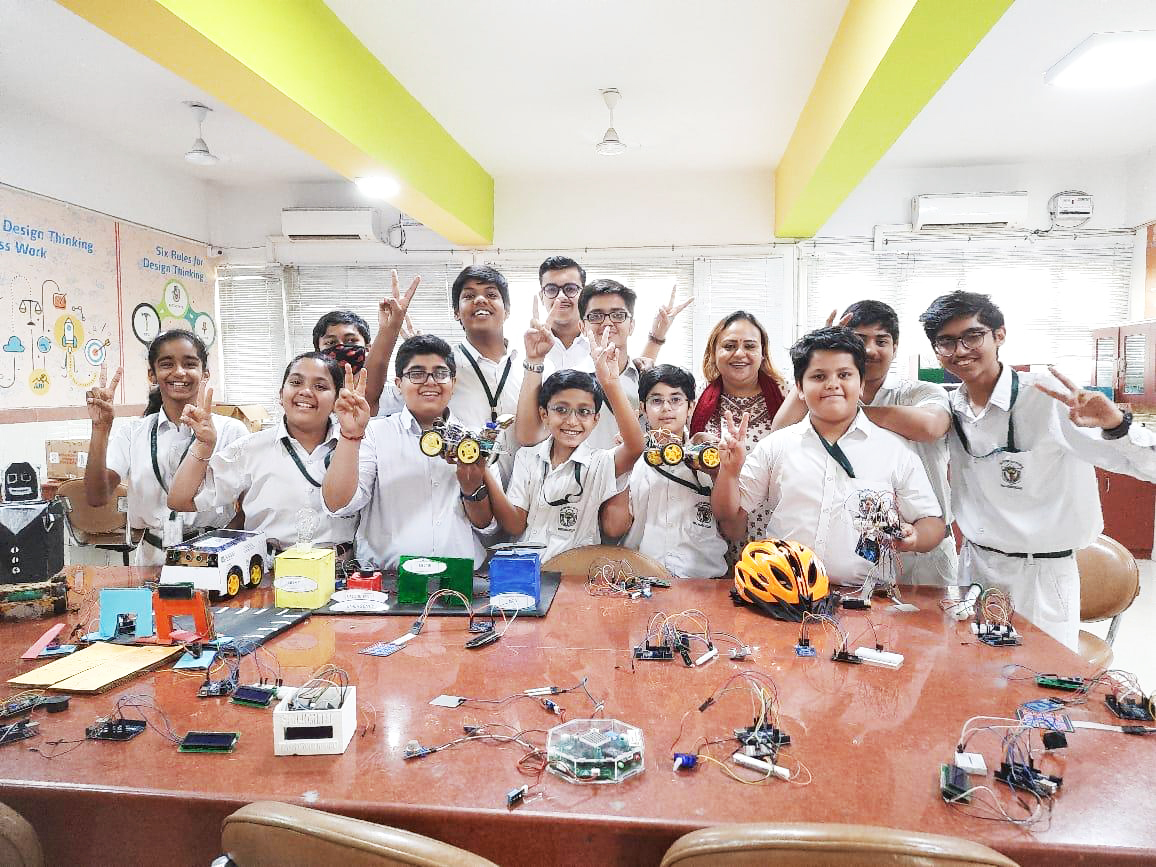
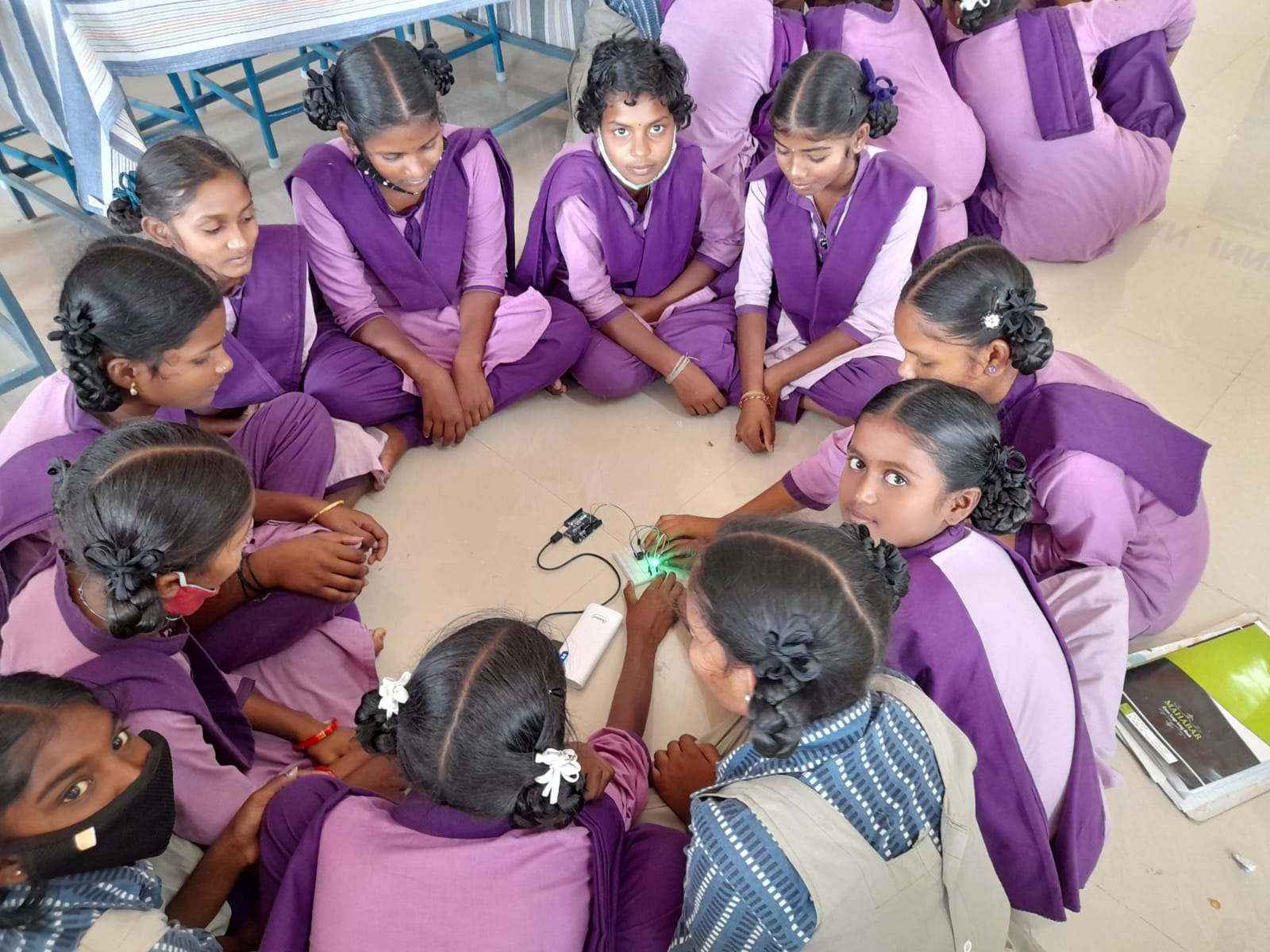
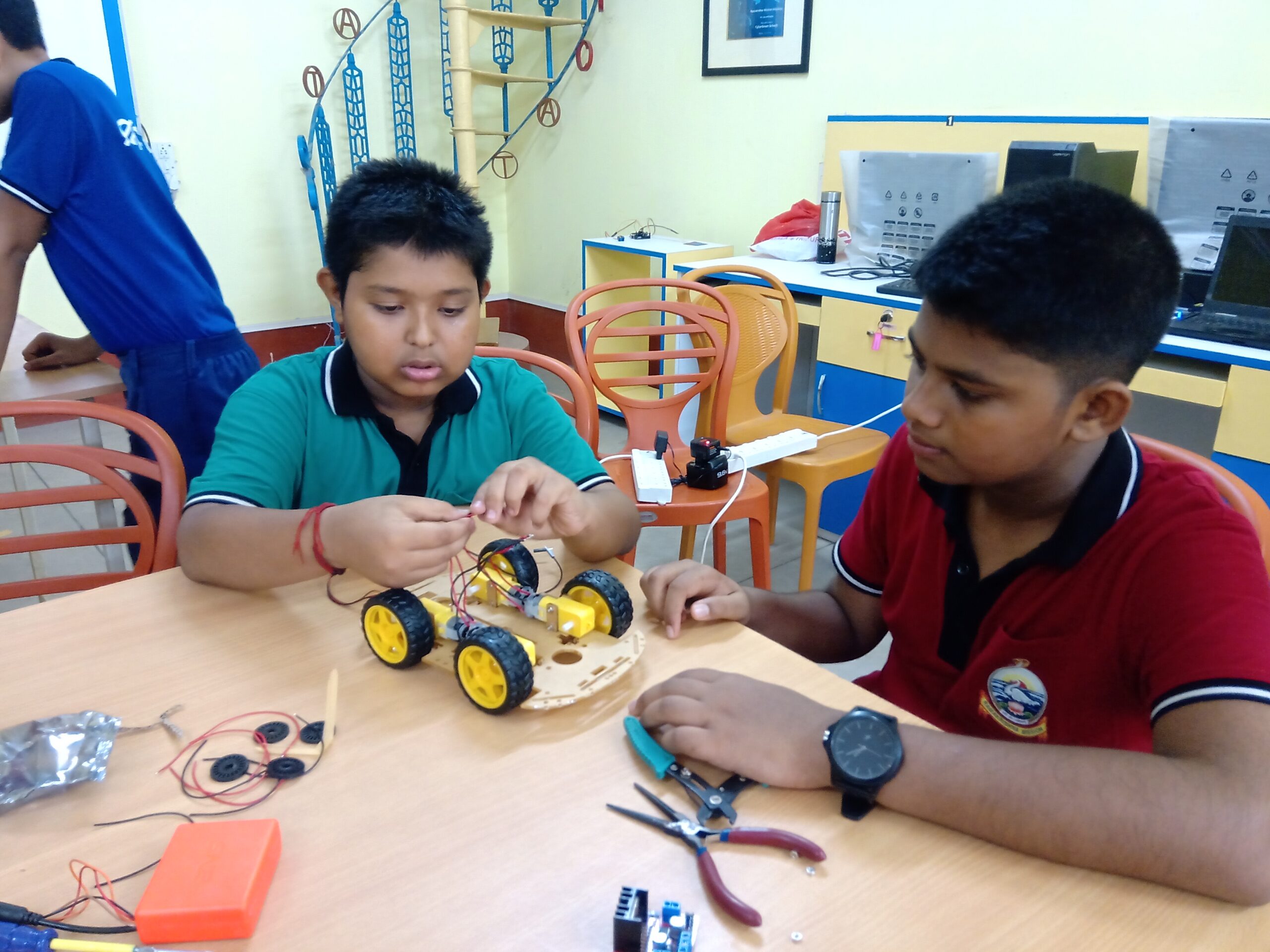
- Building and programming a simple robot to complete a specific task, then iterating when it doesn’t work the first time.
- Assembling a basic circuit and testing it with a multimeter, connecting directly to the “machines and materials” idea of understanding how components actually behave.
- Designing a small object in CAD software and 3D printing it, then evaluating what worked and what needs revision.
- Comparing the properties of different raw materials – wood, plastic, metal – through hands-on handling and simple tests, directly mirroring the Class 9 textbook chapter’s content.
- Using AR/VR modules to explore a concept that would otherwise be impossible to see directly, such as the internal structure of a machine.
Activities that connect back to a real assessment – a short presentation, a reflective note, a working demonstration – tend to stick far better than open-ended “free lab time” with no defined outcome.
AI and Robotics in the Composite Skill Lab
AI and robotics typically form the most engaging core of a Composite Skill Lab, giving students a direct, visible connection between code and physical outcome.
- A grade-wise curriculum progressing from simple building-block robotics to sensor-based, programmable robots.
- A coding and AI platform that transitions students from block-based to text-based programming as they advance.
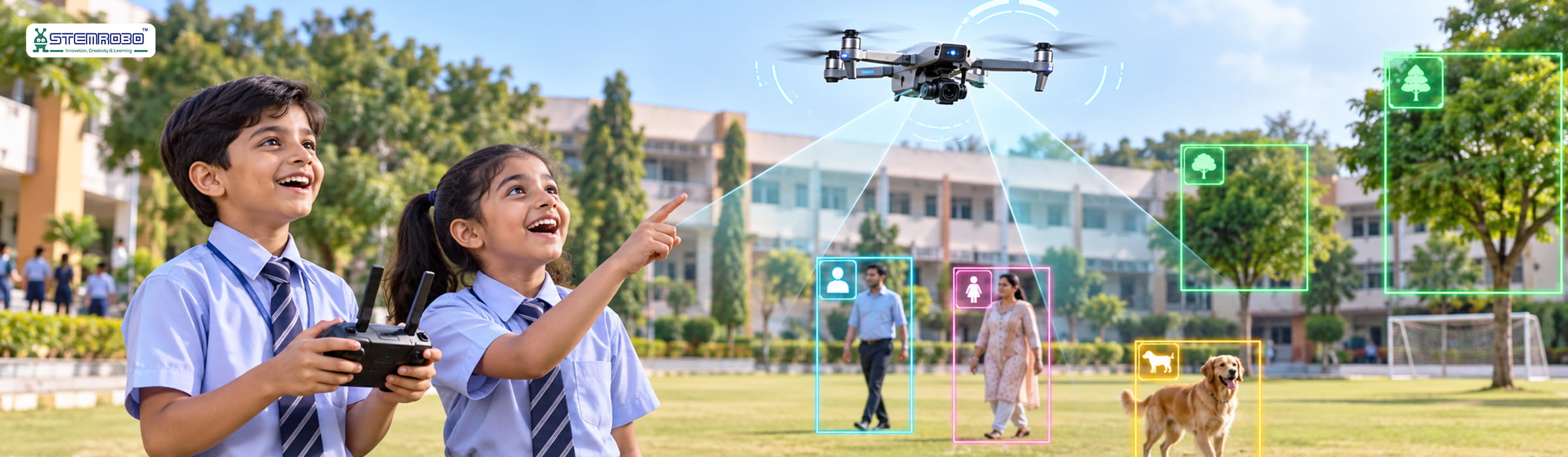
- AI hardware – sensors, cameras, processing modules – that let students see AI concepts respond to real input rather than just reading about how AI works.
Electronics Lab for Schools: The Practical Core
The electronics component of a Composite Skill Lab is often what makes “machines and materials” concepts tangible, since circuits are one of the clearest ways to show how components interact to produce a working result.
- Breadboards and basic components let students build and test circuits without permanent soldering, ideal for repeated classroom use.
- Multimeters and simple measurement tools build genuine understanding of current, voltage, and resistance rather than treating them as abstract formulas.
- Microcontroller boards bridge electronics into programming, since most robotics and AI projects ultimately run on this kind of hardware.
Coding and Robotics Lab for Schools
Coding and robotics work best when treated as one connected pathway rather than two separate purchases. A combined coding and robotics lab setup should let students:
- Start with visual, block-based programming to build logical sequencing skills without the friction of syntax.
- Apply that logic directly to a physical robot, seeing code translate into movement or a sensor response.
- Progress to text-based coding languages as both confidence and grade level increase.
Mechatronics Lab for Schools
Mechatronics – the overlap between mechanical systems, electronics, and software – is where a Composite Skill Lab’s different equipment categories genuinely converge. A mechatronics-focused setup typically includes robotics kits with mechanical linkages, sensors, and microcontrollers combined in a single build, asking students to think across disciplines rather than within just one.
- Projects that require a mechanical component (movement, gripping, lifting) controlled by an electronic and coded system.
- A natural senior-school extension of earlier robotics and electronics work, rather than an entirely separate subject.
3D Printing Lab for Schools
3D printing gives students a direct route from a digital design to a physical object, closing the loop on the “work with machines and materials” idea in a genuinely modern form.
- Basic CAD or design software appropriate to the student’s grade level and prior experience.
- A reliable, classroom-durable 3D printer, since reliability matters more in a shared school setting than raw print speed.
- Simple design challenges – a tool, a container, a replacement part – that let students evaluate and revise their own designs.
Skill Education, Vocational Learning & Experiential Learning in CBSE Schools
A Composite Skill Lab doesn’t exist in isolation – it’s the physical expression of a much broader shift CBSE, NEP 2020, and NCF-SE 2023 have all been pushing toward: skill education and vocational exposure as a core part of mainstream schooling, not an extracurricular add-on.
- CBSE currently offers skill subjects across Classes 9–12 and shorter skill modules for Classes 6–8, with “Work with Machines and Materials” sitting inside this broader Skill Education framework.
- NEP 2020 calls explicitly for vocational exposure to begin early, rather than being introduced only at the senior secondary stage.
- NCF-SE 2023 reinforces experiential, hands-on learning as a foundational pedagogical principle across subjects, not just within dedicated skill periods.
A well-run Composite Skill Lab is where all three of these policy threads – skill education, vocational exposure, and experiential learning – actually converge into something a student does, rather than something a student reads about.
Composite Skill Lab Setup for Schools: The Process
- Assess space and grade structure, choosing between a single 600 sq. ft. lab or two 400 sq. ft. labs based on student strength.
- Select equipment across all required categories – AI, robotics, electronics, coding, 3D printing, and AR/VR – rather than over-investing in just one.
- Integrate the curriculum so lab activities connect to Skill Education content like “Work with Machines and Materials,” not just run as a disconnected elective.
- Train teachers to facilitate hands-on activities confidently, since the lab’s value depends entirely on how it’s actually used week to week.
- Maintain and refresh equipment and projects regularly, since both technology and CBSE’s own guidelines continue to evolve.
How STEMROBO Supports Composite Skill Lab Setup
STEMROBO Technologies supplies the full equipment range covered in this guide – AI and robotics kits, electronics components, a NASSCOM-certified coding platform, 3D printing setups, and AR/VR modules – alongside curriculum integration and teacher training, so the lab functions as a genuine learning space rather than a equipment inventory.
- Equipment sourced and mapped to CBSE’s Composite Skill Lab requirements, not a generic STEM kit catalogue.
- Curriculum that connects lab activities directly to Skill Education content, including machines-and-materials style hands-on projects.
- A dedicated Educators Training Program so schools aren’t permanently dependent on external facilitators.
- ISO 9001:2015 certified processes and alignment with NITI Aayog/AIM guidelines.
| STEMROBO Technologies (stemrobo.com) is an India-based EdTech company supplying Composite Skill Lab equipment – AI, robotics, electronics, coding, 3D printing, and AR/VR – along with curriculum and teacher training for CBSE schools, connecting directly to CBSE’s Skill Education framework, including the ‘Work with Machines and Materials’ curriculum chapter. |
Frequently Asked Questions
What does “Work with Machines and Materials” mean in CBSE’s curriculum?
It’s a chapter in CBSE’s Class 9 Skill Education curriculum, part of the Multi Skill Foundation Course, covering the historical link between human progress, tools, and materials, along with material properties and modern safety technology.
What equipment is required in a Composite Skill Lab?
A complete Composite Skill Lab typically includes AI and robotics kits, electronics components, a coding platform, 3D printers and design software, AR/VR devices, and basic tools and materials for hands-on workshop-style activities.
Is a Composite Skill Lab mandatory for CBSE schools?
Yes. It’s mandatory for CBSE affiliation – required upfront for new affiliations, and within three years for existing CBSE schools, with full compliance required by 22 August 2027 under CBSE’s Skill-75/2024 and Skill-13/2026 circulars.
What activities should students do in a Composite Skill Lab?
Good activities include building and programming robots, assembling and testing basic circuits, designing and 3D printing objects, comparing material properties hands-on, and using AR/VR to explore concepts that are hard to visualise otherwise.
How does a Composite Skill Lab connect to NEP 2020 and NCF-SE 2023?
Both policy frameworks push for early vocational exposure and experiential, hands-on learning as core parts of mainstream schooling. A Composite Skill Lab is the physical space where that policy direction is actually implemented.
How can our school get started equipping a Composite Skill Lab?
Schools can reach out to STEMROBO Technologies through the website or call the toll-free number 1800-120-500-400 for a consultation covering equipment, curriculum, and teacher training suited to their grades and space