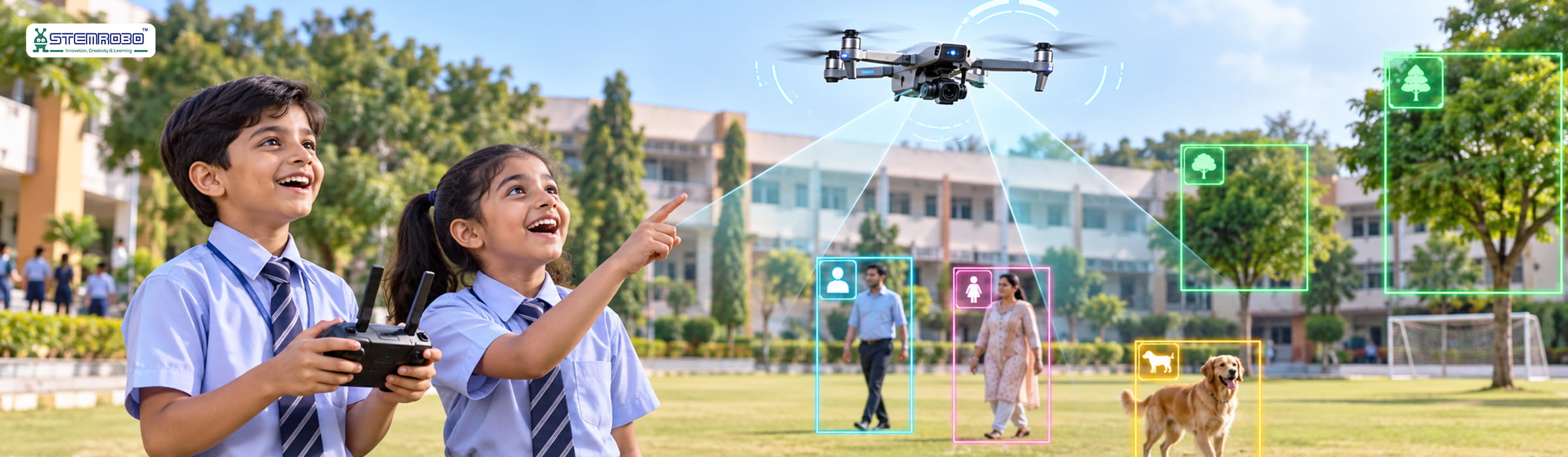
NEP 2020 gave schools a vision for the future. The challenge now is turning that vision into everyday classroom experiences.
The introduction of NEP 2020 – one of the most groundbreaking changes in India’s education system Schools across the country accepted NEP’s concept of holistic learning, promoting innovation and creativity, nurturing skill development.
However, for many teachers and school leaders, that question still remains after all these years in service:
How do we get the NEP 2020 vision into our everyday classrooms?
Schools in general may be clear about the concepts of Experiential Learning, Skill-Based Education, critical thinking, digital literacy etc but translating it into practice across all classrooms may not be easy.
The challenge is not policy awareness.
The challenge is putting it into practice in a way that makes sense to your students.
Which is why AI Labs for Schools might be the best thing to happen to schools.
Instead of it being yet another addition to the school timetable, AI Labs helps students by exploring, innovating, collaborating and applying theory to practice – the true spirit of NEP 2020.
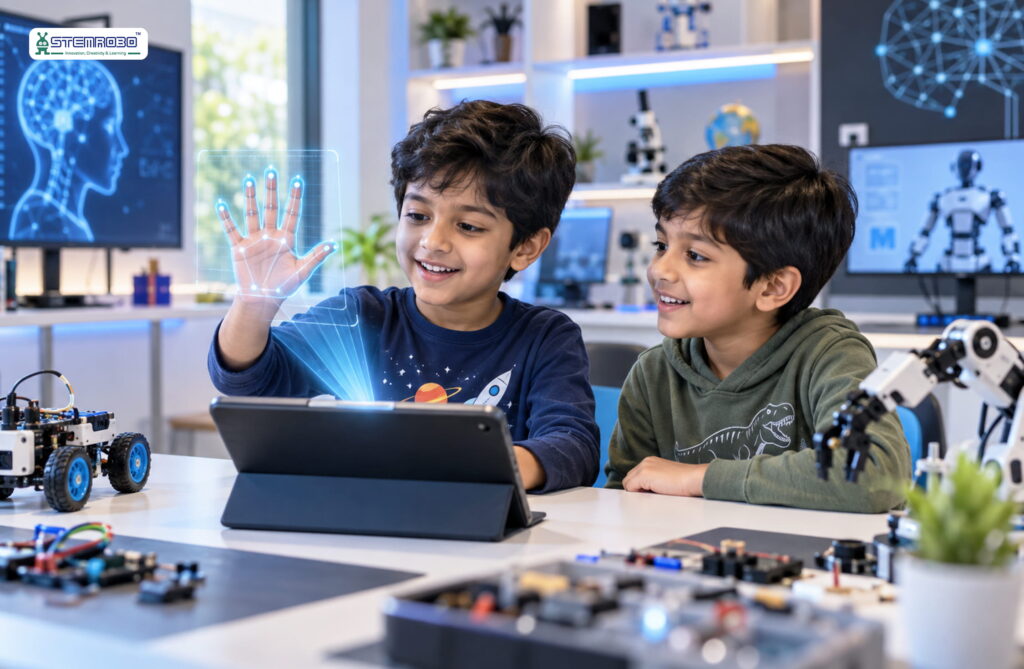
NEP 2020 Isn’t Asking Schools to Teach More. It’s Asking Them to Teach Differently.
One of the biggest myths about NEP 2020 is that now schools are required to pack in more subjects to their curriculum. The reality is that the approach to learning is changing in schools from:
- drilling to conceptual understanding
- learning of facts to application
- passive learning to active learning
- subject expertise to multiple disciplines
- exams to competencies
Modern learners require more than textbook knowledge. Their future requires the skills to interpret, address challenging and complex problems, work in collaboration and adapt to emerging technologies.
That is what Future-Ready Education is all about.
For schools, it is no longer a question of whether it is important.
It’s a question of how we are going to do it.
The Gap Between NEP 2020 and Classroom Reality
While schools are undoubtedly making significant strides in this direction in response to the policy, many still encounter hurdles.
1. Schools Want Experiential Learning: Many classrooms are still lecture-based, textbook-style teaching.
2. Schools Want Innovation: Many schools lack the time, space and tools for students to create, design, build, test and experiment.
3. Schools Want Digital Literacy: Many schools limit technology to slides and presentations.
4. Schools Want Critical Thinking: Many schools assess by testing student recall rather than their ability to apply knowledge. This disconnect is where schools need a solution.
And this is precisely where AI Labs excel.
Why AI Labs Are Becoming the Missing Piece
Artificial Intelligence is no longer the future. The future is here.
Students interact with AI every day through their cell phone, recommendations and content engines, voice assistants, digital platforms and more.
The crucial question is whether we want students to be consumers of technology or creators of technology?
For many schools, AI Labs are becoming one of the most effective avenues to do this.
They give students an opportunity to create technology rather than just interact with it.
Rather than simply study Artificial Intelligence, learners start applying the technology to address authentic issues.
Learning becomes more meaningful when students are not just listening.
- They are building.
- They are experimenting.
- They are exploring.
- They are solving real-world problems.
That is what makes Artificial Intelligence in Education so valuable.
5 Ways AI Labs Help Schools Achieve NEP 2020 Goals
1. They Make Experiential Learning Practical
One of the key pillars of NEP 2020 is Experiential Learning, so – it makes sense to incorporate hands-on experience into the curriculum.
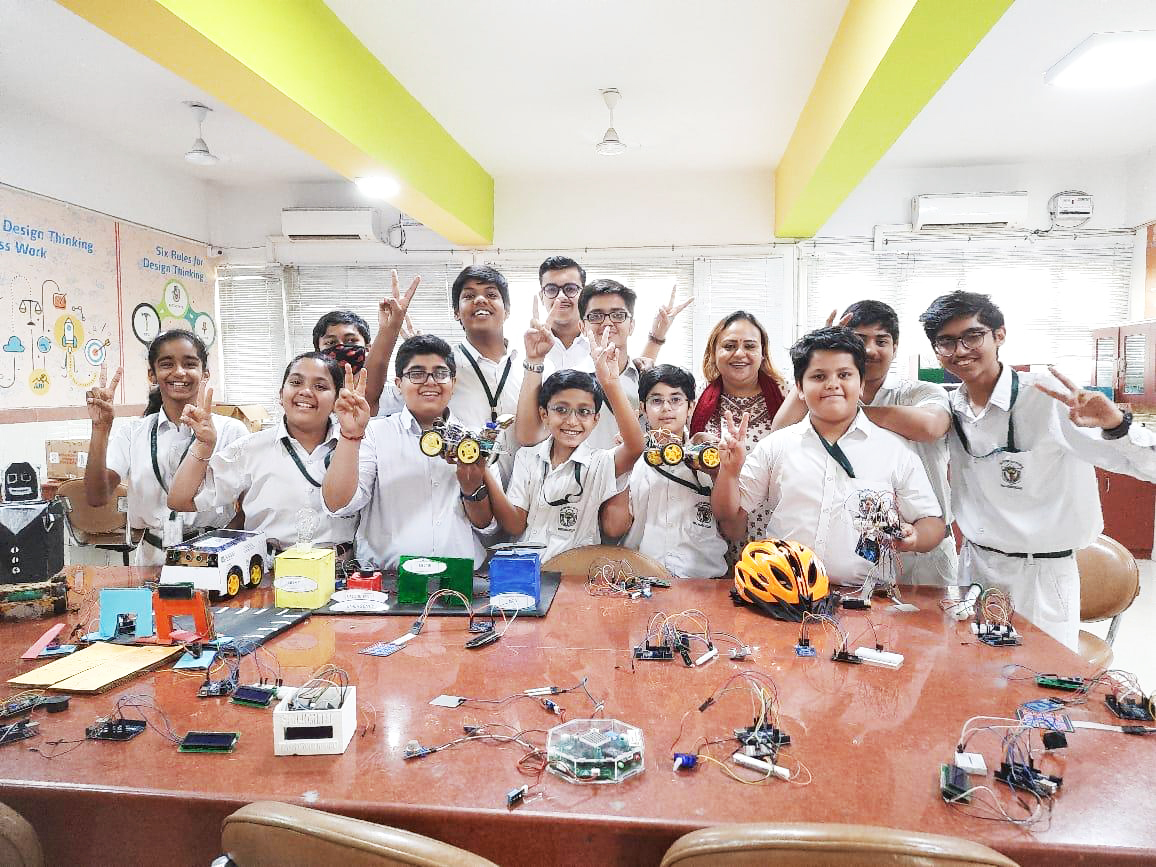
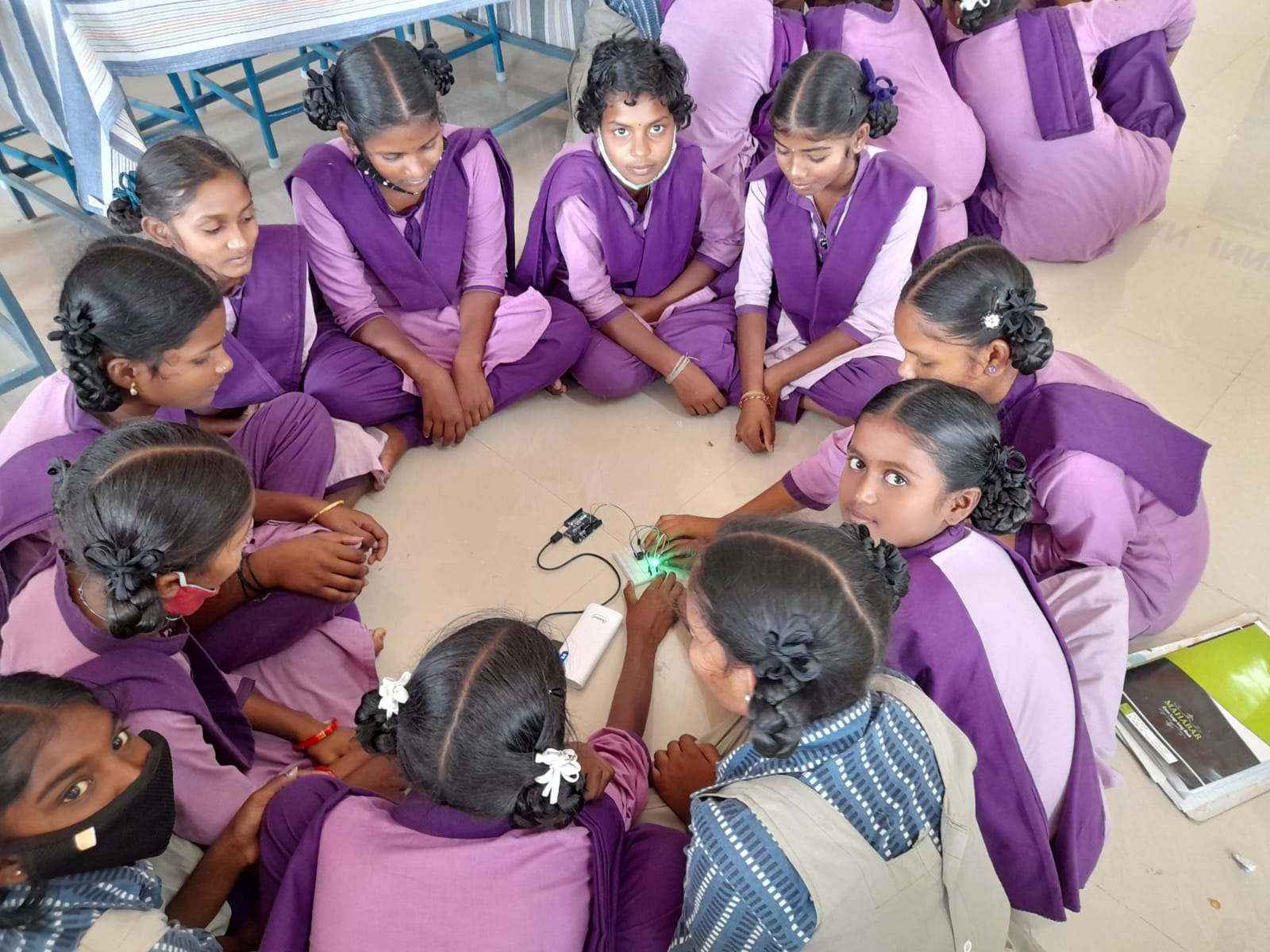
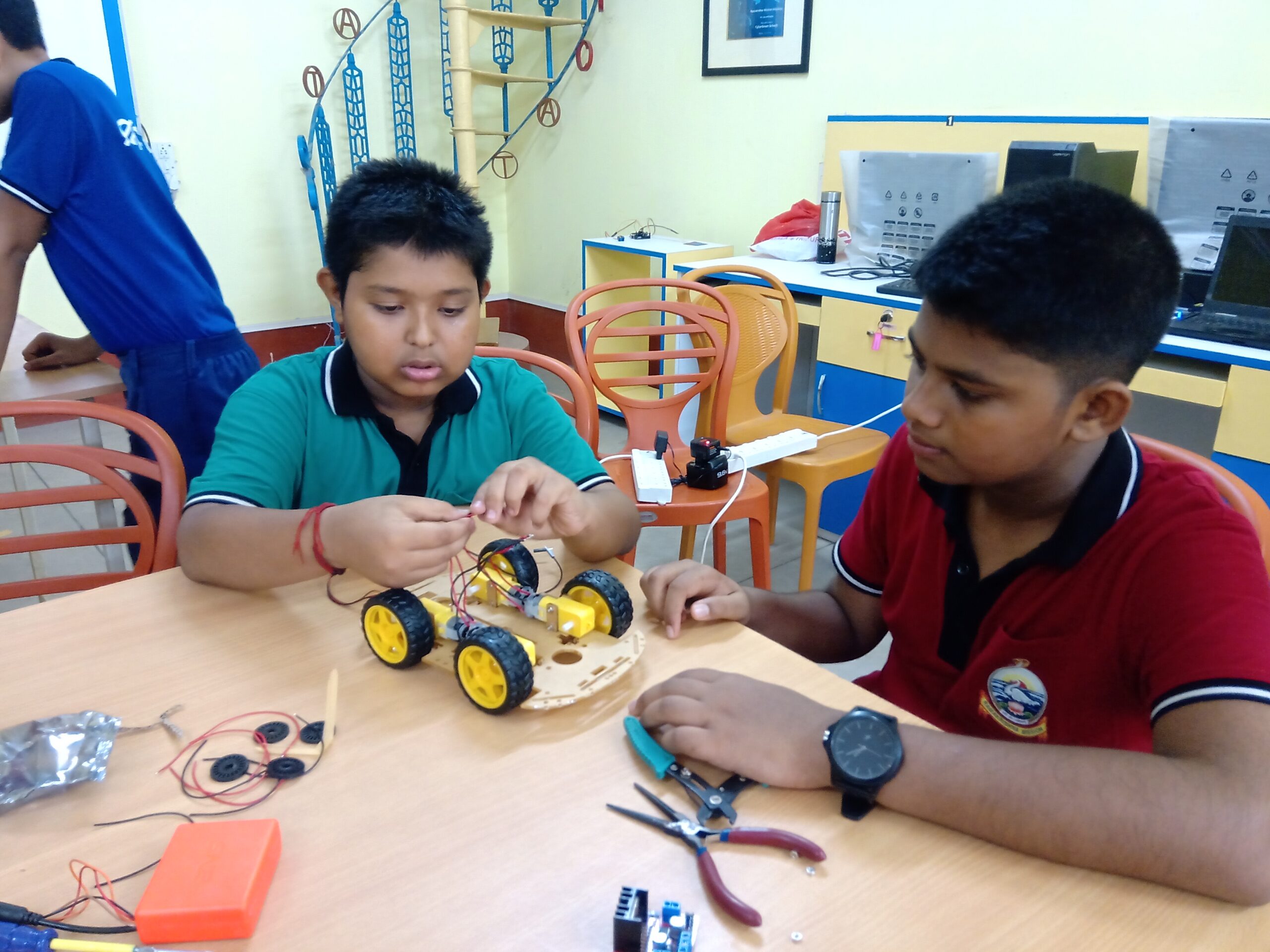
That’s where AI Labs play the perfect role – Students don’t just read about data, but interact with it. Students don’t just learn from theory, but work on projects. From developing AI-enabled apps, to training low-level ML models, or working to solve real-world community issues, students learn best by doing.
2. They Build Future-Ready Skills
The world is evolving.
A career for tomorrow may demand skills that can’t simply be taught in a classroom.
AI Labs benefit students by helping them to excel in the Essential Skills of:
- Communication
- Collaboration
- Creativity
- Adaptability
- Digital Literacy
- Innovation
- Problem-Solving
Whatever career students go into next, they will need these Future-Ready Skills.
3. They Strengthen Computational Thinking
One of the most valuable outcomes of AI education is the development of Computational Thinking.
Students learn how to:
- Break down complex problems
- Identify patterns
- Analyze information logically
- Design solutions systematically
- Test and improve outcomes
These abilities extend far beyond technology.
They improve decision-making and analytical thinking across subjects and real-life situations.
4. They Encourage Multidisciplinary Learning
The future doesn’t work in a compartmentalised way.
Real-life challenges demand ideas from diverse subjects.
AI Labs help students leverage the domains of:
- Science
- Mathematics
- Technology
- Environment
- Social Science.
Some of the problem statements at the AI Labs include designing AI solutions for water conservation, waste management, healthcare education, and, even, agriculture.
This interdisciplinary application directly aligns with the objectives of NEP 2020.
5. They Turn Curiosity into Innovation
Innovation starts with asking questions.
AI Labs allow students to ask questions and experiment and try things, test solutions, and see where that takes them. In Ai Labs students become more willing to try things out.
They learn that failure is part of the process.
Students build confidence as problem solvers and innovators – an important skill that can be even more valuable than technical skill.
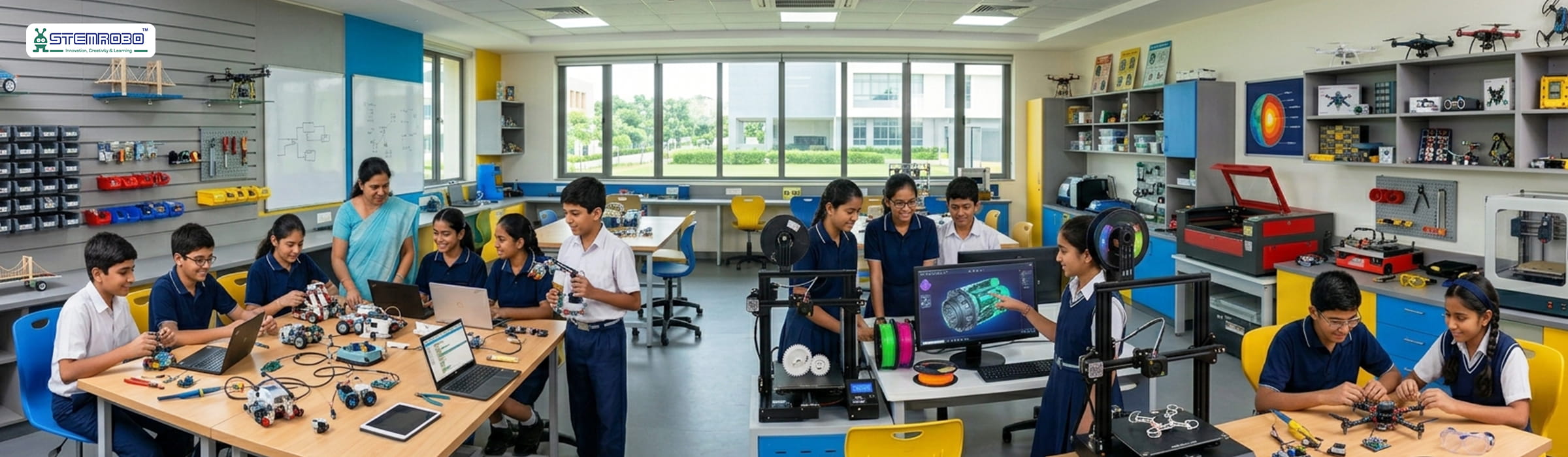
What Does an NEP-Ready AI Lab Actually Look Like?
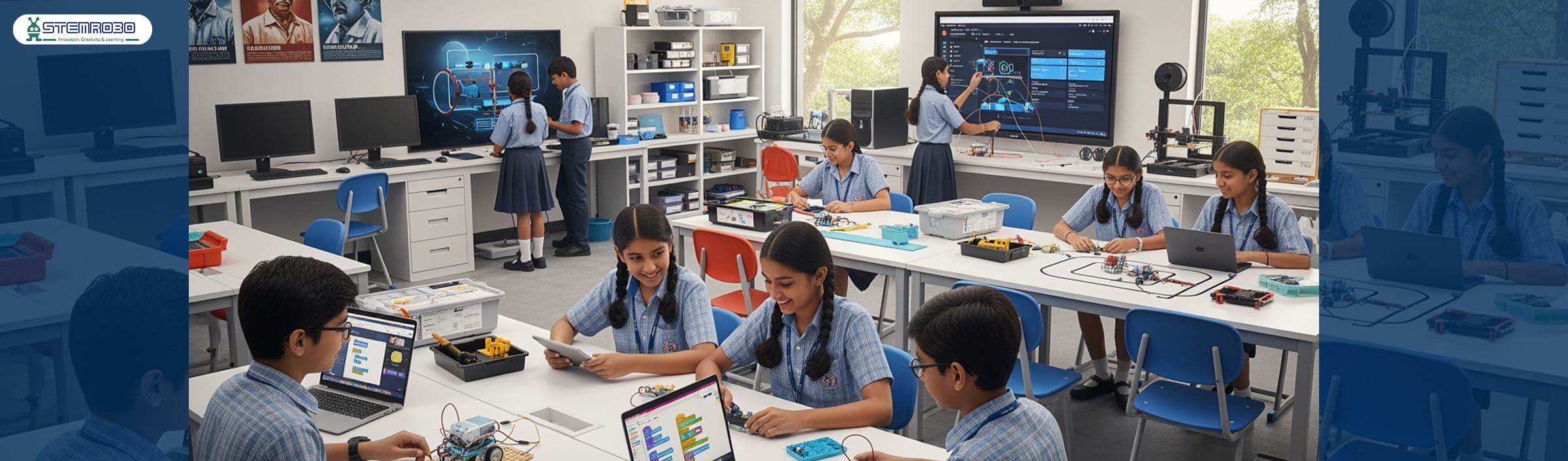
An effective AI Lab isn’t just a space that is all about tech.
This is a learning ecosystem.
A successful AI Lab includes:
- Students actively building projects
- Teachers facilitating discovery-based learning
- Structured project-based activities
- Opportunities for collaboration
- Assessment methods focused on competencies
- Exposure to emerging technologies
- Continuous teacher training
Schools can often adopt AI Labs powered by STEMROBO to create a learning ecosystem-not just a technology.
It is not about introducing AI/ML to the classrooms or teaching them the nitty-gritty of these technologies.
It is about cultivating innovative thinkers out of our students who will create impactful innovations to change the world.
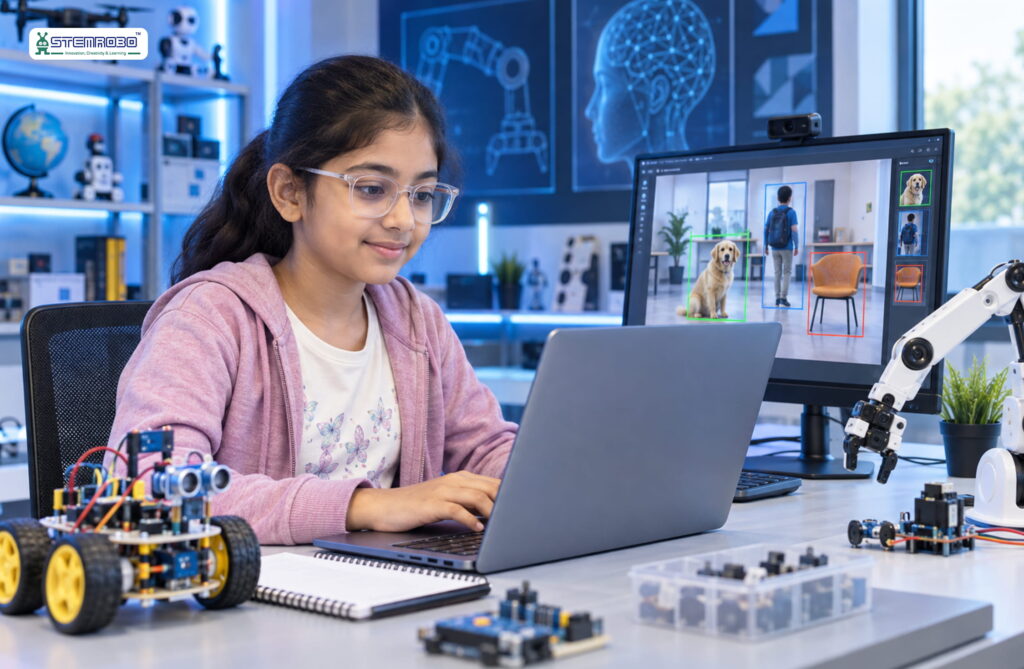
A Practical Roadmap for Schools Starting Their AI Journey
Many schools assume that implementing AI requires significant infrastructure investments. The truth: implementation begins with a clear plan.
Step 1: : Assess Current Readiness
Understand your infrastructure, teachers, and students
Step 2: Upskill Your Teachers
Upskilling your teachers for sustained implementation. An empowered teacher empowers an empowered class.
Step 3: Introduce Age-Appropriate AI Concepts
Emerging tools should be translated into simple tools and advanced tools should be taught in order
Step 4: Use Project-Based Learning
Translation of the concept into the real world is the best way to learn
Step 5: Create a Culture of Innovation
The best schools are where innovation is woven into the learning fabric of the school, not only the occasional project.
The Bigger Question: Is Your School Preparing Students for Exams or for the Future?
Academic achievement is still crucial.
But the future will belong to those who can challenge convention, develop innovative new ideas and have the ability to adapt to change.
Technology is revolutionising how and when industries operate more quickly than at any other time before. Tomorrow’s students will need to navigate a world where the difficulties they will encounter are not yet known to us.
- Educating students for this future is not just a matter of textbooks and tests.
- It’s a matter of inspiring learners to discover, to try, to work with one another and to invent.
- That’s where AI Labs have the potential to impact.
We need to give them the opportunity to build. That’s the value of the AI Lab.
Conclusion
NEP 2020 should not be measured on the number of schools talking about innovation.
It should be on the number of students experiencing innovation.
AI Labs enable schools to operationalize the ideas of innovation, creating learning spaces where curiosity is innovation, ideas are projects, and students are empowered problem solvers.
Through Artificial Intelligence in Education, experiential learning, skill-based education and projects, you can bring the vision of Future-Ready Education to life.
Schools partnering with STEMROBO are already on their way to cultivating 21st Century Skills in their students, aiding their adaptation to the increasingly AI-driven world.
The schools adopting AI now are not just trying to implement a new technology.
They are in fact creating rich learning environments where students not only think on their own and tackle real world problems but also equip them to succeed in a rapidly changing world.
Becoming NEP 2020 Ready is really more about reimagining education than just infusing a new technology.
Frequently Asked Questions (FAQs)
1. How do AI Labs support NEP 2020 in schools?
AI labs complement the NEP 2020 program by enabling the experience, thinking skills, problem-solving, creativity, skill-based, and multidisciplinary learning at the school level. They bring experiential learning as project-based learning through real-world & contextual challenges.
2. What are the benefits of AI Labs for schools?
At an AI Lab, students acquire the skills of the future such as collaboration, communication, collaboration, computational thinking, digital literacy, innovation, and problem solving. They also enjoy it by doing project based learning and applications.
3. At what age can students start learning Artificial Intelligence?
Start Learning AI Too, as early as Middle School Students. Students can learn AI in fun, yet appropriate ways-through AI Labs for Schools that offer project-based activities, games and coding-based activities with real-world problem solving at every age level.
4. Do schools need advanced infrastructure to set up an AI Lab?
Every school may not be able to have a go at a strategic plan, training for teachers and courseware suited to the age group. It is wise to begin with a practically-oriented and project-based AI Lab curriculum instead of cumbersome gadgets and hardware.
5. Why are AI Labs important for future-ready education?
As industries change with technology, learners require 21st Century Skills, an innovation mindset, exposure to new-age technologies.
AI Labs assist learners in attaining a new set of skills to become future-ready.
6. What is an AI Lab in a school?
An AI Lab in a school is an innovation space that focuses on Artificial Intelligence, Computer Science, Coding, Robotics and other emerging areas through experiential learning in schools. It helps schools enable NEP 2020 in the digital world.