CBSE Schools Are Moving Beyond Traditional Learning
There is a drastic change taking place in the education system of India, where CBSE schools have started adopting a new approach to learning that moves away from the traditional way of learning through textbooks and examinations.
The present-day classroom scenario is becoming very practical, and learners are advised to learn by making things, solving problems, conducting experiments, and understanding technology through practice.
Students of today’s generation are growing up in a world driven by technologies like Artificial Intelligence, Robotics, Automation, and Coding. In such a context, there is an increasing trend towards incorporating STEM education in schools.
There is no scope left merely for studying concepts; rather, schools seek creativity and collaboration among students.
Why Students Learn Better Through STEM Activities
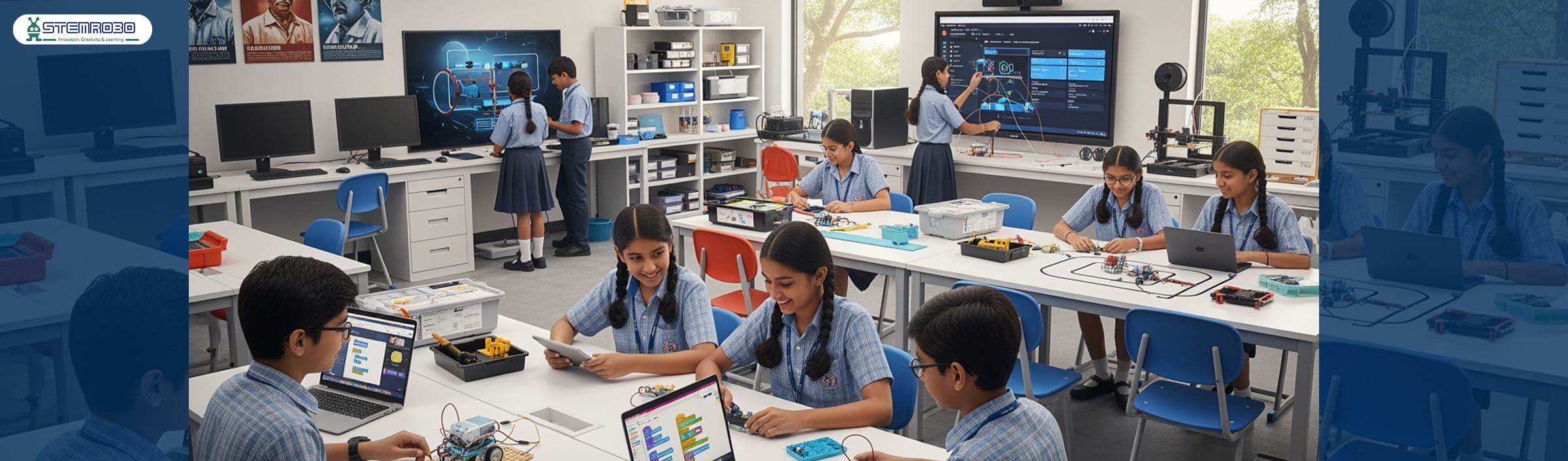
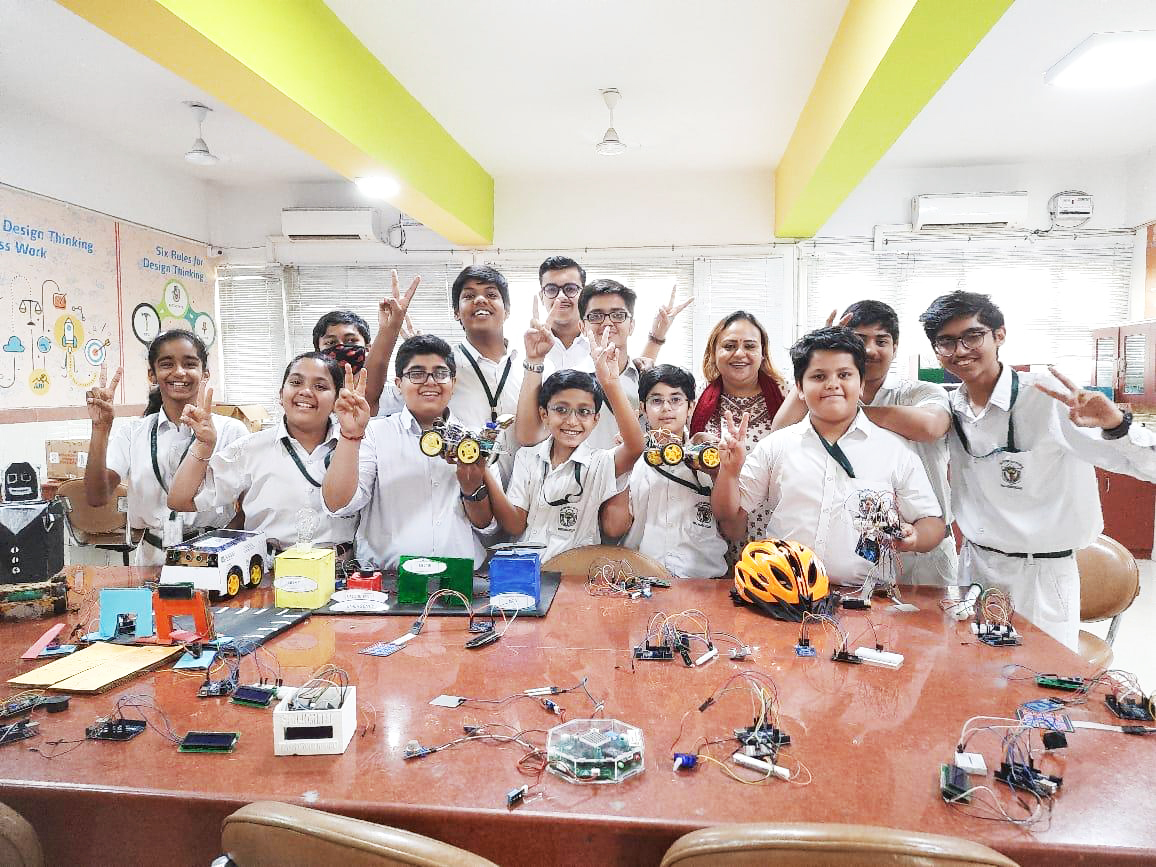
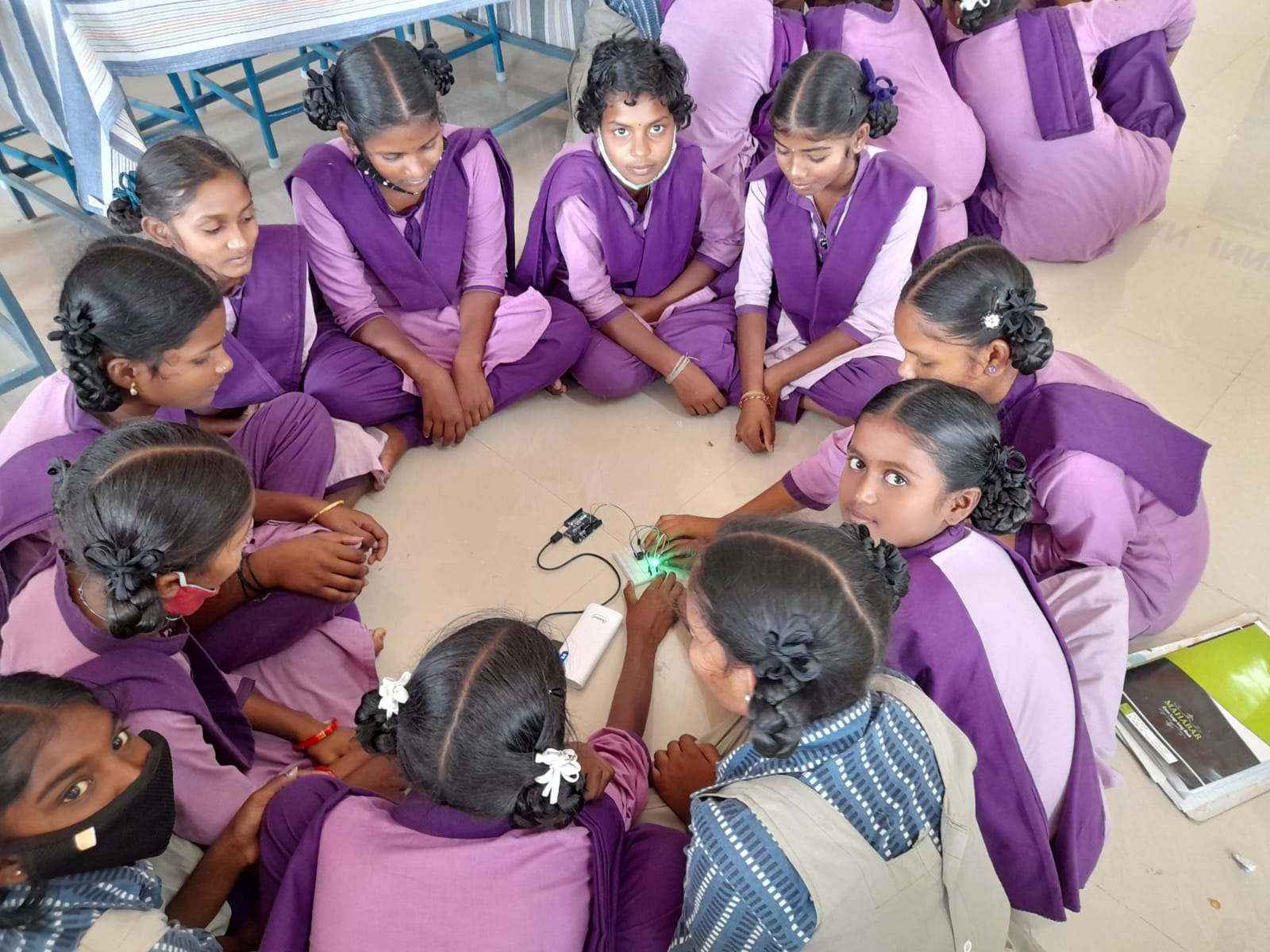
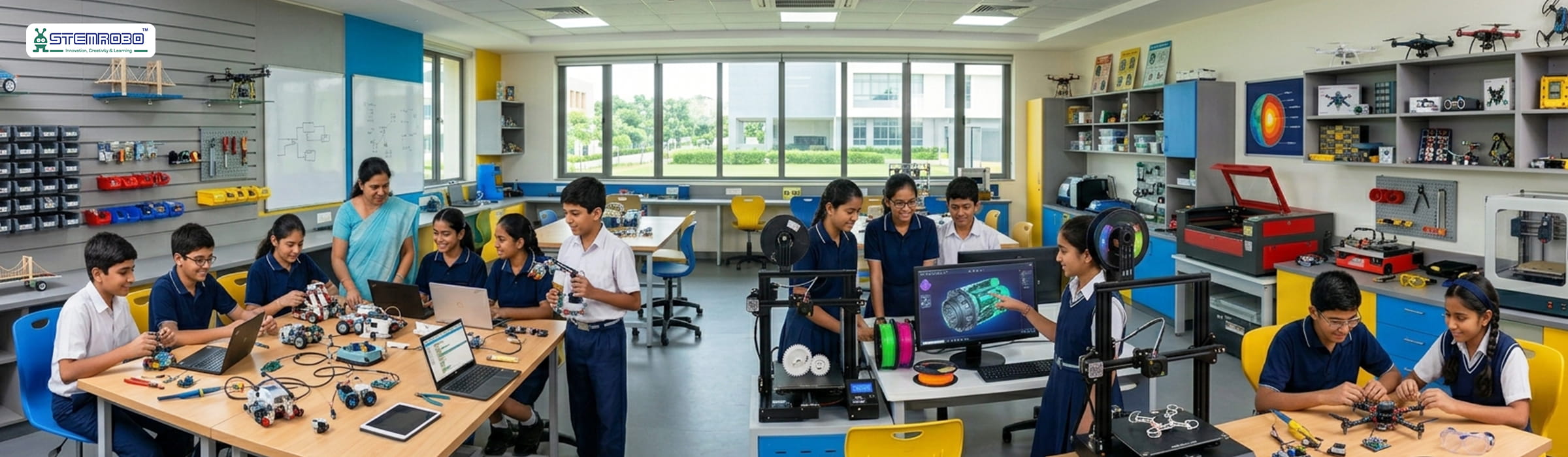
There is an atmosphere in a STEM Lab that is entirely different from that found in the typical classroom. The students talk about the concepts, test the projects, fix problems, and collaborate instead of listening silently to notes written in books.
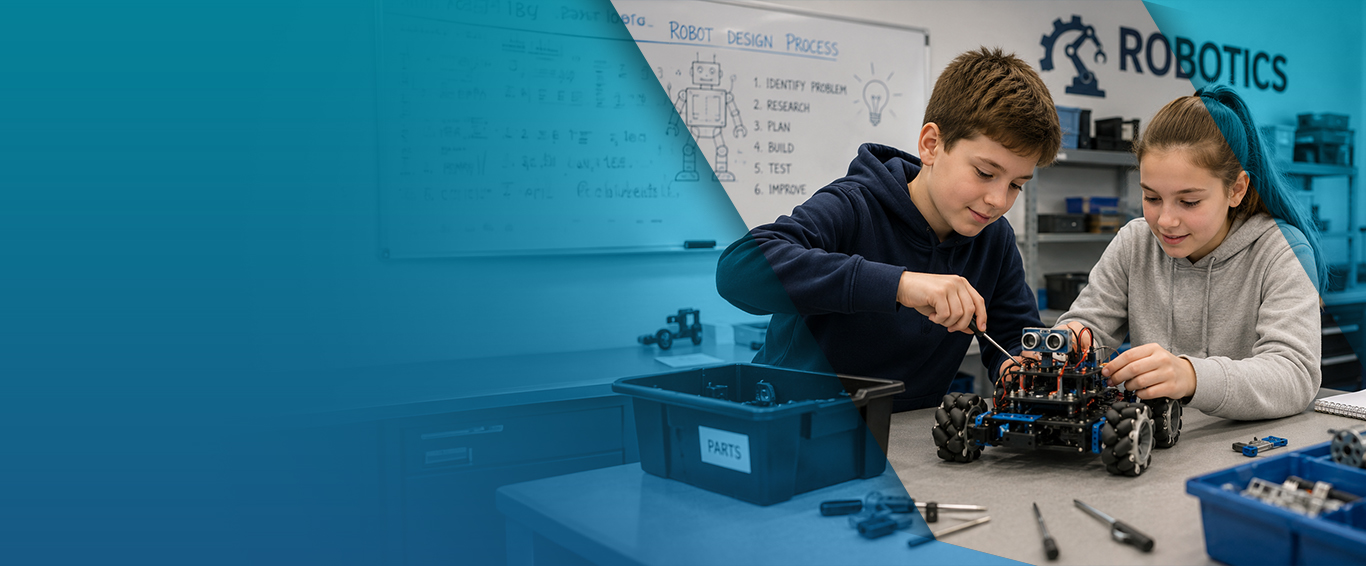
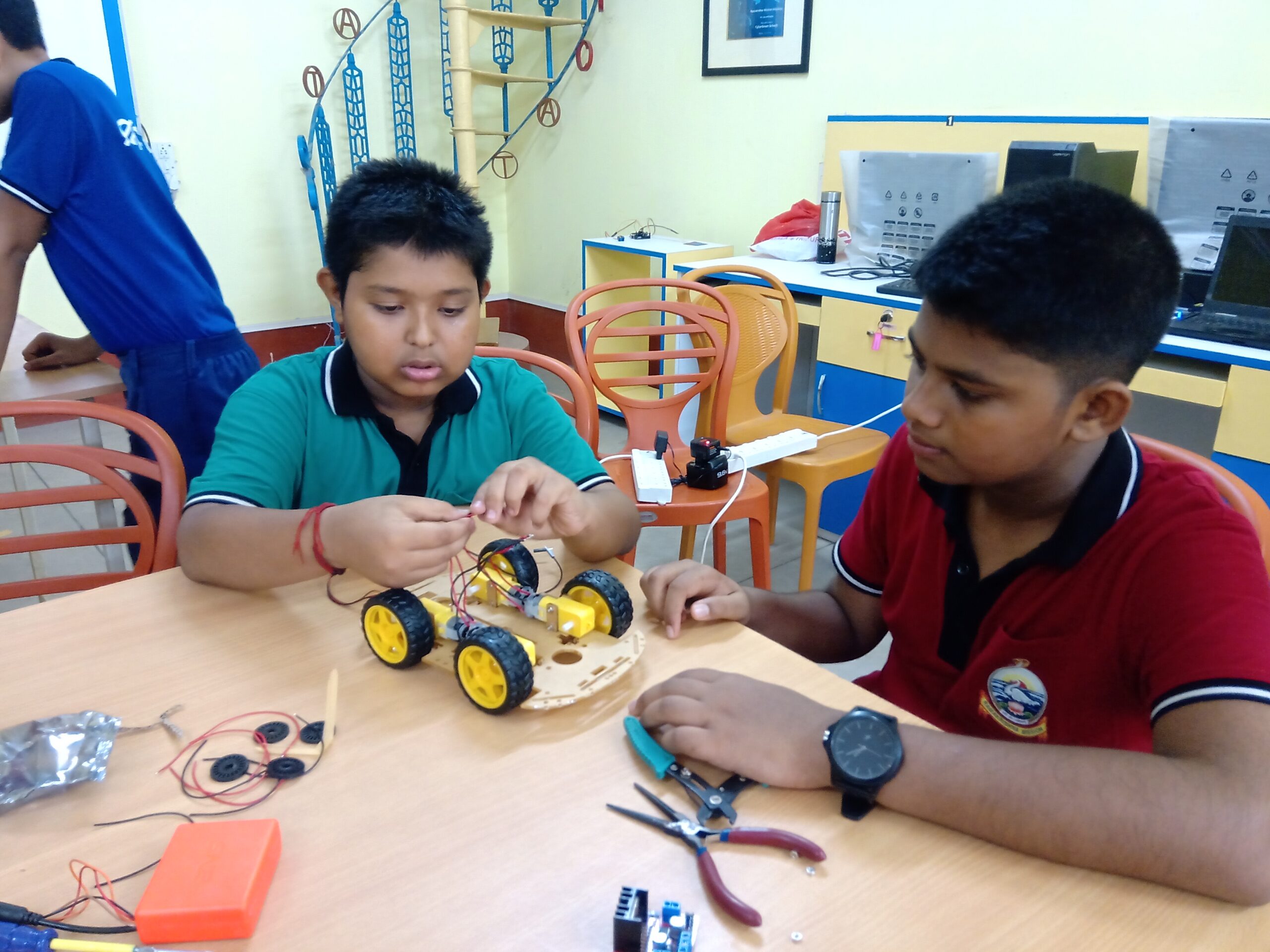
One group of students might be constructing a robotic arm, while other groups work on their smart sensor experiment. Students will focus on coding activities, or on designing automation models. All these activities will enable students to develop solutions independently.
This sort of experiential STEM learning is likely to boost the skills of curiosity, creativity, collaboration, confidence, and problem-solving among many others.
What is important is the fact that learners actually enjoy the process of learning.
What Is a STEM Lab?
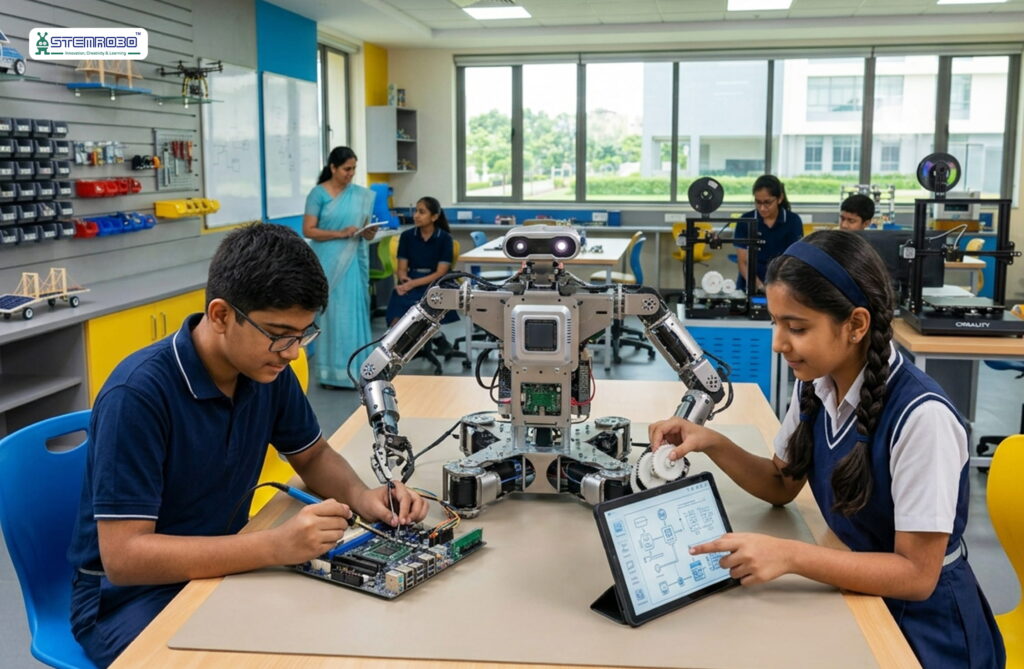
A STEM laboratory is a unique education system in which students interact with STEM through a practical learning process involving different projects.
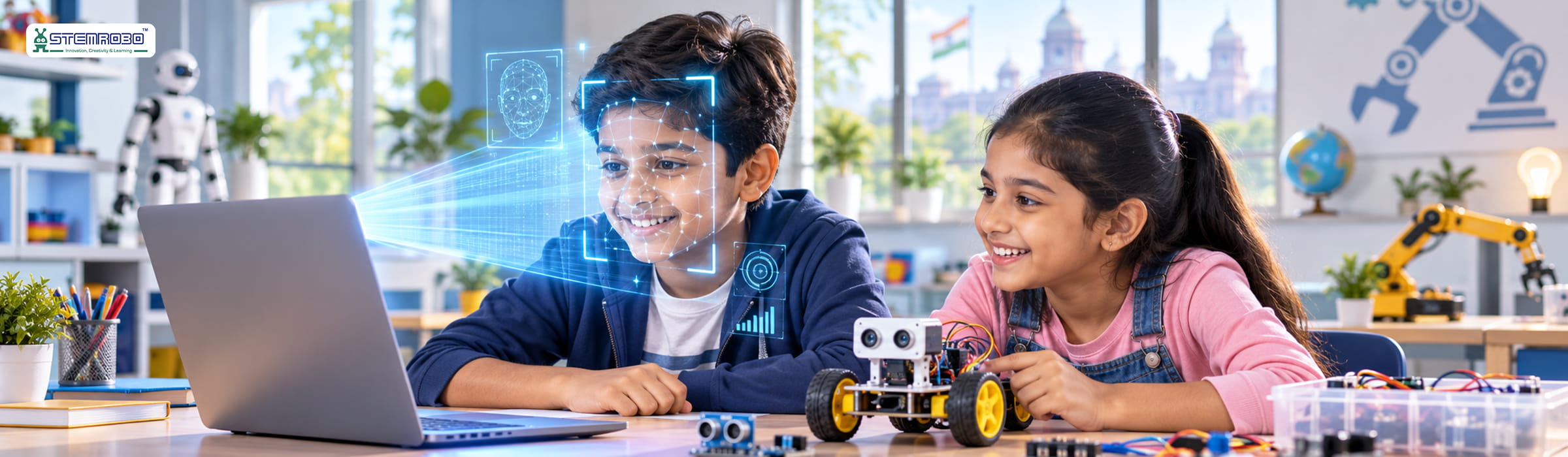
In STEM laboratories, students can engage themselves with robotics, programming, machine learning, electronics, sensor technologies, automation, and engineering projects.Unlike conventional classes where students learn theoretical concepts from textbooks, here, students can experiment and practically apply their ideas.
Such hands-on learning is not only effective for concept comprehension but also turns the classroom into a highly innovative one.
Why CBSE Schools Need STEM Labs
Traditional classrooms provided theoretical knowledge to the students, but today’s education system demands practical knowledge along with academic subjects.
With STEM Labs, the students are able to:
- Enhance their creativity
- Develop their problem-solving skills
- Collaborate and work together
- Coding and logic learning
- Practical learning of technology
- Boost their confidence through experiments
Project-Based Learning enables learners to make a correlation between theories discussed in class and real-life scenarios, thereby providing value addition to the process of learning.
Moreover, STEM Labs are playing an important role in making NEP-based learning methods effective by including skills development, critical thinking, innovation, and experiential learning amongst CBSE school learners.
This change is causing many schools to invest in STEM ecosystems.
Features Schools Look for in a STEM Lab Setup Company
Modern educational institutions need STEM learning ecosystems rather than just basic lab setups.
The best STEM Lab setup providers in India not only concentrate on providing the equipment itself but also strive to develop innovation-based learning environment solutions for CBSE schools.
A good STEM Lab setup provider should offer:
- STEM curriculum assistance
- Robotics and coding software
- Teacher development programs
- AI classroom technology
- Interactive STEM solutions
- Smart learning environment options
- Technical support and maintenance
- AI solution integration
- Project-based learning tools
The aim is not to install equipment in classrooms alone.
The aim is to develop an environment in which kids can freely explore and learn while solving practical problems confidently.
Top STEM Education Companies Supporting CBSE Schools in India
Many companies in the field of STEM education have taken the initiative to integrate an innovation-based learning environment among CBSE schools through the concept of STEM Labs, robotics education, coding, and artificial intelligence-based learning solutions.
STEMROBO Technologies has been playing a key role in promoting innovative ways of learning among schools by implementing Artificial Intelligence and Robotics Labs, Internet of Things learning solution, coding platform, innovations program, and STEM Education.
How STEM Education Companies Are Transforming Schools
Some firms dealing with STEM education in India are assisting CBSE schools in adopting innovative learning approaches.
The role of firms such as STEMROBO Technologies in this case is facilitating schools with STEM Laboratories, robotics training, coding sites, AI Learning Systems, Internet of Things (IoT) programs, and Experiential Stem Learning programs for future-ready classrooms.
The classrooms created by this type of approach are encouraging learners to be innovative in their thinking, work on independent projects, and understand technologies through practical experience.
Technology Is Reshaping Modern Education
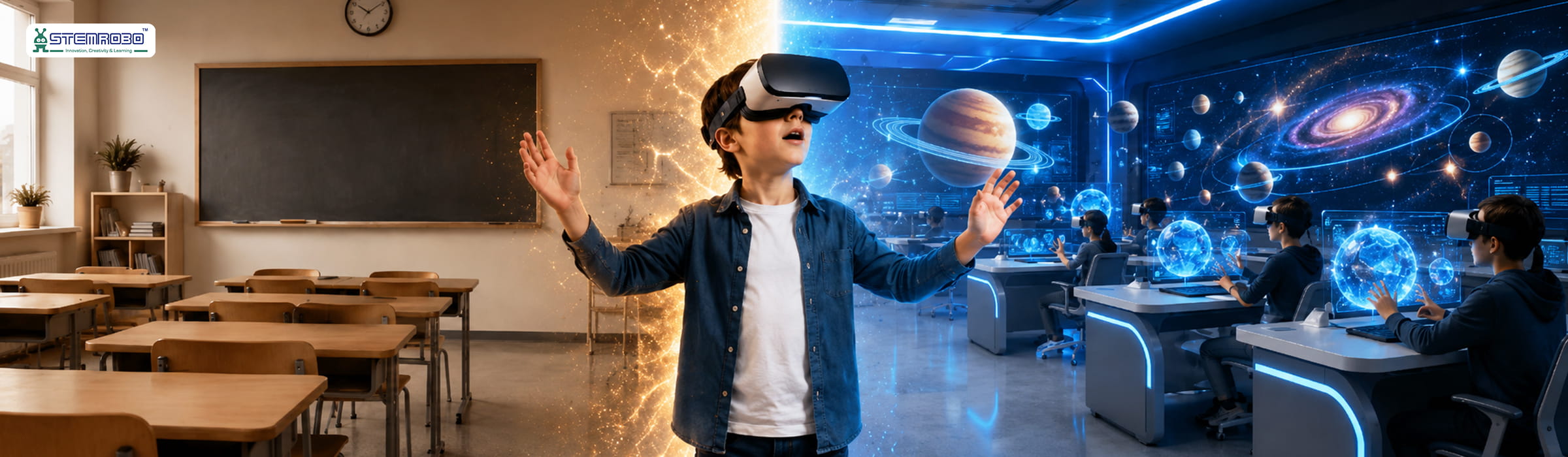
Technology is increasingly being used as a tool in school education in India. Many CBSE schools have begun embracing the use of AI classrooms, smart learning technologies, coding systems, and interactive learning tools to foster engagement and futuristic thinking in classrooms.
The schools are utilizing Generative AI for education, personalized learning technologies, and AI-powered educational tools to encourage active participation of students in learning by promoting innovation-based learning.
Also, digital STEM education and intelligent learning tools are playing a key role in fostering collaborative learning.
However, technology alone does not change education.
The transformation occurs as a result of students’ active engagement in the learning process.
STEM Labs Are Creating Future Innovators
While STEM education is making sure that the younger generation becomes competent in using technology, it is also creating a totally new mindset.
While working in STEM Labs, students are introduced to the concept of solving problems, testing their theories, making improvements, and moving on despite failed projects. Instead of relying solely on directions from others, they start finding answers by themselves.
It completely transforms the atmosphere in class. The teacher becomes a mentor, the student becomes an inventor, and learning becomes active and social.
Such activities allow the young generation to acquire those qualities that will be considered the most valuable by future industries:
- Creativity
- Innovation
- Adaptability
- Leadership
- Critical thinking
- Technical competence
Students are no longer afraid of failure because trial and error become common practice.
Building Future-Ready Classrooms
In today’s society, modern education invests all its resources in developing future-ready classrooms in order to ensure that the youth gain knowledge along with the necessary skills and use of technology.
Taking part in STEM education, robotics, programming, artificial intelligence, and other ventures, the youth gain knowledge regarding technologies that will define their future work industry.
In turn, the youth become more confident and ready to overcome all future difficulties.
Thus, the investment made into the development of STEM education ecosystems is not only reflected in the improvement of classroom facilities, but also in preparing the students for their future success.
Conclusion
With STEM Labs, CBSE schools are being revolutionized to make the process of learning much more hands-on, interactive, and innovative. By introducing robotic activities, programming skills, AI tools, automation projects, and other STEM activities into their classes, schools can create spaces where children are constantly experimenting, collaborating, and thinking out of the box.
The future of education belongs to those schools that are investing in STEM now because in the future, it is the children who can solve problems and innovate that will have the edge.
The future of education cannot be about classrooms that focus on the memorization of facts.