Click For Schools

Atal Tinkering Lab

Atal Tinkering Lab

Atal Tinkering Lab (ATL Lab): A Complete Guide to ATL Labs Setup and Impact

If you’ve been hearing the terms Atal Tinkering Lab or ATL Lab more frequently lately, you’re not alone. Across India, schools are turning empty rooms into buzzing innovation spaces where students build robots, code AI models, design 3D prototypes, and solve real-world problems – all before finishing high school. This is exactly what the Government of India’s Atal Innovation Mission envisioned when it launched the ATL program, and the results are extraordinary. In this comprehensive guide, we walk you through everything you need to know about ATL Labs – what they are, why they matter, how to set one up in your school, what activities take place inside, and how STEMROBO Technologies can be your trusted partner in this journey. What Is an Atal Tinkering Lab (ATL Lab)? An Atal Tinkering Lab – commonly called an ATL Lab – is a dedicated innovation and maker space set up inside schools to give students aged 6 to 18 hands-on exposure to modern technologies. Established under the Atal Innovation Mission (AIM), an initiative of NITI Aayog, ATL Labs are designed to move education away from passive textbook learning and towards active, project-based exploration. Inside an ATL Lab, students work with tools and technologies such as: The core philosophy behind every ATL Lab is simple: Learning by Doing. When children build something with their own hands – a working robot, a smart home sensor, or an AI prototype – the learning is deep, lasting, and exciting. More importantly, students begin to see themselves as creators, not just consumers of technology. Why ATL Labs Are a Game-Changer for Indian Education The traditional education system, while producing strong academic achievers, has historically left a gap between theoretical knowledge and practical application. ATL Labs were designed specifically to bridge that gap. Here’s why they are transforming schools across India: Nurturing Innovation from an Early Age Children are naturally curious. An ATL Lab gives that curiosity a structured outlet. Instead of wondering “how does this work,” students in an Atal Tinkering Lab can actually build it and find out. Building 21st-Century Skills Employers and universities around the world want problem-solvers, critical thinkers, and collaborators. ATL Labs actively develop these skills through real projects, team challenges, hackathons, and competitions rather than standardized tests. Levelling the Playing Field One of the most powerful aspects of the ATL program is inclusivity. ATL Labs are accessible to students regardless of gender, economic background, or geography – including rural schools that have historically had limited access to quality STEM education. Aligning with India’s National Education Goals ATL Labs are a cornerstone of India’s Digital India, Make in India, and NEP 2020 vision. They create the grassroots pipeline of innovators and entrepreneurs that a growing economy needs to remain globally competitive. How to Set Up an Atal Tinkering Lab in Your School The Atal Tinkering Lab setup process is well-defined and structured. Here is a step-by-step guide to help your school get started: Step 1 – Allocate a Suitable Space Your ATL Lab needs a minimum dedicated space of around 1,000 sq. ft. The room should have good ventilation, sufficient electrical outlets, stable internet connectivity, and a flexible layout that supports both individual work and group collaboration. Step 2 – Apply Through the Official AIM Portal Schools register and apply via the Atal Innovation Mission (AIM) portal. Both government and private schools meeting the eligibility criteria can apply. Selected schools receive a grant-in-aid of Rs. 20 lakhs over five years – Rs. 10 lakhs for capital expenses and Rs. 10 lakhs for operational costs. Step 3 – Procure Approved Equipment Once the grant is approved, schools follow official procurement guidelines to purchase robotics kits, computers, electronics components, 3D printers, and other approved tools from certified vendors. Step 4 – Install and Configure the ATL Lab Equipment is set up, workbenches arranged, software installed, and the space is organized to be intuitive and safe for students. Good labeling and cable management make a big difference at this stage. Step 5 – Train Your Teachers An ATL Lab is only as effective as the educators guiding it. Teachers need structured training on ATL tools, activity design, and student facilitation. STEMROBO Technologies offers comprehensive educator training programs designed specifically for ATL environments. Step 6 – Launch with Workshops and Competitions Once the lab is ready, maintain momentum through regular workshops, inter-school competitions, hackathons, and innovation exhibitions. Participation in national ATL Marathons and AIM competitions helps students gain exposure and recognition. What Happens Inside an ATL Lab? Activities and Learning Outcomes ATL Labs follow a flexible, activity-based learning model tailored to the age and interests of students. There is no single fixed curriculum, which means schools and educators have the freedom to design experiences that genuinely resonate with their students. Typical activities include: These activities culminate in exhibitions, demo days, and competition submissions where students present their prototypes to peers, parents, and external judges. The sense of ownership students feel when showcasing something they built themselves is genuinely transformative. Real-Life Impact: Innovations Emerging from Atal Tinkering Labs The most compelling argument for ATL Labs is not found in policy documents – it is found in the projects that students are actually building. Here are a few examples of student-led innovations from Atal Tinkering Labs across the country: Smart Irrigation Sensors for Water-Scarce Regions Students from rural Maharashtra developed low-cost water-level sensors for agricultural use, helping farmers manage irrigation efficiently during droughts – a direct solution to a problem in their own community. AI-Based Road Accident Alert Systems Young innovators designed a prototype that detects sudden vehicle impact and automatically sends emergency alerts to hospitals and family members, potentially saving lives in remote areas. Health Monitoring Wearables A group of Class 9 students built a simple wearable device that tracks heartbeat and body temperature, making basic health monitoring accessible at almost zero cost. Smart Cane for the Visually Impaired Using ultrasonic sensors and a microcontroller, students designed a cane that vibrates when it detects nearby obstacles –

Atal Tinkering Lab (ATL Lab): A Complete Guide to ATL Labs Setup and Impact Read More »

ATL Tranche 3

How to Apply for the Atal Tinkering Lab (ATL) Tranche 3 ?

Technology is moving really fast, and with that, the way we teach our kids is also changing. To keep up, the Government of India has started a big step called the Atal Tinkering Lab (ATL) under the Atal Innovation Mission (AIM), NITI Aayog. Now, the government has announced ATL Tranche 3 – which simply means they are opening doors for even more schools to set up these labs. If you are a school leader, teacher, or principal, this is the right time to apply for ATL Tranche Now let us understand how we can apply, how to apply, and why having an ATL is a big win for your students and school. Understanding the Atal Tinkering Lab (ATL) An Atal Tinkering Lab (ATL) is a government initiative wherein the schools get government funds to set up Robotics and AI labs in schools. Here, students get to learn-by-doing. They learn to connect theoretical knowledge to the practical knowledge. These labs have the essential tools like 3D printers, robots, sensors, AI kits, and IoT devices. With these, kids from Class 6 to 12 can explore their curiosity and also find solutions for real life problems The main aim of ATL is simple to help children become creators of technology, not just users. This initiative has changed the way education is imparted in schools by turning them into innovation hubs where kids can build real skills needed for the future. STEAM subjects like Science, Maths, and Technology becomes more interesting and fun because students not only learn through theory but also learn by doing. What is Atal Tinkering Lab Tranche 3? ATL Lab Tranche 3 in Simple Words:The Atal Tinkering Lab (ATL) gets its Funds from the government in parts, called tranches (like installments). ATL Tranche 3 means the third round of money is being given to schools that already have an ATL Lab. But to get this money, schools must show that they used the earlier funds properly and followed the rules. This new installment helps schools keep their labs running, buy new tools, and improve them so that students can continue learning and creating cool projects for many years. ATL Tranche 3 Eligibility To get the Atal Tinkering Lab Tranche 3 funds, schools need to meet a few simple conditions: ATL  Lab Tranche 3 – How to Apply (Simple Guide) The Atal Tinkering Lab Tranche 3 application process is simple and online. Schools just need to follow these steps: Note: Make sure to finish the application before the last date so that the grant is not delayed. ATL Tranche 3 Guidelines Schools need to follow the rules given by NITI Aayog for ATL Tranche 3 funds. These rules will make it easy to understand how the fund should be used, what activities the schools should so and others- ATL Tranche 3 Last Date to Apply The ATL Tranche 3 last date to apply will be officially communicated by NITI Aayog. Schools must keep track of announcements through the ATL official website or circulars. Timely submission is essential, as late applications may result in delays or loss of eligibility for funding. Why Apply for Atal Tinkering Lab Tranche 3? Applying for Atal Tinkering Lab Tranche 3 provides schools with the next round of financial support. ATLs act as incubators where students can experiment, learn by doing, and prepare themselves for future careers in science, technology, and entrepreneurship. By applying for Tranche 3, schools can: The Bigger Picture: ATLs and STEM Education The Atal Tinkering Lab initiative is not just about providing equipment, it is about creating a culture of innovation. In India, where traditional education has long focused on rote learning, ATLs represent a shift toward inquiry-based and experiential learning. By doing so, we are: Handson learning has been on the buzz for quite some time and it has it’s own importance. Because when we are learning by doing, we tend to understand better and remember more. Conclusion Making kids technically smart and building 21st century skills is important and the announcement of ATL Tranche 3 is a huge thing. If your school ticks off all the eligibility criteria, then this is the right time to apply. With this ATL Tranche 3 support, students can learn by doing, try out STEM in a fun and practical way, and grow into future innovators. Strating early is always encouraged and if your school wants to apply then, keep your papers ready, and use this chance to build a culture of hands-on learning. After all, India’s future in technology depends on the kids of today and ATL will help them achieve great heights and more.

How to Apply for the Atal Tinkering Lab (ATL) Tranche 3 ? Read More »

STEM Education

Integrating SDGs into STEM Education: Why It Matters

With the advancement of the technology, the world is also changing, rapidly and along with these changes, we hear about problems that matter, problems that are harmful for the entire ecosystem. These problems range from climate change to lack of clean water, famine, hunger and the list goes on. These issues may be common but ironically enough they affect the common people on the larger bandwidth. The question arises – are our schools preparing the students only for exams and not to help solve problems that really matter and contribute to the society? The answer is yes and the best way is to integrate United Nations’ Sustainable Goals to STEM education. STEM stands for Science, Technology, Engineering, and Mathematics. These are more than just subjects; it’s about learning how to integrate classroom learning to practical knowledge. It is about solutions to real life problems. The SDGs or the Sustainable Development Goals of the UN (United Nations). Now imagine if every school project in science, robotics, or coding also helped with one of these goals. That’s the idea behind integrating SDGs into STEM education. It means students learn useful skills while also working on real-life challenges — making learning exciting, practical, and meaningful. At STEMROBO, we believe that learning isn’t just about reading from a book. It’s about doing. Our robotics kits, coding platforms, and tinkering tools are all designed so students can actually create something that makes a difference. And the best part? These creations often match directly with one or more SDGs. Take Tinker Orbits, for example. This kit can be used to build devices that measure air quality, soil moisture, or temperature, and etc that are important in understanding the environment. That connects directly to SDG 13: Climate Action. Or think about our Smart Circuit kit — that can be used to build solar-powered lamps or wind-powered generators, which link to SDG 7: Affordable and Clean Energy. Even our 3D Printer kits can be used to create useful tools for communities, helping with SDG 9: Innovation and Infrastructure. Why is this so important? Because by this, students learn that their learning is not only limited to classes and marks but also for making the society a better place to live in.A student who builds a water-saving irrigation system for a science fair might be helping farmers in real life. A team that makes an automatic waste-sorting robot might be helping their city reduce pollution. We’ve seen this happen in schools with Atal Tinkering Labs (ATLs), where STEMROBO kits are used every day. Students have built smart flood alert systems, AI-powered recycling machines, and devices that monitor crops and water usage. These aren’t just “cool gadgets” — they’re real solutions to real problems. And they’ve all been made by students who are still in school. When students work on SDG-linked projects, something amazing happens. They don’t just learn how to code or build circuits — they also learn how to think about the bigger picture. They start asking: How will this project benefit the common public? Is the solution sustainable, accessible and economical? These are the kinds of questions that make them thoughtful and responsible problem-solvers. One of my favorite examples is a group of students who used this education company’s tools to make a smart irrigation system. It had sensors in the soil and only watered the crops when the plants actually needed it. This saved water, improved harvests, and made life easier for farmers. And the students realised they weren’t just doing a school project — they were helping with Zero Hunger, Clean Water and Sanitation, and Climate Action all at once. This approach also makes teaching more exciting and interesting. Instead of the traditional ways of imparting education through just books, teachers can teach and engage the young innovators in learning-by-doing. This way, students will retain more and understand better. Through SDGs too students can solve real life problems and actually contribute to the society. Instead of just teaching coding commands, they can help students make an app that warns about bad weather. We also support teachers with training and ready-made lesson plans, so they can easily link activities to SDGs without extra stress. And the best part is that students are prepared for the future. They grow the very essential 21st century skills, skills like problem-solving, teamwork, and critical thinking. These skills prepare a student by helping them make better informed decisions. Of course, schools need the right tools and mindset to make this happen. That’s why partnerships with organizations like us are important. We provide everything from the kits and software to training for teachers and support for project ideas. And because our approach aligns with India’s National Education Policy (NEP) 2020, schools know they’re moving in the right direction for modern, skills-based education. In layman language, basically if we combine the SDGs with the STEM learning, the students’ minds will be directed in a particular way, a way in which they can actually learn about the problems that the people are facing and how they can solve themThis makes the learning process even more fun and easy, as the STEM learning is all about gaining practical knowledge through hands-on learning. At STEMROBO, we’ve seen how even a small school project can lead to big ideas and real change. Take examples from the STEAM INNOVATION LEAGUE, where the students from all over the country explored their potential and presented their best. And we believe every students, if given the right guidance and opportunity can transform into an innovator contributing to the welfare of the society. Every child no matter who they are and where they are from deserves the chance to dream, innovate and create and we have the vision to reach out to every institution that nurtures the dreams of these young kids. If you’re a teacher, school leader, or parent who wants to see students learning in a way that prepares them for both life and work — and helps the

Integrating SDGs into STEM Education: Why It Matters Read More »

ATAL Tinkering Lab

50k Atal Tinkering Lab- A ground breaking announcement in  Budget

Our Indian government has taken an important step in encouraging innovation and hands-on learning among our young learners where they made an announcement of launching 50,000 Atal Tinkering Labs (ATLs) in the latest budget. This particular initiative, taken by NITI Aayog under the Atal Innovation Mission (AIM), aims to upgrade the landscape of STEM education throughout the country by providing our young learners access to advanced robotics & AI kits and fostering a culture of creativity, these 21st-century AI & robotics skill labs are ready to upgrade the learning experiences and assist the next generation with critical problem-solving skills. Importance of understanding Atal Tinkering Labs(Atl’s) Atal Tinkering Labs are the highest level of development workspace established in schools to show the necessity of a hands-on, experiential approach to modern learning. Atal tinkering labs are equipped with the latest technologies, including robotics, Artificial Intelligence(AI) 3D printing, and the Internet of Things (IoT). The major goal is to encourage students to make new innovative projects, experiment, and develop solutions for real-world problems. By integrating these labs into schools as STEM robotics curriculum, the government aims to bridge the gap between theoretical knowledge and practical application with the collaboration of Atal lab setup Company in India. Highlights of the Budget Announcement The government took a big initiative by making an announcement of a commitment to establish 50,000 ATL Lab marking a substantial increase in the government’s efforts to make STEM education accessible to students across urban and rural areas. This also added additional financial support that will be allocated to ensure every lab is well-equipped with modern tools and resources as per the requirement of the school. The dominating part is which makes this information more interesting, this initiative aligns with the National Education Policy (NEP) 2020, which draws attention to skill-based learning and innovation-driven education. At this very crucial stage government encourages partnerships with STEM Education Companies and other educational institutes to provide mentorship, internships, and training programs for students’ bright futures. Strategic implementation on How ATLs Will Transform EducationTraditional theoretical learning methods becoming absolute in the face of dynamic technological advancements. Atal tinkering lab provides students an interactive environment where they can create, , innovate, experiment, and apply concepts practically to learn the daily life adaptation of the particular learning they have done in the lab. The advantage of such a lab is it helps in building the bridge between classroom conceptual knowledge into practical knowledge. In our country, we have immense innovation potential, but the lack of resources and exposure to technology at an early age in schools often gives a break to creativity, and with the concept of Atal Tinkering Lab, students will have access to this 21st-century skill lab helps our learners enabling them to think outside the box and develop an innovative solution for the basic human problems.The question is what kind of outcomes we are expecting from such practical labs and how these labs prepare the students for their future careers, the answer is pretty simple our future workforce requires efficiency and accuracy ability in emerging technologies such as AI, machine learning, robotics, and automation. Atal tinkering lab prepares students for these career opportunities by providing them with early exposure to these fields, which improves their skills to develop new businesses for themselves in the future. Now the point we need to explore is what will happen after learning these skills the students are going to answer is this skill not only encourages students but the students will also develop prototypes and real-world applications so that we can understand that ATL fosters an entrepreneurial spirit among the students. Recently it observed that our generation always stays motivated to create startups, file patents, and contribute to India’s growing startup ecosystem. The Role of Teachers and Mentors For any subject we require teachers who will educate students properly in regards to the subjects and importantly those teachers have the specialization in their particular subject with our ATL labs we have the STEM certified educators who make the atmosphere of the lab very creative where students get there ideas and enhance their part of knowledge for creating there own innovation and the practical learning make them successful in achieving the target they decided to acquire, our well-trained educators and mentors actually pays a crucial role in nurturing the students with the robotics and AI practical based knowledge. On the positive end, the government plans to provide extensive training programs for teachers, enabling them to guide students in utilizing ATL resources effectively also with the help of STEM education companies provide STEM Certified educators, with this method of Collaboration with industry experts and research institutions will further enhance the quality of mentor-ship available for the students in the school. The Role of Teachers and Mentors For any subject we require teachers who will educate students properly in regards to the subjects and importantly those teachers have the specialization in their particular subject with our ATL labs we have the STEM certified educators who make the atmosphere of the lab very creative where students get there ideas and enhance their part of knowledge for creating there own innovation and the practical learning make them successful in achieving the target they decided to acquire, our well-trained educators and mentors actually pays a crucial role in nurturing the students with the robotics and AI practical based knowledge. On the positive end, the government plans to provide extensive training programs for teachers, enabling them to guide students in utilizing ATL resources effectively also with the help of STEM education companies provide STEM Certified educators, with this method of  Collaboration with industry experts and research institutions will further enhance the quality of mentor-ship available for the students in the school. Challenges and the Way Forward Whenever we talk about the big steps taken by the government for the public welfare we always focus on the positive points and sometimes we focus on the negative points or we can say the challenges we face during

50k Atal Tinkering Lab- A ground breaking announcement in  Budget Read More »

Robotics lab setup

How Robotics and AI Can Help Prepare Students for Future Workforce Needs

In the uprising Artificial Intelligence era we have disadvantages and advantages where we are following the roots of our basic subjects like Robotics & AI , Information & Technology, and Computer science. These subjects help us to learn the basic assets of industry where we perform the practicals in colleges and gain the knowledge of programmable languages like JavaScript, C++, Python, SQL, and many more and the interesting part is that we have having very good form-set of the companies in the India where we are giving lot of job opportunities to our youth generation. As we know if we have the advantage of something then we also have the disadvantages too or I say we always need to find new growth in our knowledge assets and need to develop new skills as per the growth of modern technology. Yes, well you understood my point correctly, as the rapid growth of building the future with artificial intelligence is also causing job layoffs. Today’s industries and big companies because of AI’s quick growth firing their employees. The reason is very basic & understandable because the AI can give you the quick result and where it took 36 to 48 hours to complete the team projects the AI can easily complete the project in  6 to 8 hours. Companies can work with engineers remotely by using this modern technology and as per the durability and agility of the work and the fruit full results, the layoffs are happening. Now the question is how can we solve this problem in this daily rapid growth. For this, we just need to learn the mix-up of IT and technology together where students need to take the knowledge of both the software and hardware. So, that they can understand the requirements of the future clients and the organizations. This approach will help the young youth with the complete job profile and the knowledge required to get good opportunities. HOW the STEM education Company Builds the Job Opportunity Well if we look on the positive side of our education industry then we proudly say that our STEM education Company taking the initiative to enhance the modern 21st century skills for students and teachers where they not only give the kits to experiments or provide notes to learn. Our STEM Certified educators help young brains to explore the vision of becoming engineers and experts in their field and when we say engineers that means great engineers if someone pursues a medical course that would also not be a problem because in the modern age era where we are living the doctors also use medical machines for treating the patience and increase the chances of living for them. At the initial stage, they learn all these steps and take humanity on the right path of using the technology correctly. In this ongoing process, STEM Lab or ATAL Tinkering Labs help the students to learn more new concepts where they apply those new concepts in the practicals. Later on, when they understand the importance of the components and the tech. The use in the lab will take them to the path of making innovation and who knows by applying those concepts one day they become entrepreneurs and hold the businesses with the learning they adapt in the  STEM Lab or ATAL Tinkering Labs. Government Initiative for the Future Job Now the important question is what kind of initiatives our government is taking for the future youth like Make in India, skill India Mission, and many more where they encourage the youth to increase their self-esteem for more hard work in different fields.   Not only this but our government started the concept of robotics labs like Atal Tinkering Lab which we all recently observed at its peak in the schools organizing competitions like Inspire Manak Award, ATL Marathon, ATL Tinker Lab, and School Innovation Marathon. These competitions help the students to explore new projects and they make Innovative projects with the help of the ATL & STEM Mentors. Schools can also make these projects patent with the help of government support and in all these pointers one most important thing is this will become the initial and first step for becoming the Engineer who will be like the future workforce required for the future growth of our country. The future of AI gives both immense opportunities and significant challenges to future learners & engineers. On the positive end, it enhances productivity and innovation, disrupts traditional job roles, and initiates the need for continuous learning and skill development. To adapt this, we require a balanced approach that integrates software and hardware knowledge to the upcoming engineers and learners which is essential for them to stay relevant and competitive in the job market. Well, not only this but also the STEM education and Atal Tinkering Labs have proven the invaluable presence in empowering students to adapt to technological advancements. By fostering creativity, problem-solving, and technical expertise, these platforms nurture the young mind, future engineers, innovators, and entrepreneurs. The government programs include Make in India and Skill India. These efforts, provide a robust foundation for the youth to explore various fields related to the tech field, especially artificial intelligence. By equipping our younger generation with the right tools, knowledge, and mindset, we can ensure they become not just contributors but leaders in building a future where technology and humanity coexist together. Searching for the perfect setup for Atal Tinkering Labs, STEM Labs, AI Labs, Robotics lab, AR & VR Labs, or Composite Skill Labs? Look no further! STEMROBO offers a one-stop solution to equip your school with innovative lab setups. Visit STEMROBO today to transform your school’s learning environment with cutting-edge technology and hands-on education solutions!

How Robotics and AI Can Help Prepare Students for Future Workforce Needs Read More »

Atal Tinkering Lab

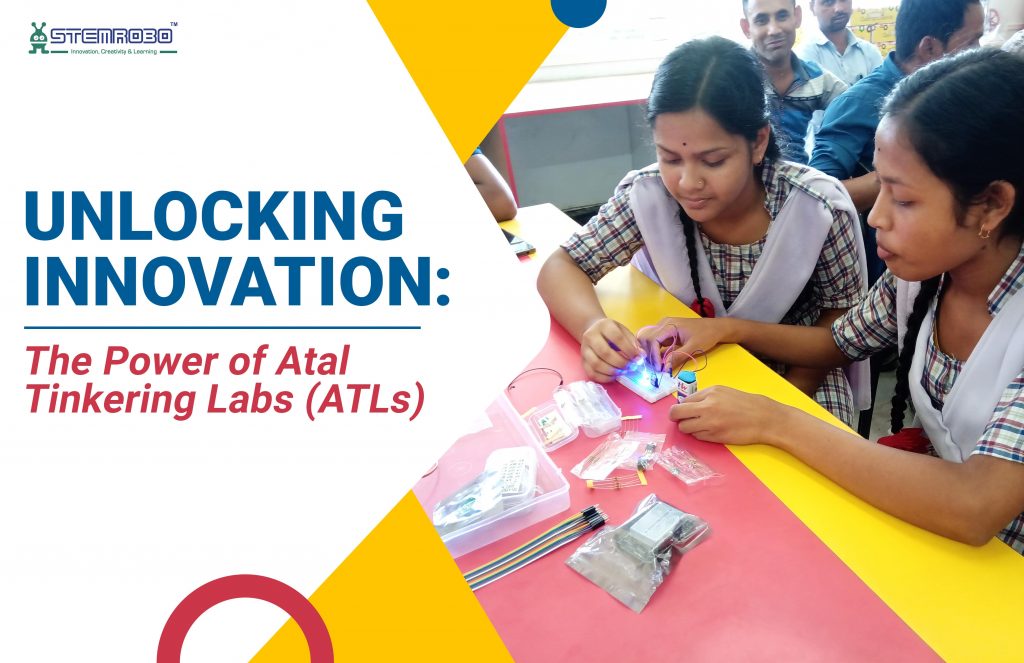
Unlocking Innovation: The Power of Atal Tinkering Labs (ATLs)

In today’s rapidly changing world, fostering innovation and creativity among young minds is essential for driving progress and solving complex challenges. Atal Tinkering Labs (ATLs), an initiative launched under the Atal Innovation Mission (AIM), are playing a transformative role in revolutionizing the educational landscape across India. Let’s explore the journey of ATL Labs and their profound impact on shaping the innovators of tomorrow. Understanding the Atal Tinkering Lab Initiative Atal Tinkering Labs (ATLs) represent a revolutionary approach to education, redefining traditional classroom dynamics and fostering a culture of innovation and creativity among students. These labs, strategically integrated within school premises, serve as dynamic learning environments where students are empowered to explore, experiment, and innovate. Equipped with cutting-edge technology and a diverse array of resources, ATL Lab provide students with unparalleled opportunities to engage in hands-on learning experiences and delve into the realms of STEM (Science, Technology, Engineering, and Mathematics) education. By transcending the confines of theoretical instruction, ATL Lab encourage students to embrace a mindset of curiosity and discovery, igniting their passion for learning and problem-solving. Through a combination of collaborative projects, mentorship opportunities, and access to state-of-the-art equipment, Atal Tinkering Lab empower students to unleash their creative potential and develop the skills necessary to thrive in the rapidly evolving landscape of the 21st century. Empowering Students Through Hands-On Learning Atal Tinkering Labs (ATLs) prioritize experiential learning as a cornerstone of their educational approach. Through hands-on activities, students are not only exposed to theoretical concepts but also given the opportunity to apply them in practical, real-world scenarios. These labs provide a diverse range of activities, including robotics, 3D printing, electronics, and more, allowing students to explore their interests and develop valuable skills. By actively engaging in these projects, students gain practical experience that goes beyond textbooks, fostering a deeper understanding of STEM concepts and principles. Moreover, collaborative projects within Atal Tinkering Lab promote teamwork and communication, essential skills for navigating the complexities of the modern workplace. Through hands-on learning experiences, ATL Lab empower students to become confident problem-solvers and critical thinkers, preparing them for success in today’s competitive world. Driving Innovation and Entrepreneurship ATL Labs serve as incubators for innovation and entrepreneurship, encouraging students to think creatively and develop solutions to real-world problems. By fostering an environment of experimentation and risk-taking, Atal Tinkering Labs instill an entrepreneurial mindset among students from a young age. Through projects and competitions, students learn to identify opportunities, prototype ideas, and pitch their innovations – essential skills for aspiring entrepreneurs. By nurturing a culture of innovation, ATL Labs are not only preparing students for future careers but also empowering them to become changemakers in their communities. Transforming Education Through Technology Technology plays a pivotal role in ATLs, providing students with access to cutting-edge tools and resources to bring their ideas to life. From coding and programming to robotics and artificial intelligence, ATLs expose students to emerging technologies and equip them with the skills needed to thrive in the digital age. By integrating technology into the learning process, ATLs make education more engaging, relevant, and accessible, bridging the gap between theoretical knowledge and real-world application. Collaboration and Knowledge Sharing Atal Tinkering Labs foster a culture of collaboration and knowledge sharing, bringing together students, teachers, industry experts, and mentors to exchange ideas and expertise. Through partnerships with local businesses, universities, and research institutions, ATLs provide students with opportunities to learn from professionals and gain insights into various industries and career paths. By facilitating interactions between different stakeholders, Atal Tinkering Lab create a vibrant ecosystem where innovation flourishes and ideas come to life. Expanding the Reach of ATLs Since its inception, the ATL initiative has grown significantly, with Atal Tinkering Labs being established in schools across the country. However, there is still much work to be done to ensure that every student has access to these transformative learning environments. By expanding the reach of Atal Tinkering Labs to underserved communities and rural areas, we can unlock the potential of millions of young minds and empower them to become agents of change and innovation in their communities. STEMROBO: Empowering ATLs, Empowering Futures At STEMROBO, we are committed to supporting the ATL Lab initiative and empowering schools and educators to create innovative learning environments. Through our comprehensive range of products, resources, and training programs, we aim to inspire the next generation of innovators and problem-solvers. From providing hands-on kits and curriculum support to offering professional development opportunities for teachers, STEMROBO is dedicated to making Atal Tinkering Labs accessible and impactful for students across India. Conclusion: Building a Brighter Future Through ATL Lab In conclusion, Atal Tinkering Labs are not just spaces within schools; they are catalysts for transformation and innovation. By providing students with opportunities to explore, experiment, and innovate, ATLs are shaping the leaders, inventors, and entrepreneurs of tomorrow. As we continue to expand the reach of ATLs and empower more students to unleash their creative potential, we are building a brighter future for India

Unlocking Innovation: The Power of Atal Tinkering Labs (ATLs) Read More »

Atal Tinkering Lab

The Role of Atal Tinkering Labs in Shaping Tomorrow’s Innovators

In today’s rapidly changing world, fostering innovation and creativity among young minds is essential for driving progress and solving complex challenges. Atal Tinkering Labs (ATLs), an initiative launched under the Atal Innovation Mission (AIM), are playing a transformative role in revolutionizing the educational landscape across India. Let’s explore the journey of ATL Lab and their profound impact on shaping the innovators of tomorrow. Understanding the Atal Tinkering Lab Initiative Atal Tinkering Labs (ATLs) represent a revolutionary approach to education, redefining traditional classroom dynamics and fostering a culture of innovation and creativity among students. These labs, strategically integrated within school premises, serve as dynamic learning environments where students are empowered to explore, experiment, and innovate. Equipped with cutting-edge technology and a diverse array of resources, ATL Lab provide students with unparalleled opportunities to engage in hands-on learning experiences and delve into the realms of STEM (Science, Technology, Engineering, and Mathematics) education. By transcending the confines of theoretical instruction, Atal Tinkering lab encourage students to embrace a mindset of curiosity and discovery, igniting their passion for learning and problem-solving. Through a combination of collaborative projects, mentorship opportunities, and access to state-of-the-art equipment, ATL Lab empower students to unleash their creative potential and develop the skills necessary to thrive in the rapidly evolving landscape of the 21st century. Empowering Students Through Hands-On Learning Atal Tinkering Labs (ATLs) prioritize experiential learning as a cornerstone of their educational approach. Through hands-on activities, students are not only exposed to theoretical concepts but also given the opportunity to apply them in practical, real-world scenarios. These labs provide a diverse range of activities, including robotics, 3D printing, electronics, and more, allowing students to explore their interests and develop valuable skills. By actively engaging in these projects, students gain practical experience that goes beyond textbooks, fostering a deeper understanding of STEM concepts and principles. Moreover, collaborative projects within Atal Tinkering lab promote teamwork and communication, essential skills for navigating the complexities of the modern workplace. Through hands-on learning experiences, ATLs empower students to become confident problem-solvers and critical thinkers, preparing them for success in today’s competitive world. Driving Innovation and Entrepreneurship ATLs serve as incubators for innovation and entrepreneurship, encouraging students to think creatively and develop solutions to real-world problems. By fostering an environment of experimentation and risk-taking, Atal Tinkering lab instill an entrepreneurial mindset among students from a young age. Through projects and competitions, students learn to identify opportunities, prototype ideas, and pitch their innovations – essential skills for aspiring entrepreneurs. By nurturing a culture of innovation, ATLs are not only preparing students for future careers but also empowering them to become changemakers in their communities. Transforming Education Through Technology Technology plays a pivotal role in ATLs, providing students with access to cutting-edge tools and resources to bring their ideas to life. From coding and programming to robotics and artificial intelligence, ATL Lab expose students to emerging technologies and equip them with the skills needed to thrive in the digital age. By integrating technology into the learning process, ATLs make education more engaging, relevant, and accessible, bridging the gap between theoretical knowledge and real-world application. Collaboration and Knowledge Sharing ATLs foster a culture of collaboration and knowledge sharing, bringing together students, teachers, industry experts, and mentors to exchange ideas and expertise. Through partnerships with local businesses, universities, and research institutions, ATL Lab provide students with opportunities to learn from professionals and gain insights into various industries and career paths. By facilitating interactions between different stakeholders, ATLs create a vibrant ecosystem where innovation flourishes and ideas come to life. Expanding the Reach of ATL Lab Since its inception, the ATL Lab initiative has grown significantly, with Atal Tinkering lab being established in schools across the country. However, there is still much work to be done to ensure that every student has access to these transformative learning environments. By expanding the reach of ATLs to underserved communities and rural areas, we can unlock the potential of millions of young minds and empower them to become agents of change and innovation in their communities. STEMROBO: Empowering ATL Lab, Empowering Futures At STEMROBO, we are committed to supporting the ATL Lab initiative and empowering schools and educators to create innovative learning environments. Through our comprehensive range of products, resources, and training programs, we aim to inspire the next generation of innovators and problem-solvers. From providing hands-on kits and curriculum support to offering professional development opportunities for teachers, STEMROBO is dedicated to making ATL Lab accessible and impactful for students across India. Conclusion: Building a Brighter Future Through ATL Lab In conclusion, Atal Tinkering Labs are not just spaces within schools; they are catalysts for transformation and innovation. By providing students with opportunities to explore, experiment, and innovate, ATLs are shaping the leaders, inventors, and entrepreneurs of tomorrow. As we continue to expand the reach of Atal Tinkering lab and empower more students to unleash their creative potential, we are building a brighter future for India

The Role of Atal Tinkering Labs in Shaping Tomorrow’s Innovators Read More »

Tinkering lab in School

Tinkering lab in School

The importance of experiential education and hands-on classroom learning has recently increased. Establishing tinkering labs in schools is one of the biggest developments in this area. Students may explore, experiment, and create in tinkering labs, which develops their creativity, problem-solving abilities, and conceptual knowledge. Let us examine the idea of “tinkering labs” in schools, their advantages, and how they are changing the face of education. What is a Tinkering Lab? A tinkering lab, often called an innovation lab or creative space, is a specially designated space at a school where students may work on practical projects, frequently utilizing various instruments, resources, and technology. These labs are designed to encourage students to discover new interests, acquire new abilities, and work creatively with classmates on projects. With resources including 3D printers, laser cutters, electronics kits, and robotics parts, tinkering lab in school enable students to work on projects ranging from simple crafting to complex development. The Advantages of Tinkering Lab in school Encourages Creativity: Students are allowed to freely explore and develop their creative ideas in tinkering labs. Develops Problem-Solving Skills: By working on hands-on projects, students learn to identify problems, develop solutions, and enhance their designs via practical project work. This process helps develop critical thinking and problem-solving skills. Promotes Collaboration: Tinkering labs are frequently places where students may collaborate on projects with one another. This kind of cooperation encourages idea exchange, communication, and teamwork. Encourages Innovation: tinkering lab in school can be used by students as a platform to be creative and come up with innovative ways to solve issues in the real world. By doing this, kids develop a sense of innovation and get ready for the workforce of the future. Improves Education: It has been proven that experiential learning improves conceptual understanding and memory. Learning becomes more interesting and engaging when theoretical information is applied practically, which is what tinkering labs provide. Promotes Creativity: Tinkering labs in school provide a space for K-12 students to explore their creativity and turn their ideas into reality. By working on hands-on projects, students can experiment with different materials and technologies, encouraging them to think outside the box and come up with innovative solutions to problems. Enhances STEM Skills: Tinkering labs focus on subjects such as science, technology, engineering, and mathematics (STEM), helping K-12 students develop skills in these areas. These skills are in high demand in today’s workforce and are crucial for success in many careers. Improves Academic Performance: Research has shown that hands-on, experiential learning can improve academic performance. Students who engage in tinkering activities often demonstrate higher levels of engagement, motivation, and achievement in their studies. Implementing Tinkering Labs in Schools To successfully implement tinkering labs in schools, several key factors need to be considered: Space and Resources: Adequate space and resources, such as tools, materials, and technology, must be provided by schools for the tinkering lab. Curriculum Integration: With projects that match academic requirements and aims, tinkering labs need to be incorporated into the educational curriculum. Teacher Training: To support students’ tinkering and foster experiential learning, teachers must get training. Community Engagement: By forming connections with nearby companies, schools, and maker spaces, tinkering labs may give students access to resources and knowledge. Prepares for Future Careers: Tinkering labs help K-12 students develop skills that are valuable in the workforce, such as creativity, critical thinking, problem-solving, and collaboration. These skills are increasingly important in a rapidly changing and technology-driven world. Schools can benefit from having tinkering labs because they provide students the chance to participate in immersive, hands-on learning. Tinkering lab in school are revolutionizing education by fostering creativity, problem-solving, teamwork, and invention while equipping students for the problems of the future. In addition to improving the educational experience for their students, schools that implement tinkering labs are cultivating an innovative and entrepreneurial culture that will benefit society at large. STEMROBO offers all-inclusive solutions for establishing tinkering labs in schools, giving students access to experiential learning opportunities. Students can explore, create, and work together on a variety of projects in tinkering labs, which are creative environments that promote creativity and problem-solving abilities. Here’s how STEMROBO helps in the creation of tinkering lab in school: Embarking on the journey of setting up an Atal Tinkering Lab (ATL) in your school can be a transformative step towards fostering innovation and creativity among students. STEMROBO, a leading provider of educational solutions, offers comprehensive support to schools in establishing and managing ATLs, ensuring a seamless and enriching experience for both students and educators. STEMROBO’s approach to setting up ATLs is rooted in providing schools with the necessary tools, resources, and guidance to create a dynamic learning environment. From the initial registration process to the final setup of a fully functional lab, STEMROBO’s expertise and experience ensure that ATLs are established in accordance with guidelines and best practices. One of the key components of STEMROBO’s support is the provision of high-quality DIY kits, products, and methodologies tailored for ATLs. These resources are designed to stimulate students’ curiosity and encourage hands-on learning, enabling them to explore STEM concepts in a practical and engaging manner. In addition to providing physical resources, STEMROBO also offers teacher training programs to empower educators with the skills and knowledge needed to effectively utilize ATLs. These programs focus on enhancing teachers’ ability to facilitate meaningful tinkering experiences, guiding students through the process of ideation, prototyping, and iteration. Tinkering labs in school are important for K-12 students because they provide a dynamic and engaging learning environment that promotes creativity, critical thinking, problem-solving, collaboration, and a range of other valuable skills. By engaging in hands-on projects, K-12 students can develop the skills they need to succeed in school, in their careers, and in life.

Tinkering lab in School Read More »

Atal Tinkering Lab

10,000 Atal Tinkering Labs in Indian schools: What they are, and their purpose

Revolutionizing Education: A Deep Dive into Atal Tinkering Labs in Indian Schools In the vast landscape of education, innovation stands as the cornerstone of progress. Recognizing the paramount importance of fostering a culture of innovation among its youth, the Indian government embarked on a groundbreaking initiative in 2016: the establishment of 10,000 Atal Tinkering Labs (ATLs) in schools across the nation. This monumental endeavor, named after the visionary former Prime Minister Atal Bihari Vajpayee, has been instrumental in reshaping the educational landscape of India, empowering students with the tools, resources, and mindset needed to thrive in the 21st century. What are Atal Tinkering Lab? Atal Tinkering Labs are vibrant hubs of creativity and exploration embedded within schools throughout India. These labs serve as catalysts for innovation, providing students with a playground of cutting-edge technology, tools, and resources to ideate, experiment, and create. From 3D printers to robotics kits, from IoT devices to electronics components, ATLs are equipped with a diverse array of resources aimed at igniting the spark of curiosity and ingenuity in young minds. The genesis of each ATL Lab lies in the vision of nurturing a generation of innovators and problem-solvers. These labs are not mere extensions of traditional classrooms; rather, they represent a paradigm shift in education, where hands-on, experiential learning takes center stage. With a focus on STEM (Science, Technology, Engineering, and Mathematics) education, ATLs empower students to delve into the realms of science and technology through immersive, project-based learning experiences. The Purpose of Atal Tinkering Labs Impact and Future Prospects Since their inception, Atal Tinkering Labs have made significant strides in transforming the educational landscape of India. By providing students with the resources, opportunities, and support needed to innovate, ATLs have sparked a wave of creativity and entrepreneurship across the country. From designing low-cost solutions to local challenges to competing in national and international innovation challenges, students from ATLs are leaving their mark on the world stage. Looking ahead, the future prospects of ATLs are brimming with promise. With a growing network of labs and an ever-expanding ecosystem of mentors, partners, and supporters, ATLs are poised to continue nurturing the next generation of innovators and change-makers. As the world grapples with complex challenges ranging from climate change to global health crises, the role of innovation in driving sustainable solutions has never been more critical. ATLs stand as beacons of hope, empowering students to harness the power of innovation for the greater good of society. Atal Tinkering Labs represent a transformative force in Indian education, catalyzing a shift towards a more experiential, hands-on approach to learning. By nurturing creativity, promoting STEM education, cultivating an entrepreneurial mindset, bridging the digital divide, and fostering collaboration, ATLs are laying the foundation for a brighter, more innovative future for India and beyond. As these labs continue to inspire and empower the next generation of innovators, the ripple effects of their impact are bound to resonate far and wide, shaping the course of education and innovation for generations to come.

10,000 Atal Tinkering Labs in Indian schools: What they are, and their purpose Read More »

Atal Tinkering Lab

Empowering Innovation: Exploring the Impact of Atal Tinkering Lab

Innovation is the cornerstone of progress. It’s the force that propels societies forward, driving advancements in technology, science, and every facet of human endeavor. Recognizing the importance of fostering innovation from an early age, the Government of India launched the Atal Tinkering Lab (ATL) initiative as part of the Atal Innovation Mission (AIM). These labs are transforming the educational landscape, empowering students to become innovators, problem solvers, and entrepreneurs. In this blog, we delve into the significance of Atal Tinkering Labs, their impact on students, and their role in shaping the future of India’s innovation ecosystem. What are Atal Tinkering Lab? Atal Tinkering Lab are dedicated innovation workspaces established in schools across India. Launched under the Atal Innovation Mission, these labs aim to foster a culture of innovation and entrepreneurship among students from a young age. Equipped with state-of-the-art equipment like 3D printers, robotics kits, electronics components, and design software, these labs provide students with hands-on experience in STEM (Science, Technology, Engineering, and Mathematics) fields. They serve as creative hubs where students can experiment, tinker, and bring their ideas to life. Objectives of Atal Tinkering Lab The primary objectives of Atal Tinkering Lab are: Impact of Atal Tinkering Lab The impact of Atal Tinkering Lab extends far beyond the confines of school walls. Here are some ways in which these labs are making a difference: Success Stories The impact of Atal Tinkering Lab is best illustrated through the success stories of students who have benefited from these initiatives. From developing low-cost solutions for local problems to winning national and international awards for their innovations, ATL students are making waves in the innovation landscape. Here are a few examples: These success stories not only highlight the ingenuity and creativity of students but also underscore the transformative potential of Atal Tinkering Labs in addressing real-world challenges and driving positive change in society. Atal Tinkering Labs are more than just physical spaces equipped with tools and equipment; they are catalysts for transformation. By nurturing a culture of innovation, entrepreneurship, and problem-solving, these labs are empowering the next generation of Indian innovators and leaders. As the ATL initiative continues to expand its reach and impact, it holds the promise of shaping a future where creativity thrives, challenges are met with ingenuity, and India emerges as a global hub for innovation and technology. Atal Tinkering lab packages  In today’s rapidly evolving world, fostering innovation and creativity among students has become more crucial than ever. Recognizing this imperative, the Government of India launched the Atal Tinkering Lab (ATL) initiative under the Atal Innovation Mission (AIM). These labs serve as creative hubs where students can explore, experiment, and innovate. To further support schools in implementing these labs effectively, the government offers a range of Atal Tinkering Lab packages. In this blog, we’ll delve into the significance of these packages and how they empower schools to nurture a culture of innovation among students. Understanding Atal Tinkering Lab Packages: Atal Tinkering Lab packages are comprehensive kits provided to schools to set up and run innovation labs effectively. These packages include a variety of equipment, tools, training modules, and resources tailored to the needs of students and educators. The aim is to create an ecosystem that encourages hands-on learning, problem-solving, and entrepreneurial thinking. Components of Atal Tinkering Lab Packages: Benefits of Atal Tinkering Lab Packages: Atal Tinkering Lab packages are instrumental in empowering schools to foster a culture of innovation and entrepreneurship among students. By providing access to cutting-edge technology, training, mentorship, and resources, these packages equip students with the skills and mindset needed to thrive in the 21st-century economy. As the ATL initiative continues to expand its reach and impact, it holds the promise of unleashing the full potential of India’s youth and driving positive change in society.

Empowering Innovation: Exploring the Impact of Atal Tinkering Lab Read More »