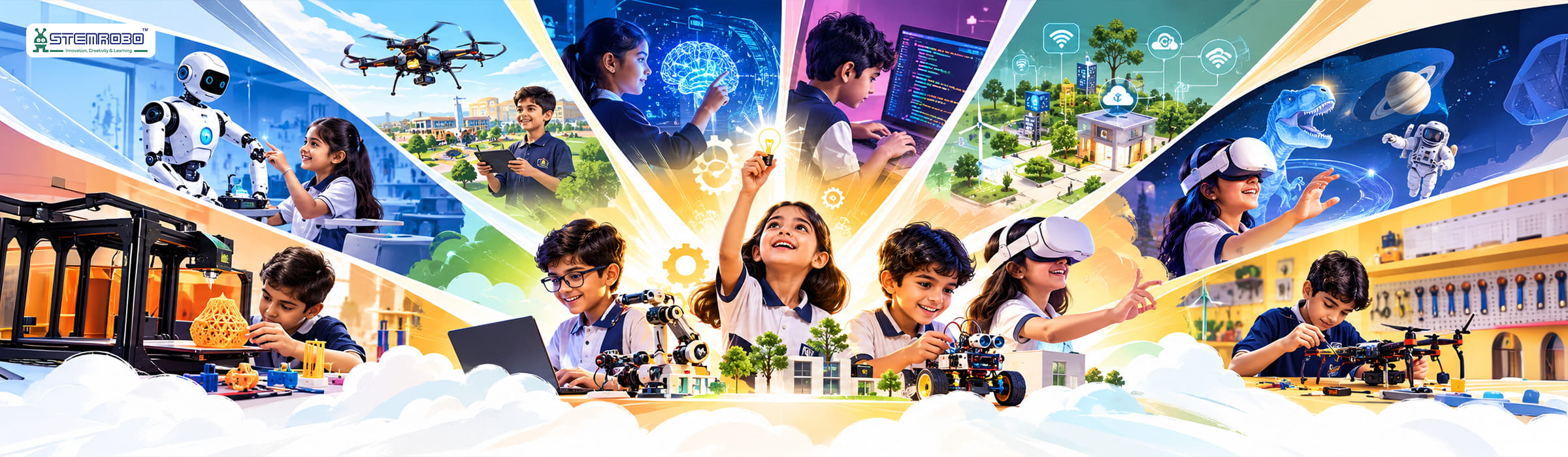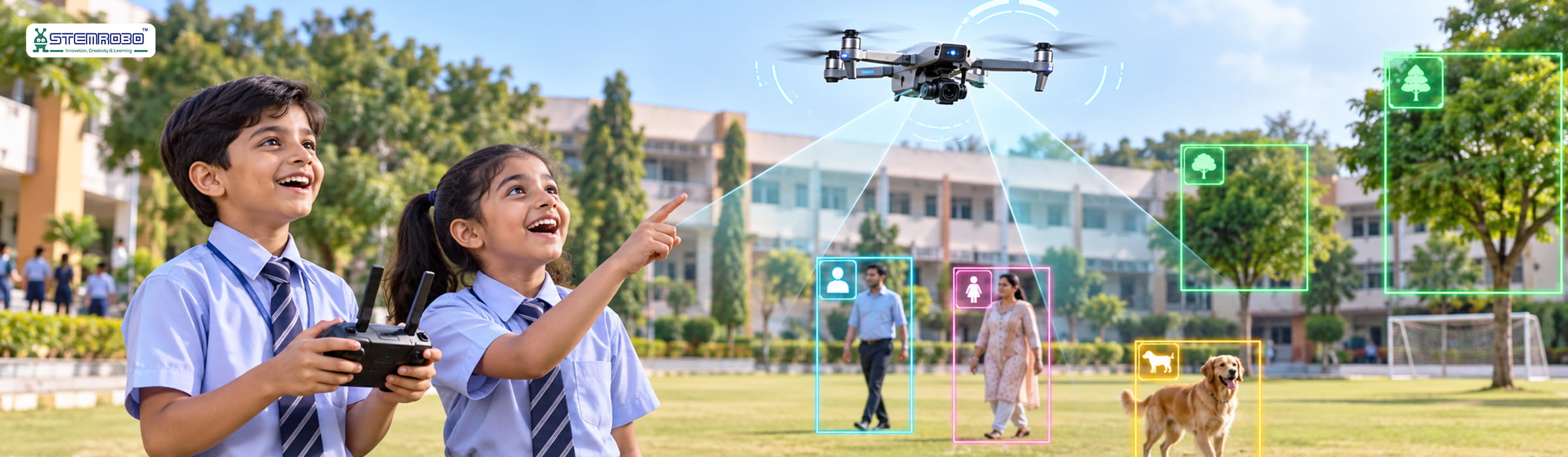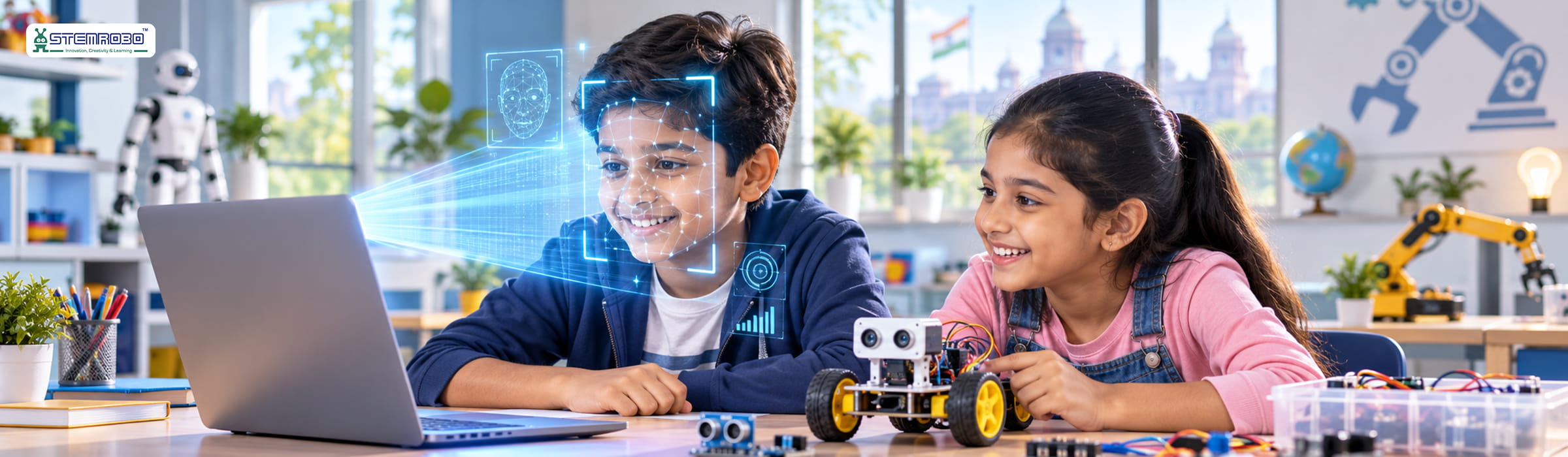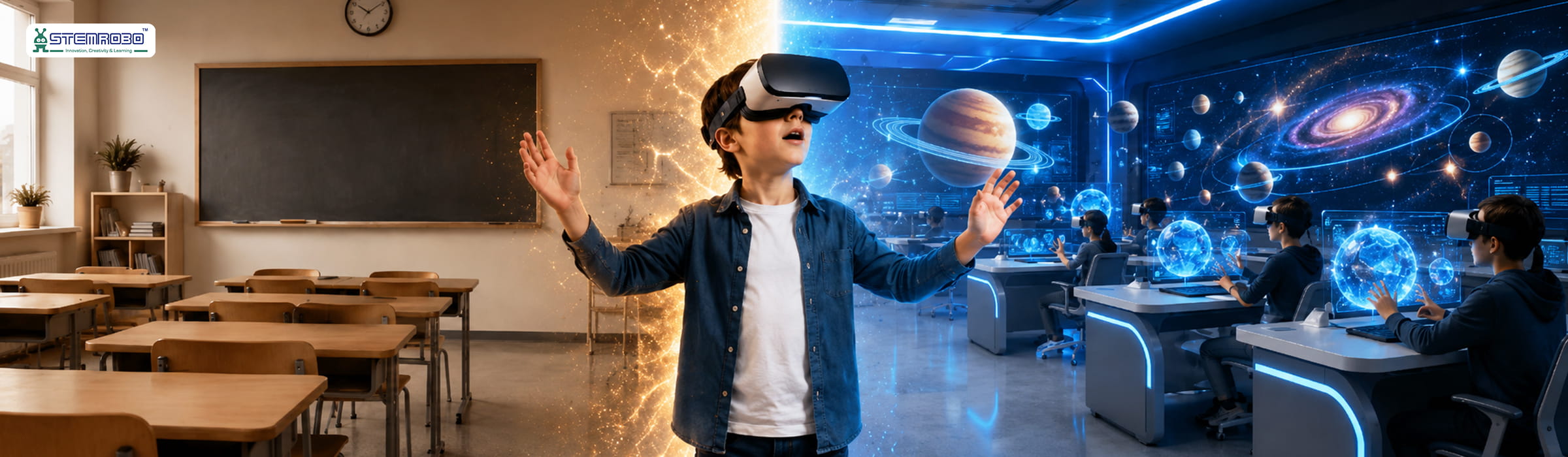
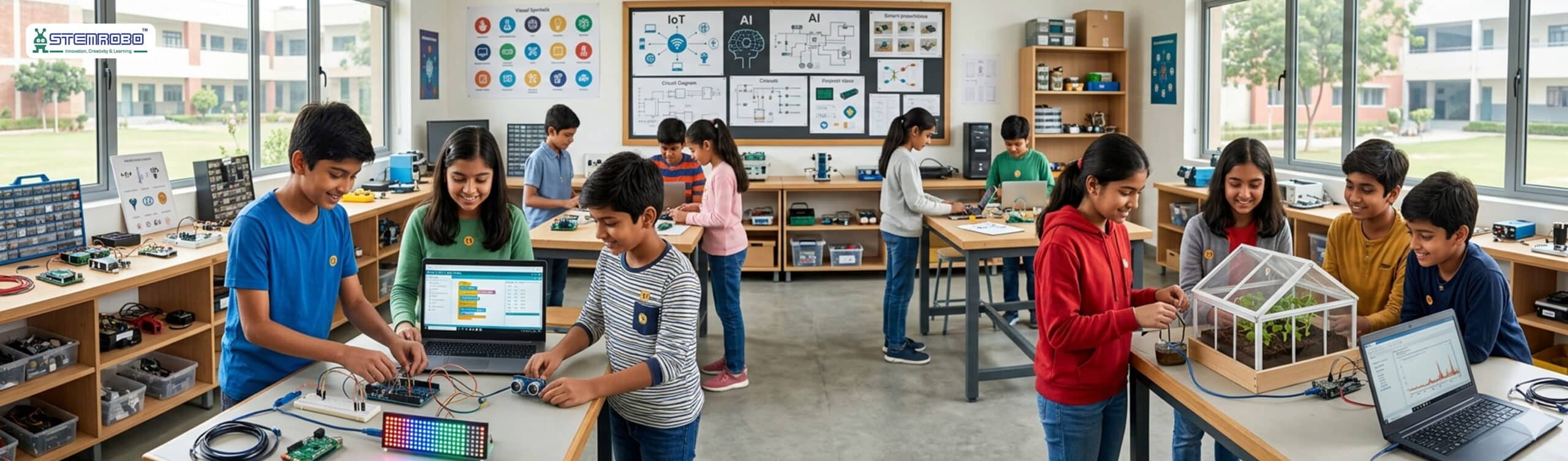
What does a “future-ready school” really look like in practice, today? Is it merely a case of swapping white boards for interactive white boards and physical screens, or can schools be so much more hands-on, intelligent, and interactive than that?
The classroom is changing. Students now have the will to explore and create, to test and build, rather than merely “look and remember.” They seek to understand technology and how it works outside the context of their own imagination and lives. A dedicated AI & IoT lab is becoming, in part, a solution for this learning demand. This shift is further supported by AI classroom applications and Generative AI for education, making learning more interactive and practical.
An AI & IoT lab is no mere physical classroom with a bunch of tech. It is indeed a space, but the work that is done inside the classroom is more so a place to experiment with your thoughts. It is the transition out of imagination and into “doing.”
Understanding the Purpose First
Why might your school need it? This question should be answered even before you set up the lab:
The impact of AI and IoT is becoming increasingly noticeable in all aspects of our lives, whether they be smart homes or health services and automated control systems. By teaching them about the technologies early on, students develop a new form of thinking, especially when supported by the right AI learning platform and AI integration solutions; one which helps them to find solutions to problems, recognize system behavior and learn without fear or hesitation.
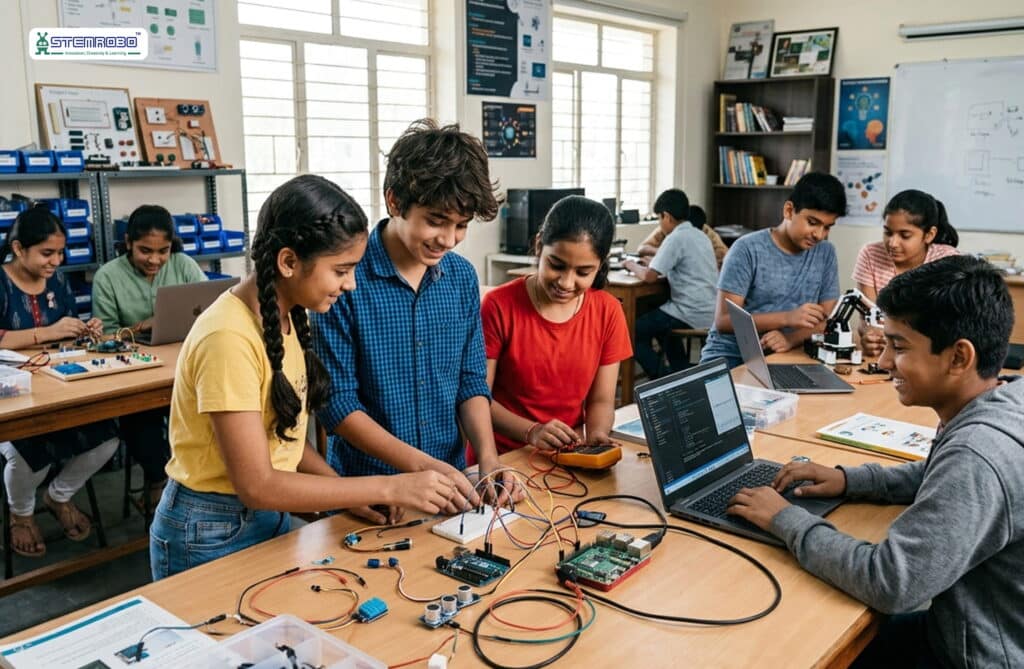
The shift is not one from the role of consumer of information to one which involves the creation of information. This is where the transformation actually begins:
Building the Right Infrastructure
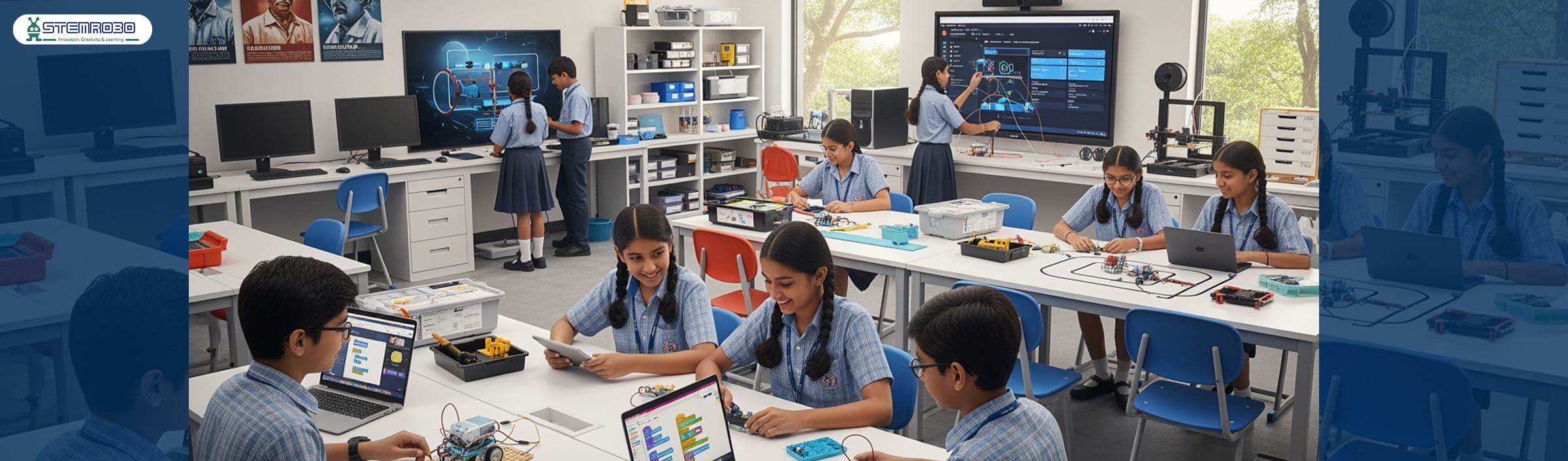
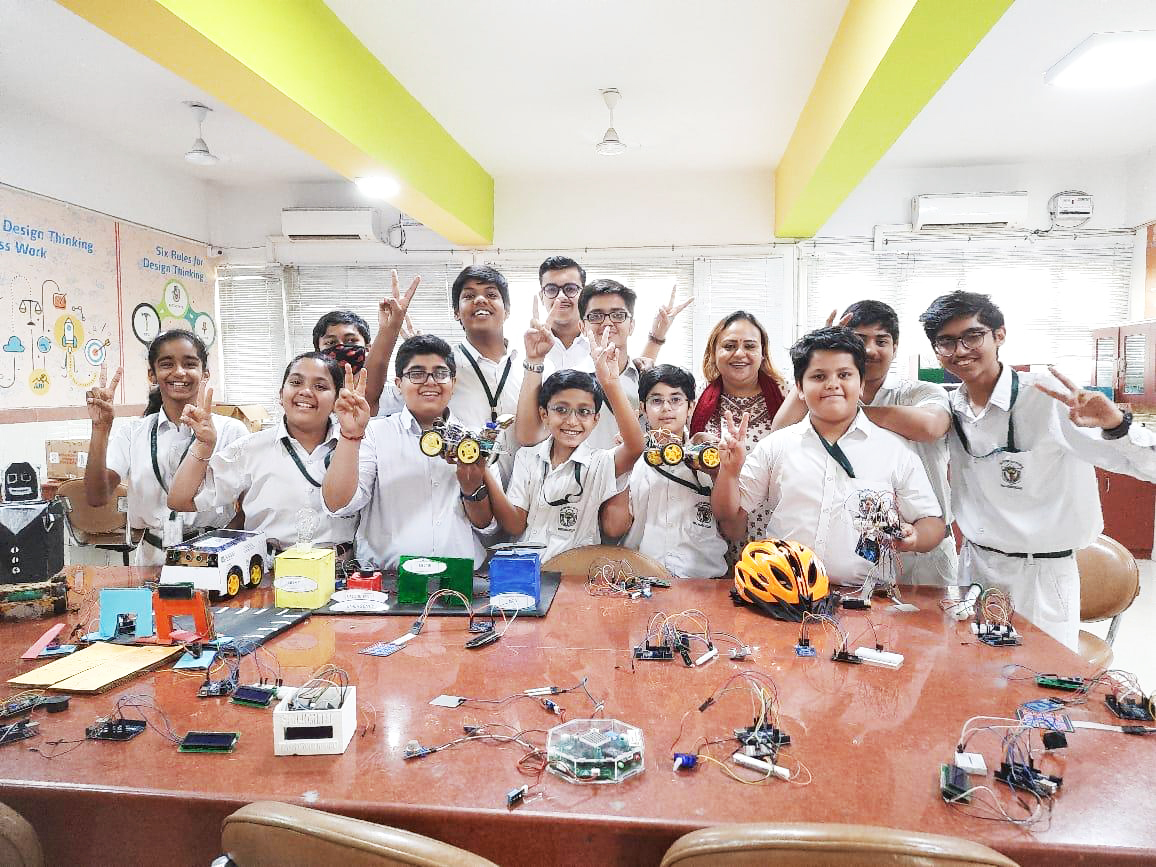
Setting up a space for an AI & IoT lab need not be costly and complex; it’s more about designing an appropriate space that can be used to foster collaboration and experimentation.
It is perhaps better to imagine a “workshop” rather than a classroom. There is a need for movement and free interaction between students and for allowing the testing of their own experiments without inhibitions. Stable internet connection, stable power and convenient storage for devices are a great start.
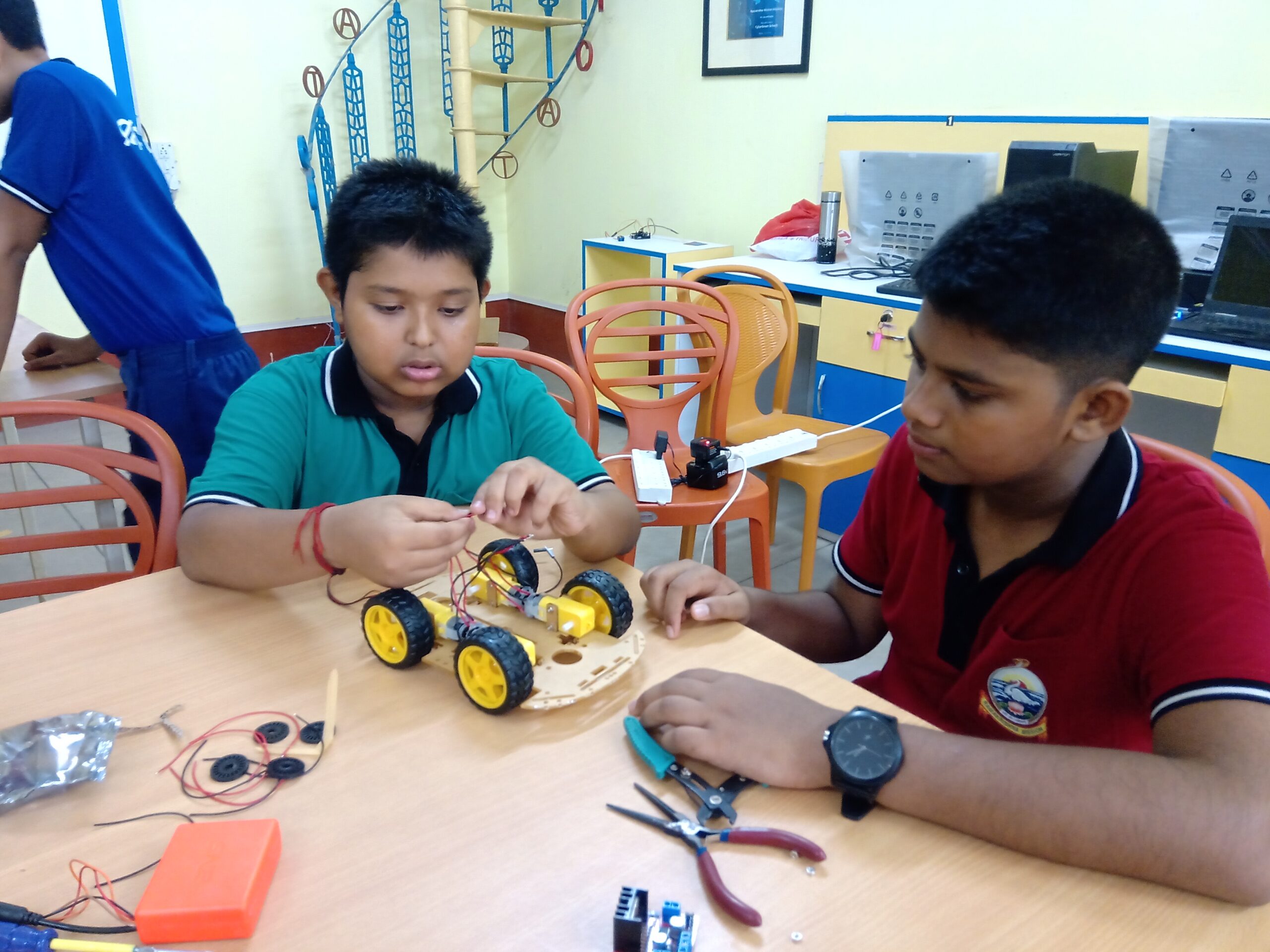
When choosing hardware; simple and less complicated is a more practical idea. Basic microcontrollers, sensors and coded devices are good enough for a starting space. As the lab develops, it could be upgraded.
Choosing the Right Tools and Technology
When there are so many different products on the market, it can seem daunting to know what tools are best for our students to use. What is most important isn’t the sheer number of items we have but how they promote systematic learning.
So how can we know our students aren’t just using technology, but actually grasping it? With the help of AI tools for teachers and AI tutoring software, learning becomes more guided and effective.
We know that learning must not stand still, so it follows that our tools should be able to move with our students. With younger students, they can start with a basic visual creation while older students might begin manipulating automation, real time data, and smart systems. When our tools reflect what our students need to be learning, the process becomes far more enjoyable and less chaotic.
Designing a Future-Ready Curriculum
Having a good lab without the right curriculum is a recipe for fragmented learning. Students will enjoy attending the sessions, but they will walk away with little gain without a plan.
The good curriculum is cumulative. We start with introductory concepts like basic electronics and programming and build to interconnected systems, data acquisition and processing and even applications in artificial intelligence. Learning needs to be constructed in building blocks.
What separates truly effective learning is context. It makes a tremendous difference when students can be brought to see the “why” of building something and not just the “how.” This becomes even more effective with Personalized learning AI and Adaptive assessments AI that adjust to each student’s pace.
Training Teachers for Effective Implementation
There is no use of even the best lab without a teacher full of confidence. The duty of a teacher in an AI & IoT lab is not to take lectures rather to lead the students for exploration. Teachers when trained can become facilitators of creativity. It is not essential to be acquainted with everything; rather, the teacher has to guide the students to the correct path.
Teachers feel comfortable, more interactive classrooms can be conducted and students will interact spontaneously.
Encouraging Hands-On Learning
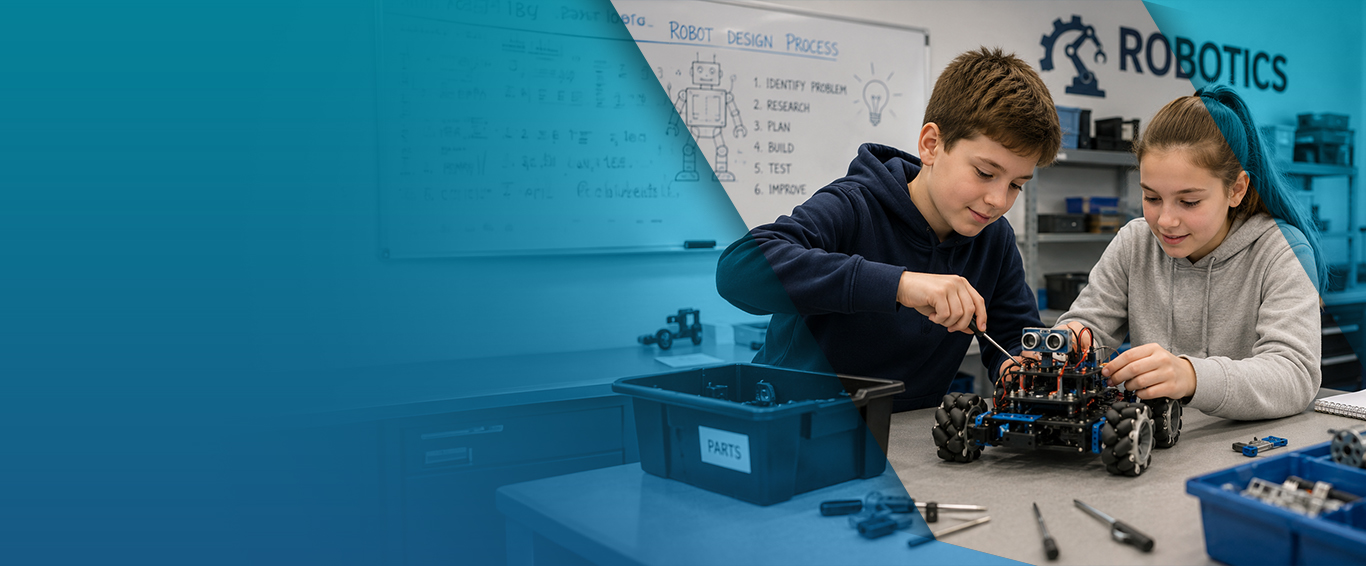
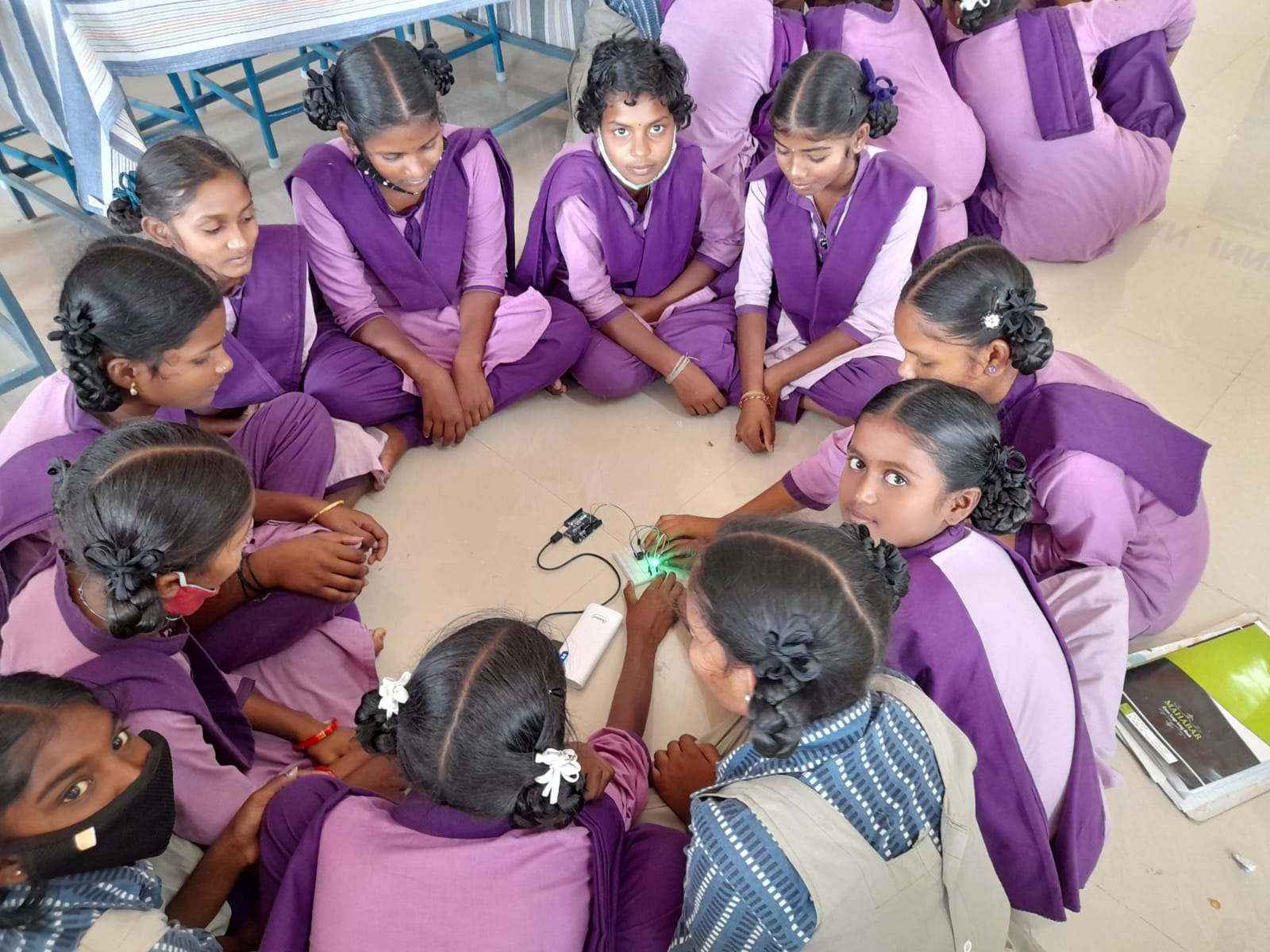
In the end, what an AI & IoT lab must provide is hands-on practice. Students should have the opportunity to try and make their hypothesis, and they should not be afraid of failures.
Consider a student who tries to develop a smart system to turn on a lamp automatically whenever someone is walking in the room. Such activity teaches the students coding, electronics and logical thinking, without their being aware.
Such learning would remain with them for a long time. Tools like AI chatbot for students and Education chatbot software further enhance this interactive learning experience.
Making Learning Engaging and Continuous
A lab should not be just another subject. It should be something that students want to look forward to.
How is it that an AI and IoT lab can really influence the student’s learning journey?
It has to be an experience. Learning to build things, competing in challenges and solving real-world issues gets the students to invest more. They feel a sense of owning their learning process over time. This is where insights from Student learning analytics and AI learning analytics help track and improve progress.
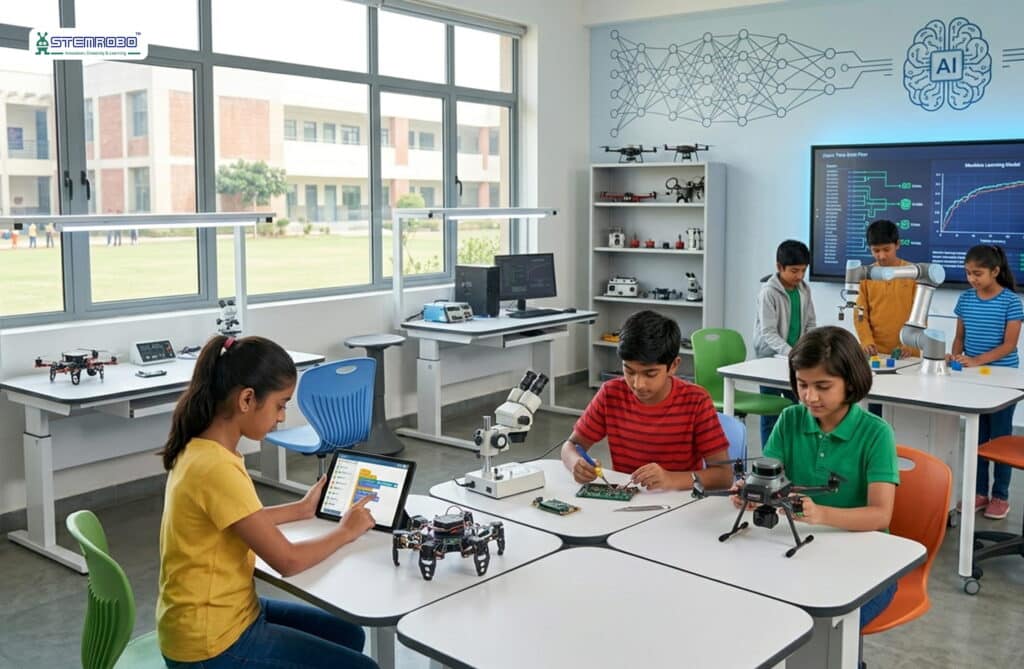
The Benefits of AI & IoT Labs in Schools
Beyond technology skills the influence these labs have is enormous, especially when supported by Education analytics AI, Learning analytics platform, and Education analytics platform. They build upon creative and problem solving skills as well as logical thought processes. They also foster an increased comfort level with technology, better preparing students for their future endeavors.
The influence upon schools can also be seen at several levels. It is both beneficial for the school in terms of academic atmosphere as well as school image/preparedness for the future.
Taking a Smart Implementation Approach
A variety of factors, including infrastructure, curriculum, teacher training, are to be included while setting up an AI and IoT lab. A complex coordination process of handling each of them separately may prove to be very cumbersome.
Thus, schools often adopt a simpler and efficient route by joining hands with expert solution providers such as STEMROBO Technologies who ensure the successful implementation, training of teachers and academic support for the AI & IoT lab.
Final Thoughts
An AI and IoT lab is not an evolution, but a revolution in education.
It is a move from learning about technologies to living in a world where technology is all around us. Students develop, design and engineer their future.
In this new paradigm, schools who move quickly aren’t being contemporary-they’re being visionary. Future-ready schools are also exploring tools like Custom GPT for schools and Custom GPT for students to make learning more intelligent and accessible.
Because in the end, education isn’t about learning technology anymore…. It’s about using it to shape the future.