21st Century Skills for Teachers: The Real Starting Point of Classroom Transformation
When educators discuss 21st century skills, they almost always centre the conversation on students — their creativity, their digital fluency, their collaborative instincts. But the most important variable in any classroom transformation is the teacher.
An educator who still delivers rote-recall lessons cannot build critical thinkers. That makes developing 21st century skills for teachers non-negotiable — it is the prerequisite for everything else.
What Modern Educators Need to Do Differently
Modern educators must operate with a fundamentally different skill set from what schools expected a generation ago. They must move from being the sole authority in the room to becoming a facilitator of inquiry — someone who guides students toward discovery rather than simply delivering answers.
Teachers must also feel confident integrating technology into their daily practice. Not as a substitute for teaching, but as an amplifier of it. Beyond that, they need to design learning experiences that build the six competencies that research consistently identifies as most critical for students entering a technology-driven economy:
- Critical thinking & problem-solving
- Creativity & innovation
- Communication & collaboration
- Digital literacy
- Emotional intelligence
- Adaptability & lifelong learning
Teachers cannot deliver these skills secondhand. They must embody them first.
A teacher who works through a hands-on robotics project — debugging code, iterating on a design, presenting findings to peers — understands experiential learning from the inside. That lived understanding separates a lesson that checks a curricular box from one that genuinely shifts how a student thinks.
Why Ongoing Professional Development Changes Everything
A one-day training workshop changes nothing. For 21st century teaching practices to take hold, educators need regular exposure to new pedagogical tools, subject-specific upskilling in areas like AI and data science, and a sustained community of practice with fellow educators navigating the same transition.
Schools that invest in teacher development as seriously as they invest in student programmes build something rare — a culture where 21st century skills grow at every level simultaneously, because teachers model what learning looks like.
STEMROBO’s Teacher Training Programme equips educators with hands-on STEM and AI pedagogy, structured certification, and ongoing support. [Explore Teacher Programme →]
How 21st Century STEM Education Differs from Traditional Learning
Education no longer stays confined to classrooms and textbooks. The shift toward 21st century STEM education pushes students to experiment, apply knowledge, and solve real-world problems — building far deeper understanding than passive reading ever produces.
Three differences stand out most clearly:
- Traditional education asks students to memorise. STEM education asks them to implement. Students who learn by doing retain concepts more deeply and apply them more confidently.
- Traditional education covers many subjects broadly. STEM dives deeper into science, technology, engineering, and mathematics — and connects those domains to each other.
- Traditional education follows a fixed structure. STEM encourages unique, creative thinking — pushing students to solve problems in ways no one has tried before.
The Structural Gap Between Traditional and STEM Education
The difference between conventional schooling and modern STEM-integrated education goes beyond teaching style. Every dimension of how schools organise, assess, and deliver learning looks different.
| Dimension | Traditional Education | 21st Century STEM Education |
|---|---|---|
| Teaching approach | Teacher leads; students receive | Teacher facilitates; students discover |
| Curriculum structure | Subjects taught in isolation | Cross-disciplinary, integrated projects |
| Student role | Passive listener | Active maker and problem-solver |
| Assessment | Standardised written exams | Project portfolios and practical demos |
| Technology use | Occasional and supplementary | Central — coding, robotics, AI are core |
| Failure & iteration | Penalised; wrong answers lower grades | Expected and valued in the design process |
| Collaboration | Individual work dominates | Team-based projects mirror workplaces |
| Teacher’s role | Sole knowledge authority | Facilitator, coach, and co-learner |
What Hands-On STEM Learning Actually Looks Like in the Classroom
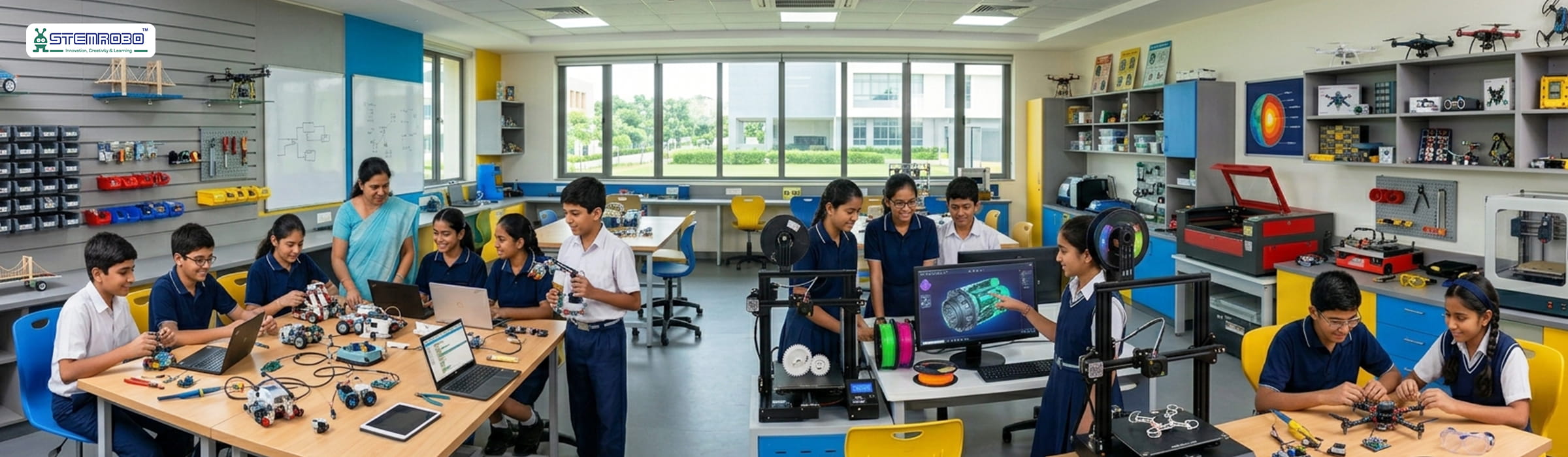
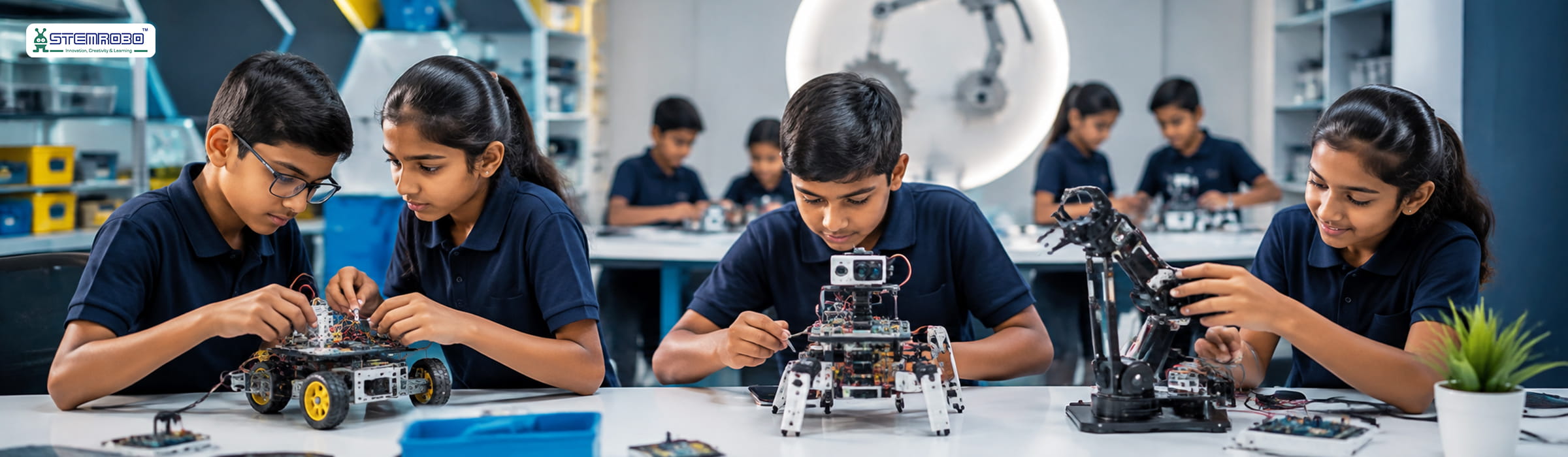
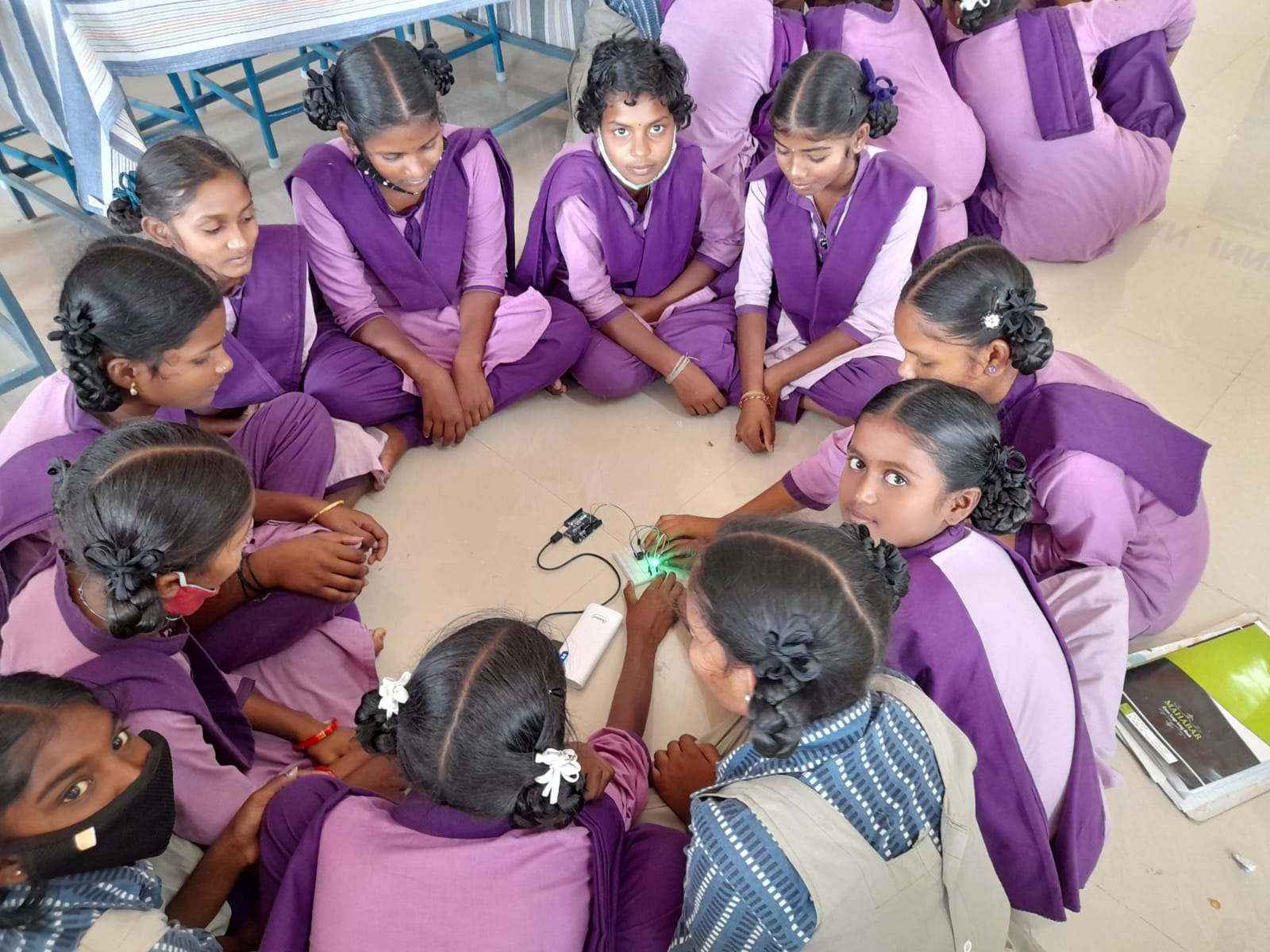
The phrase hands-on STEM learning gets used broadly, but its meaning is specific. Students learn by doing, making, testing, and iterating — not by reading about what others have done.
The outcomes speak for themselves. A 2023 meta-analysis of K–12 STEM programmes found that project-based, hands-on approaches improve conceptual retention by up to 40% compared to traditional instruction.
Here are four activities that deliver hands-on STEM learning at its most effective:
1. Bridge-Building Under Constraint
Students design and build a bridge using only spaghetti and marshmallows, with the goal of supporting maximum weight. In a single session, they practise structural engineering, load distribution, iterative testing, and team decision-making — often without realising how much they’re absorbing.
2. Programmable Robotics Challenge
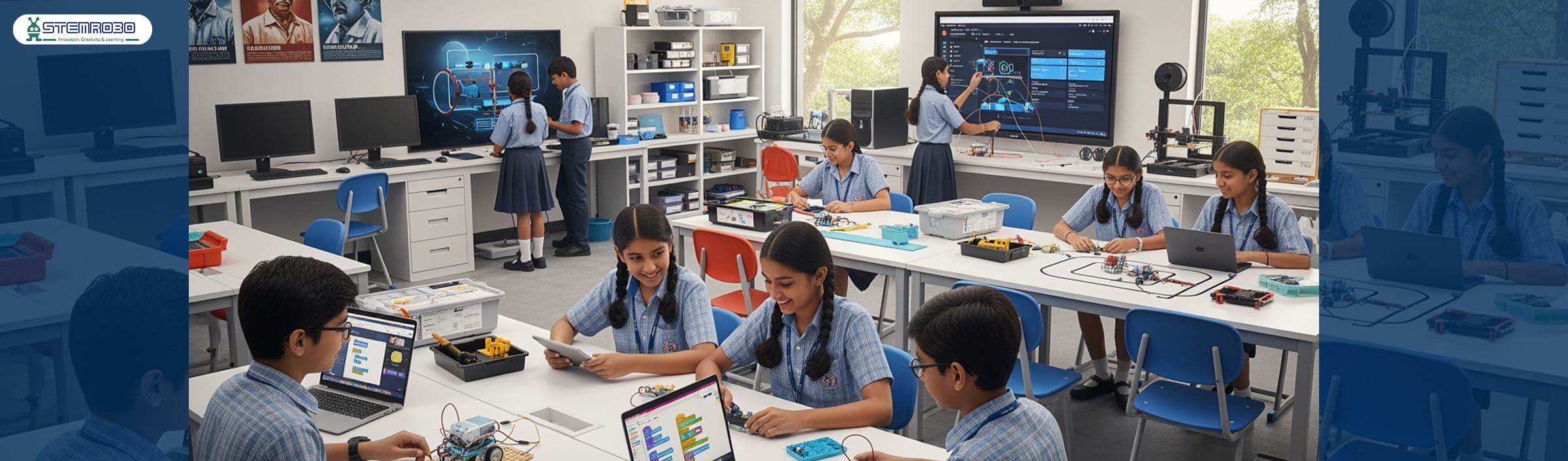
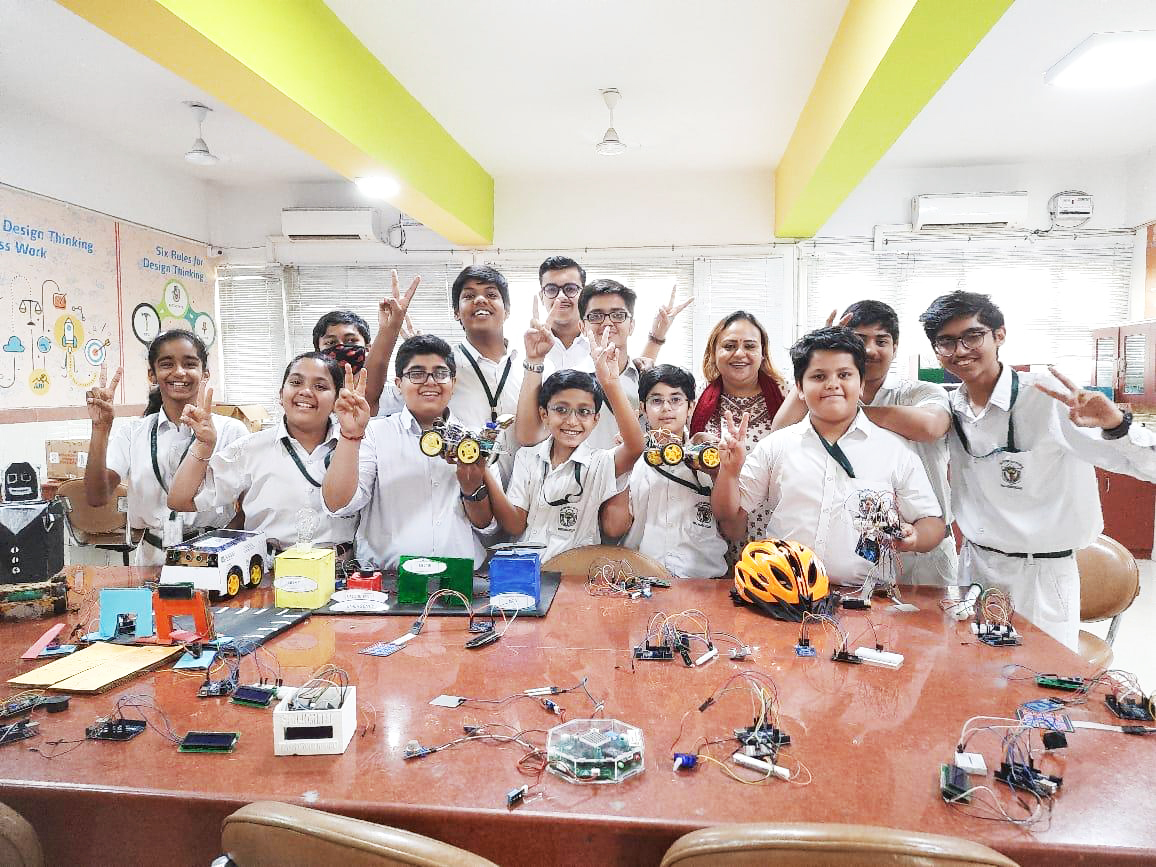
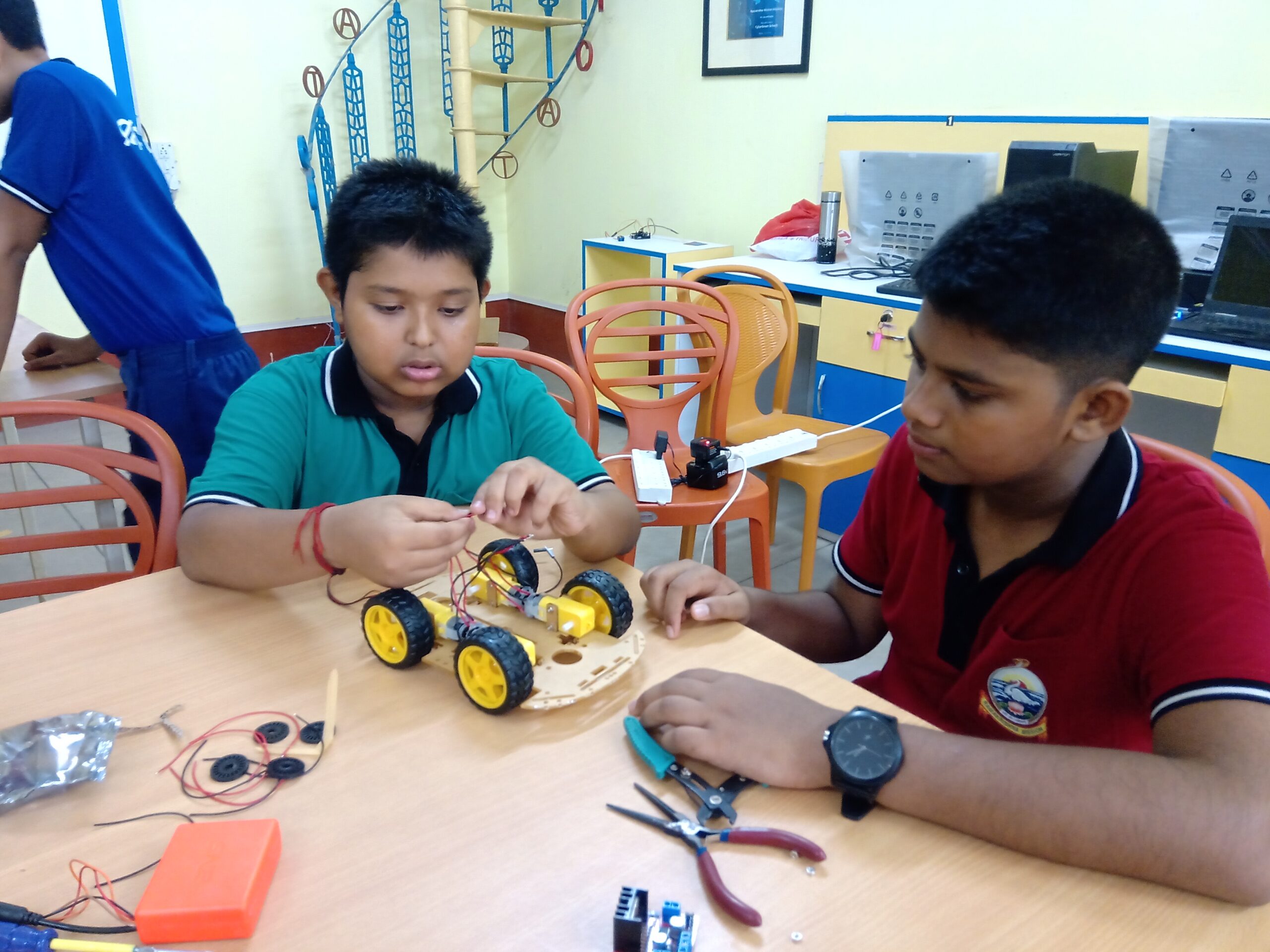
Using a STEMROBO kit, students programme a robot to navigate a maze, pick up objects, or sort items by colour. They apply logic, write coding sequences, and interpret sensor data — connecting computer science theory to physical outcomes they can see and adjust in real time.
3. Water Quality Testing Project
Students collect water samples from different sources, test pH and turbidity using lab equipment, record their findings, and present results to the class. This single project covers chemistry, data collection, environmental science, and scientific communication — exactly the multi-domain thinking that modern STEM education develops.
4. AI Image Recognition Mini-Project
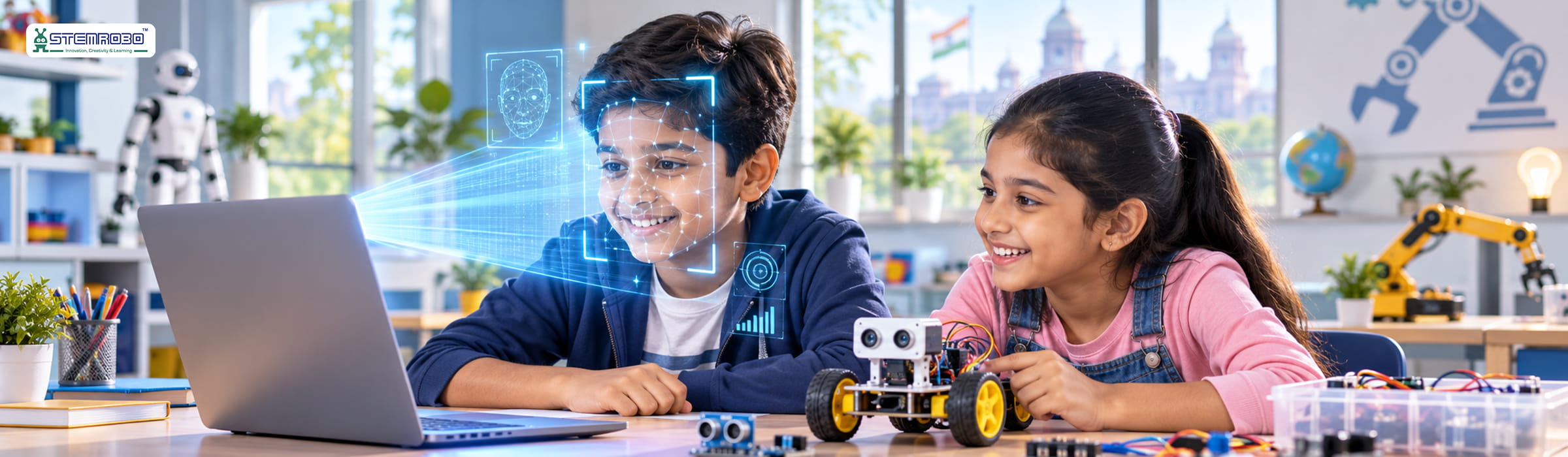
Students train a simple machine learning model using a visual dataset — teaching a classifier to identify leaf types or geometric shapes. They label data, run the model, assess accuracy, and refine their training set. This hands-on process builds AI literacy through direct experimentation, not abstract explanation.
All four activities come as structured, curriculum-mapped modules inside STEMROBO’s STEM Lab programme. [Explore STEM Lab →]
How STEM Education Closes the Learning Gaps Traditional Methods Create
Traditional education often teaches subjects in isolation. Students memorise facts but struggle to see how those facts connect to real problems. When doubts go unanswered, learning gaps form. As difficulty grows, those gaps become fear of the subject.
STEM education tackles this directly. Students learn concepts by applying them, not by reading about them. They build understanding through doing. And because the process treats failure as a normal part of design thinking — not something to penalise — students take intellectual risks more willingly.
Think of it this way: when someone hears a story, they might forget it. When they watch the same story unfold in a film, it stays with them. STEM education applies that same principle to learning — when knowledge becomes an experience, it sticks.
How STEMROBO Delivers This Across K–12 Schools
STEMROBO provides an all-inclusive STEM education solution for K–12 schools, built around a grade-wise progressive curriculum that adapts to each level. The programme integrates STEM concepts with academic subjects, creating interdisciplinary learning that keeps students engaged from the earliest grades onward.
The approach does not ask schools to choose between academic rigour and experiential learning. Both live inside the same framework — one that equips future generations with the adaptability, creativity, and critical thinking skills that a fast-changing world demands.