Robotics

Step-by-Step Guide to Setting Up a STEM and Robotics Lab in Schools

Step-by-Step Guide to Setting Up a STEM and Robotics Lab in Schools

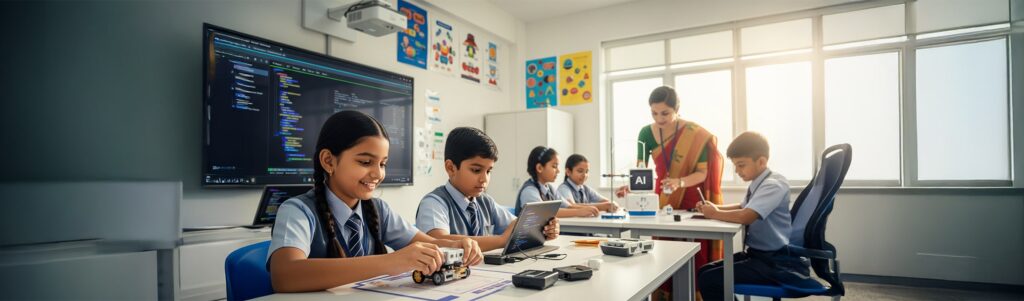
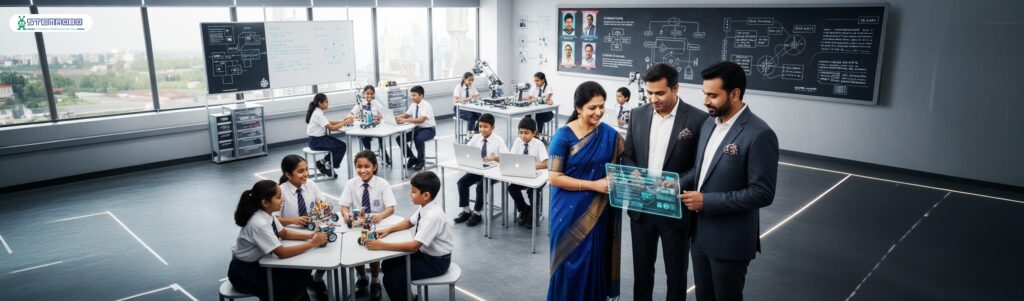
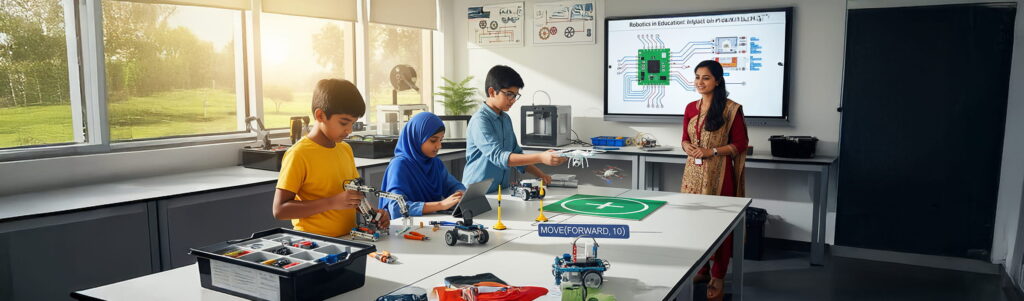
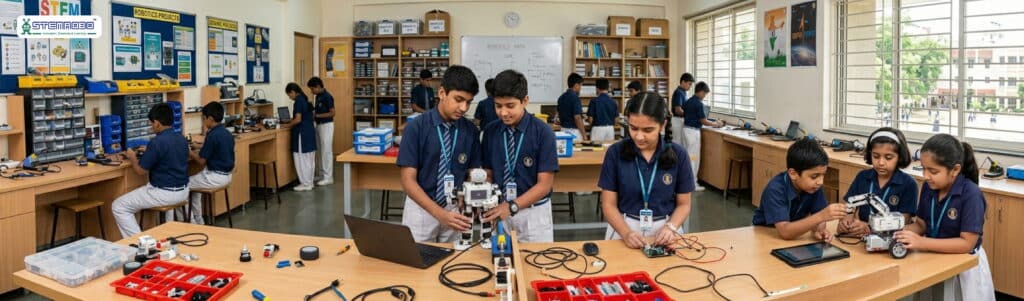
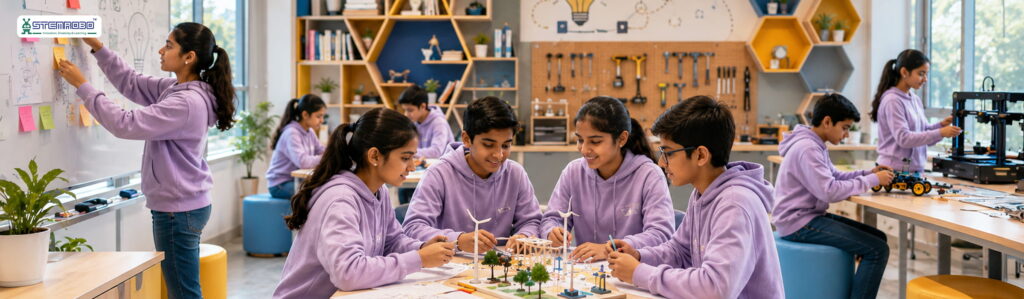
Today’s classrooms are not the lecture halls of the past. They are environments where students investigate, discover, question and construct. Today’s students don’t want to just read about science. They want to do science. They want to discover and design. They want to take the risks, make mistakes, analyze the results and learn from them. Let’s face it – this is the heart of the learning process. It is this change in perception and approach that is elevating the importance of the STEM and Robotics Labs within schools. For schools this is not simply a new space. It is a redesign and complete restructuring of the school itself. A thoughtfully designed STEM Lab converts the existing “listening rooms” into powerful learning centers where ideas are tested and the quest for knowledge flourishes. So, if you are thinking of introducing a STEM and Robotics Lab into your school, this guide will provide you with a roadmap for setting one up-clear and straightforward. Understand the “Why” Before the “How” Before you order any kits or begin establishing a laboratory, pause and consider; why does your school require this? The role of a STEM lab isn’t only about robots and coding. It’s about equipping students with the knowledge and skills that they will need for the future which will be integrated with technology, automation and problem-solving at an everyday level. As a result, early implementation of STEM learning in schools brings: A marked difference will begin to appear in your students, and not only in the marks they receive, but also in the attitude they approach learning with. Once the aim is stated it will become much more of a consequence of what you do next. Step 1: Define Your Vision Clearly Success starts with being clear. It is far too easy to have fantastic tools sitting in storage. Begin by thinking of these few, simple questions: The key for elementary classes (1-5) is invention, logic, and very simple physical models. As you move toward middle school students, you might introduce: Being clear on your goals allows you to purchase the right tools, not just more tools. Step 2: Create a Space That Inspires Learning You do not require a costly and complicated set-up to build up a STEM lab. Consider this more as a workshop than a classroom. The optimal space should feature: As students enter the lab they should experience an atmosphere where thinking and discussing ideas and testing solutions is encouraged and explored. Step 3: Choose the Right Tools and Kits Here is the point where most schools get stuck- and quite understandably so! There is a multitude of options out there in the market, and a majority of them are not meant for structured learning. Instead of picking a random kit or two, schools should look for solutions that are: This is where a truly integrated provider such as STEMROBO Technologies comes to the fore. Instead of piecing together kits, content and manuals individually, the schools can have access to an entire ecosystem that functions in tandem to one another! This ultimately saves time, and avoids confusion, while guaranteeing learning instead of simple play. Step 4: Don’t Skip the Curriculum One of the big mistakes that schools make is setting up a Robotics lab, but without the learning process being properly planned. The consequence is that students love the class, but the learning is fragmented. An effective curriculum should have include: A real-world example is a student building a working model which they then figure out how to construct – the experience has made the knowledge more memorable than reading about it in a textbook. Step 5: Train and Support Your Teachers However good your lab may be, it will be unsuccessful if your teachers are unhappy working in it. The upside? You don’t need to be a robotics expert to be a successful robotics teacher. They just need: Many schools partner with organizations like STEMROBO Technologies because they provide structured teacher training along with the lab setup. And once teachers are at ease, fantastic things occur – engagement increases, sessions are more fluid and the learning is more effective. Step 6: Focus on Learning by Doing This is without a doubt the most important component of any STEM lab. Have your students… Even if it is nothing more than an ill-constructed assembly of items when they first attempt to assemble it, that triumphant moment of seeing their contraption move and zip across the table after it is “fixed” cannot be topped for student confidence. That is what a hands-on lab can and must create. This is the magic of hands-on experiences. Step 7: Keep It Fun, Engaging, and Ongoing Your STEM lab should never feel like another class you have to go to. Instead, it should be something students look forward to! The interest and excitement can be sustained by: When the learning is enjoyable, students naturally increase participation and desire to learn more. Step 8: Take a Smart, Integrated Approach Establishing a STEM lab, however, is far from a simple task due to the numerous components involved. But managing each of these separately can prove to be tedious. Hence an integrated solution has become the preference for most schools these days. Schools that team up with partners such as STEMROBO Technologies receive: This way, it becomes both feasible and manageable to manage the lab for a long period of time. Step 9: Evolve with Time Once your STEM lab is up and running, the journey doesn’t stop—it actually begins. To keep it effective: Technology is ever evolving – your lab should be too. Final Thoughts Establishing a STEM and Robotics lab isn’t solely about providing the infrastructure, it’s about establishing the culture of curiosity, creativity, and innovation. It’s about shifting from: Schools that embrace this change are not just improving education—they are preparing students for the real world. Because in the end, the goal isn’t just to teach students how to use technology… It’s to empower them

Step-by-Step Guide to Setting Up a STEM and Robotics Lab in Schools Read More »
AI & Robotics Lab for Schools

STEM & Robotics Lab Setup Company in Guwahati: A Complete Guide for Schools

STEM Labs, Robotics Labs, AI Labs, ATL Labs, and CBSE Composite Skill Labs in Guwahati – what each one means, and how schools set one up Guwahati’s school scene has been changing quickly. Parents who once judged a school purely on board results are now asking a different question during admissions season: does the school have a STEM lab, a robotics setup, or an AI program? For a city that’s become the education hub of the Northeast, this shift matters – and it’s why so many school heads and trustees end up searching for STEM lab setup company in Guwahati or “robotics lab setup company in Guwahati” without quite knowing where to start. Part of the confusion is that these aren’t all the same thing. STEM Labs, Robotics Labs, AI Labs, ATL Labs, and CBSE Composite Skill Labs each mean something specific, and vendors don’t always explain the difference clearly. This guide walks through what each one actually is, what Guwahati schools specifically need to know, and how the setup process typically works. Why Guwahati Schools Are Investing in STEM and Robotics Infrastructure Guwahati has grown into the primary educational centre for Assam and much of the Northeast, pulling in students from across the region. That growth has brought real competition among CBSE, ICSE, and Assam board schools, and lab infrastructure has become one of the clearest ways schools differentiate themselves during admissions. There’s policy weight behind this too. NEP 2020 calls for coding, computational thinking, and hands-on STEM exposure to be part of mainstream schooling, not an optional extracurricular. CBSE has made Composite Skill Labs mandatory for affiliation nationwide, and that requirement applies just as much to CBSE schools in Guwahati as it does anywhere else in the country. On top of that, NITI Aayog’s Atal Innovation Mission has been actively funding ATL Labs across Assam, giving schools in the region direct access to government grants for innovation infrastructure. Put together, this means Guwahati schools aren’t just competing locally anymore – they’re expected to meet the same infrastructure standards as schools in Delhi, Mumbai, or Bengaluru, often with fewer local vendors to choose from. The Five Lab Types Guwahati Schools Are Asking About Before approaching a vendor, it’s worth understanding exactly what each lab type covers, since the terms get used loosely in the market: Lab Type What It Covers STEM & Robotics Lab A hands-on lab combining science, technology, engineering, and math learning with robotics kits, letting students build and program physical robots and automation projects. AI & Robotics Lab A dedicated space for artificial intelligence and machine learning education, built around a grade-wise curriculum, coding platforms, and AI hardware modules. ATL Lab An Atal Tinkering Lab funded by NITI Aayog’s Atal Innovation Mission, giving students aged 6–18 access to 3D printers, robotics kits, IoT tools, and electronics for innovation projects. CBSE Composite Skill Lab A CBSE-mandated lab combining AI, robotics, electronics, coding, 3D printing, and AR/VR Lab- required for CBSE affiliation, not optional. Many Guwahati schools end up needing more than one – for example, a CBSE school might set up a Composite Skill Lab to satisfy affiliation requirements while also applying separately for an ATL Lab grant to expand innovation infrastructure beyond the mandatory minimum. STEM and Robotics Lab for Schools in Guwahati: What It Involves A STEM & Robotics Lab is usually the starting point for schools building lab infrastructure for the first time. It’s built around project-based learning, where students don’t just study science and math concepts in theory – they apply them directly by building and programming robots. For many Guwahati schools, this is the lab type that delivers the most visible, immediate value – students building something they can see work is a powerful hook for both learning and admissions marketing. AI & Robotics Lab for Schools in Guwahati An AI & Robotics Lab goes a step further than a standard STEM setup, focused specifically on artificial intelligence and machine learning alongside robotics. It’s built around three components: hardware, a grade-wise curriculum, and a coding and AI learning platform. STEMROBO’s AI & Robotics Lab for Schools solution is built around exactly this structure, with a NASSCOM-certified AI Connect platform and curriculum aligned to NEP 2020 – the same solution being deployed for schools in Guwahati as elsewhere in the country. Atal Tinkering Lab (ATL) Setup in Guwahati An ATL Lab is different from the labs above in one major way – it’s government-funded, not school-funded. Set up under NITI Aayog’s Atal Innovation Mission, ATL Labs give schools access to a capital and operational grant specifically to build an innovation space for students aged 6 to 18. STEMROBO is registered on the GeM portal as a verified Atal Tinkering Lab equipment seller, giving it standing authorization to set up ATL Labs for schools anywhere in India, including Guwahati and the wider Northeast region. The company supports schools from grant application guidance through to full installation and ongoing mentoring. CBSE Composite Skill Lab Setup in Guwahati Unlike STEM, AI, or even ATL Labs, a CBSE Composite Skill Lab isn’t optional for CBSE-affiliated schools. It’s a mandatory requirement under current CBSE affiliation guidelines, and this applies to Guwahati’s CBSE schools exactly as it does everywhere else in the country. Given Guwahati’s expanding CBSE school network, this is likely the most time-sensitive lab type for many schools in the city right now, simply because of the compliance deadline attached to it. Choosing a STEM, Robotics, or Skill Lab Setup Company in Guwahati Guwahati has fewer specialized EdTech vendors locally compared to metro cities, which makes vendor selection even more important – a mistake here is harder to correct quickly. A few questions worth asking any company you’re evaluating: A vendor who can speak clearly to all five points, with documentation to back it up, is usually the more reliable long-term partner – even when working across the distance from Guwahati to a vendor’s core operations elsewhere in India. Why STEMROBO Works for Schools in Guwahati

STEM & Robotics Lab Setup Company in Guwahati: A Complete Guide for Schools Read More »

STEM Innovation and AI Learning Solutions: Preparing Students for the Future

Best AI & Robotics Lab Setup Company in Mumbai for Schools

How Mumbai schools are building future-ready AI, Robotics & STEM labs  the right way Walk into almost any school admin office in Mumbai today and you’ll hear some version of the same conversation: parents are asking about AI education, the CBSE circular on Skill Labs is sitting on someone’s desk, and the management wants “something in robotics” before the next admission season. It’s not hype anymore  it’s an expectation. But turning that expectation into an actual, working lab that teachers can run and students genuinely enjoy is a different challenge altogether. If you’re a school principal, trustee, or academic coordinator in Mumbai researching AI and robotics lab setup, this guide walks you through what a good lab actually needs, the mistakes schools commonly make when they rush the decision, and why STEMROBO has become one of the names Mumbai schools keep coming back to for this exact job. Why Mumbai Schools Can’t Afford to Wait on AI & Robotics Labs Mumbai’s school ecosystem is one of the most competitive in the country. Between CBSE, ICSE, IB, and state board institutions all vying for the same pool of tech-aware parents, a school’s lab infrastructure has quietly become a differentiator during admissions season  right alongside sports facilities and board results. There’s also a policy push behind this. NEP 2020 explicitly calls for coding, computational thinking, and AI exposure from the middle school years onward, and CBSE has made Skill Subjects, including AI, part of the mainstream curriculum rather than an optional add-on. Schools that treat this as a checkbox exercise  a one-time kit purchase with no curriculum or teacher support  usually end up with an underused lab and a lot of unanswered parent questions a year later. The schools that get real value are the ones that plan the lab as an ecosystem: infrastructure, curriculum, teacher training, and assessment, all working together, rather than a room full of expensive boxes. What a Genuine AI & Robotics Lab Setup Should Include Before you shortlist a vendor, it helps to know what you’re actually buying. A credible AI and Robotics lab for schools in Mumbai should cover four layers, not just hardware: Miss any one of these four, and the “lab” becomes a showroom. This is really the core test to apply when you’re comparing AI and robotics lab setup companies in Mumbai  ask what happens after the equipment is installed, not just what’s in the box. STEMROBO: A Trusted AI & Robotics Lab Partner for Mumbai Schools STEMROBO Technologies has built its reputation on exactly this end-to-end approach. Rather than positioning itself as an equipment supplier, STEMROBO works with schools as a long-term education technology partner  designing the lab, delivering the curriculum, training teachers, and supporting the school as the program scales year on year. A few things stand out about how STEMROBO’s AI & Robotics Lab for Schools is structured: STEMROBO’s work also carries credibility markers that matter to school managements: ISO 9001:2015, ISO 14001:2015, and ISO 20000-1:2018 certifications, alignment with Atal Tinkering Lab (ATL) and NITI Aayog / AIM guidelines, and a track record with CBSE-mandated Composite Skill Labs. For a Mumbai school evaluating vendors, this combination of curriculum depth, platform ownership, and compliance alignment is genuinely hard to match. Why This Matters for Decision-Makers •  Skill development that top employers rank highly  analytical thinking, complex problem-solving, and technology design  is built directly into the AI & Robotics curriculum, not treated as a side activity. •  A single vendor handling infrastructure, curriculum, software, and training removes the coordination headache of managing multiple contractors. •  NEP 2020 and CBSE alignment means the lab supports compliance goals, not just extracurricular enrichment. How the AI & Robotics Lab Setup Process Works Most Mumbai schools go through a fairly predictable journey when setting up a lab with an experienced partner like STEMROBO: This sequencing matters. Schools that skip the consultation step and jump straight to buying kits often discover, months later, that the equipment doesn’t match their curriculum needs or grade structure  an expensive mistake to fix retroactively. Questions to Ask Before Choosing a Lab Setup Company in Mumbai Since this is a multi-year commitment for a school, it’s worth being deliberate about vendor selection. A few practical questions to raise in any vendor meeting: A vendor that can answer all of these clearly, with documentation to back it up, is usually the safer long-term choice  even if the upfront quote isn’t the lowest on the table. The Real Payoff: What Students Gain It’s easy to get caught up in vendor comparisons and lose sight of the actual goal. A well-run AI & Robotics Lab gives students measurable gains: sharper logical thinking, earlier and more comfortable exposure to coding and AI concepts, stronger teamwork through project-based learning, and a direct line between what they study in class and how technology actually works in the real world. Those are exactly the competencies that global reports on future skills  from analytical thinking to technology design  consistently flag as priorities for the next decade of the workforce. Schools that invest in this now aren’t just adding a facility; they’re preparing students for a job market that looks very different from the one their parents entered. Mumbai has no shortage of vendors willing to sell a school a box of robotics kits. What’s harder to find is a partner who treats the lab as an educational program  one with curriculum depth, teacher support, platform ownership, and a compliance record that stands up to scrutiny. STEMROBO’s AI & Robotics Lab for Schools has been built around that exact philosophy, which is why it continues to be a preferred choice for schools across Mumbai and the wider NCR and pan-India network. If your school is at the stage of exploring an AI & Robotics Lab  whether from scratch or as an upgrade to an existing computer lab  it’s worth having a proper consultation before finalising a vendor. The right setup, done once and done well, saves years of rework. Frequently

Best AI & Robotics Lab Setup Company in Mumbai for Schools Read More »

AI and Robotics education 0

AI and Robotics Education for K-12 Schools: A Complete Guide for School Leaders

Education has evolved beyond traditional methods which required students to study from textbooks and take tests while memorizing information. Students today will enter a world which operates through Artificial Intelligence and automation technologies and robotic systems and smart technologies that exist in all areas of existence. The use of AI technology extends from the child who holds a smartphone to the traffic control systems that operate in metropolitan areas. School leaders must determine whether their educational programs teach students for the upcoming future or for a past educational system that no longer operates. AI and robotics education is not about adding another subject to an already busy timetable. It is about changing the complete process through which students develop their thinking skills and solve their problems while creating their solutions. The organization aims to provide people with all necessary technical resources so they can develop their full potential. Why AI and Robotics Matter More Than Ever Artificial Intelligence and robotics exist in modern society as operating technologies that people use today. The healthcare sector and agricultural field and financial industry and manufacturing sector and transportation system all increasingly rely on automated systems which use data analytics for their operations. The students who learn to operate technology will find work but those who know its inner workings will become industry leaders. The introduction of AI and robotics to K-12 education helps students acquire logical thinking and creative skills together with teamwork abilities and structured problem-solving techniques. They learn how to break down complex challenges into smaller parts and design solutions step by step. The students develop self-assurance to test new ideas while creating fresh solutions. The purpose of education should focus on developing thinkers who can succeed beyond standardized tests. Moving Beyond Passive Learning The traditional classroom system conducts its educational work through theoretical teaching. Students read machine content and algorithm content and system content but they never gain actual experience. The introduction of AI and robotics education enables students to participate in active learning through their exploration activities. Students in the classroom environment create a robot through assembly work and program work to develop its obstacle navigation capabilities. Students learn machine learning through direct experience because they build and train a basic AI system to identify different visual elements. The experience of seeing their programming work properly enables students to create enduring learning knowledge. This method of learning enables students to keep information better while showing enhanced interest and commitment to their studies. The process of learning from failure has been transformed. In robotics labs, mistakes are not setbacks, they are stepping stones toward better solutions. The mindset development prepares students to meet actual life situations. What Should a Strong AI and Robotics Program Include? An effective K-12 educational program requires AI and robotics content to be organized into structured educational paths that suit various student development stages. Primary students should start their learning journey through basic logical sequencing and simple coding activities and beginner robotics kits which provide educational content through interactive learning. At the middle school level, students progress to block programming which uses sensors and enables them to work on small automation projects. The secondary education level provides students with AI development opportunities through Python programming and machine learning and IoT system development and real-world problem-solving activities. The key to achieving goals requires establishing a constant process. Yearly skills development requires students to learn new knowledge and abilities through ongoing training which builds on their existing competencies. A well-designed curriculum enables students to advance from basic logic knowledge to intelligent system design capabilities. Infrastructure serves as a vital component which supports operations. A proper robotics and AI lab requires more than equipment because it needs to provide space which supports testing new ideas. Innovation opportunities arise from using robotics kits together with microcontrollers and sensors and AI platforms and IoT modules. The outcome depends on factors beyond hardware installation according to the statement. The system requires both structured lesson plans and curriculum mapping and ongoing support throughout the process. The Changing Role of Teachers People raise questions about AI and robotics systems replacing teachers in educational settings. The answer is simple no. Technology does not replace educators because it works to empower them. AI-enabled classrooms require teachers to transform into facilitators who will assist students in learning through innovative activities. The teacher conducts classroom discussions while demonstrating to students how their schoolwork connects to real-world situations and through his questions he helps students develop deeper understanding. Teacher training functions as the essential element which enables this transformation. Educators in this program need to develop confidence for three specific areas which include using AI tools and overseeing project-based learning and guiding students through their research activities. Teachers discover technology advantages after receiving complete training because they learn to use technology instead of facing technical problems. Integration Across Subjects AI and robotics should not remain isolated subjects. Their actual strength exists in their combination with other subjects. Students in mathematics classes learn to use algorithms together with data analysis methods. Students in science classes study automation systems and environmental monitoring systems. Social studies classes explore ethical considerations of artificial intelligence and smart city technology. Even in language classes, students can document projects and present innovations effectively. This interdisciplinary method shows students that technology functions as a solution to different problems instead of being only an ability to operate technical equipment. Planning for Sustainable Implementation School leaders need to conduct detailed planning work which should take place before they start implementing their upcoming AI and robotics program. Schools need to assess their complete infrastructure requirements while determining their budget needs and curriculum development requirements and safety regulations and technical support needs. Schools should establish AI integration as their long-term strategic approach instead of treating it as a short-term enhancement. Many institutions select complete implementation partners who provide educational program development and laboratory installation and instructor development and ongoing support throughout one unified system. The platforms Stemrobo Technologies Smartly provide

AI and Robotics Education for K-12 Schools: A Complete Guide for School Leaders Read More »

How Robotics Labs Are Transforming K-12 Education in India

How Robotics Labs Are Transforming K-12 Education in India

India’s education landscape is evolving at a rapid pace , fueled by technology, innovation, and the growing need to equip students for a future unlike anything before. Today, students have unlimited access to resources that help them enhance their knowledge, sharpen their skills, and develop deeper curiosity. Now Students have unlimited access where they can enhance their Skills, knowledge power , sharpen their skills and develop a deeper curiosity for learning. The classrooms are evolving beyond textbooks and tests into spaces filled with creativity, technology, and active learning. AI & Robotics Labs are leading this shift, giving students the huge opportunity to explore, build, and help them to develop problem solving skills . As a core part of STEM education, these labs are helping schools create learning experiences that focus on curiosity, and real-world application so that students can learn hands- on activities. Robotics lab are no longer limited to elite institutions or higher education. Today, they are becoming a one stop end to end solution for new age schools, especially in the K-12 segment, helping students to , nurturing creativity, experimentation and developing 21st century skills for students and teachers. These labs act as creative learning hubs encouraging curiosity, and learning becomes practical , interactive and engaging. With a young population and rapidly fast evolving tech ecosystem, it needs an education system that focuses on learning and innovation skills, design thinking solutions, and hand on application. Students go beyond exam- centric learning and develop skills that are aligned with future career opportunities in technology-driven fields . Robotics labs play a key role in bridging the gap between theory and real-world application. They introduce students to coding and AI platforms for schools, robotics, automation, and even emerging areas like AI & IoT lab setup, AR / VR lab setup, and Atal Tinkering Labs in schools making learning more relevant and future-ready. What we are seeing today is not just a change in classrooms, but a move toward future-ready learners and a more innovative, adaptable education system in India. What Is a Robotics Lab in K-12 Education? Robotics labs turn ordinary classrooms into lively STEM hubs where ideas are not just only discussed, they come to meet action and provide them results as well . By combining all hardware, software, and structured curriculum, these labs give freedom to all the students to explore robotics, coding, AI, and problem-solving through practical projects rather than just reading the theories and making the experiments from the textbooks. Whether it’s a basic robotics lab for junior level students or an advanced AI and Robotics Lab in senior classes, these systems support all the age groups from the K-12. Students don’t just learn how these robots work, they acquire knowledge about design, build, test, iterate, and innovate, gaining practical skills along the way. This adds excitement in the students while keeping them focused and engaged. Alignment with NEP 2020 and Competency-Based Learning The National Education Policy (NEP) 2020 plays the vital importance of experimental study , multidisciplinary education, critical thinking, and skill development from a junior age group of students. Robotics labs strongly support these goals by promoting learning by doing rather than memorizing the theoretical concepts from the books. Through project-based activities, students build strong skills such as Problem analysis, Original thinking, Cooperative learning, and Practical reasoning. Robotics encourages learning practical knowledge , where students are judged on how well they grasp and apply concepts, not only on exam results. In addition to robotics labs, programs like Atal Tinkering Labs (ATL) and AR/VR-based learning environments play an important role in building up NEP 2020 implementation in schools. ATL encourages New-age solutions, Empathy-driven design, and Activity-based problem-solving by enabling students to experiment and build real-world solutions. AR and VR technologies enhance robotics learning by allowing all the students to understand the complex concepts , explore virtual worlds , and interactive learning . Together, robotics labs, ATL initiatives, and AR/VR tools contribute to learning environments that support NEP 2020 goals. Why Robotics Labs Are Crucial for 21st Century Learning Traditional education focuses on rote learning while Robotics labs shift the focus to doing and experimenting. Through STEM education for students, learners develop skills such as critical thinking, creativity, teamwork, collaboration, and logical reasoning. These labs encourage stem based learning, helping students understand concepts of math, science, coding and technology in a practical way. They‘re preparing the students for 21st century skills which help them to navigate their careers paths. Robotics Labs and Coding: Building Digital Fluency Early Coding has become an essential skill for students of all ages. Robotics labs bring together robotics and AI learning, offering age-appropriate coding platforms for all the students. Students can start with learning block-based coding in early grades and gradually progress to Python, AI models, and automation in higher grades. This structured approach ensures continuity across K-12 and supports an end-to-end solution for K-12 school learning providing a comprehensive solution for school STEM education. AI, IoT, and Future Technologies in School Labs Modern robotics labs are much more than a place for building robots. Schools now adopt AI & IoT lab for schools, AI lab setup in schools, and IoT lab for kids to expose students to smart technologies and prepare them for the emerging tech careers. Here they learn how the sensors detect information , how data is gathered, and how smart systems make decisions. By working straight with these technologies students find confidence in themselves which inspires them to pursue careers in Robotics, AI emerging tech industries in India. Industry-Relevant Skills and Career Readiness Robotics labs give students hands- on experiences that are directly useful in today’s industries as it’ll help them for their future career aspects too like entering in the engineering, data science, automation, and entrepreneurship field . By participating in the project-based activities, students learn how technology is actually applied in real-world application of technology . This experience builds both self assurance and capabilities to expand their career awareness for higher education and professional growth.

How Robotics Labs Are Transforming K-12 Education in India Read More »

Greener Classrooms, Smarter Futures

Greener Classrooms, Smarter Futures: Teaching Sustainability with STEMROBO Kits

The population is increasing with every second and world is rapidly evolving to keep up with the demands and desires of the generation and to adapt itself for the problems and quests of the future world. To adapt is a huge bandwidth: that is, in this context we will, deep dive into the adaptation of the kids of today to make themselves technologically smart and practice ways that contribute to sustainability and conservation. These 17 interconnected goals are designed to address the world’s biggest challenges like poverty, climate change, health, education, innovation, and inequality. But the question is: How do we contribute to these goals in a classroom setting? The answer lies in a dynamic blend of STEAM education, technology integration, and hands-on learning platforms and this is where this edtech company leads the way. Connecting Classrooms with Global Challenges Our kits and solutions aren’t just about circuits and sensors. They are embedded with values and themes aligned with the United Nations’ SDGs, ensuring every student project directly links to a real-world problem and its potential solution. Take, for example: •        A Soil Moisture Sensor project developed using the Tinker Orbits Kit teaches students how implementing smart agriculture practices help conserve water. A goal that aligns with SDG 2: Zero Hunger and SDG 12: Responsible Consumption. •        A Smart Morning Alarm using LDRs helps in minimal use of energy that aligns with SDG 7: Affordable and Clean Energy. •        An Air Quality Monitor helps to analyse pollution and find ways to control it. It aligns with SDG 3: Good Health & Well-being. These are not just science projects. They are preparation for life in the 21st century. Empowering Schools with Innovation Labs To make such experiential learning accessible, 21st century skills in education supports schools in establishing and running Atal Tinkering Labs (ATLs)—a government of India initiative under NITI Aayog’s Atal Innovation Mission. We are among the leading ATL lab setup companies in India, offering end-to-end solutions: •        ATL registration assistance •        Complete ATL kit and equipment setup •        PM SHRI TLM Kits, Math Kits, and IoT lab equipment •        Teacher training & capacity building programs Whether you’re a PM SHRI school, a private institution, or a government school, our goal is the same: enable every student to explore robotics, AI, IoT, and design thinking. So, if you’re wondering how to set up an Atal Tinkering Lab in school, your wait is over here! Internet of Things lab for Schools’s expert consultants ensure smooth onboarding and setup within the framework of ATL compliance. 21st Century Skills for 21st Century Learners Today’s classrooms must evolve to foster: •        Critical thinking •        Problem-solving •        Creativity •        Digital fluency •        Collaboration These are the 21st century skills every student and teacher must master. Professional development courses for teachers empowers this transformation by offering: •        AI Curriculum for Schools •        Robotics and Coding Curriculum •        AR/VR Curriculum and content platforms •        Internet of Things Lab for Schools •        Professional Development Courses for Teachers •        Certified Educator Programs Our STEM-based learning for students bridges the gap between traditional academics and future-ready capabilities. Learning by Doing: The Power of Project-Based Learning (PBL) All Teachers training program kits—including Tinker Orbits, Tinker N Design, Bitli, Mechatron kit, Smart Circuit Kit, STEAM Paper Circuit etc are developed to follow a project-based learning (PBL) model. This means students: •        Build working models from scratch. •        Understand the “why” behind every wire, code, and component. •        Collaborate in teams, simulating real-world engineering tasks. •        Present and document their innovations—building communication and documentation skills. Here’s a snapshot of popular PBL activities: •        Water Level Indicator for urban homes •        Gas Detection System for kitchen safety •        Smart Fan System to conserve energy •        Voice-controlled Home Automation using MicroBit or Arduino Robotics Each activity links back to real-life use cases and encourages STEM education for students with purpose. Teacher Training: From Instructors to Innovators A teacher is one of the most important role models in a child’s like. A teacher is someone who helps others learn. They are the students’ guides who explain and support them in understanding new concepts, developing skills, and growing as individuals. No transformation is complete without empowering educators. That’s why we offer a complete Teachers Training Program, both online and offline. Our training focuses on: •        Understanding core STEM concepts •        Handling coding and AI platforms with confidence •        Setting up and managing robotics labs in schools •        Integrating 21st century skills in education We also help teachers create digital AR/VR classrooms and leverage tools to drive student engagement. If you’re looking for professional development courses for teachers, Stem innovation and learning Centre provides tailored programs that turn traditional instructors into facilitators of innovation.  For Every School, Every Vision, whether your school aims to: •        Launch a Robotics Lab for students •        Introduce an AI and IoT learning solution •        Embed a Coding and Robotics Curriculum •        Implement Virtual Reality in Education Curriculum for Schools offers full-stack support as a STEM Education Solution Provider Company trusted by hundreds of schools across India. We are proud partners to many PM SHRI schools, CBSE institutions, and international curriculum-based schools, helping them embrace new-age learning with clarity, quality, and confidence. The Impact So Far: Smarter Students, Sustainable Solutions Our approach is already making waves across India: •        Students are building eco-friendly solutions to local challenges. •        Schools have transformed into STEM innovation and learning centres. •        Teachers are confident in using technology for instruction and assessment. •        Communities are recognizing the value of STEM-based education in everyday life.  The Future of Learning is Green, Smart, and Hands-On Now, sustainability is more than just a necessity because it is now a way to conserve for the future. Finding innovation solutions to this goal helps in serving it With AI Curriculum for Schools’s SDG-aligned, and hands-on learning platforms, students become more than just learners. They become innovators, thinkers, and problem-solvers. They solve problems through SWOT, PESTLE, DESIGN THINKING etc. They learn about

Greener Classrooms, Smarter Futures: Teaching Sustainability with STEMROBO Kits Read More »

robotics lab setup in school

Careers in Tech Start Early: How Kids Can Build a Portfolio Before High School

Earlier, there were only two options in the STEM career: engineer or doctor. But today, the world has changed. Automation, artificial intelligence, and rapidly evolving industries are transforming what it means to have a “secure future.” These “skills for the future” make one a better leader. The once-coveted professions are no longer the only path to success, or even the most in-demand. Today, everything is shifting rapidly towards a much easier environment: digitalisation, where everything is easy, from shopping to transactions to learning and researching, etc. And it is more than important to prepare the kids for the careers that are going to be in high demand in the digital future through programs like STEM education for kids, robotics classes for kids, and AI and IoT learning Solution for schools. The Great Shift: Why Traditional Careers Are Losing Their Shine Today, when the world is rapidly moving towards a wholly digital ecosystem, with almost everything being embedded with technology, it only makes sense to also make ourselves and our kids equipped with the tools that will help us navigate through this environment. Tools like Coding and AI Platforms providers Company offerings or tinkering labs in school are setting the stage for a future-ready generation. The Tools of the Future: Why Data Science, AI, and Machine Learning Matter In this new world, skills like data science, artificial intelligence (AI), and machine learning (ML) are in extremely high demand. Data Science helps in making informed decisions. It helps us summarise raw data into meaningful information; helps us to analyse market trends, predict consumer behaviour and personalise supply chains, which helps in personalising user experience and solving real-world problems. AI or artificial intelligence simply means mimicking human intelligence. It helps ease human work by taking the load of repetitive and time-consuming tasks, makes analysis easier and also leaves little room for errors. Machine Learning (ML) is a branch of Artificial Intelligence (AI) that allows computers to learn from data and improve over time, without being directly programmed. Today’s AI curriculum for schools is designed to make these concepts accessible even to middle schoolers. Building a Tech Portfolio Before High School: Is It Even Possible? Learning knows no age. Starting early is the best way to grow naturally with a dream. Learning technology has become more accessible than ever, especially for kids. With the right guidance and support from thoughtful parents and educators, children can be equipped with the essential tools to develop 21st-century skills for students and teachers like critical thinking, creativity, problem-solving, and digital literacy that would prepare them for the future. These skills won’t just prepare them for the future but also empower them to lead it. Schools can integrate such learning through robotics syllabus for school students and STEM innovation and learning Centre. How to Prepare Your Kids for the Future? To help the kids lead the digital future, here are a few steps to do so: Inspiring the Innovators of Tomorrow By starting early with the right resources, children can build a strong tech portfolio that not only boosts their confidence but also prepares them for high school and beyond. With consistent practice and encouragement, they’ll be ready to take on the digital future with creativity and leadership. By building their first own creation, children gain confidence in themselves. They learn to trust the process and venture onto more complexities, which makes them much more smart and confident. Kids learn to expand their potential and hence their portfolios grow, and they set a bar for themselves; a competition they try to beat themselves at with every project and idea. They strive to become a better version of themselves, a better and smarter kid than they were the previous day. A Call to Action for Parents and Educators Thus, the earlier we start to expose our kids to the digital skills, the better they are prepared for the digital world. Parents should understand that we must move on from passive learning and embrace a learning style that challenges the kids’ potential, creativity, and curiosity, i.e., experiential and hands-on learning. STEMROBO helps schools integrate experiential learning programs, coding clubs, AR & VR labs, and robotics lab setup in school that allow students to apply their classroom knowledge to real-world challenges. Meanwhile, parents can encourage these efforts by indulging their kids in online coding classes that they can also revise through recorded sessions. Schools can also benefit from PM Shri TLM Kits, math kits, and Robotics Labs for schools provided by STEM Education Solution Providers Company like STEMROBO. Conclusion: The Future Belongs to the Curious In a world that’s evolving faster than ever, the greatest gift we can give our children is not just support and education, but preparation. The foundation of a successful career in tech begins early on. At STEMROBO, with the right support, exposure, encouragement, and learning environment, kids don’t just learn to code or build; they learn to think, question, innovate, and lead. They develop the essential 21st-century skills for students and teachers. The future doesn’t wait, and neither should we. Let’s empower our children today to become the creators, thinkers, and leaders of tomorrow. Because in this digital age, those who start early will always stay ahead.

Careers in Tech Start Early: How Kids Can Build a Portfolio Before High School Read More »

Why Women Leave STEM: A Deep Dive Into the Systemic Barriers

Why Women Leave STEM: A Deep Dive Into the Systemic Barriers

Starting early is everything. Imagine a world where every girl steps into a classroom, knowing that STEM isn’t just a “boys-only zone,” but a playground full of endless and exciting possibilities, from AI to biotech and robotics. With the right robotics syllabus for school students and exposure to real-world problem-solving, this can become a reality. Although the education of women in the world has been raised to a significant level, a substantial gender gap still exists in STEM careers. The UNESCO states that 35% of female graduates are majoring in STEM subjects, representing no change in the number over ten years. However, in real life, their number crashes immediately: only 26% in AI and data science, 15% in engineering, and a mere 12% in cloud computing. India seems to be an example due to nearly 40% of STEM students being females. However, only 14–27% of them continue in the STEM field. Encouraging women to dream big is only one side of the issue. The most significant part is about building a society open to these dreams enough. That’s where Educational Technology Company like STEMROBO come in, offering innovative ideas for school development to support girls in STEM from an early stage. Traditional gender roles and patriarchal norms continue to decide who belongs where, often forcing women to choose between career and conformity. Until the ecosystem evolves, especially that of India, true equality in STEM will remain out of reach. But here’s where the real problem arises: society still decides what’s “acceptable” for women. “Normal” career choices like teaching or nursing are applauded, but when a woman chooses engineering or AI, she’s often questioned or doubted. Flip it around—a man becomes a homemaker or a nurse—and judgment follows him too. These aren’t individual choices anymore; they’re boxed-in expectations built by a patriarchal mindset. Until society stops deciding who belongs where, equality in STEM will stay just a number on paper. The Stereotype People often say, “Women have it easy,” “A man can’t afford to be jobless, he’ll be shamed.” – said by a man. But the real question arises: who has set this system up? “A man should be a breadwinner, a provider.” “A woman should help her in-laws after her marriage.” Well, deep dive into every stereotype, and you will get the very sure answer — they’re man-made expectations born from a deeply rooted patriarchal system, one that sets the standards, defines the roles, and then turns around to question a gender’s potential after burying it under centuries of bias. The Leaky Pipeline: Understanding the Dropout “Leaky Pipeline” means the way women drop out at different stages of the STEM journey, starting strong in classrooms but gradually leaving due to problems like lack of support, mentorship, or exclusive workplaces. It shows how talent is lost before reaching the finish line. Various factors contribute to this attrition: • Lack of Gender-Sensitive Career Guidance: Most girls have joined the STEM field without the correct professionals’ help on how to start. With STEMROBO’s AI and IoT learning Solution for schools, students can now explore career pathways with a futuristic perspective. • Absence of Female Role Models and Mentorship: The small number of women visible in the STEM field makes it difficult for girls to relate or feel motivated. Mentors help teams with a good feeling and open doors for them. Tinker and Innovation Programs for Schools can bridge this gap. • Cultural and Societal Expectations: Gender stereotypes and family pressures are among the reasons which further lead women not to pursue or stay in STEM careers, especially after marriage or childbirth. A woman is judged if she prioritizes her career and dreams. Even if she continues her work after marriage or childbirth, she still has to “multitask”; keep the in-laws happy and the list goes on. This is not the same in the case of the man. • Unwelcoming Work Environments: Prejudices and lack of inclusiveness make professional life uncomfortable; women’s efforts are often doubted or wrongly addressed to men. If a woman makes huge strides in her career, she is often questioned if she is being ethical, or if she even “deserves” an applaud.Quoting a lyric of the hit song “The Man” by pop star Taylor Swift – “I’d be the man. They’d say I hustled. Put in the work They wouldn’t shake their heads and question how much of this I deserve What I was wearing If I was rude Could all be separated from my good ideas and power moves?” The Crucial Role of Teachers and Educational Institutions Teachers’ Attitudes and Support: Educators play a vital role. They are one of the most important segments of a child’s motivation and growth. Even unconscious gender biases can discourage girls from STEM by making them feel unsupported or undervalued in classrooms. Early Gender-Sensitive Career Guidance:Introducing girls early to diverse STEM careers and breaking stereotypes is crucial. Sharing success stories and involving parents builds a strong support system for the girls. That’s why gender-sensitive career guidance needs to begin early. Schools should actively nullify the stereotypes by organizing STEM career days, inviting women role models from the tech and science industries to speak, and promoting hands-on workshops where girls can explore their talents fearlessly. Including parents in this journey is equally important. Coding and AI Platforms providers Company can also contribute by making technology accessible and relatable. Teachers Matter: When teachers encourage equal participation, use inclusive language, and foster hands-on, collaborative learning, they make STEM engaging and empowering for all girls. Using inclusive language, sharing diverse examples, and ensuring every student has a role in group activities, they help build equity in the classroom. Curriculum for Schools must evolve to reflect these values and initiatives. 21st-century skills for students and teachers teach inclusion and diversity. This teaches the students how to build an inclusive society, and encourages teachers to support every learner—regardless of gender or background—equally. Conclusion Despite more girls stepping into STEM classrooms than ever before, too many are still missing

Why Women Leave STEM: A Deep Dive Into the Systemic Barriers Read More »

Building The Future Innovators Through Computational Thinking

Building The Future Innovators Through Computational Thinking

“It’s not that I’m so smart, it’s just that I stay with problems longer.” — Albert Einstein The essence of computational thinking is infused in this fantastic quote by one of the all-time greatest scientists. Having the capacity to hold on, judge, and address problems with the mindset of tackling challenges as an essential major ingredient of being successful in the high-speed world today, not just in science, but life overall. Understanding Computational Thinking: Beyond Coding Individuals think that computational thinking is all about coding on the computer. But it is a means of solving problems, dividing them into smaller pieces, knowing each piece and determining the best possible way to solve them. Through our programs, we show students that computational thinking is a life skill—a 21st-century skill. Be it solving a math equation, setting up a robot, composing a song, or anything else, the path to completion remains the same. Why Problem-Solving Skills Are Important In traditional education, students often memorize information without deeply understanding it. But the world needs thinkers, not repeaters. That is why problem-solving education skills have become the center of focus in contemporary curricula. Problem-solving isn’t merely identifying the correct response. It involves trying, trial and error, and perseverance. By providing an organized but accessible way of approaching problem-solving, computational thinking empowers students to be more tenacious and creative. At STEMROBO, we merge real-world problems into the classroom, making learning more interesting and fun. Our projects in robotics, AI, and coding sharpen both technical skills and the intellectual stamina needed for real-life challenges. Benefits of Computational Thinking: When students practice computational thinking, they learn a lot of life hacks: • Analytical Skills: Students learn to solve problems in a different way, analyze more, and select the best way to create solutions • Pattern Recognition: They start identifying underlying similarities between different problems, leading to faster and smarter solutions • Logical Reasoning: Helps the students to think clearly, from all angles • Creativity: Creativity leads to innovations and solutions • Persistence: The habit of never giving up, despite failures How Students Learn Problem-Solving Through Computational Thinking It’s a question: how exactly do students acquire these problem-solving superpowers? The answer lies in the methodology. Here’s how we nurture problem-solving through computational thinking: • Decomposition: Students learn to divide their problems into segments and analyze them accordingly. • Pattern Recognition: They analyze similarities in different tasks—realizing that understanding one system can help solve another. • Abstraction: Students focus only on what’s important, filtering out the noise. It teaches them to concentrate on key factors while ignoring distractions. • Algorithm Design: Finally, students create a clear method to solve the problem, testing and refining it along the way. Thinking critically involves using your mind instead of taking what somebody says for granted. It involves slowing down, analyzing the facts, asking yourself, “Is this actually true?” and avoiding making premature judgments. Having the ability to think clearly, ask good questions, and make intelligent decisions based on reason instead of merely what feels right is akin to being a detective in everyday life. We are doing that. Our philosophy is straightforward: critical thinking in schools should be experienced, not merely instructed.  With STEM projects, students analyze several solutions, challenge assumptions, and defend their decisions — key ingredients of critical thinking.’ STEM Education and Computational Thinking: A Perfect Match The integration of STEM education and computational thinking creates a learning ecosystem where students are prepared not just for exams, but for life. They learn to face their problems in the best way possible. Science, Technology, Engineering, and Mathematics (STEM) naturally demands analytical, structured thought processes. Computational thinking strengthens this foundation, enabling students to navigate complex STEM challenges with confidence. STEM education and computational thinking are partners, growing together to create students who are innovators, creators, and leaders. Students who will think outside the box and create innovative solutions to real-life problems. Through robotics kits, coding platforms, AI modules, and IoT projects, we make sure that computational thinking is an essential element in the learning process. Conclusion: Teaching Students to Be Problem Solvers Einstein’s words remind us that intelligence is more about understanding the problem, learning about its different dimensions, and solving it in the most sustainable way. In the coming future, where change is inevitable, and there is great advancement of technology, computational thinking is what sets students apart from those who don’t. At STEMROBO Technologies, we teach students how to face their problems with computational thinking, optimize their skills, and make use of the 21st-century skills that will help them build a brighter future. The way to a tech-driven future, where students can solve real-life problems, is through logical and computational thinking. Students will also develop resilience, perseverance, and analytical skills, which will help them become the problem-solvers of tomorrow.

Building The Future Innovators Through Computational Thinking Read More »

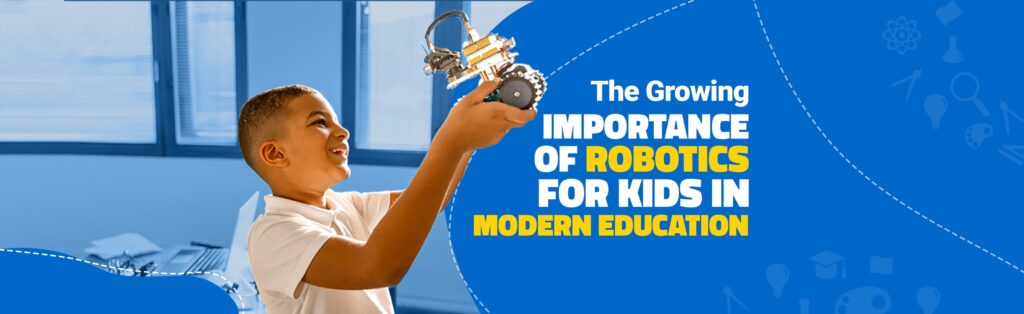
The Growing Importance of Robotics for Kids in Modern Education

The Growing Importance of Robotics for Kids in Modern Education

What are robots and robotics? Robots are physical machines that perform tasks to ease the life of humans and robotics is the field of study that designs, invents and programs. It combines the concept of science, mathematics, technology, engineering, i.e, STEM and also AI, to develop unique robots to make our lives easier With the advancement of time and technology, we are leaning more towards the comfort that the presence of robots provide. From the time we get up, scroll our phones to the time we head back to our beds, we are subconsciously surrounded by robots at every second second of our day. If we want to prepare kids for this future, we need to rethink how we teach them. Traditional education has served us well, but it’s no longer enough. Kids today need more than just books and tests. They need to learn how to think critically, solve problems, and create. And this is exactly where robotics education comes into play. Imagine a classroom where students aren’t just memorizing equations or listening to lectures. Instead, they’re building and programming their own robots — learning through action, collaboration, and real-world problem-solving. This isn’t a futuristic fantasy. It’s happening now, and it’s changing the game for education. Atal Tinkering Labs (ATLs) are government-initiated innovation spaces in schools, designed to foster creativity and hands-on learning in STEM fields like robotics, coding, and electronics. These AI and Robotics labs, part of the Atal Innovation Mission, aim to develop problem-solving skills and prepare students for a technology-driven future and provide Robotics labs for schools.  Let’s explore how robotics is empowering kids to become the leaders, innovators, and problem-solvers of tomorrow. FROM THOUGHTS TO THINGS Traditional classrooms are often only equipped with the blackboard and the teacher who most probably fails to engage the whole of the class . In today’s fast-paced, tech-driven world, where competition is getting more tense, simply just going for class and doing homeworks just doesn’t work well. Students need dynamic, hands-on education that prepares them for the rapidly evolving world of technology and innovation. This is where robotics education comes into play Traditional classrooms are designed around a passive learning model, where students listen to a teacher and absorb information. But this approach doesn’t always translate well in today’s fast-paced, tech-driven world. The future demands that kids don’t just absorb knowledge — they need to actively apply it. This is where robotics and coding for kids steps in. What is Hands – on learning? Robotics and AI Curriculum for schools is a game-changer because it turns students from passive learners into active creators. Instead of just learning about how things work, kids get the chance to roll up their sleeves and actually build something that works. Imagine a group of students sitting together, coding a robot to move or figuring out how to fix a broken sensor. They aren’t just memorizing facts — they’re problem-solving in real time, trying new ideas, failing, and then trying again. This develops their resilience and their persistence. They get ready for challenges ahead of them and to enjoy also the journey and embrace their failures with full heart and mind This type of hands-on, project-based learning is engaging, exciting, and — most importantly — memorable. Kids don’t forget what they’ve built and the challenges they’ve overcome. Robotics gives them a tangible way to apply everything they learn in school to create something meaningful. That’s the beauty of robotics — it makes abstract concepts real Problem-Solving and Innovation: The Heart of Robotics Education What makes robotics education truly special is the way it nurtures problem-solving skills. In robotics, there’s no one-size-fits-all solution. Every design is unique, and every robot faces different challenges. That’s why students must become innovative thinkers. They need to come up with creative ways to solve problems. Let’s say a student is building a robot to follow a path. At first, the robot works fine — but then it starts veering off course. The student quickly learns that the sensors need recalibration or that a different algorithm might be needed to guide the robot more accurately. This is real-world problem-solving in action. Robotics teaches students that problems aren’t obstacles, they’re opportunities to learn and improve. The more challenges a student faces, the more creative they become. And here’s the thing: innovation is contagious. As kids work together on their robots, they feed off each other’s creativity and learn how to tackle challenges in new ways.  They begin to see obstacles as chances to innovate — a mindset that will serve them well in any career, whether they go into technology, business, or any other field. Shaping the Innovators of Tomorrow It’s not just about building robots — it’s about building future innovators. The world is evolving at an unprecedented pace, and the next generation of leaders will need to be comfortable with change, creativity, and adaptability. Robotics education provides the perfect environment for kids to develop these traits. Think about the next big breakthroughs in fields like artificial intelligence, healthcare, or environmental sustainability. Many of these breakthroughs will be driven by kids who are learning robotics today. They might not realize it yet, but the students designing their first robot today could very well be the engineers, scientists, and entrepreneurs solving the world’s biggest problems in the future. Robotics: More Than Just STEM It’s easy to think of robotics as a STEM subject (Science, Technology, Engineering, and Mathematics). And yes, robotics teaches kids about coding, engineering, and algorithms. But it’s so much more than that. Robotics also fosters creativity, collaboration, and emotional intelligence. These are the qualities that will drive success in tomorrow’s world. Take teamwork, for example. Most robotics and AI projects require students to work together in small groups. They need to communicate, delegate tasks, and combine their skills to get the job done. In the process, they learn how to listen to each other’s ideas, provide constructive feedback, and resolve conflicts. These skills are just as important

The Growing Importance of Robotics for Kids in Modern Education Read More »