21st Century Skills

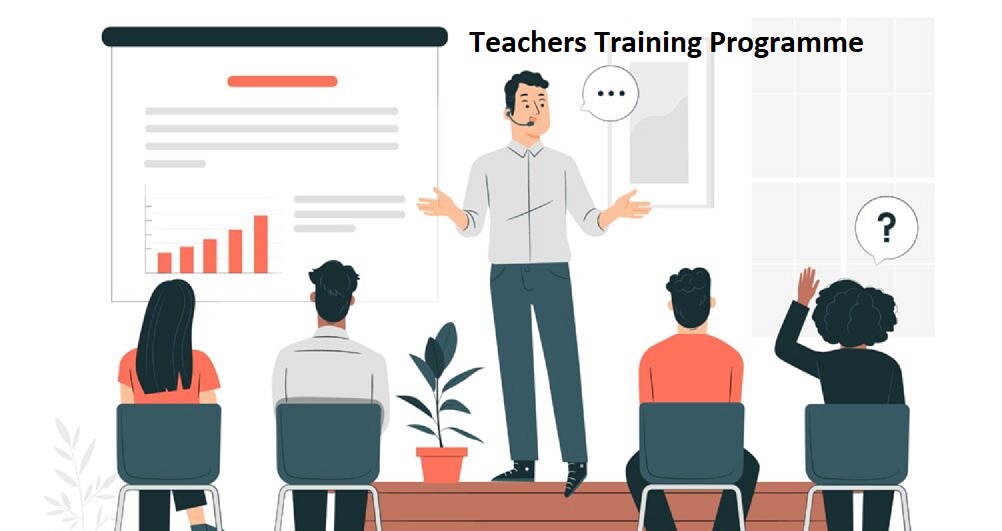
Teachers Training Program

Teachers Training Program

The foundation of any educational system is its teachers. They are the key to helping every student reach their full potential, shaping the minds of future generations, and setting them up for success. But teaching is more than just a job; it’s an occupation that calls for commitment, skills, and ongoing professional development. Recognizing the pivotal role that teachers play in the educational ecosystem, teacher training programs have emerged as crucial initiatives aimed at empowering educators with the knowledge, skills, and resources necessary to excel in their roles. Let us look into the relevance and impact of teacher training programs, evaluating their importance, critical components, and the transformational influence they have on teaching and learning outcomes. The Value of Teacher Training programs: Teacher training programs play a crucial role in guaranteeing the efficiency and quality of education provided. That’s why they are necessary: Improving Teaching Skills: Teaching effectively demands more than just subject matter expertise; it also calls for an understanding of teaching methods, classroom management approaches, and student engagement methods. Teachers can improve their teaching skills through workshops, seminars, and practical training sessions offered by teacher training programs. Through the use of cutting-edge teaching strategies and instructional techniques, these programs empower educators to establish dynamic and captivating learning environments that effectively meet the varied requirements of the students who attend them. Keeping Up with Academic Patterns: The education sector is always changing, with new approaches, technology, and trends appearing quickly. Through the provision of knowledge about the most recent trends in education and best practices, teacher training programs assist educators in keeping up with these advancements. Through the use of project-based learning strategies, technological integration, or the promotion of socio-emotional learning, teacher training programs give educators the skills and information they need to successfully adjust to rapidly changing educational environments. Encouraging Inclusive Education: The goal of inclusive education is to guarantee that every student, irrespective of their skill or background, has equal access to high-quality education. By educating teachers about the needs of various students and providing them with the tools to construct inclusive classrooms, teacher training programs are essential in supporting inclusive practices. These programs, which range from differentiated teaching to personalised learning strategies, enable educators to meet the individual learning needs and preferences of every student, promoting a more welcoming and encouraging learning environment. Enhanced Student Achievement: Academic performance and student accomplishment are positively impacted by excellent teacher training programs. Proficiency in teaching enables educators to better support students’ learning, give immediate feedback, and attend to their specific needs. This results in enhanced academic achievement, increased test scores, and better student outcomes. positive School Culture: Collaboration, creativity, and ongoing development are characteristics of a good school culture, which is fostered by Educator Certification Program. Teachers who participate in professional development events and work with peers cultivate a feeling of shared purpose, collective efficacy, and excellence commitment that ultimately benefits students, teachers, and the school community as a whole. Our main goal at STEMROBO is to transform educational standards by fostering personal growth with specialized knowledge in STEM, Robotics, Coding, and Artificial Intelligence. With years of expertise and a special approach, we provide excellent training to assist you in establishing teaching standards that go above and beyond. Our comprehensive courses are carefully crafted to provide educators with the expertise and skills they need to succeed in today’s technologically advanced environment. Our Educator Certification Program provides an extensive curriculum that encourages students to develop 21st-century abilities. You will acquire the skills and information needed to make a name for yourself in the educational industry by completing this program. As an alternative, you might use your expertise to open your own activity center and establish yourself as a leader in innovation and education in the area around you.

Teachers Training Program Read More »

Tinker and Innovation Programs for Schools

Tinker and Innovation Programs for Schools

Tinker and Innovation Programs for Schools provides children with an engaging environment to innovate, explore, and create, while also giving them the tools and mindset necessary to succeed in the 21st century. The Value of Tinker and Innovation Programs for Schools: These programs give students the chance to participate in practical, experiential learning activities that foster creativity, problem-solving, critical thinking, and teamwork. These programs encourage students to explore their interests, embark on passion projects, and take charge of their education in a way that goes beyond typical education in schools. Additionally, tinker and innovation programs develop a culture of entrepreneurship by promoting qualities like problem-solving, critical thinking, and adaptability—all of which are necessary for success in a world that is becoming more and more competitive and complicated. These programs help students develop a growth mindset that equips them to take advantage of opportunities and overcome obstacles throughout their careers by allowing them to come up with ideas, refine solutions, and learn from mistakes. Impact on Student Learning and Development: Student learning and development in a variety of fields are significantly transformed by tinker and innovation programs for schools. STEM Proficiency: Science, technology, engineering, and mathematics (STEM) principles are incorporated into practical projects and activities through Tinker and Innovation Programs for Schools, allowing students to apply their theoretical understanding to real-world problems. Through the use of design thinking methodologies, technology and tool experimentation, and group collaboration, students acquire a profound comprehension of STEM concepts and cultivate practical expertise that is important for their future achievements. Creativity and Innovation: By giving students the chance to explore innovative ideas, experiment with various materials and technologies, and come up with unique solutions to issues, Tinker and Innovation programs promote creativity and innovation. Through the promotion of innovative techniques, risk-taking, and imaginative thinking, these programs foster the creative potential of all students and motivate them to become lifelong innovators and inventors. Critical Thinking and Problem-Solving : By pushing students to analyze issues, come up with many ideas, and examine the practical use of their concepts, Tinker and Innovation programs help students develop critical thinking and problem-solving abilities. Students acquire the skills necessary to think critically, express themselves clearly, and work cooperatively with others to accomplish shared objectives via practical projects and open-ended challenges. Teamwork and Communication: By encouraging students to work in groups, discuss ideas, and provide feedback, Tinker and Innovation programs place a strong emphasis on teamwork and communication skills. Students who collaborate on projects develop critical skills necessary for success in a collaborative workplace, such as respecting other points of view, using group strengths, and effectively and convincingly communicating their ideas. STEMROBO is at the forefront of providing Tinker and Innovation programs for schools, We provide end-to-end solutions to K-12 students. Our mission at STEMROBO is to transform education by giving kids the tools they need to explore, develop, and create via practical STEM experiences. Our goal is to empower the upcoming generation of innovators, problem solvers, and leaders by offering educational programs that are easily accessible, captivating, and revolutionary. Tinker and Innovation Programs for Schools are essential for enabling the following generation of creative thinkers, problem solvers, and catalysts for change. These programs equip students to succeed in an increasingly complex and interconnected world by giving them practical, hands-on learning experiences that foster STEM knowledge, creativity, critical thinking, cooperation, and communication skills. Schools that prioritize tinker and innovative education will develop a population of lifelong learners who can confidently and creatively take on the possibilities and challenges of the future.

Tinker and Innovation Programs for Schools Read More »

Educational Technology Company

Educational Technology Company

Educational technology (EdTech) companies are at the forefront of the revolution that is transforming education. These innovative companies are changing the way that education is delivered by utilizing digital resources to improve learning, give students greater choices, and simplify management processes. The Development of Educational Technology Company The growth of educational technology companies, which utilize technology to solve multiple challenges faced by students and teachers, has been encouraged by the growing popularity of digital devices and the internet. These companies, which vary in size from start-ups to well-established enterprises, all provide a wide range of solutions tailored to improve the educational system. The realization of the limitations of traditional methods of teaching is one of the primary causes of the growth of Educational Technology Companies. Traditional teaching approaches tend to fail to properly engage students, take into account the variety of learning styles, or adjust to the quickly changing needs of the workforce in the 21st century. By creating cutting-edge tools, platforms, and apps that support personalized, interactive, and collaborative learning experiences, Educational Technology Companies want to close these gaps. Teachers Development: Educational technology companies give teachers access to effective resources to enhance their teaching methods and raise student achievement. Learning management system (LMS) platforms allow teachers to focus more on teaching and providing individualized student support by automating administrative responsibilities like class planning, attendance monitoring, and grading. Moreover, Educational Technology Company provides individualized education, which gives teachers the ability to modify lessons to the particular requirements and interests of every student. Personalized material and feedback are sent by personalized educational platforms, which utilize artificial intelligence and data analytics to evaluate students’ progress in real time and make sure they receive the right help when they need it. Engaging Students: Educational Technology Companies are at the forefront of creating immersive, interactive learning experiences that capture students’ interest and encourage active involvement. Engagement is a fundamental component of effective learning. Multimedia tools also offer dynamic alternatives to traditional textbooks, enabling students to study complicated subjects engagingly and interactively. Examples of these resources include Augmented reality (AR) and virtual reality (VR) experiences. These multimedia resources support greater understanding and retention of the material while allowing a wide range of learning styles. Increasing Access to Education: Educational Technology Companies are removing obstacles to education by giving people access to learning opportunities and resources that cut across social, economic, and geographic borders. With the help of online learning platforms, students may pursue their academic interests and career development objectives from any location with an internet connection. These platforms provide courses and instructional resources on a variety of subjects. Moreover, educational technology companies are actively contributing to the effort to close the technological gap. One-to-one device programs, internet connectivity efforts, and affordable access to educational software are just a few of the initiatives that are helping students from underprivileged backgrounds get a better education and empowering them. Using Robotics, AI, STEM Curriculums, and hands-on learning, STEMROBO is a cutting-edge educational technology company that aims to promote STEM (Science, Technology, Engineering, and Mathematics) education. STEMROBO was established to transform the way students interact with and learn about STEM subjects. Since then, it has significantly improved education by offering easily accessible, engaging, and hands-on learning resources. Improving STEM Education: By providing all-inclusive learning solutions that incorporate technology, coding, and robotics, STEMROBO significantly contributes to the improvement of STEM education. With the help of its curriculum-aligned materials and programs, STEMROBO equips teachers to present captivating STEM lessons that encourage students’ curiosity, critical thinking, and problem-solving abilities. Encouraging Creativity and Innovation: By giving students the chance to design, construct, and program their own robots and electrical projects, STEMROBO promotes creativity and innovation. Students gain 21st-century skills like creativity, teamwork, and adaptability via hands-on experiences and real-world problems, equipping them for success in a world that is becoming more and more reliant on technology. Bridging the Gap Between Theory and Practice: One of STEMROBO’s most important contributions is bridging the theoretical knowledge gap that separates classroom theory from real-world application. Students get a deeper knowledge of STEM concepts and their applicability to everyday life and future careers by working on real-world projects and performing with robots and electronic kits. To improve STEM education, encourage creativity and innovation, bridge the knowledge gap between theory and practice, advance equality and accessibility, and empower teachers, STEMROBO Educational Technology Company is essential. It is significantly advancing education and equipping students for success in the digital era via its dedication to igniting future innovators, closing the skills gap, fostering diversity and inclusion, and fostering technical innovation. By empowering teachers, involving students, increasing access to learning opportunities, and fostering innovation in assessment procedures, educational technology companies are spearheading a revolutionary shift in the field of education. These businesses are transforming education and opening the door for a more effective, individualized, and diverse method of teaching and learning by utilizing technology. The role of EdTech companies will continue to change as we negotiate the challenges of the digital era, influencing the direction of education and enabling students everywhere to reach their greatest potential.

Educational Technology Company Read More »

Why 21st-century skills are important for K-12 students

21st Century Skills for Students and Teachers

The 21st century is a fast-changing world, and education is essential to preparing students for the opportunities and challenges which are waiting for them. More than traditional academic knowledge, practical knowledge is required so teachers as well as learners need to develop a wide range of skills that go beyond the boundaries of traditional schools. These skills are also known as 21st-century skills for students and teachers. The capacity to think critically and solve complex problems has become crucial in this competitive environment. The ability to analyze is necessary for students to understand complex questions and concepts and reach accurate opinions. Teachers are important in creating an atmosphere where students are challenged to solve practical problems and are encouraged to be creative. This helps children get ready for a future in which problem-solving and versatility will be necessary. The basic building block of success in the 21st century is effective communication which comes under 21st-century skills for teachers & Students. Students must improve their ability to communicate verbally and in writing, as well as their capacity to work in different teams. To foster successful communication, teachers must take the initiative to create a collaborative classroom climate where students are allowed to express their viewpoints, listen carefully to one another, and collaborate to achieve mutual goals. Teamwork and group activities can improve these abilities by giving students real-world experiences and encouraging them to become future innovators and creators. 21st-century skills for students and teachers becomes essential for both students and teachers in today’s tech-driven environment. Students must learn how to think creatively, think beyond the box, and approach problems with an open mind. Teachers need to foster an environment in the classroom where creativity is valued and where students are encouraged to explore, experiment, and come up with unique ideas. The integration of VR Lab (Virtual Reality), AR (Augmented Reality), design thinking, and project-based learning within the curriculum may stimulate students’ creativity and help them view challenges as chances for innovation. If a student wants success in their educational journey as well as in their careers, then they should have the ability to adapt to things in this digital world. Students must be skilled at using a variety of digital tools, platforms, and resources, and teachers should integrate technology into their lesson plans to understand 21st-century skills for students & Teachers. Introducing digital skills brings up new possibilities for personalized and diverse learning in addition to preparing students for the changing requirements of a global society that is becoming more digitally advanced and interconnected. To develop interesting and productive learning environments, educators might make use of interactive digital platforms, educational applications, and Internet resources which will help in learning 21st-century skills for students and teachers. Contribution of STEMROBO to nurture students around 21st Century Skills STEMROBO is one of the leading STEM Education Companies in India providing end-to-end solutions to K-12 students. We provide a wide variety of specialized labs and kits, including various online learning platforms that enable students to practice hands-on learning and acquire 21st-century skills for students and teachers. Our approach goes beyond the traditional system, as we primarily focus on connecting theoretical knowledge to real-world application, giving students an in-depth understanding of the subject and may also get the proper guidance for their future goals. Our platforms and kits are made to be able to meet the needs of children of all ages and grade levels. For example: we all must have heard about 3D printers, which can transform a computer design into physical (3-D) objects. We have also included 3D printers in our labs, but younger students of grades 1st, 2nd, or 3rd find it challenging or confusing to operate them properly. To solve this, we have created a 3D pen that simplifies hands-on learning for younger students Younger students may easily make 3D items with this 3D pen since it is very easy to handle. This makes their learning journey very interesting and exciting. Like this, we have many other tools and resources as well, through which students can study more effectively and acquire skills like critical thinking, logical thinking, and communication. When they participate in group activities, they will also learn how to work in a team and time management.

21st Century Skills for Students and Teachers Read More »

Why 21st-century skills are important for K-12 students

Why 21st-century skills are important for K-12 students

Let us understand what 21st-Century skills are, these are termed the 4 C’s that is Communication, Collaboration, Creativity, and critical thinking. Additionally, logical thinking, adaptability, problem-solving, and a global mindset are also considered essential components of these skills. In the rapidly changing world of today, technology is used in everything, from our smartphones to our household machines like washing machines or a toy car. Additionally, technology is used in every industry, including healthcare, education, and electronics manufacturing. So, in this technological world, Students with these 21st-century skills will be in high demand in the future job market. Let’s examine the use of technology specifically in classrooms and the education industry. These days, all our classrooms have smart boards, and we have learning platforms like virtual reality (VR) and augmented reality (AR). These technology tools and platforms help to make education more engaging and productive. The method of teaching students that makes use of these platforms or various labs encourages the development of 21st-century abilities. Students will be able to gain hands-on learning experience through these platforms and labs, where they will also be able to apply their creative thinking to real-world projects and problem-solving. It is very important to learn these technological skills and academic knowledge. These are not just skills for higher students; younger students can also learn them. Learning these skills at an early age can be very beneficial to our children’s development because these skills cannot be acquired by learning in one day, they need a lot of practice. Critical Thinking and Problem-Solving: In a world where change happens quickly, having the capacity to think critically and solve complex problems is essential. Students should be taught to analyze data and come up with creative solutions. Students who develop their critical thinking abilities are better equipped to handle challenges in the real world and make intelligent decisions. Critical thinking is a collection of intellectual abilities that enables people to approach challenges systematically. It helps students become more adept at solving problems and more prepared to deal with the challenges of the working world. Teamwork In the modern workplace, teamwork and efficient communication are highly valued. Students in grades K–12 need to work in various groups, develop their ability to interact with others, and properly communicate their ideas. In the classroom, collaborative projects and activities foster collaboration and prepare students for the cooperative atmosphere of the workplace in the future. Students should be proficient in using these technological tools. Working remotely and collaborating virtually are becoming more common, therefore being able to communicate well on digital platforms is essential. Innovative thinking skills Innovative ideas are driven forward by creativity. Developing creativity in K–12 education helps children develop their capacity for innovative thinking, idea generation, and problem-solving. The ability to think creatively doesn’t just apply to the arts; it may be used in any subject of study and stimulate creativity in the STEM (science, technology, engineering, and mathematics) sectors. Teachers can use creative activities and project-based learning to spark students’ imaginations in K–12 classrooms. Giving students the chance to express themselves and engage in learning enables them to uncover their creative potential. Incorporating creativity into the curriculum also fosters in students a love of learning and a perspective that views challenges as chances for creativity. We have also included modern technologies like VR( Virtual Reality) headsets, LMS (Learning Management System), and other tools that benefit children as well as provide support to teachers, with VR headsets teachers can engage their students in studying and they can also use the LMS platform to create assignments, mark attendance automatically, assign homework, and can also take live sessions and if any students were absent or not able to take live sessions then they can also watch recorded lectures. This makes the work of the teachers easier and gives them more time to finish other necessary tasks or improve the way they teach so that they can educate students more effectively.

Why 21st-century skills are important for K-12 students Read More »

AI and Robotics Lab

STEMROBO’s Impact on Hands-On Learning and Skill Development

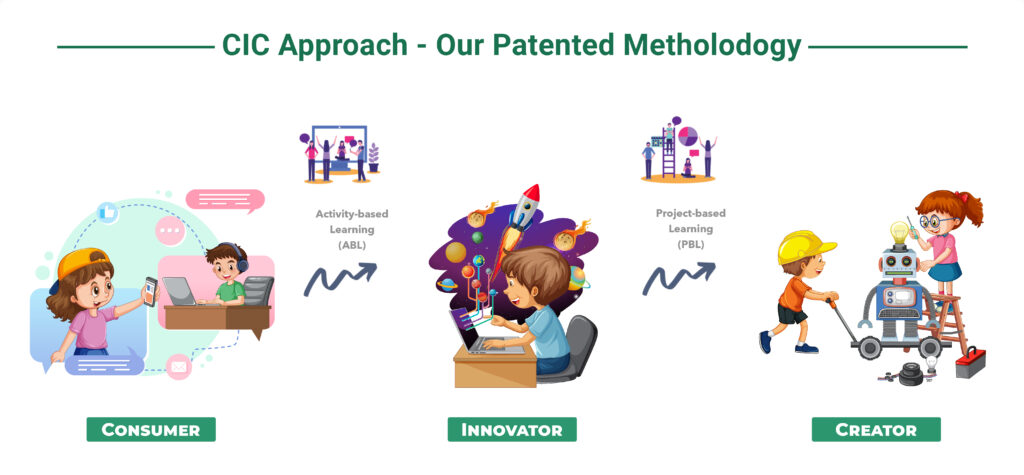
One of the most fundamental 21st-century skills is hands-on or practical learning, especially in the tech-driven educational environment of today. Students don’t want education that is based on Rote memorization they need a platform where they can learn concepts by creating different types of projects using modern technology and engaging in various activities. They want education that is focused on something other than memorization. Hands-on learning is a way of educating students where they may apply what they have learned in the classroom to real-world situations. One of the primary advantages of hands-on learning is its ability to expand academic knowledge. Students learn more effectively and retain knowledge when they apply theoretical concepts in practical situations. Through active engagement, they strengthen their critical thinking and problem-solving skills and develop a stronger understanding of the fundamental concepts. STEMROBO is one of the leading Educational Technology Companies providing End-to-End solutions for K-12 students. We foster learning and innovation skills through our cutting-edge STEM education programs. As one of the top robotics and artificial intelligence companies in India, we offer integrated solutions that empower students to become creative thinkers and problem solvers. Our curriculum covers a wide range of subjects, including robotics, AI, and IoT, enabling students to gain hands-on experience and develop critical skills. We provide a variety of labs, such as AI/IoT lab, STEM lab, and Robotics lab where students can apply the knowledge they have learned in the classroom to make projects in the real world. We also offer different types of kits such as Robotic kits, Basic electronic kits, Arduino kits, Mechatron kits and many more These kits can be used by students to create practical scientific projects. As an example, if a student has learned the theoretical concept of how a fan operates in their classroom, they can now apply this knowledge in our STEM Lab to create a project based on this concept. To accomplish this, we offer kits that include all the necessary tools, such as a motor, battery, propeller fan, and other equipment needed to complete the project. The students are going to connect all of the components, and when they turn on the switch, they will see that the fan is operating. In this way, they will learn the fundamental idea behind how a fan operates as well as how current flows through the fan. They will also learn how to build a customized fan, which will enable them to become developers. So, in this way, the students will learn the concept more effectively and can also be able to remember it for a longer time We also organize various group activities where students can participate and work with other students to create a project, this will make them learn other critical skills like how to manage time, how to work in a team, and how they can be good leaders of the team, these activities will enhance their overall personality and problem-solving abilities. In this way, students can also become innovators as they get a lot of opportunities to develop new projects using advanced technologies. We follow two approaches, one is the CIC approach while the other is Design and Thinking. CIC Approach We follow a unique methodology enabling students to evolve from Consumer-to-Innovator to-Creator. The student initiates this journey by working with various kits and platforms to gain a complete skill set. The students gradually become capable of innovating and bringing change to the world. In the last step, students create a product that can be introduced to the market and help the world become a better place. Design Thinking Approach We have a curriculum designed for the exponential growth of students from taking small steps to achieving milestones in the fields of Science, Technology, Engineering, Mathematics, and Robotics. Our curriculum has an emphasis on design and thinking and is academic-relevant as per your education boards. We also offer customized curriculums following the skill set of students. We provide a curriculum that is closely linked with academics, along with delivering 21st-century skills, enthusiastic support from our innovation engineers, and many other resources. Thus, STEMROBO enhances hands-on learning and develops 21st-century abilities, both of which are essential for students to be successful in the years to come.

STEMROBO’s Impact on Hands-On Learning and Skill Development Read More »

leading Educational Technology Companies

The Future of Education: STEMROBO’s Contribution to a Technologically Advanced Tomorrow

In the rapidly evolving world of today, technology has taken on an important role in our daily lives. It changed the way traditional classrooms teach, especially in education, by introducing new classroom techniques. It included 21st-century skills in the curriculum, which is crucial for students to learn if they want to succeed in their careers. There are several benefits to this technological revolution in education: Students may access all educational materials available online at any time and location. It offers hands-on experiences that allow students to put the theoretical concepts they have learned in the classroom into practical application. Students learn extra skills beyond academic knowledge through this hands-on learning approach, including teamwork, critical thinking, inventive thinking, communication, and leadership development. Additionally, it offers personalized education, with lessons customized according to each student’s age and grade level. This is because we understand that each student has a different learning style, with some being able to learn things more quickly than others. Now, Let us see how STEMROBO Contributes to this technological advancement STEMROBO is one of the leading Educational Technology Companies providing end-to-end solutions to K-12 students. At STEMROBO, We provide innovative STEM education programs that develop 21st-century skills. We provide AR/VR labs where students can visualize complex concepts in 3-D form and learn through them. Students become more engaged in their studies and can learn more efficiently as a result. Students get an in-depth knowledge of the subject and are better able to retain it for a longer Time. These technologies are very important for students as they provide interactive and experiential learning opportunities. We provide STEM/Robotic labs where students can work on actual projects, such as making a small robot or a moving car. As the modern world is mainly automated, students must learn new technologies. To achieve this, we provide AI/IoT labs where students can learn about modern technologies and use them in real-world situations. STEMROBO offers a series of Tinker Workshops around Advanced Technologies. (AI, Robotics, IoT, 3-D Designing, Arduino & Sensors, Raspberry Pi, Drone & Aero-modelling, and many more…) We provide training to students on the latest technologies through various interesting methodologies, by which students can solve real-life problems. We train school teachers to integrate learning and innovation in regular classroom sessions. We offer LMS (Learning Management System), which is one of the best online Platforms, which provides all the courses, lectures, quizzes, and other things in an online format. It is very helpful for Students, Teachers, Schools as well as for parents. Our programs have helped teachers to make their classes more interesting and informative. Regular technical sessions are provided to students and teachers for exposure to improve their learning skills We foster real-world problem solvers through Design Thinking integrated into STEAM education. Our curriculum encourages Hands-on projects where students identify issues, explore, and come up with innovative ideas. For this, we have different types of DIY Kits : · Arduino Robotics Kit · Basic Electronics Kit · Smart Circuit kit · Mechatron kit · Bitli In this way, we contribute to digitizing Schools with modern technologies Our methodologies We follow two approaches, one is the CIC approach while the other is Design and Thinking. CIC Approach We follow a unique methodology enabling students to evolve from Consumer-to-Innovator-to-Creator. The student initiates this journey by working with various kits and platforms to gain a complete skill set. The students gradually become capable of innovating and bringing change to the world. In the last step, students create a product that can be introduced to the market and help the world become a better place. Design Thinking Approach We have a curriculum designed for the exponential growth of students from taking baby steps to achieving milestones in the fields of Science, Technology, Engineering, Mathematics, and Robotics. Our curriculum has an emphasis on design and thinking and is academic-relevant as per your education boards. We also offer customized curriculums in accordance with the skill set of students. Our mission is to build an ecosystem focused on leveraging technology in education where STEAM, Robotics, Coding, and Artificial Intelligence are utilized as crucial tools for kids to become smart in their academics and be able to solve modern world problems.

The Future of Education: STEMROBO’s Contribution to a Technologically Advanced Tomorrow Read More »

21st century Skills

STEMROBO’s Role in Creating a Generation of Critical Thinkers and Innovators

Let us look at the importance of critical thinking and innovation skills. Have you ever questioned why certain objects float while others sink, or why the sky is blue? Students ask these questions naturally. They constantly search for solutions and try to figure out about them, much like scientists, and detectives. Behaving curiously like a problem solver is like critical thinking. Students sometimes question, “What makes a robot go forward?” while they are analyzing how a robot moves. What happens when it turns? They use critical thinking to break down difficult issues into smaller segments so they can observe a bigger concept. This is when innovation enters the picture. As soon as students have these questions, they begin to think about how to find the solutions. They could either come up with a basic robot on their own or come up with a creative way to explain how the Earth moves. Critical thinking skill One of the most important skills of the 21st century is critical thinking. It involves analyzing and recognizing problems reducing them into the simplest elements, and coming up with practical solutions. It also involves asking questions to understand every topic completely. It improves the communication skills of students so they can effectively express themselves and ensure that others understand them. Thinking critically means going beyond the predetermined study mindset. Additionally, it develops their ability to solve problems; with this mindset, students may generate innovative ideas. Innovation skills Innovation is more than just creating new things; It is also about transforming concepts into practical solutions that benefit society. It is among the most important factors in improving student’s development in the 21st century. These abilities have become essential in today’s tech-driven educational environment if you want to succeed as a job prospect in the future. Students have an amazing ability to question everything around them. Consider their curiosity about how the Earth rotates or how robots move. These are the fundamental and essential questions that form the foundation of critical thinking, which is the capacity to explore, examine, and understand something completely. But the work does not end there. Students must use their innovative skills to come up with these solutions and through Regular practice they will be able to acquire these skills Now, let us understand the role of STEMROBO in Creating a Generation of Critical Thinkers and Innovators STEMROBO is one of the top companies in educational technology, offering end-to-end solutions to K-12 students to help them become critical thinkers and innovators. It plays a very important role in developing innovators and critical thinkers in the next generation. It develops an innovative mindset that encourages creativity, problem-solving, and curiosity through its cutting-edge educational programs and platforms. These qualities are essential in nurturing future innovators and critical thinkers. Let us take a look at how STEMROBO manages all this We provide multiple labs with integrated curriculum and kits so that students may work on hands-on projects, develop critical thinking, and come up with new and innovative ideas. It consists of robotics labs and AI/IoT labs where students may do experiments such as building robots or applying classroom theory to these labs. As an example, if a student is trying to build a robot with a particular method, and is unsuccessful, he will analyze the problem and try to come up with another solution to solve it. In this approach, students learn to think critically and develop creative and innovative ideas. Schools must have a curriculum that teaches all these skills to help today’s students acquire these abilities. It also offers an integrated platform to help schools teach their students effectively and develop their innovative skills. To achieve this, we have STEM Labs where students may engage in hands-on learning and get an in-depth understanding of the STEM subjects (Science, Technology, engineering, and mathematics). Additionally, we organize group projects that encourage students to actively participate, come up with innovative ideas, and develop more critical abilities like leadership, time management, and teamwork. we regularly provide workshops to help students understand the importance of 21st-century skills as well as learn how to operate efficiently in these labs. Additionally, we offer workshops and training to lab instructors and teachers so they may develop 21st-century skills and educate students effectively. In this way, STEMROBO contributes to developing and Creating a Generation of Critical Thinkers and Innovators.

STEMROBO’s Role in Creating a Generation of Critical Thinkers and Innovators Read More »

LMS for Schools

STEMROBO’s Learning Management System: Streamlining Education for Schools

LMS is one of the leading platforms of STEMROBO, one of the most essential for schools, students, teachers and parents. Let us know about what is LMS and what are the benefits of this platform. Learning Management System is one of the best online Platforms, which provides all the courses, lectures, quizzes, and other things in an online format for students. LMS is very essential software for schools as it manages all the educational processes like Online tests, and live sessions, and keeps a record of each student’s individual growth and development. Learning Management System For Schools: · Exam scheduling is made incredibly simple and quick by it, and since the entire procedure is done online, there is very little possibility of making a mistake or facing an issue. · Additionally, it schedules tests for K–12 students, which is incredibly beneficial for educators and reduces their workload so they can make the most of their time working on other tasks. · It is quite simple to use, and all of the educational materials can be accessed at one place rather than being stored on many devices. · It also arranges the academic year for students, including admissions, exam schedules, and the quick creation of report cards. Additionally, it maintains a full-year record of students, showing how much they learned in a year and highlighting all of their areas of strength and weakness that require improvement. · This platform includes everything from learning from the lectures offered on LMS to taking exams to see how much the students retained from the lectures. Learning Management System For Students: · It provides live sessions and also keeps the recorded lectures as well which allows students to study easily according to their convenience. · Students from all over the world may access it at any time and from any location, which facilitates convenient and efficient studying. · It maintains track of each student’s grades and marks so that they can easily find out their errors and make improvements. · Given that technology is the driving force behind education in the 21st century, it is very necessary for students to learn how to integrate online learning into their existing educational approach · Students find it simple to submit their assignments on time and to have access to all of the study materials in one place. LMS For Teachers: LMS For Parents: With its Learning Management System, STEMROBO promises to provide both educators and students with a seamless, engaging, and complete learning experience. It acts as the foundation of educational technology, enabling schools to digitize their educational programs to meet the needs of teaching and learning in the 21st century. The Learning Management System from STEMROBO is a prime example of innovation; it provides a comprehensive solution for modern schools and is reshaping 21st century education by integrating accessibility, technology, and student participation.

STEMROBO’s Learning Management System: Streamlining Education for Schools Read More »

21st-Century Skills

21st Century Skills for Teachers: Why Educators Must Evolve Too

21st Century Skills for Teachers: The Real Starting Point of Classroom Transformation When educators discuss 21st century skills, they almost always centre the conversation on students — their creativity, their digital fluency, their collaborative instincts. But the most important variable in any classroom transformation is the teacher. An educator who still delivers rote-recall lessons cannot build critical thinkers. That makes developing 21st century skills for teachers non-negotiable — it is the prerequisite for everything else. What Modern Educators Need to Do Differently Modern educators must operate with a fundamentally different skill set from what schools expected a generation ago. They must move from being the sole authority in the room to becoming a facilitator of inquiry — someone who guides students toward discovery rather than simply delivering answers. Teachers must also feel confident integrating technology into their daily practice. Not as a substitute for teaching, but as an amplifier of it. Beyond that, they need to design learning experiences that build the six competencies that research consistently identifies as most critical for students entering a technology-driven economy: Teachers cannot deliver these skills secondhand. They must embody them first. A teacher who works through a hands-on robotics project — debugging code, iterating on a design, presenting findings to peers — understands experiential learning from the inside. That lived understanding separates a lesson that checks a curricular box from one that genuinely shifts how a student thinks. Why Ongoing Professional Development Changes Everything A one-day training workshop changes nothing. For 21st century teaching practices to take hold, educators need regular exposure to new pedagogical tools, subject-specific upskilling in areas like AI and data science, and a sustained community of practice with fellow educators navigating the same transition. Schools that invest in teacher development as seriously as they invest in student programmes build something rare — a culture where 21st century skills grow at every level simultaneously, because teachers model what learning looks like. STEMROBO’s Teacher Training Programme equips educators with hands-on STEM and AI pedagogy, structured certification, and ongoing support. [Explore Teacher Programme →] How 21st Century STEM Education Differs from Traditional Learning Education no longer stays confined to classrooms and textbooks. The shift toward 21st century STEM education pushes students to experiment, apply knowledge, and solve real-world problems — building far deeper understanding than passive reading ever produces. Three differences stand out most clearly: The Structural Gap Between Traditional and STEM Education The difference between conventional schooling and modern STEM-integrated education goes beyond teaching style. Every dimension of how schools organise, assess, and deliver learning looks different. Dimension Traditional Education 21st Century STEM Education Teaching approach Teacher leads; students receive Teacher facilitates; students discover Curriculum structure Subjects taught in isolation Cross-disciplinary, integrated projects Student role Passive listener Active maker and problem-solver Assessment Standardised written exams Project portfolios and practical demos Technology use Occasional and supplementary Central — coding, robotics, AI are core Failure & iteration Penalised; wrong answers lower grades Expected and valued in the design process Collaboration Individual work dominates Team-based projects mirror workplaces Teacher’s role Sole knowledge authority Facilitator, coach, and co-learner What Hands-On STEM Learning Actually Looks Like in the Classroom The phrase hands-on STEM learning gets used broadly, but its meaning is specific. Students learn by doing, making, testing, and iterating — not by reading about what others have done. The outcomes speak for themselves. A 2023 meta-analysis of K–12 STEM programmes found that project-based, hands-on approaches improve conceptual retention by up to 40% compared to traditional instruction. Here are four activities that deliver hands-on STEM learning at its most effective: 1. Bridge-Building Under Constraint Students design and build a bridge using only spaghetti and marshmallows, with the goal of supporting maximum weight. In a single session, they practise structural engineering, load distribution, iterative testing, and team decision-making — often without realising how much they’re absorbing. 2. Programmable Robotics Challenge Using a STEMROBO kit, students programme a robot to navigate a maze, pick up objects, or sort items by colour. They apply logic, write coding sequences, and interpret sensor data — connecting computer science theory to physical outcomes they can see and adjust in real time. 3. Water Quality Testing Project Students collect water samples from different sources, test pH and turbidity using lab equipment, record their findings, and present results to the class. This single project covers chemistry, data collection, environmental science, and scientific communication — exactly the multi-domain thinking that modern STEM education develops. 4. AI Image Recognition Mini-Project Students train a simple machine learning model using a visual dataset — teaching a classifier to identify leaf types or geometric shapes. They label data, run the model, assess accuracy, and refine their training set. This hands-on process builds AI literacy through direct experimentation, not abstract explanation. All four activities come as structured, curriculum-mapped modules inside STEMROBO’s STEM Lab programme. [Explore STEM Lab →] How STEM Education Closes the Learning Gaps Traditional Methods Create Traditional education often teaches subjects in isolation. Students memorise facts but struggle to see how those facts connect to real problems. When doubts go unanswered, learning gaps form. As difficulty grows, those gaps become fear of the subject. STEM education tackles this directly. Students learn concepts by applying them, not by reading about them. They build understanding through doing. And because the process treats failure as a normal part of design thinking — not something to penalise — students take intellectual risks more willingly. Think of it this way: when someone hears a story, they might forget it. When they watch the same story unfold in a film, it stays with them. STEM education applies that same principle to learning — when knowledge becomes an experience, it sticks. How STEMROBO Delivers This Across K–12 Schools STEMROBO provides an all-inclusive STEM education solution for K–12 schools, built around a grade-wise progressive curriculum that adapts to each level. The programme integrates STEM concepts with academic subjects, creating interdisciplinary learning that keeps students engaged from the earliest grades onward. The approach does not ask

21st Century Skills for Teachers: Why Educators Must Evolve Too Read More »