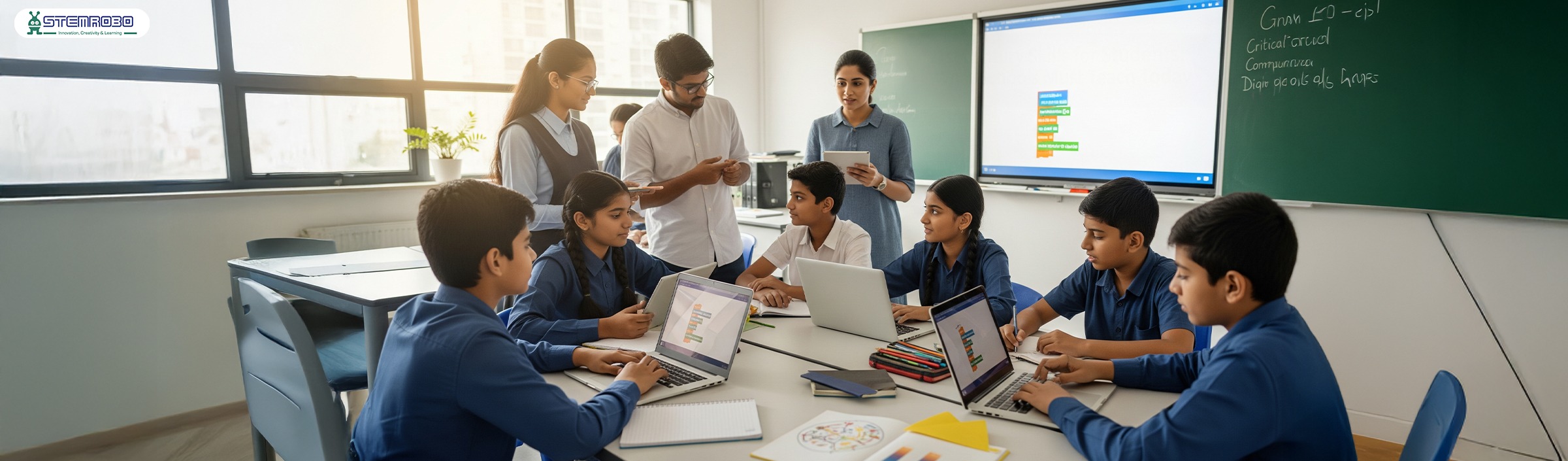
Students in contemporary classrooms maintain their traditional study methods which involve using textbooks and preparing for tests through memorization. The world outside school boundaries shows rapid advancement in technological development. Our daily existence depends on smart devices and artificial intelligence together with automation and robotics and virtual environments as essential components of our life.
The increasing distance between traditional classroom teaching methods and actual workplace requirements needs educational institutions to concentrate their efforts on preparing students with essential 21st century skills. Students develop their ability to think independently and create new ideas while using these skills which help them handle different challenges and achieve success in upcoming technological workplaces.
STEMROBO Technologies, a Educational Technology Company Platform for AI and Robotics Education, is now working with Indian schools to establish partnerships that create future-ready educational solutions.
Why 21st Century Skills Matter More Than Marks
Successful careers now require more than good grades as their sole requirement for achievement. Universities and employers today look beyond report cards. The assessment criteria require students to demonstrate their ability to analyze problems, think creatively, use technology, work with others, and learn new skills throughout their lives.
The process of developing these abilities requires more than traditional memorization techniques and study methods that focus solely on exam preparation. The development of skills occurs when students conduct active research and practical application of their knowledge. The global education systems of today consider 21st-century skills to be essential components of their educational framework that needs to be taught to both students and teachers.
Schools that emphasize these skills prepare learners not just to pass exams but to thrive in real life.
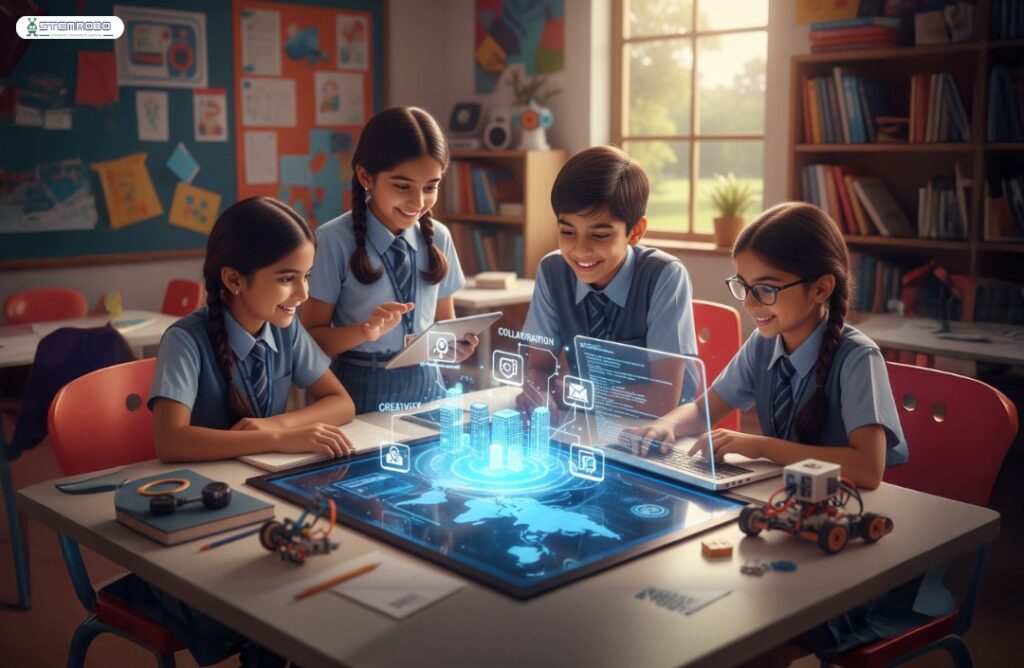
Key 21st Century Skills Every Student Needs
1. Critical Thinking and Problem Solving
Real-world problems lack ready-made solutions which students must learn to find. Students need to develop skills that allow them to observe situations, formulate important questions, examine data, and evaluate potential answers.
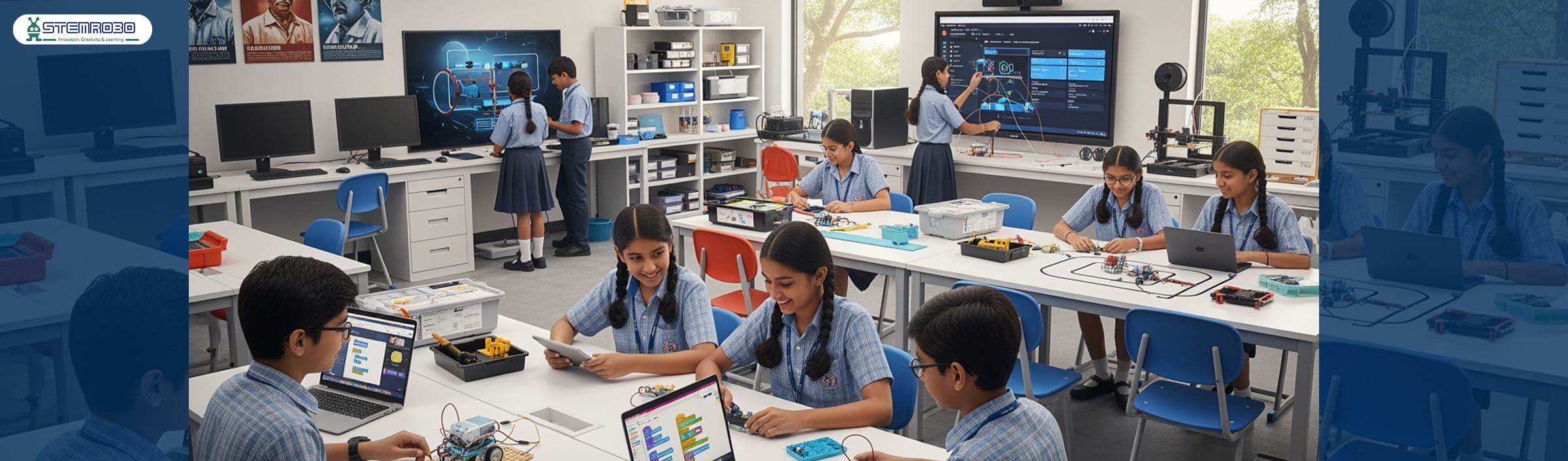
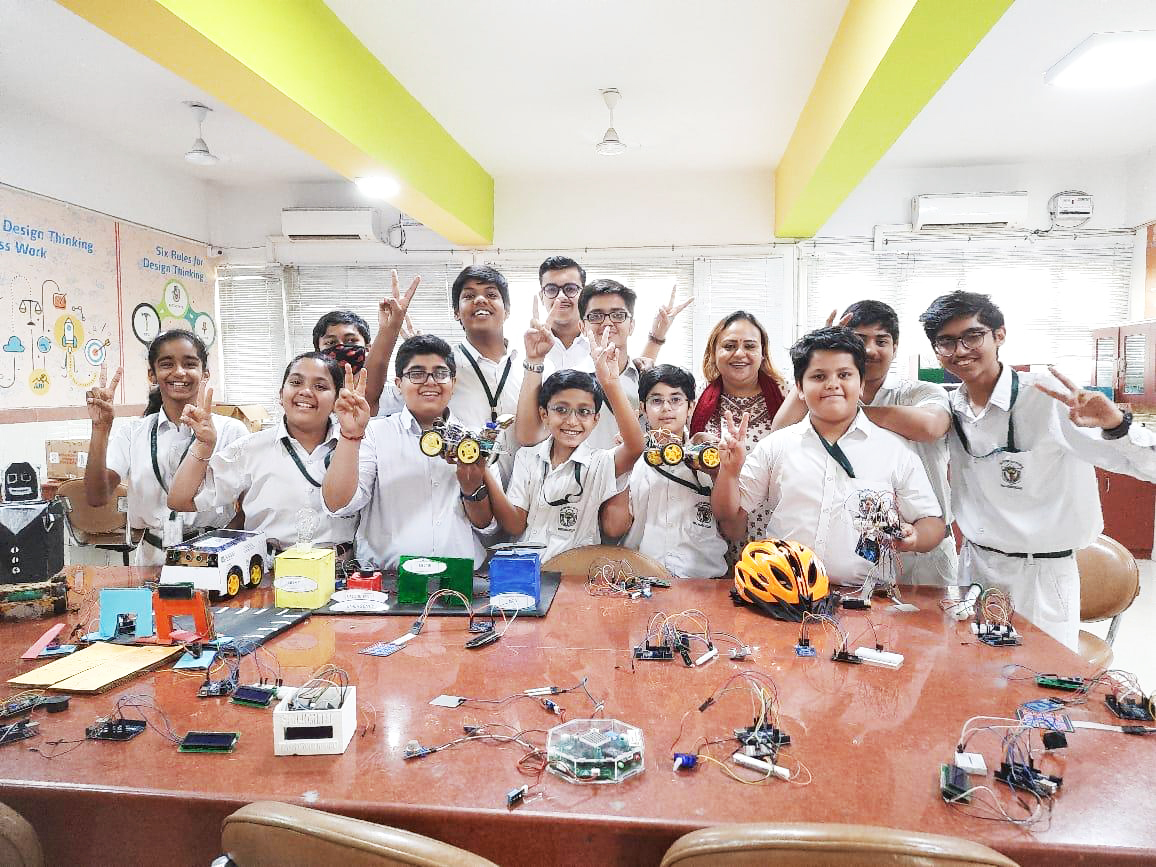
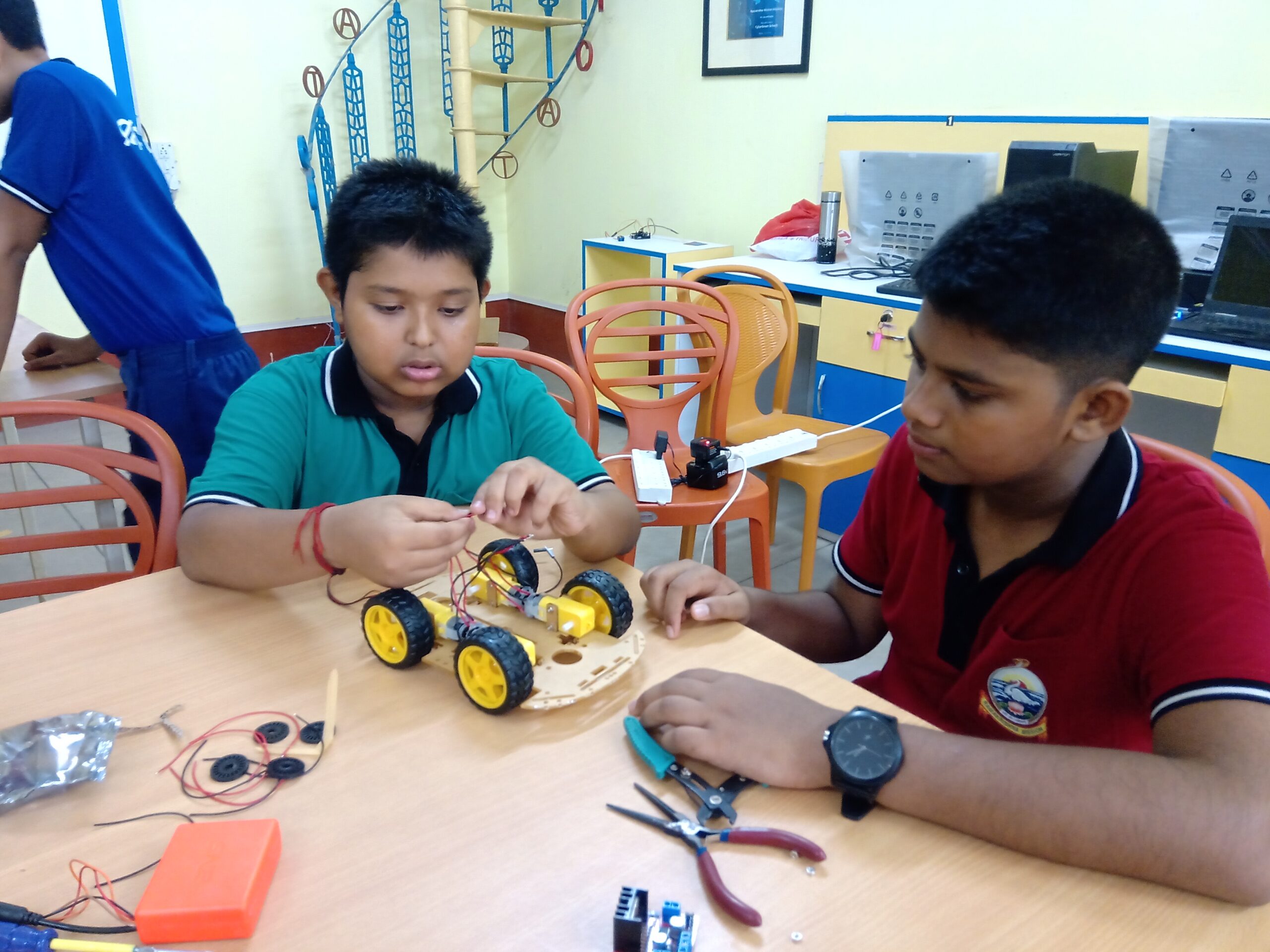
The educational environment uses STEM labs and robotics labs along with design thinking spaces to create essential learning resources. Students develop their critical thinking abilities when they create functional models, control machines, and develop solutions to actual problems.
Learning transforms into social and practical activities that serve specific purposes instead of becoming abstract theoretical concepts.
2. Creativity and Innovation
The 21st century now defines creativity as a skill which extends beyond artistic and musical expressions. The current definition of this term requires people to create intelligent solutions through their work on new projects while applying technology to realize their concepts.Through tinkering programs and innovation labs and Atal Tinkering Labs students receive opportunities to test their ideas through the process of experimentation and failure and subsequent learning and improvement.
The facilities enable people to develop original ideas which will lead to their success as entrepreneurs because they support the development of curiosity and risk-taking behavior. The right guidance helps students transform their natural curiosity into innovative solutions which build their confidence in their creative abilities and ideas.
3. Coding, AI, and Robotics Skills
The modern world requires people to master coding because it operates as a basic life skill which people need for their daily activities. Early exposure to coding, artificial intelligence, and robotics helps students understand logic, structure, and computational thinking from a young age. Students acquire problem-solving skills through learning machine thinking and response patterns which show them contemporary technology functions. The educational system requires students to learn robotics and coding because these skills serve as fundamental instruments for their digital economy development.
The main goal of technology education in schools is to teach students how to create new things while using technology for their own needs. The main goal of technology education in schools is to teach students how to create new things while using technology for their own needs.
4. AI, IoT, and Smart Technology Awareness
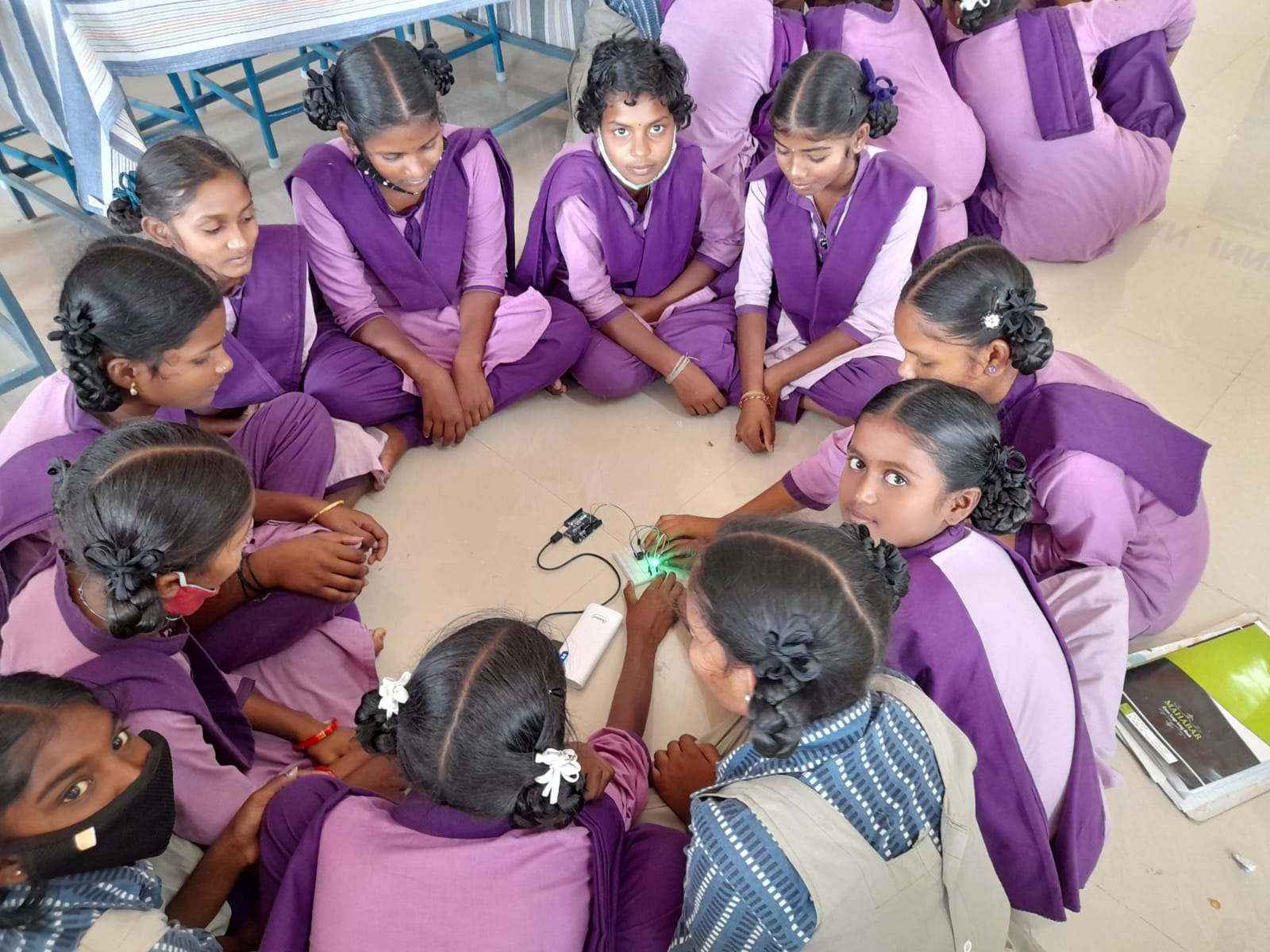
Smart homes, smart cities, and connected devices have become common elements of contemporary existence. Schools need to implement AI and IoT educational programs through their regular academic programs to prepare students for the upcoming technological world. Students at Internet of Things laboratories study the operational principles which connect sensors with data management and automation and smart system functionality.
Through hands-on projects, learners gain exposure to:
- Internet of Things concepts
- AI-driven decision making
- Smart automation solutions
Students acquire hands-on knowledge which enables them to link their academic work to actual world scenarios, consequently making their learning experience both relevant and future-oriented.
AR & VR: Making Learning Come Alive
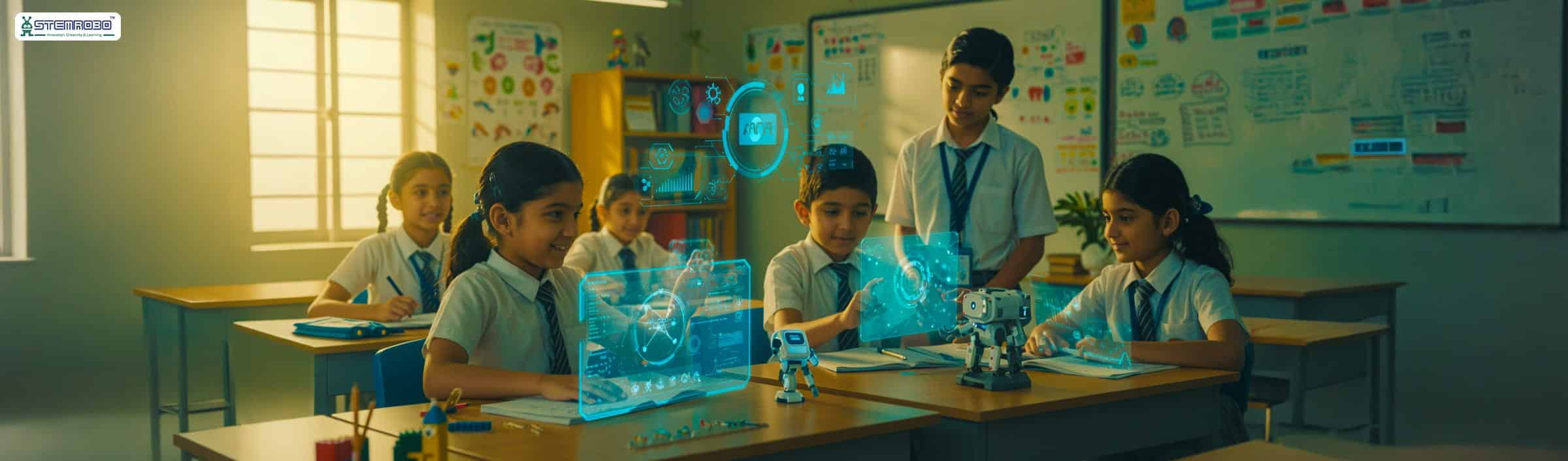
The primary educational challenge today requires teachers to develop methods which successfully engage their students throughout the entire learning process. The combination of Augmented Reality and Virtual Reality creates a strong impact in this area. Students can learn about ancient civilizations through virtual walking experiences which allow them to see 3D human body structures and analyze advanced scientific principles through virtual exploration. The use of immersive technologies creates learning environments which provide students with interactive experiences that create lasting memories and thrilling educational moments.
The combination of AR and VR technologies creates virtual classrooms which provide students with hands-on learning experiences that help them grasp challenging content through active participation instead of passive learning.
STEM Education: Building a Strong Foundation
Theoretical aspects of science and engineering education receive practical application through STEM education. STEM education teaches students science, mathematics, and technology through practical problem-solving activities which combine these subjects into one educational approach.
Students develop real-world skills through practical activities which show them actual applications of knowledge outside their textbooks. The program helps students build three essential skills for engineering, technology, and research careers which require technical abilities and research skills along with self-assurance in conducting experiments.
Schools throughout India implement STEM-based learning systems to create solid academic foundations which equip students with essential skills needed for upcoming work environments.
STEMROBO Technologies, which operates as a top STEM education organization in India, helps schools to create integrated learning spaces that promote student exploration and creative thinking while they acquire practical knowledge.
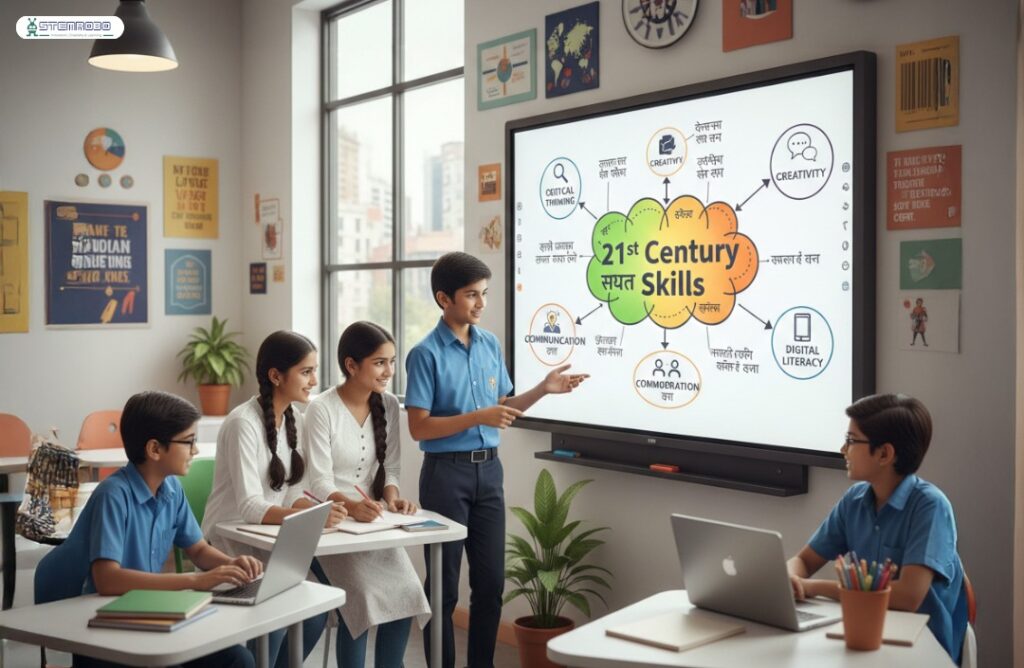
Empowering Teachers for 21st Century Classrooms
The most advanced technological systems will not function properly when educators lack technology usage confidence. Teacher training and professional development serve as essential elements which support contemporary educational systems.
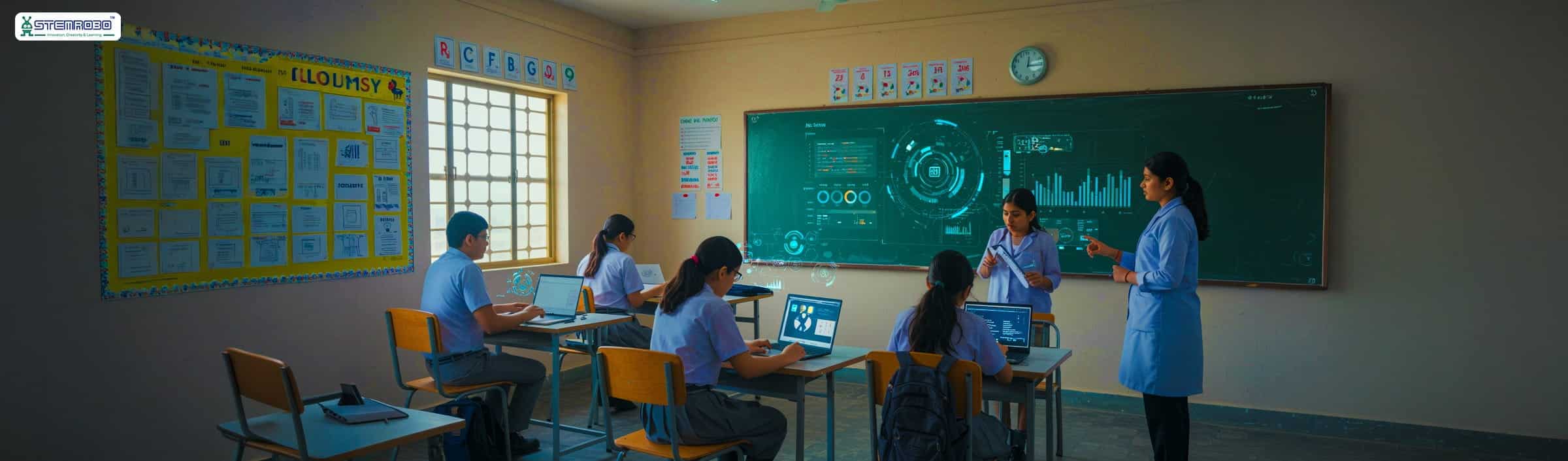
The structured training programs should assist educators in learning about new technologies and using digital tools throughout their classroom activities and creating interactive teaching methods which focus on student needs.
The empowerment of teachers leads to classrooms which operate with greater energy and provide equal access to educational resources while preparing students for future challenges. The ongoing process of upskilling enables educators to maintain their status as confident experts who navigate the changing educational landscape.
End-to-End Solutions for New Age Schools
New Age Schools require End-to-End Solutions which provide complete system support for all their operational needs. The holistic solution requires all components which include curriculum development, educational infrastructure, digital systems, instructor education, and continuous academic assistance.
Schools can use the comprehensive end-to-end system to achieve a seamless transition from traditional educational methods to modern student-focused learning environments which fulfill present and future requirements.
The integrated method enables institutions to implement new innovations while maintaining their current operations.
Preparing Students for the Future Starts Today
Students need to begin their future preparation process at this present moment. The future will belong to those students who possess the ability to adapt and create new solutions while using technology in an ethical manner. Schools that dedicate resources to teach 21st century skills will achieve durable educational results which benefit both their students and society at large. Educational institutions implement STEM labs together with AI and robotics programs and IoT projects and AR/VR classrooms and ongoing teacher training to create learning environments that enhance student engagement and maintain educational relevance while preparing students for their future careers.
STEMROBO Technologies operates as a reliable supplier of AI and robotics and STEM and immersive educational solutions to develop intelligent modern learning spaces across Indian schools which prepare students for future challenges.
Final Thought
The purpose of modern education extends beyond teaching students for exam success because it aims to prepare them for their entire life. Schools need to establish proper educational environments which help students develop their self-confidence and creative abilities and prepare them to become future innovators.
The future of education begins today because the educational spaces developed through today’s classroom changes will become the world’s educational centers in the future.