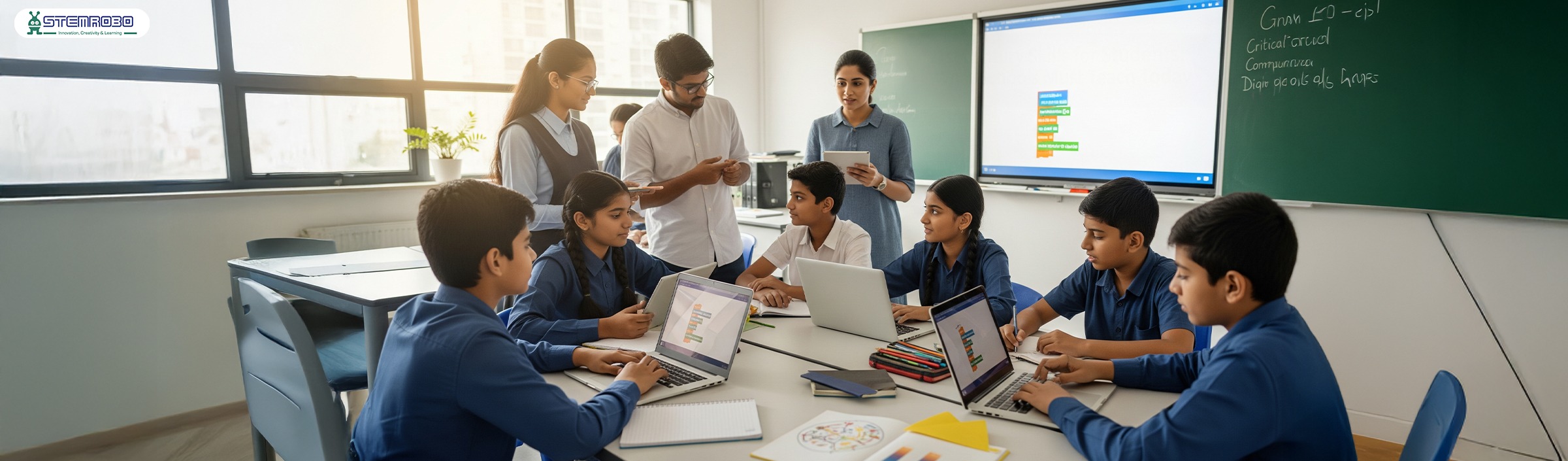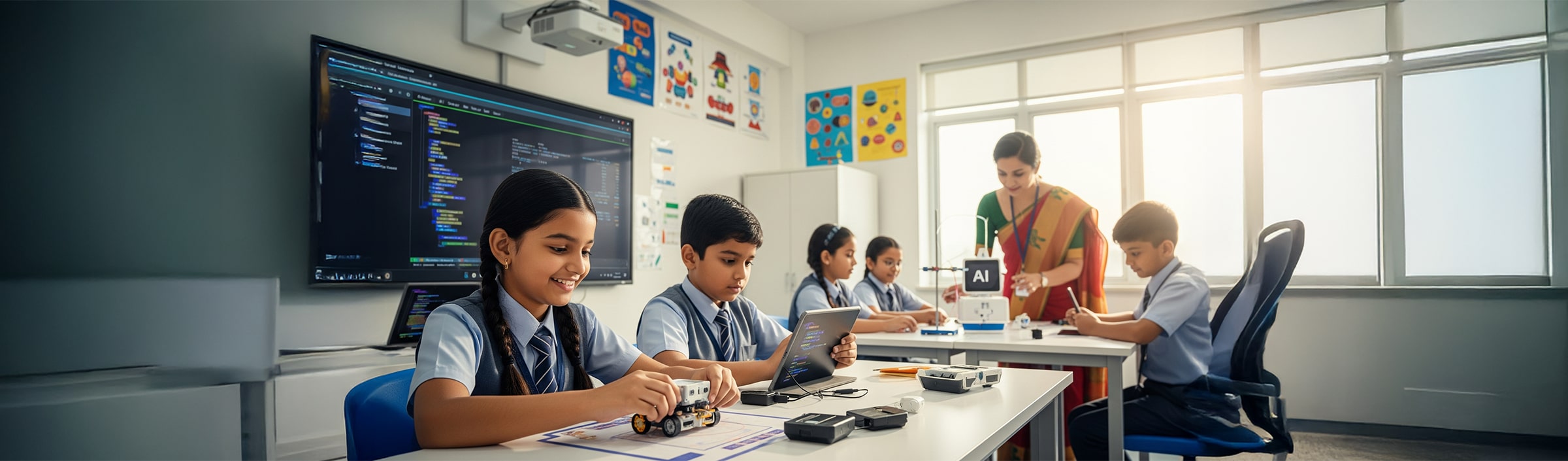
Step into any classroom today and you’ll see a contrast. Outside the school, students are using smartphones, exploring apps, and interacting with smart technology every day. Inside the classroom, however, learning frequently follows old patterns like making the notes, blackboard , textbooks and exam preparation.
This mismatch between students’ real-world experiences and traditional teaching is a major gap in learning. That’s exactly why setting up STEM and Robotics Labs in schools has become a crucial part of preparing students for the future not just to study technology, but to help students move beyond theory and engage in hands-on, future-ready learning.
Education Is Changing : Skills Matter More Than Scores
The future won’t judge the students how many definitions they can recall. It will ask how well they can think independently, adapt to new changes, think creatively, and solve real life problems. That’s why schools across India are increasingly towards STEM education solutions, AI & Robotics Labs, and Innovation Centers.
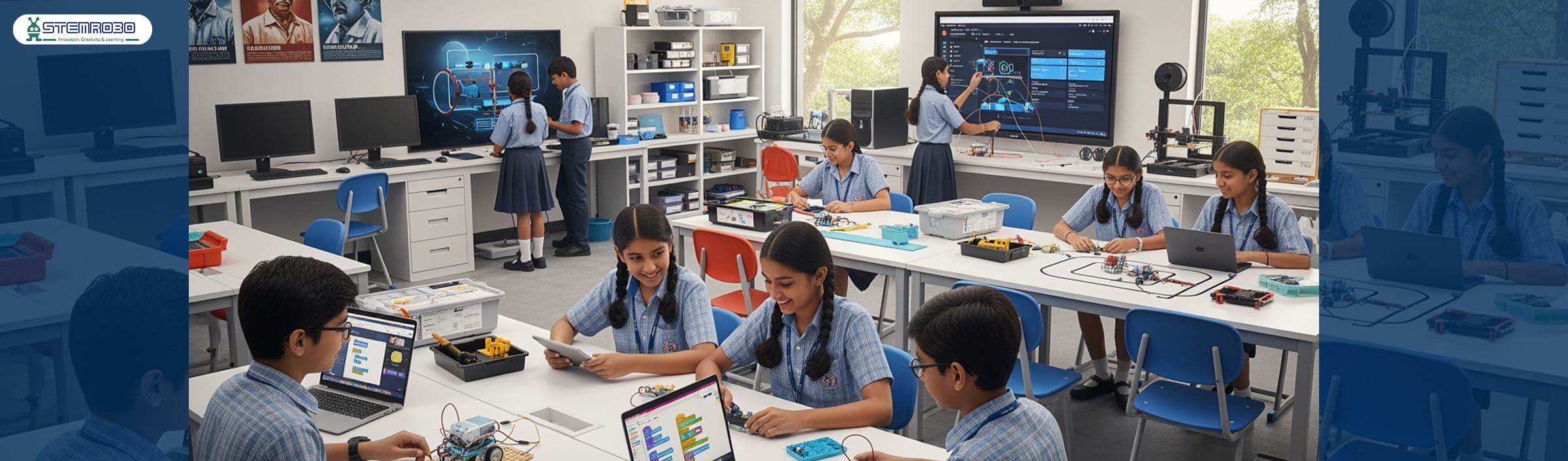
A STEM lab isn’t just another room in the school with the equipment . It’s a new environment where students where curiosity is welcomed, trial and error is part of the process, and students learn by doing.
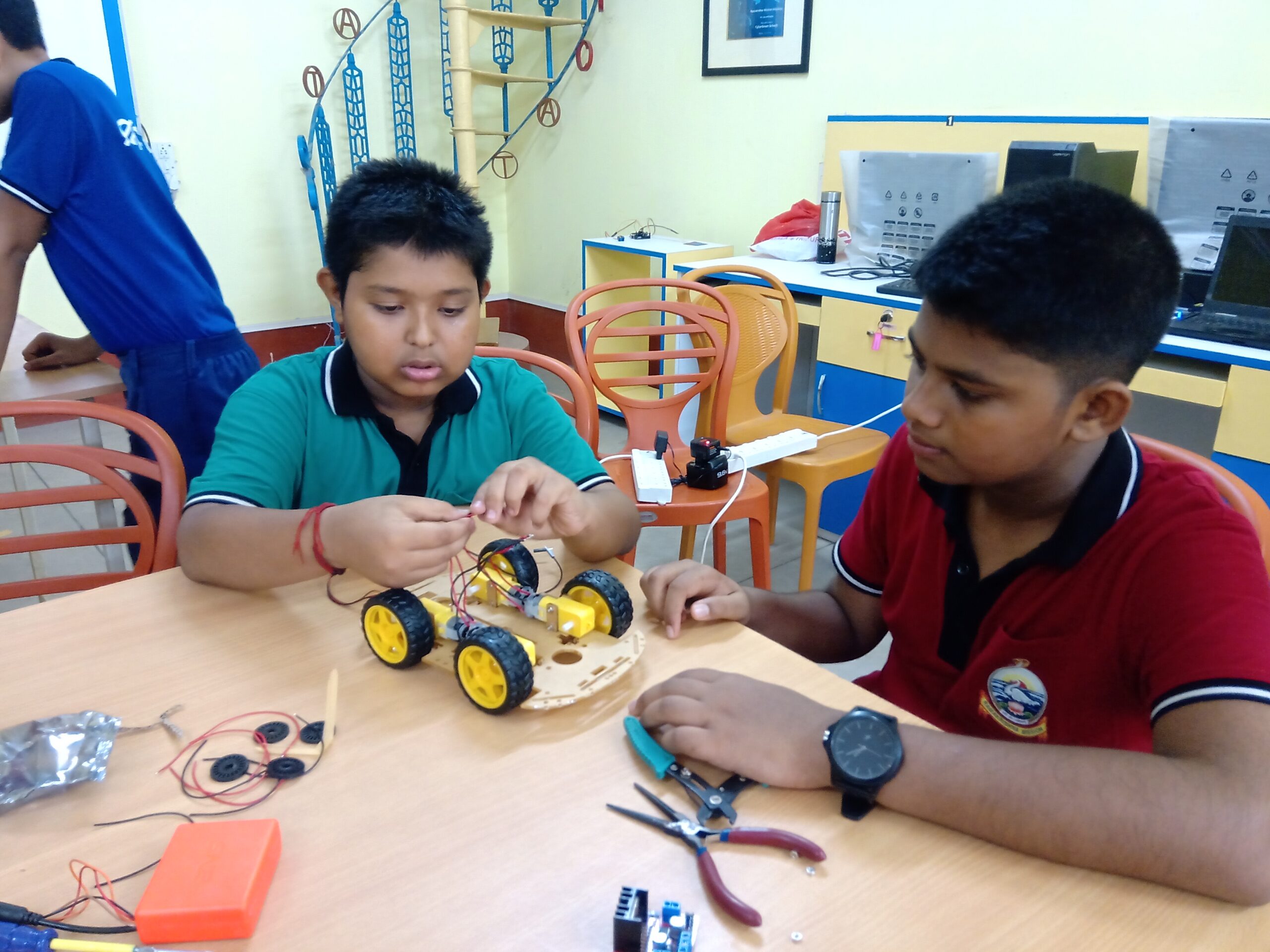
When a student builds a robot and it doesn’t work for the first time, the real learning begins. Through debugging, redesigning, and teamwork students develop practical skills which go far beyond than textbooks.These are the 21st century skills that prepare both students and teachers for the future.
What Makes a STEM and Robotics Lab Truly Effective?
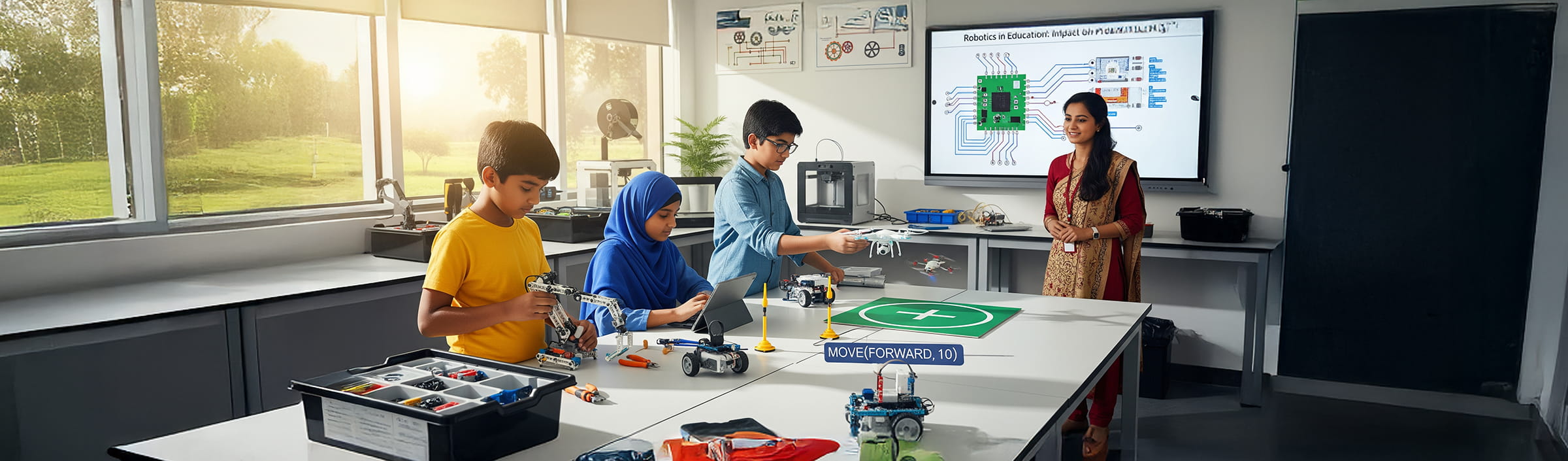
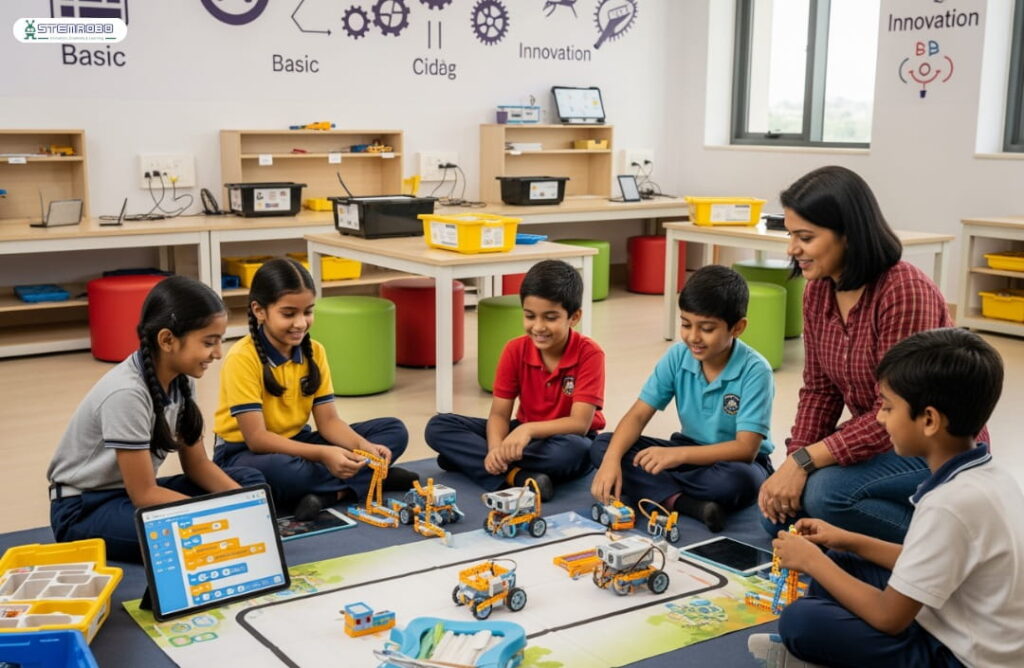
Many schools think a lab setup means simply purchasing the equipment, but a strongly effective STEM and Robotics Lab is a complete learning ecosystem. With the right mix of robotics kits, mechanical components, sensors, programmable boards, and electronics, students don’t just study concepts, they solve problems on their own.
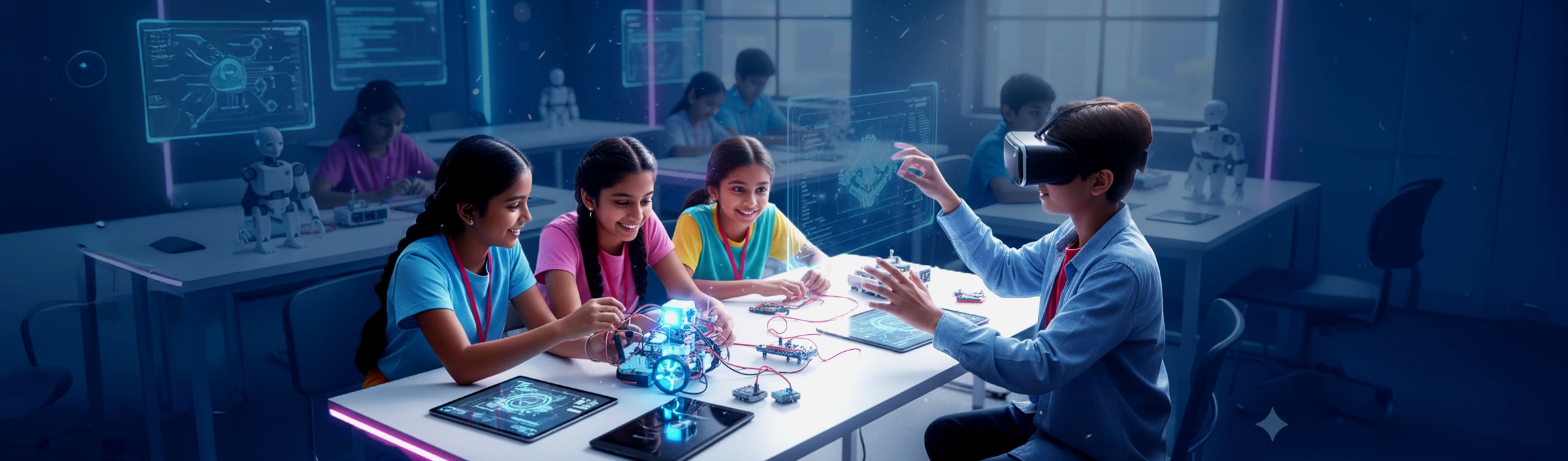
Introducing technologies like AI, IoT, and AR/VR further enhance their learning and become engaging and real-world focused. The purpose is clear to allow students to build, test, fail, and rebuild, because hands-on learning creates deeper understanding than textbooks ever can.
Curriculum That Connects Concepts to Life
Simply having the equipment or installing the robotics and AI isn’t enough. Without proper guidance, the students will struggle to understand and can get confused. That’s why schools needed a proper design for Robotics and AI curriculum. A carefully and quality designed STEM program aligns with NEP 2020, is suitable for K-12, ensuring lessons are interactive and focus on practical skills instead of just memorizing theory from the textbooks. By connecting the lessons to real- world problems, students not only build practical experience but also develop critical thinking while exploring and experimenting with technology.
Learning by Age Group
Primary School: Students explore basic science concepts motion, balance, sequencing, and logic. With visual coding and safe components, learning feels playful but meaningful.
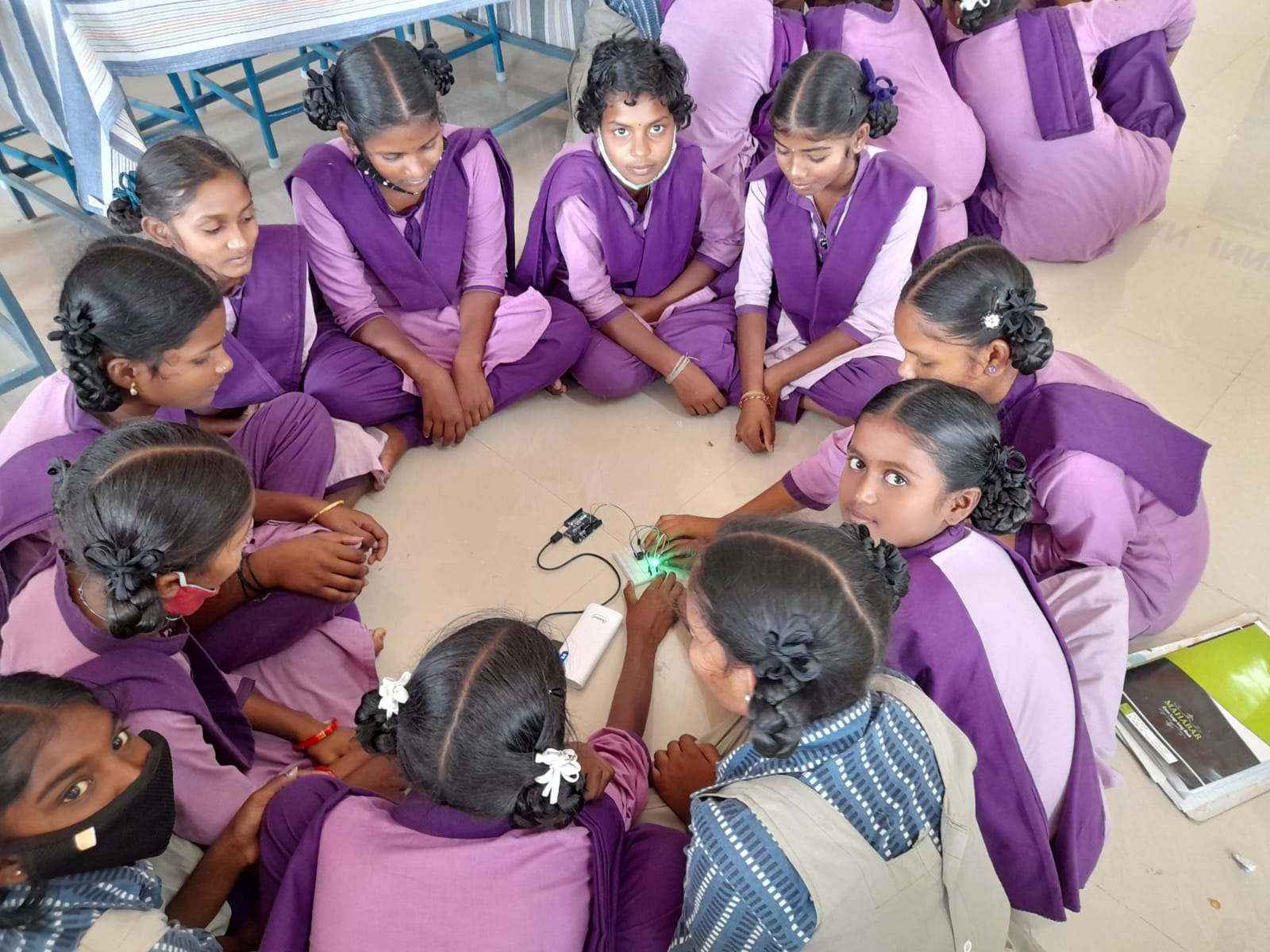
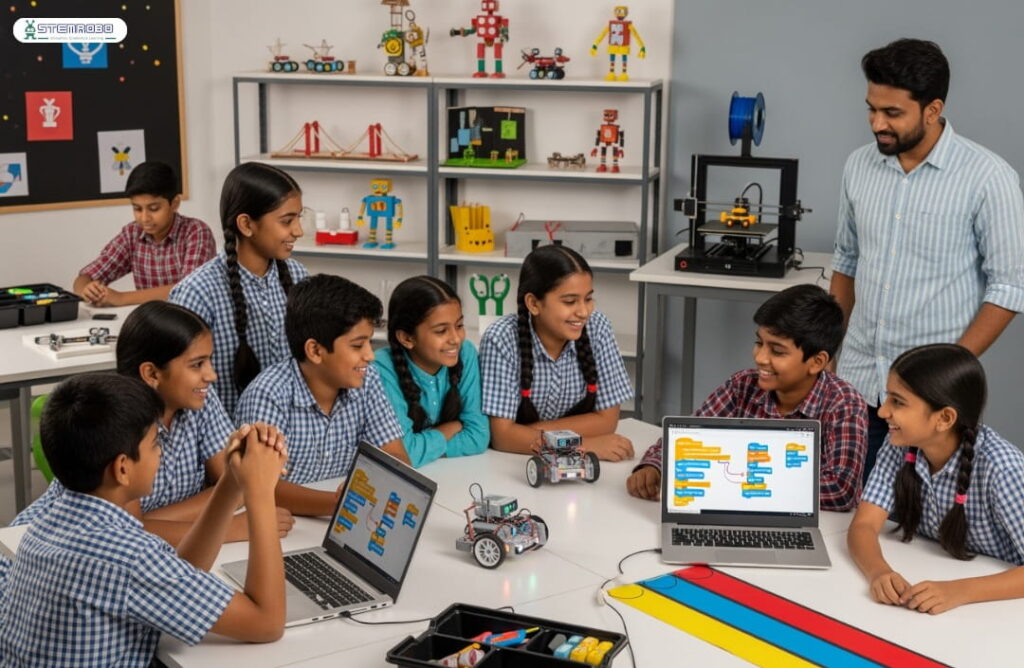
Middle School: Through the practical experience with sensors, circuits, and logical reasoning. They build real life Projects including smart streetlights, obstacle-detecting robots, and basic automation models.
High School: This is the stage where ideas turn into Innovation. Students are frequently engaging with AI & IoT Lab programs, robotics automation, data-based decision making, and real-life problem statements.
Learning progresses gradually, helping students to build more confidence and curiosity.
Teacher Training: Turning Labs into Learning Spaces
A well-equipped lab can only succeed when teachers feel confident using it. That’s why teacher training programs play a vital role. Those Schools which are investing in certified educator training programs can see stronger learning outcomes, as masters are becoming comfortable working with robotics, AI, IoT concepts, coding tools, and managing hands-on lab sessions effectively.
Programs like Certified Educator Programs and professional development courses help teachers move from traditional teaching to facilitation. Teachers don’t need to be engineers, they need confidence, proper guidance, and ongoing support.
Digital Platforms & Learning Management Systems
Modern AI and robotics education platforms offer much more than hardware alone.Schools gain access to coding and AI platforms, structured lesson plans, interactive simulations, student progress tracking, and seamless LMS integration. These tools help teachers manage classrooms more effectively while providing students a proper guiding and personalized learning paths which making STEM education a true one-stop solution for new-age schools.
AR & VR Labs: Making Learning Immersive
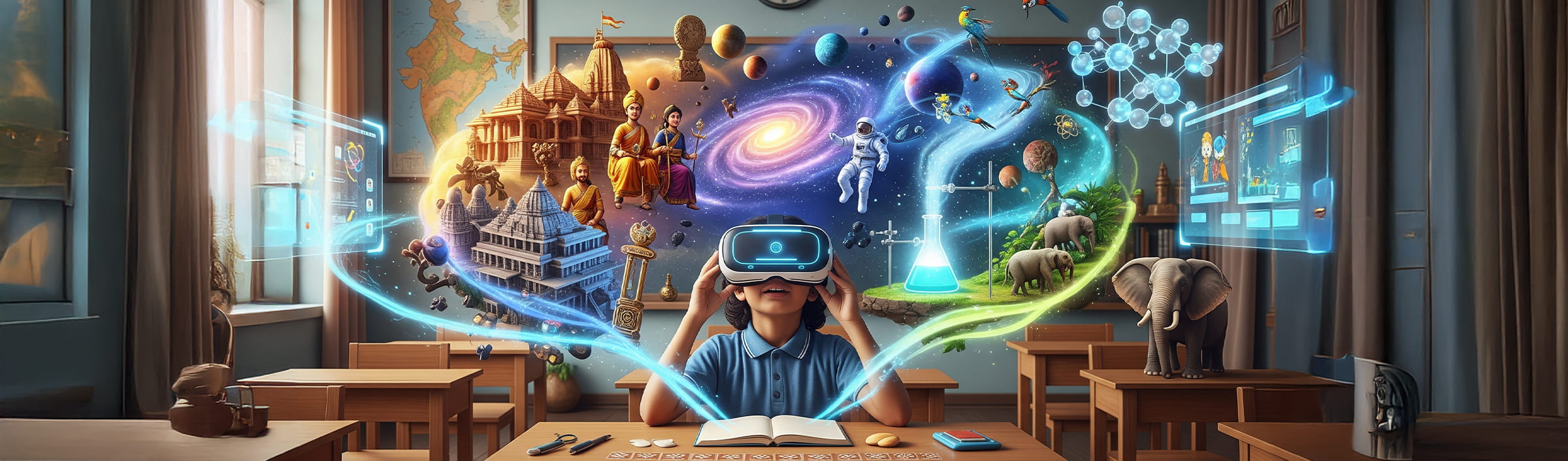
One of the most interesting and exciting advancements in modern education is the use of AR and VR in the classrooms. With a VR lab allows students to move beyond reading through textbooks and start learning through practical experience . They can step inside the human body, see how they function , travel through space and galaxies, understand the machines on a deeper level, and students genuinely enjoy it.
With proper AR and VR training programs and dedicated faculty training, teachers can easily learn how to seamlessly integrate immersive content into regular lessons. This creates dynamic AR-VR classrooms that keep students engaged and curious.
STEM Education for Every School, Everywhere
Earlier, advanced learning labs were mostly limited to metro cities. Today, programs such as Atal Tinkering Labs, ATL registration, and CSR initiatives are bringing these opportunities like STEM labs to schools in Tier 2 and Tier 3 cities. With the support of STEM education companies in India and experienced STEM education consultants, schools can adopt innovation in a simple and structured way making quality education accessible and equal for all.
A Practical Example from the Ground
One school wanted more than the usual science labs and opted for a complete end-to-end solution for K–12 education. This included a robotics lab, AI and IoT curriculum, teacher training, and continuous academic and technical support.
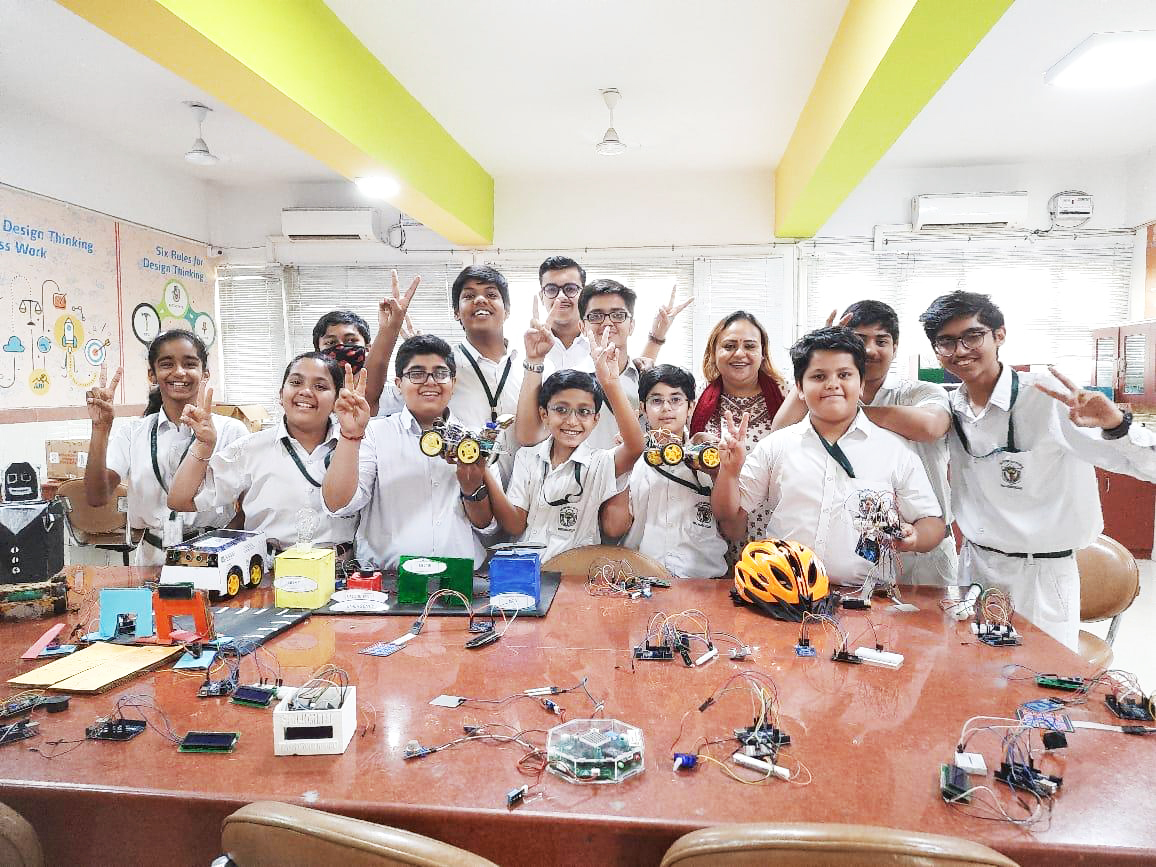
In just a year, students were showcasing original projects at exhibitions, while teachers saw improvemnet in engagement, stronger teamwork, collaborating, and improved logical thinking.
Companies like STEMROBO Technologies follow this approach by helping schools to create complete learning ecosystems, rather than just labs supporting them from setup to long-term success.
Robotics & AI Are for Everyone
Robotics isn’t just for future engineers . Creative students enjoy designing robot models, logical thinkers love solving coding challenges, and socially conscious students focus on sustainability based projects. Curious minds also get a chance to understand how technology influences everyday life. That’s why robotics and AI in schools focus on inclusion, not specialization.
Preparing Students for Tomorrow
The future belongs to learners who can think for themselves, work well with their teammates, handle real-world problems, and use technology in an effective way. A well-designed STEM and robotics program helps to develop these skills. Instead of simply absorbing information, students begin creating, building, and innovating.
Modern Education: A Necessary Step Forward
Education is no longer about scoring the higher marks. It’s about preparing the students to deal with real life.
When schools invest in STEM Lab Setup, Robotics Lab Setup, AI & Robotics Lab Company partnerships, AR VR Lab Setup, and Teachers Training Programs, they take a powerful step toward a future-ready learning environment.
What schools decide today defines how prepared their classrooms will be for the future.