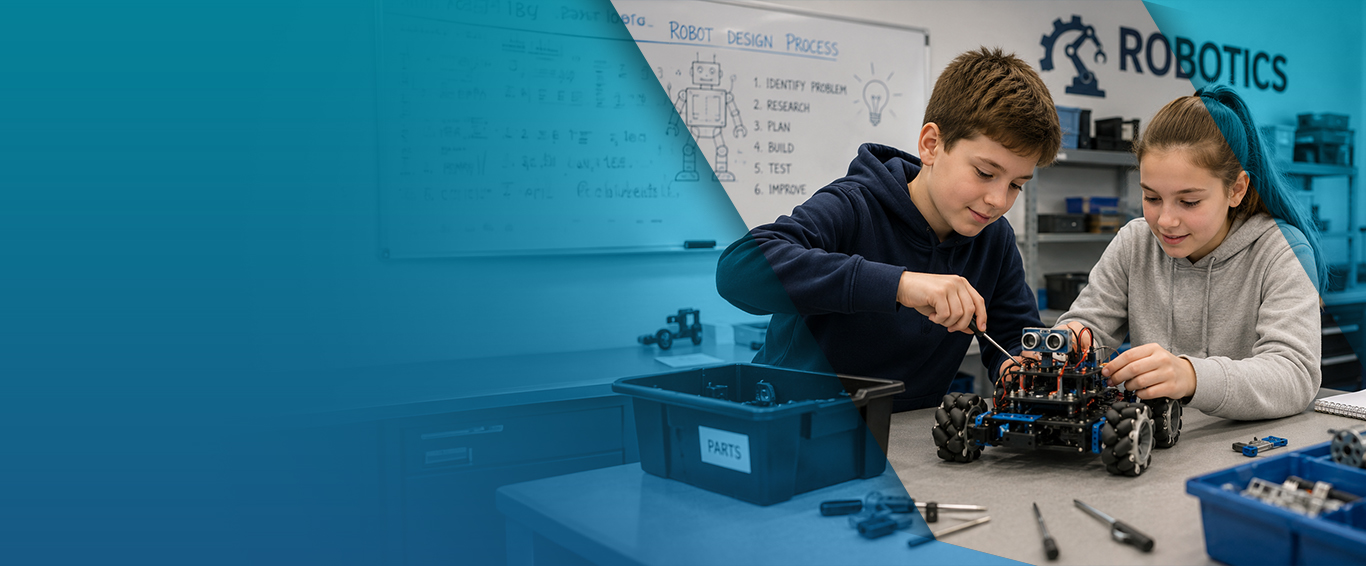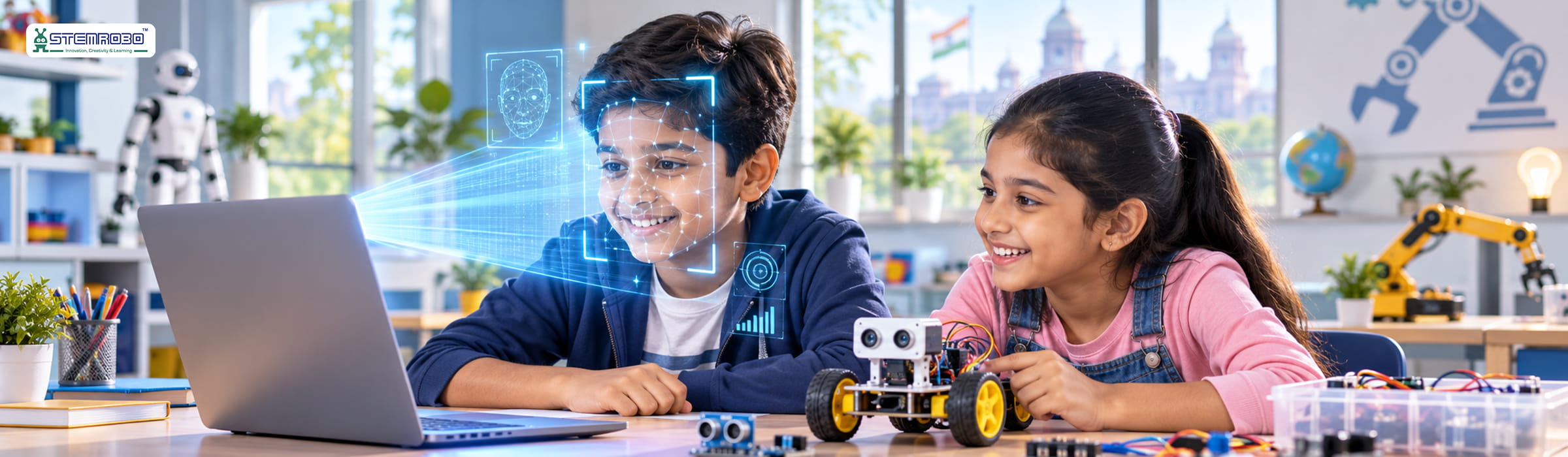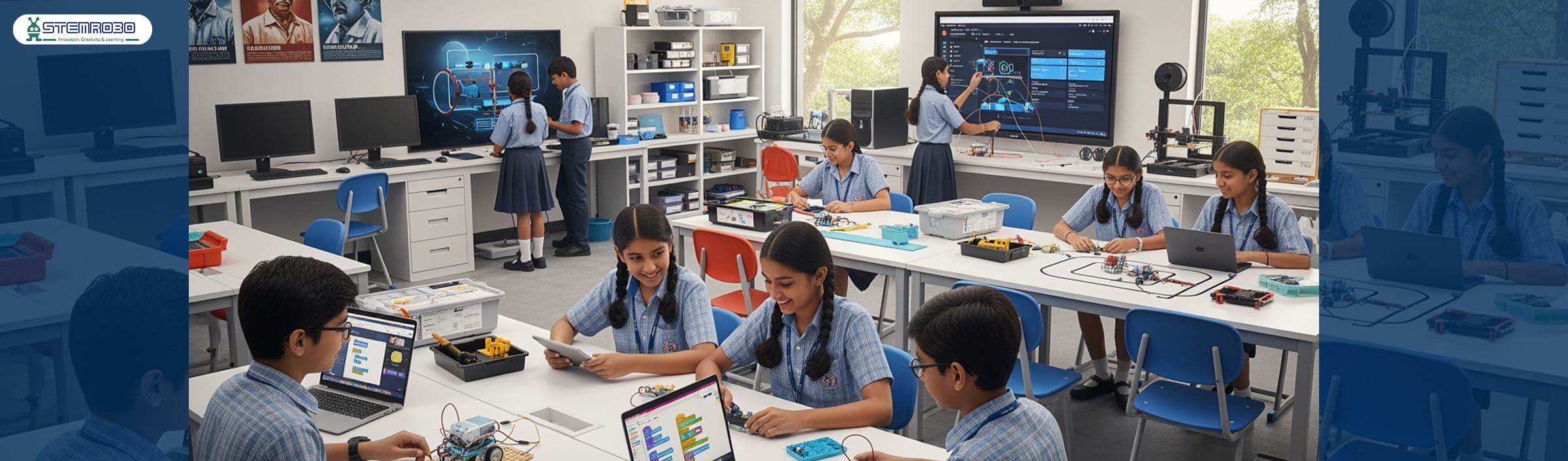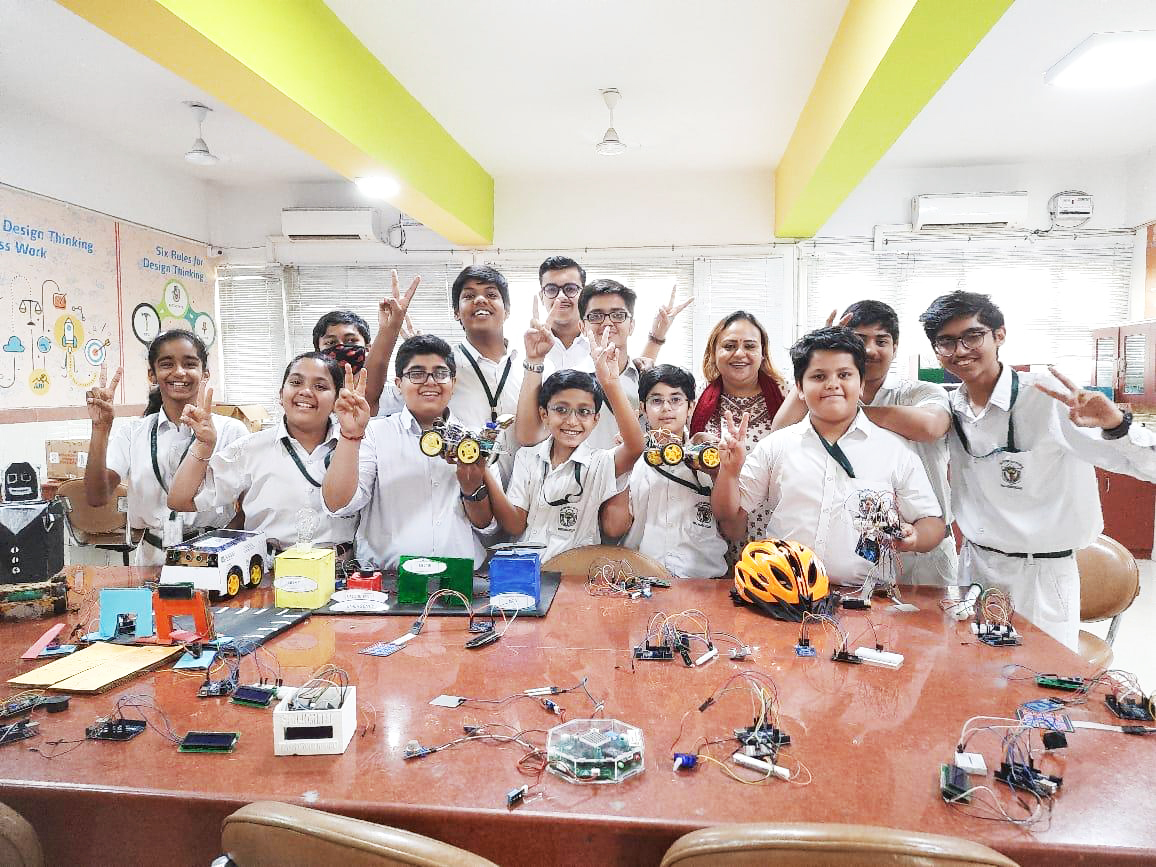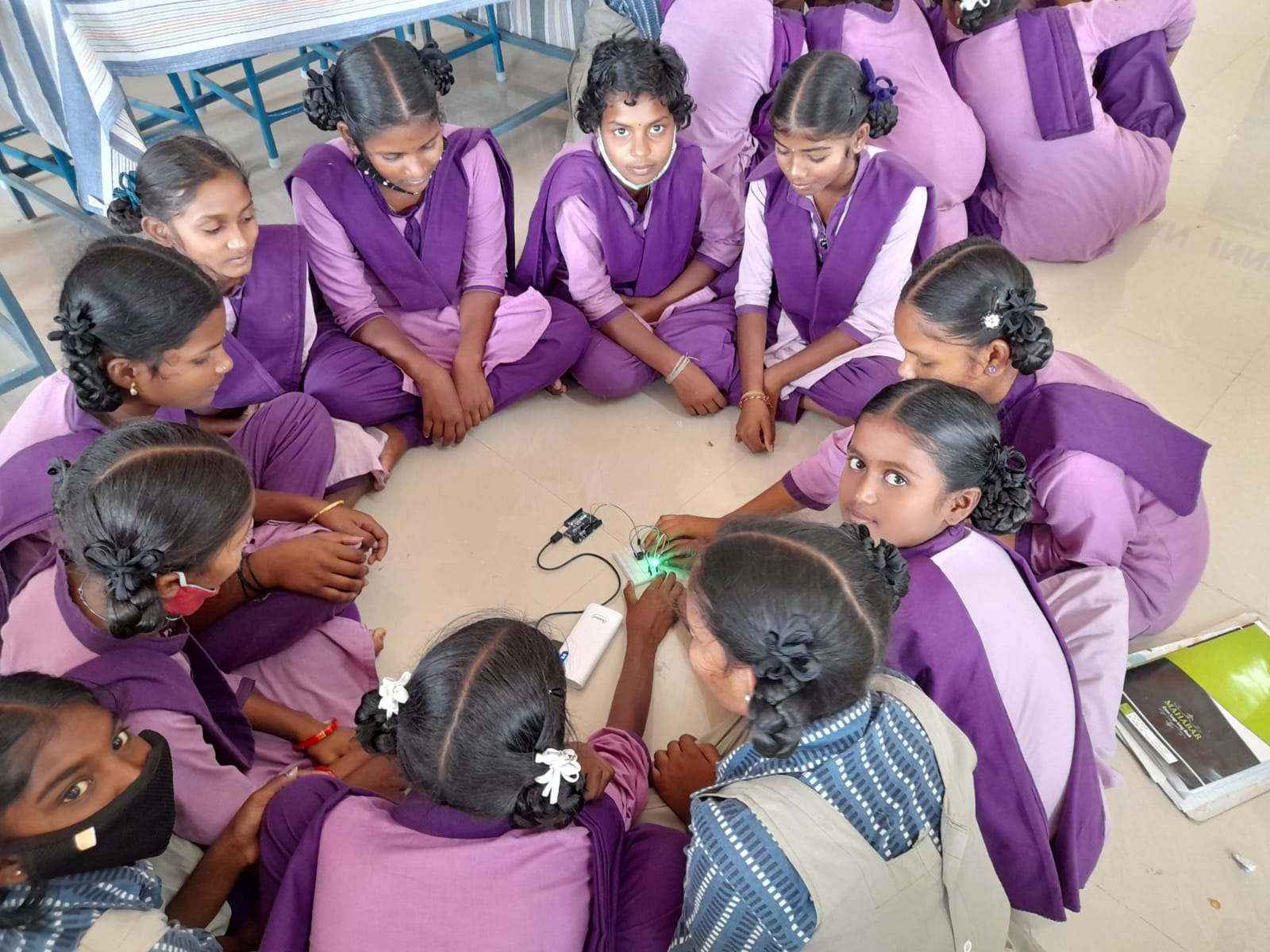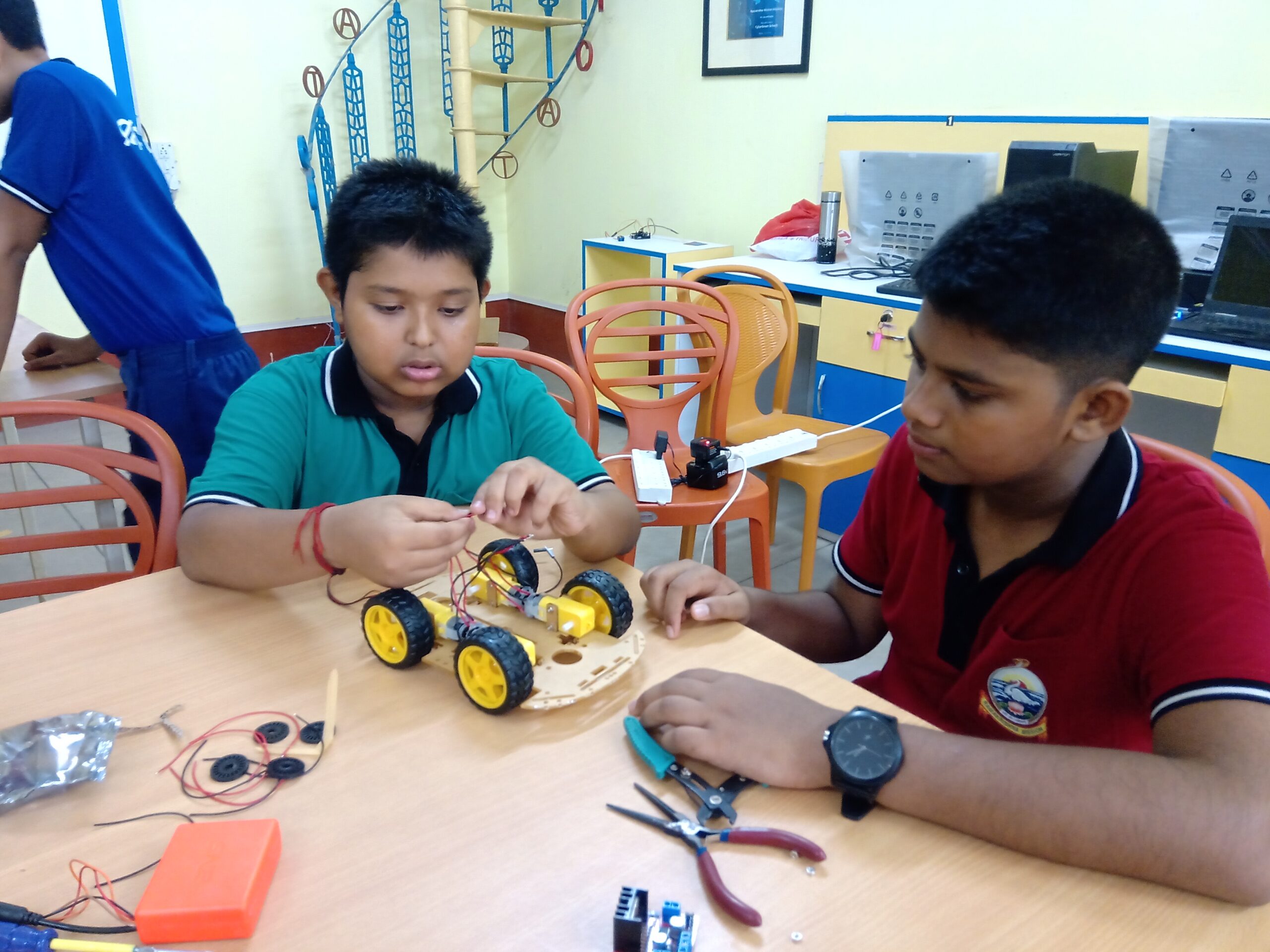
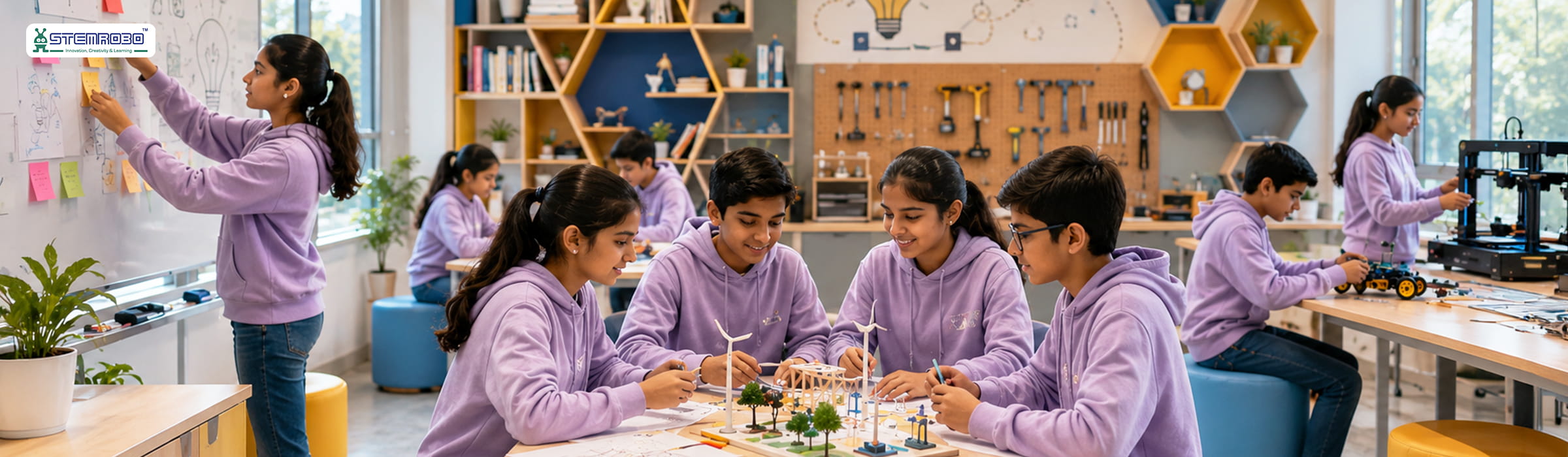
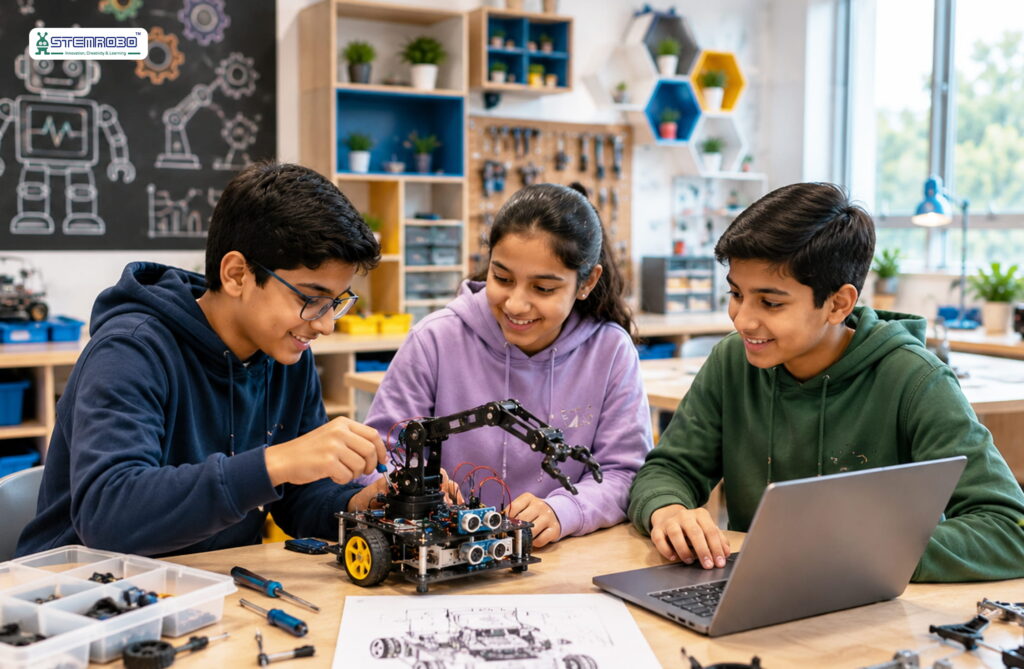
A bunch of students are gathered around the robot that is not working. One checks the circuits, another re-programs the robot and a third one tests the sensors again. After many unsuccessful trials, the robot works.
The classroom suddenly becomes lively and noisy.
But not that long ago, you would rarely see a situation like that in school. Today, that is already a piece of new culture within education. Children are supposed to invent, construct, create, find solutions and to discover things instead of repeating what is in the book.
New dimensions of learning are entering the classrooms.
From AI driven modeling and intelligent automation to practical problem solving, classrooms are becoming innovation hubs where you will find students learning through real experience, instead of focusing on grades. Schools are more about creativity, problem solving, teamwork and innovation.
Because only by doing, you will have an original answer.
This way, the future will not be for students that know a lot, but for students that invent and build a better future.
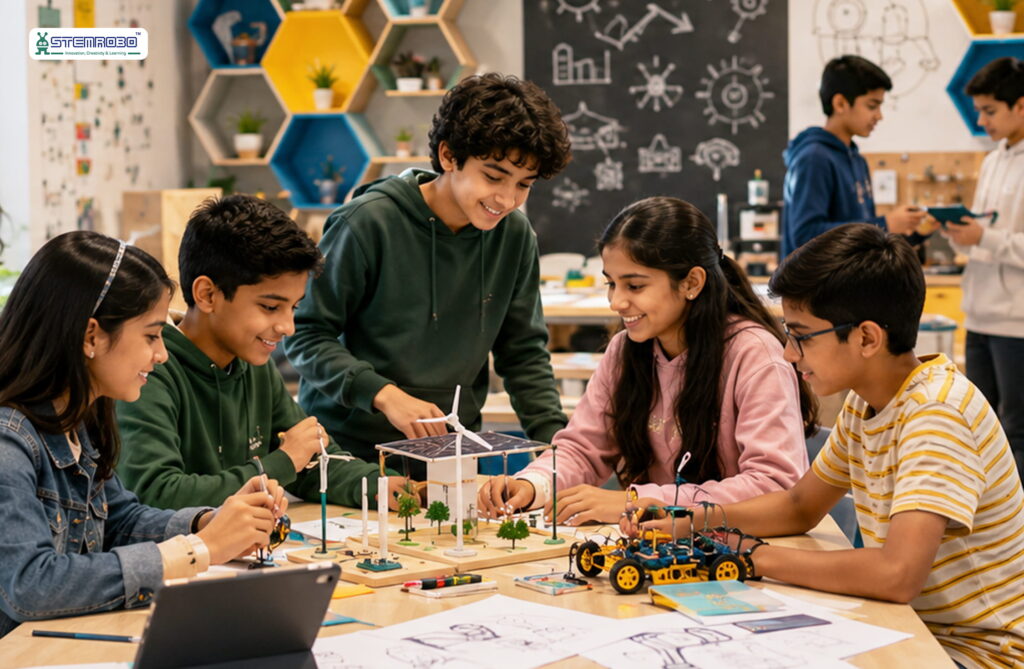
The Shift in Modern Classrooms
For decades, schools stuck to the same model. The teacher lectured and students copied and then recalled that knowledge during an exam.
This model was responsible for building academic bases but rarely encouraged imagination, experimentation or creativity.
However, the world is changing faster than ever and AI, robotics, automation and digitalization have transformed all areas of business. Therefore, many students leaving school today will have jobs that are not yet invented.
Hence schools need to use Generative AI for learning and modern experiential learning methods to ready students for new industries.
This brings forth a fundamental question; are our schools readying children for the future or for the past?
It is this question that has sparked a drastic change in the system and moved beyond a student-passive learning environment towards student active engagement in learning and solving real problems.
The act of learning now includes more than just listening and memorizing.
Students of today want to create, test, build and discover!
Why Design Thinking Matters
One of the most significant changes happening in schools now is the advent of Design Thinking.
Different from traditional teaching that mainly focuses on finding the ‘right answer’, Design Thinking encourages children to explore issues with creativity and find viable solutions through experimentation.
Picture this: If you asked children to:
‘What should we do with all of this food waste in the canteen?’
The kids would investigate the problem, conceptualize, build a prototype of the problem, test the prototype, refine the design on their notebooks.
Learning is real immediately. The kids connect to what they are doing, because their solution is actually working on a problem that is actually happening, right there.
That’s where an interesting thing starts to occur. Kids are not afraid of failure.
They realize innovation involves trial and error. A failed prototype does not become a failure – but an element that needs to be rethought to improve their idea.
Because innovation happens through experimentation.
A child who was not very vocal may confidently explain an idea of a prototype and another child who was struggling with theory may discover their hidden creativity through constructing a workable model.
The change of mentality is very strong.
Today, we are also starting to see the use of AI tools for teachers in the classroom to help them facilitate project based learning more efficiently, and in turn enhancing the learning process within the innovation-focused classroom environments.
Where Ideas Come to Life
Some of the most dynamic places within our current schools are its Innovation Labs.
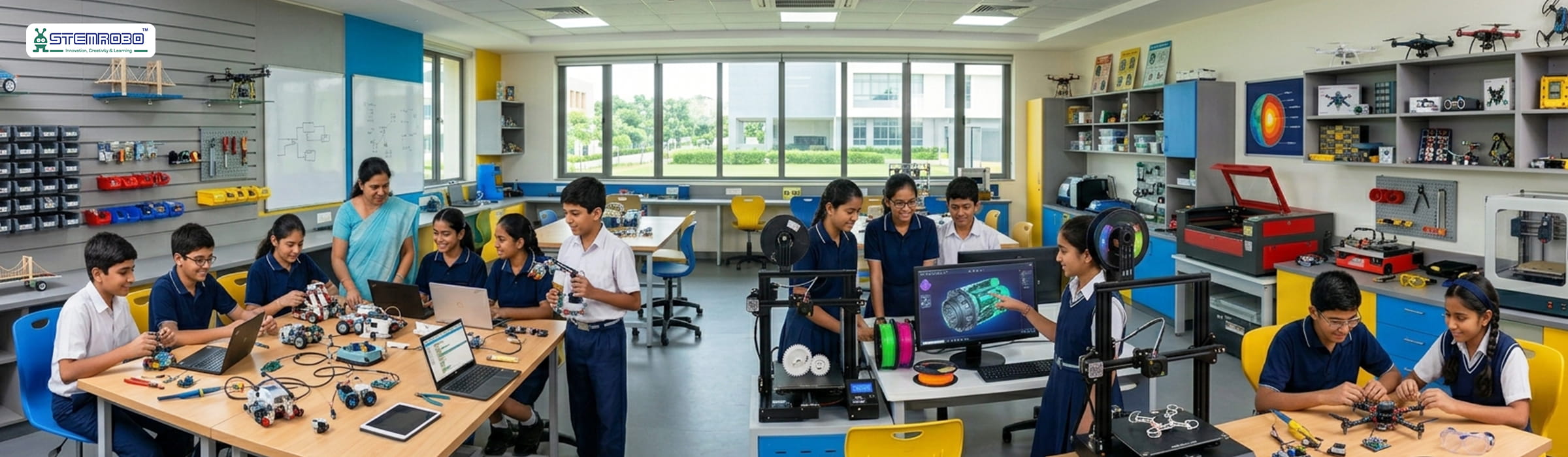
Innovation labs turn thinking into practice; as opposed to learning theories from textbooks we now experience them directly with technologies to build tangible creations.
These are places for students to explore:
- Robotics and Automation
- Coding and AI technologies
- Smart systems based on IOT
- Electronics and Sensors
- 3D printing technologies
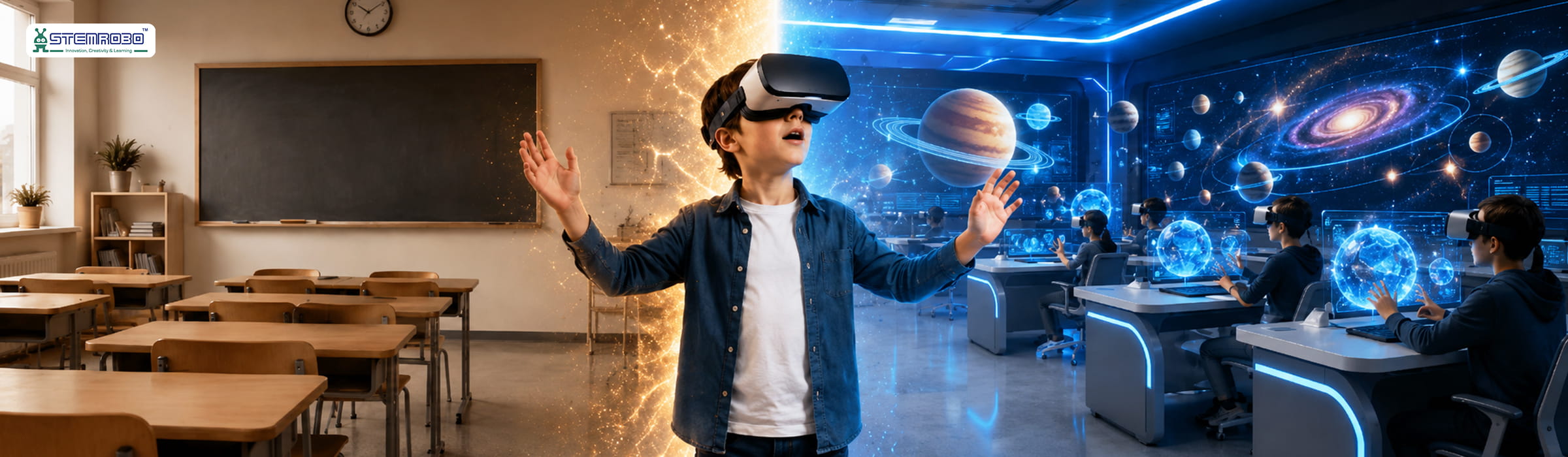
– Augmented and Virtual Realities.
This experiential approach to learning shifts education on its head. Science is no longer something studied but is applied when building smart sensors for projects. Math is no longer a formula being drilled but can be experienced through coding a robot to move in precise directions. Engineering goes from a paper diagram to an implemented prototype.
Learning can become living.
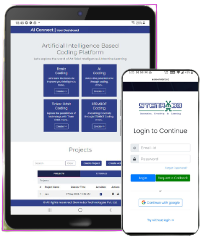
There are organizations such as STEMROBO Technologies that assist schools in the development of these ecosystems in the form of robotics labs, AI learning spaces and experiential learning STEM programs to foster imagination and tangible learning.These future-ready ecosystems are also facilitating the evolution of AI learning platforms, which integrate innovation, coding, robotics and smart learning within a singular framework.
Robotics is Building Confidence
There’s a huge gap between studying technology and building it.
Which is exactly why robotics has become one of the most exciting aspects of education today.
When students put together their own robot and watch it respond to their code. Concepts like programming begin to click. Code becomes less abstract. Technology becomes more tangible.
What is robotics teaching students beyond all of the technical aspects?
Lessons in patience, teamwork, determination, and problem solving. Robots rarely work correctly the first time. A sensor can have a phantom malfunction, a code could give an error, a mechanism might just refuse to engage.
Students diagnose errors, redesign mechanisms and repeat the attempt.
Somewhere along the way confidence builds.
Students come to understand that invention is not about perfection. But continued progress.
The practical experiences offered by robotics are transforming education towards more individualized and responsive personalized AI learning opportunities, where the subject is more about interaction, exploration and immediate feedback rather than rote memorization.
STEM Learning is Shaping Future Innovators
The next workforce is not anything like the industries we are familiar with today. All those jobs relating to Artificial Intelligence, Robotics, Data Science, Automation, new-age technologies etc. Are growing with every passing day. New age careers of the future are centered on attributes of creativity, adaptability, team-work and problem-solving skills that goes far beyond mere learning in classrooms.
This is exactly why the schools are moving towards integrated STEM learning.
STEM (Science, Technology, Engineering and Mathematics) learning is no longer taught as individual subjects but integrated with each other through project-based learning, innovation challenges and activity-based learning.
Currently students are:
- Creating smart city models
- Developing automation systems
- Designing software based application through coding
- Developing intelligence based devices
- Working on real time solutions using technology.
This method of teaching is proving to be quite effective as it allows students to comprehend as to how these subjects apply in real time situations.
EdTech companies such as STEMROBO Technologies are helping schools build futuristic learning environments for their students and expose them early on to new-age technologies with real-world experiences.
Many schools are also integrating student learning analytics and intelligent classroom systems to get a better understanding of student development and improve student engagement as well as skill-based learning experiences.
Beyond Academics
One of the great benefits of learning based on innovation is that the students develop skills that will be useful throughout their lives while developing projects and solving problems.
A student presenting a robotics project, for example, is improving his communication skills. A group designing a prototype is experiencing team-building and leadership. A child trying to solve bugs in his code is training his patience and his analytical thinking.
In such environments, children are forced to learn and grow more independently, creative, and pro-active. Most importantly, they stop learning just to be graded or passed, but start learning because they are truly interested. And it is when education becomes interesting that learning becomes immensely more impactful.
Current innovation systems are bringing in new approaches such as:
- experiential learning
- project based education
- future ready classrooms
- robotics education
- AI enhanced learning
These ideas help students prepare not only academically, but also for the modern world.
A New Learning Culture
The most significant change in schools now is not just the technology – it is the culture.
Schools are shifting slowly away from static classrooms in which students passively memorize facts in order to achieve well on tests. They are beginning to foster classrooms in which students are able to challenge concepts, ask questions openly, and feel free to invent anything they choose.
Teachers are moving beyond lecture and more toward acting as facilitators of their students’ investigations, experiments, and discoveries.
Classrooms are also beginning to expand beyond the confines of textbooks.
Classrooms are transforming into places where imagination, technology, and creativity blend together to help form the innovators of tomorrow. It is because innovation does not flourish in passive classroom environments.
Conclusion
This new phase of education sees the prominence of creativity, innovation, and hands-on experiences taking on equal importance with academics.
The application of Design Thinking and Innovation Labs have enabled schools to evolve learning from a classroom concept into a dynamic experience that involves building, experimenting, problem-solving and creating solutions of value.
Robotics, AI powered learning and experiential STEM learning initiatives are cultivating students with the confidence and future skills required for navigating the future.
The schools that are innovating today are not training students for exams.
They are preparing them to lead, to invent, to be innovative and for the future.
Because the world of tomorrow will be for those who can dare to imagine and turn ideas into reality.