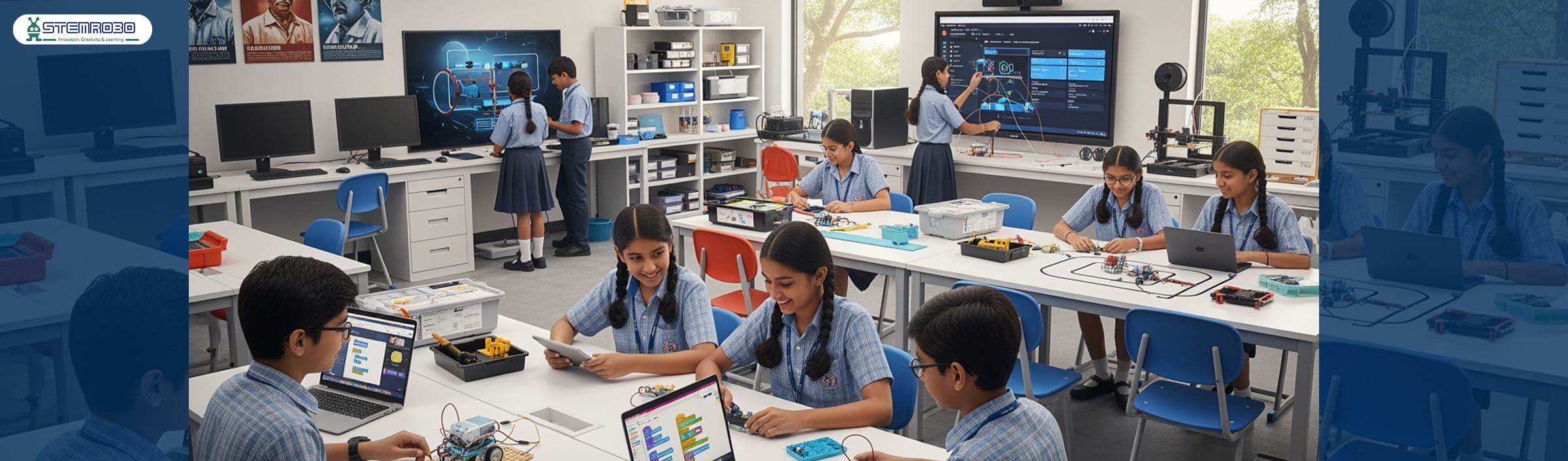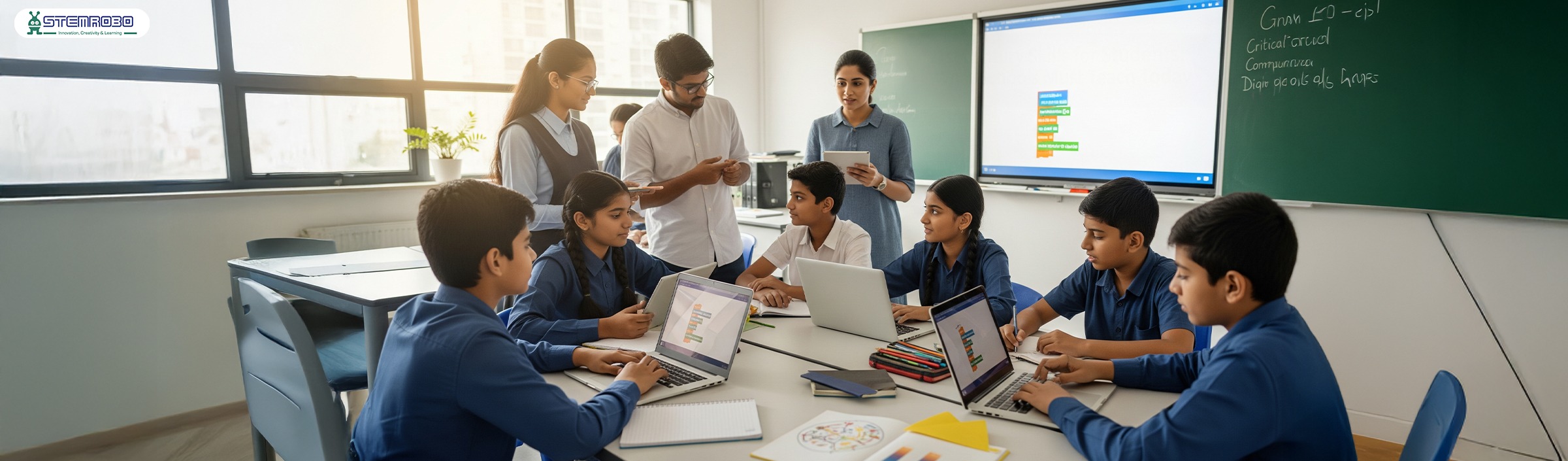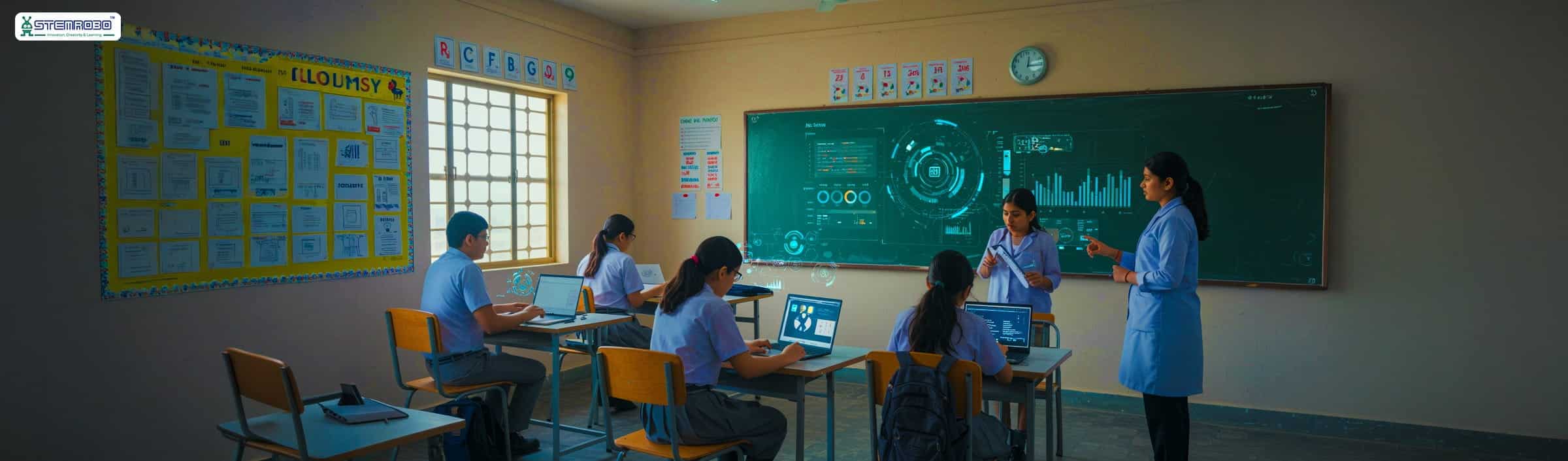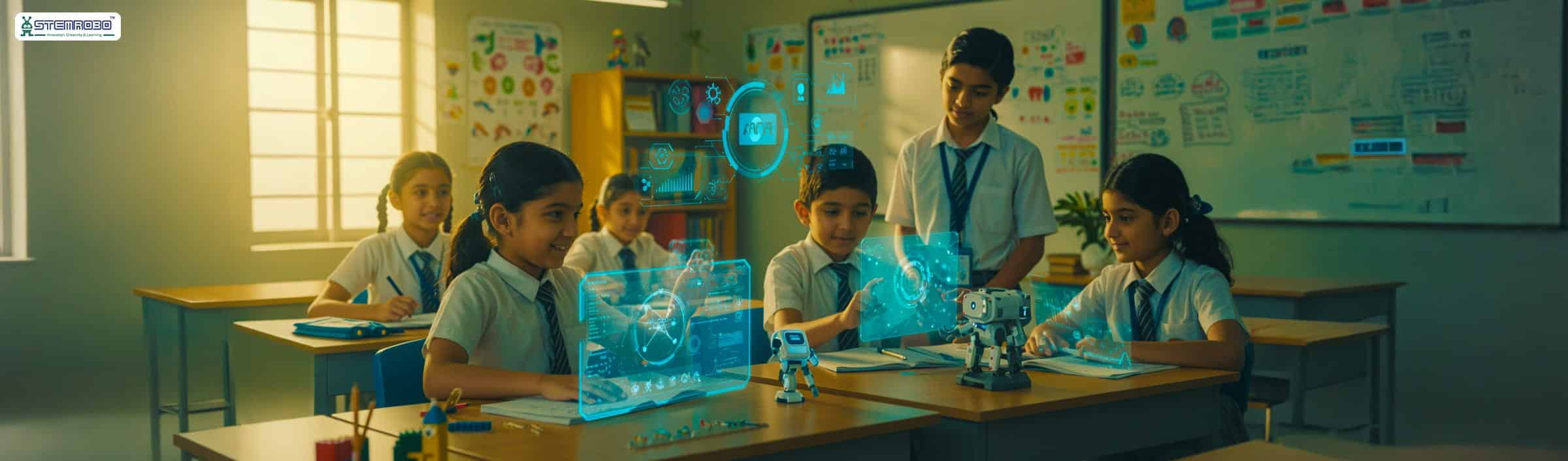
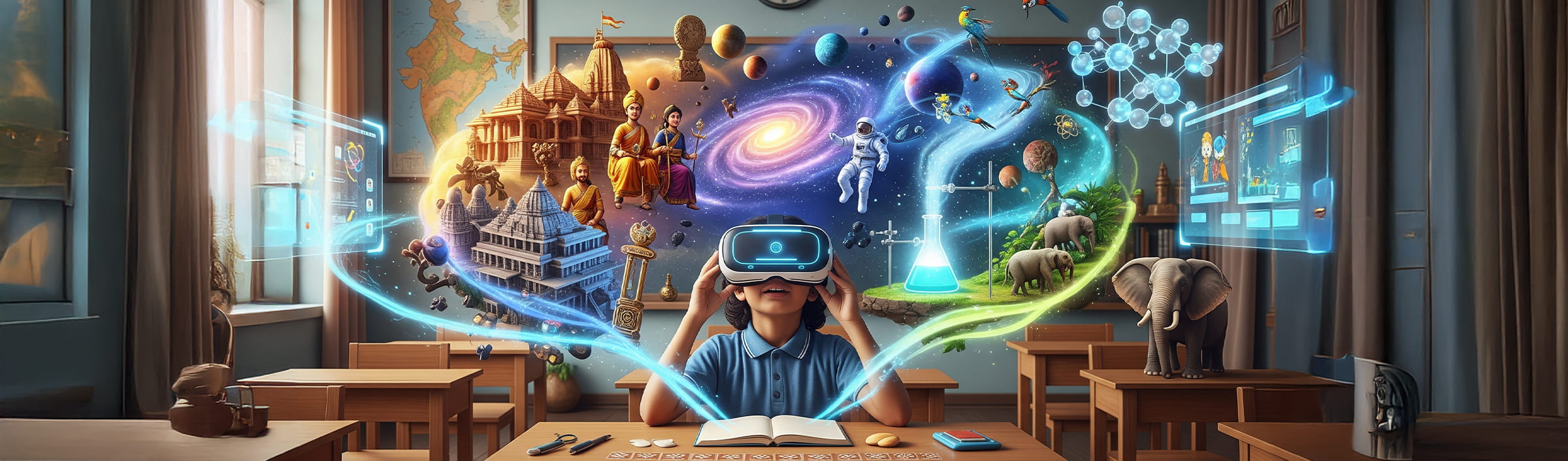
For decades, learning has been only limited to textbooks , benches and classroom walls. Students have been asked to imagine distant places, complex systems, and historic moments only through words and images from textbooks. They’re not discovering new things and yet imagination can take us only so far. Learners can experience and understand new things by exploring, and interacting. Virtual Reality is transforming education by replacing passive reading with active discovery. It bridges the gap between the digital world students live in and the traditional methods they are taught with.
The Gap Between How Students Live and How They Learn
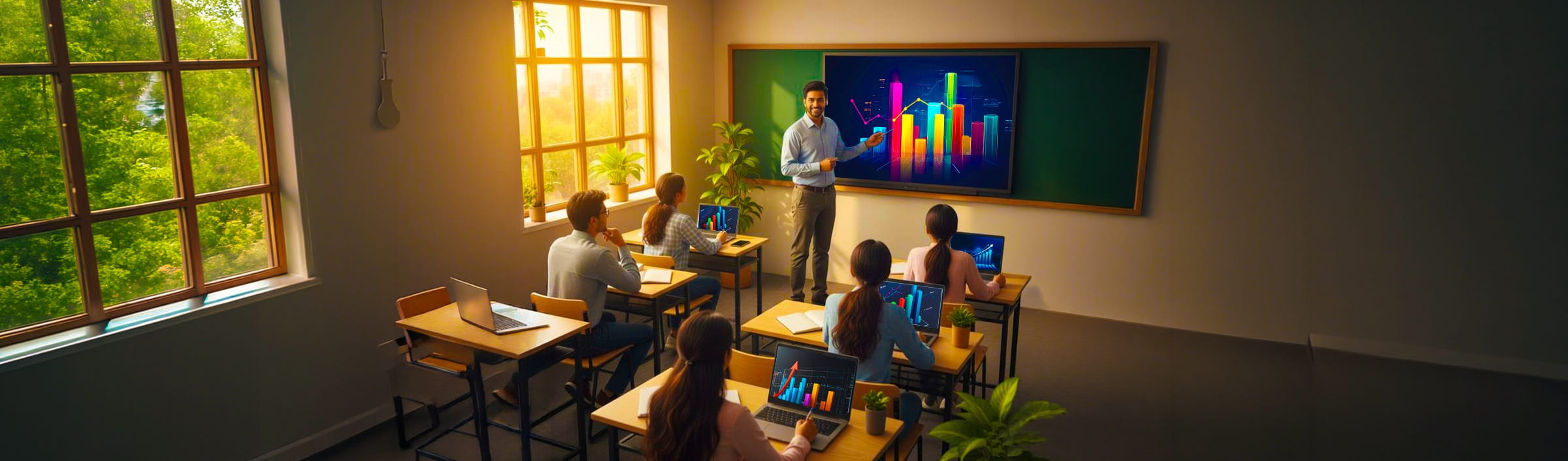
Children today are raised in a world filled with digital technology. They are already interacting with smart phones, exploring new apps, and communicating through social media whereas in the classroom students are still using chalk, talk and printed pages. Textbooks can explain the solar system, but they cannot feel Saturn’s rings. A diagram can explain the human heart, but it cannot allow students to step inside and see how life moves through it.
AR & VR in education remodel these limits into possibilities. With a VR lab setup for schools, learners do not just read about history, they stand in ancient civilizations, they don’t memorize science, they experience it.
Today’s Education demands more than remembering facts. It requires 21st century skills for students to adapt skills like critical thinking, creativity, collaboration, and problem solving. Virtual Reality naturally channels these skills by transforming students from passive observers into active discoverers.
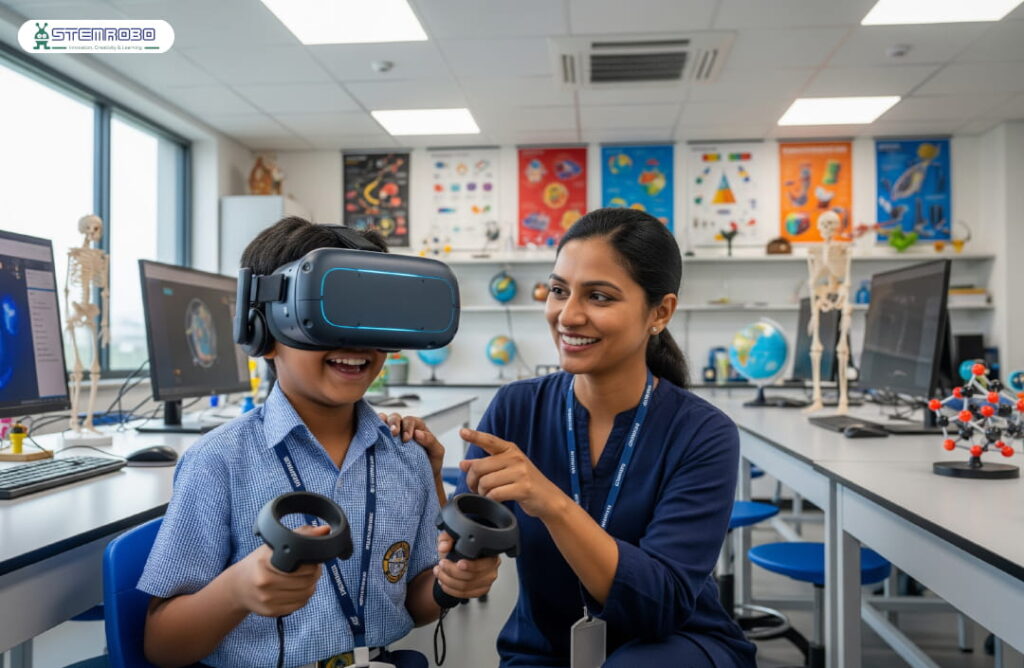
What Makes Virtual Reality Different?
Other technologies show information but VR allows students to enter inside it.
Instead of watching a video of the water cycle, students can stand inside a cloud and watch condensation happen around them. Through this they can experience real life concepts which will help them to remember the concepts for a longer time and it keeps the ideas far more effective.
This approach directly brings up 21st century skills for students’ curiosity, problem solving, collaboration, and creativity. These qualities only grow when students explore fresh ideas, not when they only read the handbooks.
Learning beyond Textbooks
- Science: Students can stand inside the human body and see how each part of the body works together.
- History: They can walk through in the past instead of just to read about them.
- Mathematics: Numbers and figures change into objects that can be moved, touched and understood easily.
- Environmental studies: Real scenes of nature can help children to feel and attract towards nature more.
These experiences become the starting point of a modern STEM Curriculum for Schools where understanding grows from doing instead of rote learning.
A New Role for Teachers
Virtual Reality does not replace teachers, it amplifies them. The educator becomes a guide inside a digital world, asking questions, starting discussions, and connecting experience with concepts.
Through Teachers training program, Certified Educator Training, and AR VR Faculty Training Program, educators learn how to blend pedagogy with immersive tools. Classrooms shift from lecture halls to exploration studios.
How Schools Can Start the Journey
To adopt VR meaningfully, schools need more than headsets. They require a complete ecosystem of content, hardware, curriculum mapping, and support. That is why many institutions look for an End-To-End Solution for K-12 School.
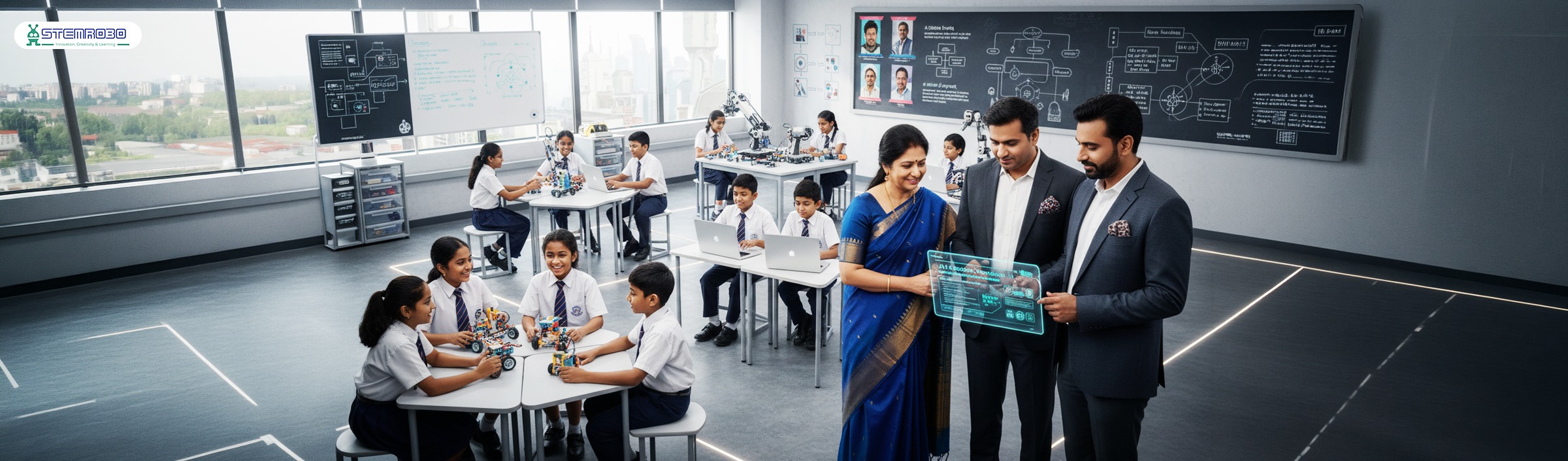
Organizations like STEMROBO Technologies, known as a leading Educational Technology Company and AI & Robotics Lab Setup Company, help schools Digitize Your School with STEMROBO by integrating VR with coding, robotics, and AI platforms. Such connected environments ensure that Virtual Reality becomes part of daily learning, not a one-time attraction.
Learning for Every Child
One powerful aspect of VR is inclusion. Slow readers grasp concepts through visuals. Children with special needs learn in controlled, stress-free environments. Rural students visit museums and laboratories they may never physically reach. A smart Learning Management System connected with VR tracks progress and supports personalized paths for each learner.
Connecting VR with AI, Robotics and IoT
Virtual Reality works best when combined with other new-age labs.AI & IoT Lab for Schools lets students design smart cities in VR and later build real sensors. Robotics & Coding Lab for Schools allows them to simulate robots before actual assembly. STEM and Robotics Solution for Schools connects imagination with engineering. This blend prepares students for careers in Robotics and artificial intelligence companies in India and beyond.
Beyond Subjects: Building Life Skills
VR education is not limited to science. Language students can practice conversational skills in virtual markets in Tokyo or Paris, etc. Commerce learners can experience stock markets & trading. Even soft skills like public speaking improve when students present in simulated auditoriums.
This Type experiences directly develops Learning and Innovation skills that industries demand. No wonder Robotics & AI Company K12 Segment Solution providers are rapidly adopting VR as a core component of education.
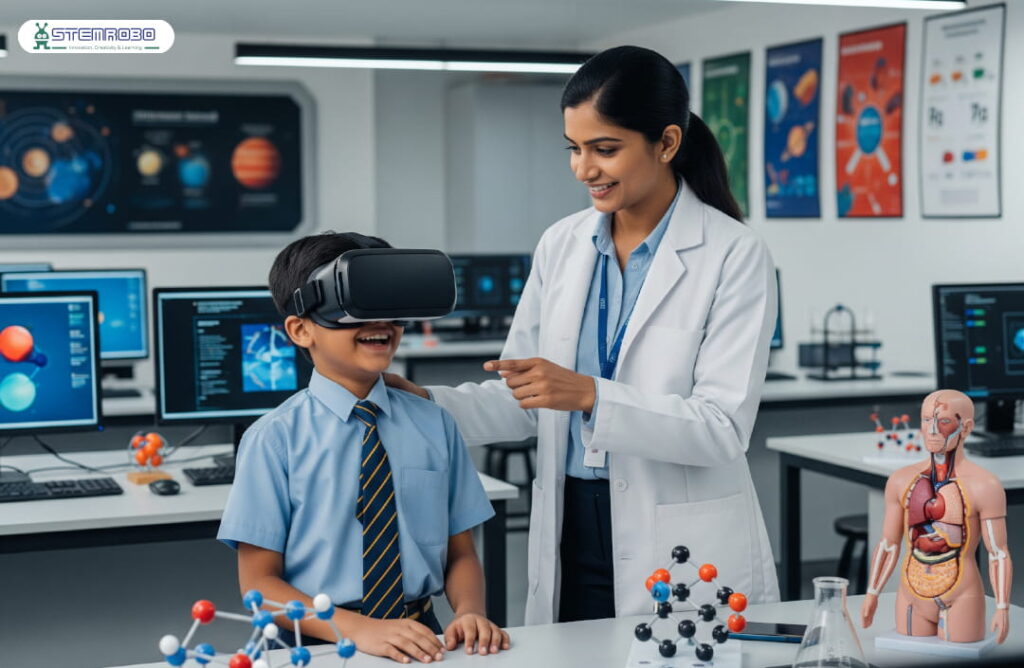
Setting Up the Right Ecosystem
Starting a VR Lab setup in India requires planning:
- Clear learning objectives
- Curriculum alignment
- Trained teachers
- Safe infrastructure
- Regular content updates
Schools exploring Start AR & VR labs in school must look for partners offering End-To-End Solution for K-12 School, not just headsets. Integration with Tinker and Innovation Programs Setup, Atal Tinkering Lab in Schools, and Stem innovation and learning Centre multiplies the impact.
Challenges and the Road Ahead
Yes, there are challenges, cost, screen time concerns, and teacher readiness. But every transformative technology faced the same questions. When computers first entered schools, many doubted them too. Today digital literacy is as basic as reading.
With falling hardware prices and strong AR VR service providers, VR is becoming accessible even to mid-budget schools. Government initiatives like ATL labs in schools further encourage adoption.
A Classroom Without Walls
Education is slowly breaking free from the limits of walls and desks. It will not be limited by four walls. It will be connected to oceans, planets, laboratories, and cultures through immersive technology. Students will not prepare for exams alone but also to solve real problems like climate change, health, and smart cities.
The purpose of today’s education is to prepare young minds for the future. To achieve this, schools need more than just smart boards, they need more smart experiences. VR Lab setup for schools combined with STEM Education Solution Providers, AI, and robotics creates that ecosystem.
After a student removes the headset from a journey through the solar system or a mission to fix a digital satellite, education stops feeling like a burden and starts feeling like an exciting quest. That sense of discovery is what learning in the 21st century truly needs to inspire.
Beyond textbooks lies a new world and Virtual Reality is the doorway.