Role of AI in the education sector

From Curiosity to Innovation

From Curiosity to Innovation: STEMROBO’s Role in Modern Education

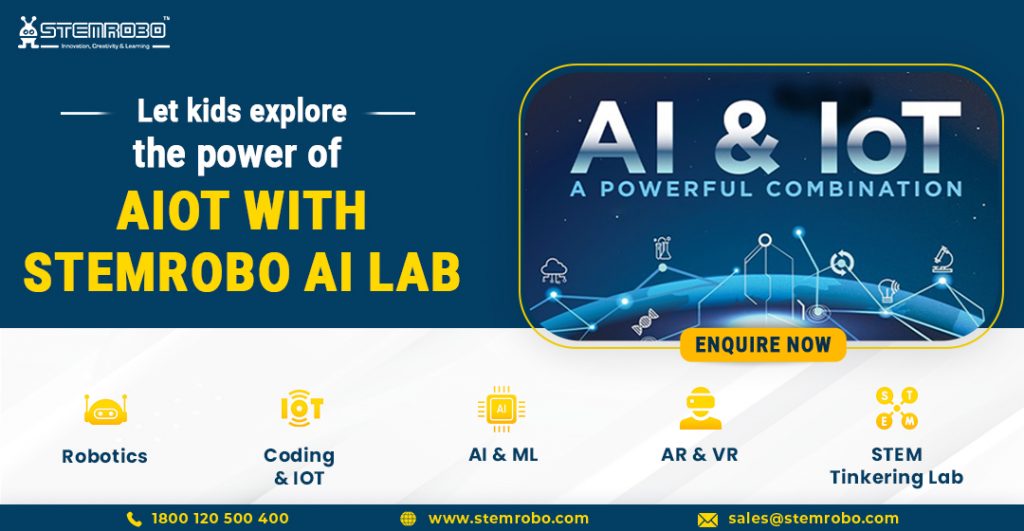
We keep on hearing the word AI, or artificial intelligence almost regularly, everyday. Why is AI a buzzword now? What is AI actually? AI or artificial intelligence means AI or Artificial Intelligence means when machines or systems are trained to replicate human tasks. It is now being actively integrated into school curricula via STEM education, Coding and AI platforms, etc, making it an essential part of modern learning. AI is now used extensively to help minimise the human efforts in the everyday repetitive tasks. Why starting early is encouraged? By starting early with the right support and resources, kids not only start gaining confidence, but also the skills that would make them able citizens in the society. With this regular practice and support, these kids will be ready to take on the digital future, head on. They learn to trust the process and venture onto more complexities, which makes them much more smart and confident. Kids learn to expand their potential and hence their portfolios grow, and they set a bar for themselves; a competition they try to beat themselves at with every project and idea. They strive to become a better version of themselves, a better and smarter kid than they were the previous day. Understanding the Role of AI in the Education Sector Artificial Intelligence (AI) is not just a trendy word, it is the core foundation for the success of tomorrow’s generation. With the help of artificial intelligence, the students get personalised plans that are adjusted to their pace and capability. This makes the learning fun and engaging. By introducing the kids to artificial intelligence at an early age is a huge bonus point. They are already ahead of their competition and along with the technical stuffs, they will develop the essential 21st century skills early on in their life. The Power of Robotics Centres One of the coolest things about is Robotics Centres. Here, kids don’t just read about technology, they get to play, build, and learn with real robots and kits. Take for example: Kids can find a common problem and make the solution through robotics and this would then contribute to the SDG. And the best part is that along with the technical skills, they develop the 21st century skills like curiosity, cooperation, collaboration etc. AI and IoT Learning Solutions The Internet of Things (IoT) is everywhere from smart homes to wearable devices and connected cars. Learning how these systems work gives students a huge advantage. Our AI and IoT learning solutions introduce children to the world of smart technology in an accessible, hands-on way. · Students can program simple IoT devices to perform tasks automatically. · With the help of AI, students learn to make better decisions, based on the data and analysing them. · Through the hands-on projects, students learn the actual usage of the gadgets. By combining AI and IoT learning solutions, it prepares children to navigate a world where technology is integrated into almost every aspect of life. Coding and AI Platforms for Students We have to communicate with computers through coding and so it is very essential that we learn the language of the computers, that is, coding in order to master and operate technology. With this company, coding is broken down into simple lessons that gets intricate with the ascending classes. It starts with the basic and easy block-based programming and goes onto more complex hands-on. Making Learning Fun and Meaningful The do-it-yourself kits like Tinker Orbits, Mechatron, Bitli etc are made to keep the students engaged and entertained. This way they learn and play at the same time. Preparing Future Innovator Innovators need to identify the problems that are faced and ignored in the day to day lives. These problems are sorted through the unique process of design thinking – 1. EMPATHISE – understand the problem 2. DEFINE – clearly state the problem statement 3. IDEATE – think of ideas, brainstorm and make the best informed decision 4. PROTOTYPE – create a sample/solution to test out. 5. TEST – try out the sample/solution on the target audience, gather feedback and rectify. Try again The benefits of design thinking is a huge bandwidth. Some of them are – 1. Economical – a new idea needs to be of low cost so that everyone can try it out. 2. Easy access – the best solution is the one that is of easy access. If the product is not easily accessible, very mere amount of the public would be interested on purchasing it and will search for an alternative. 3. Reduces risks – a prototype helps to find the defects that could be worked upon and helps to get feedback and make the product better. This helps in reducing unnecessary burnout, time, energy and funds. 4. Cross-Disciplinary Collaboration – helps in promoting teamwork, collaboration and cooperation that helps in making informed decision. 5. Boosts innovation – helps to push past limits, think outside the box and also boosts creative thinking. These programs are not just about learning technology, they are about preparing the innovators of tomorrow. Children who engage with AI, robotics, and coding early develop: · A problem-solving mindset · Confidence in technology · Creative thinking abilities · Collaboration and communication skills · Readiness for future careers in AI, robotics, and tech By providing Robotics Centres, AI and IoT solutions, and coding platforms, STEMROBO bridges the gap between traditional education and the demands of a tech-driven world. Real-Life Impact Many students who started with these programs have gone on to: · Build functional robots and AI projects · Participate in national-level STEM competitions · Apply coding skills to develop apps and games · Gain confidence in science and technology subjects By turning curiosity into practical skills, we ensures children are not just learning they are creating, experimenting, and innovating. Conclusion The future and its job market demands for candidates that can actually use the theoretical knowledge into practical knowledge. Because at the end of the day, it’s the

From Curiosity to Innovation: STEMROBO’s Role in Modern Education Read More »

role of AI in the education sector

It All Started with a Dripping Tap: A STEM Story of Change

What exactly is a real-life problem? A real-life problem as the name suggests is a problem that people face everyday and they just succumb to just compromising with it. These are not textbook examples but actual situations that require practical, innovative solutions. This is where we will learn the role of AI in the education sector. These problems still exist as it fails to attract the eye of the people who can actually solve the problems, people with the resources and knowledge, like scientists, educators, innovators. This is mainly because of the word “compromise”. People compromise with difficulties. Be it waiting in long queues, settling it areas with high pollution or road accidents etc, things that people consider “normal”. Three students, saw a problem in their school: unnecessary water dripping. It is a common problem that we generally see all the time and that which needed to be addressed fast. Water is a scarce resource already. Uncontrolled water dripping contributes to it wastage as well as pollution. How?water flows. Flows and joins larger water streams, taking with it the impurities of the soil that pollute freshwaters. These students chose not to compromise. They chose to solve. Stem based learning for students is what helped them achieve throughput their journey. Now, let’s understand what these students actually did that made them stand out from the others. PROBLEM IDENTIFICATION –(Improper watering to the plants.)  They realized that while this issue is widespread, there was no practical solution implemented to control it. This observation-based approach is at the core of tinkering lab in school environments where students identify real issues and solve them hands-on But the consequences are serious: Stagnant or still water acts a breeding ground for mosquitoes and harmful insects which lead to vector-borne diseases like dengue and malaria. This water also happens to make the water muddy Unchecked dripping of water leads to water wastage which contributes to water pollution and also its scarcity. Run-off water collects dirt and pollutants, which then flow into natural water bodies, polluting freshwater sources. 2. INNOVATIVE IDEA – (ideas that can solve the problem) They acknowledged that uncontrolled water dripping is serious and sensitive issue that needs to be looked over up on a serious note. They pondered upon what could have been solution came up with the “auto irrigation system”According to the, while India receives heavy rainfall during the monsoon seasons, only 30-40% is actually utilised.       The students built a smart Auto-Irrigation System using: How it works: This technology ensures that the plants aren’t overwatered or underwatered. This prevents the plants from being dried out due to less water or rot due to too much water. According to the students, India receives too much rain that causes floods in the monsoons and ironically enough only 30-40% of that water is actually being used.  Why This Matters This might only seem as a simple act of watering plants. But these kids developed an attitude that involved the future skills of creativity, problem solving, collaboration etc. They learnt how to apply STEM concepts in their everyday problems. This was possible through tinkering and stem labs for schools. By refusing to compromise with a problem, these students learned how to: This is just one of the many stories that get built on real problems. Problems that just get passed on as “compromise” and or “normal” The Power of STEM Education What helped these students succeed wasn’t just an idea, it was the accumulated contributions of a learning environment which encouraged them to explore their curiosity, the endless possibilities and build practical solutions. This is what STEM education is truly about—not just learning science and technology from books, but applying that knowledge in real-world scenarios. Through STEM project-based learning, students don’t just learn what to think—they learn how to think. They learn to push past their potential. The moment they connected the dots between a dripping tap and environmental damage, they weren’t just solving a plumbing issue. They were building awareness, responsibility, and impact. And that’s how small projects become big lessons. What We Can Learn from Their Journey This isn’t just another normal story. This is a story of inspiration, a story that shows how students were empathetic and solved problems that pushed them past their limits. Here’s what their journey teaches us: No problem is too small.A dripping tap, a broken vassal, flickering lights etc- everything is an opportunity to think outside the box. A solution doesn’t need to be dramatic, it needs to be accessible and economical  Innovation begins with awareness.These students were very observant and question a very simple problem that the others failed to even point out and this is what sets these three students apart.  Technology is a bridge, not the destination.Using an Arduino board or a soil sensor isn’t impressive on its own. But using it to solve a real problem—that’s where brilliance lies. It’s the idea that matters. The tech simply brings that idea to life. Teamwork multiplies impact.This wasn’t a solo mission. These students were a team! They collaborated, helped each other, learnt from each other and these helped them make better informed decisions and to widen their views and ideas. Real-Life Skills Gained What these students learned went far beyond books and marks. They picked up life skills that will help them in every walk of life: That’s the true goal of modern education—to build humans who are not just employable, but impactful.  The Bigger Vision: Learning for Change This is why establishing Atal Tinkering Lab setup in schools and investing in teacher training courses is crucial for developing 21st century skills in education. Now imagine this—what if every school encouraged students to look at their surroundings with this problem-solving mindset? What if every school invested in hands-on learning where students could build their own gadgets through design thinking? With STEM labs, AI-driven tools, mentorship, and the right attitude, students can become problem solvers for their school, their city, and even their country. And it

It All Started with a Dripping Tap: A STEM Story of Change Read More »

Role of AI in the education sector

Role of AI in the education sector

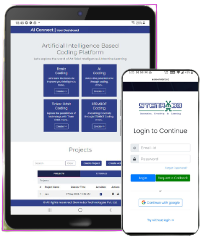
Education is the cornerstone of society, shaping the future of individuals and nations alike. In recent years, advancements in technology have revolutionized the way we learn and teach. Modern education techniques, coupled with the integration of Artificial Intelligence (AI) in the education sector, have brought about significant changes in the education sector. Let us explore the advantages of modern education and delve into the role of AI in the education sector, particularly for K-12 students. The role of AI in the education sector has emerged as a transformative force in the education sector, revolutionizing traditional teaching methods and enhancing learning experiences. From personalized learning to improving administrative tasks, AI is reshaping education in unprecedented ways. One of the key benefits of AI in the education sector is personalized learning. AI algorithms analyze student data to create personalized learning paths, catering to individual learning styles and abilities. This adaptive learning approach ensures that students receive customized content and feedback, leading to better comprehension and retention. Furthermore, AI-powered educational platforms can provide real-time feedback to students, allowing them to track their progress and identify areas for improvement. This immediate feedback loop not only enhances learning but also promotes self-directed learning habits. Another significant advantage of AI in education is its ability to automate administrative tasks. AI-powered systems can streamline processes such as grading, scheduling, and student enrolment, freeing up educators’ time to focus on teaching and mentoring students. Moreover, AI can facilitate language learning through its natural language processing (NLP) capabilities. Language learning apps powered by AI can provide immersive and interactive experiences, helping students improve their language skills in a more engaging manner. In addition to personalized learning and administrative efficiency, AI also plays a crucial role in making education more accessible. AI-powered tools can provide support for students with disabilities, such as speech recognition for students with dyslexia or visual aids for students with visual impairments. AI is also contributing to the development of new educational tools and resources. For example, AI-powered tutoring systems can provide students with additional support outside the classroom, helping them master difficult concepts at their own pace. Furthermore, AI is helping educators gain valuable insights into student performance and behaviour. By analysing large volumes of data, AI can identify trends and patterns that can inform instructional strategies and curriculum development. The role of AI in the education sector is revolutionizing by enabling personalized learning, automating administrative tasks, improving accessibility, and facilitating the development of innovative educational tools. As AI continues to evolve, its impact on education is expected to grow, creating a more efficient, effective, and engaging learning environment for students around the world. Schools can collaborate with STEMROBO (an educational technology company) which provides end-to-end solutions to k-12 students. Like we have one of our courses in Block Python and AI-Beginner Level In this course, we will introduce coding to Grade 3-5 students. Students will learn how to code using block-based programming tools with AI Connect. Block Coding simplifies the art of coding for young minds, with the help of the visual blocks students can experiment and create their own Python Programming, and Artificial Intelligence. This Block Coding Course from Tinker Coders helps students elevate vital 21st-century skills like Logical thinking, Computational thinking, Sequencing, and many more. This will not only help students pick up advanced coding courses in the future but will also help them think critically and find solutions to problems. There are no prerequisites to joining this course. Students will be taught using the AI CONNECT platform. Students will learn to apply logic, understand phonics, and the basics of coding structures. They will be working on live projects and will be provided access to self-learning modules for practice and self-exploration. We also have our in-house platform called AI Connect, it is a platform that helps to learn block-based coding as well as textual-based coding. It helps you to develop coding skills that are easy to understand, and it doesn’t demand any previous knowledge of coding, through colour coding children can relate and learn in an easy way. AI Connect (Artificial Intelligence-Based Coding Platform) We can do many things on this platform such as: Graphics Designing Block-based coding to learn Graphics design. Learn Block Coding & Python Coding. 50 + Graphics Designing Activities, more than 25 + Graphics Designing Projects. Draw your Imagination & learn coding. Think Out of the box & draw your own graphics. Basic Python GUI-based coding to learn Python Coding. Learn Block Coding & Python Coding. 100 + Basic Python Activities, more than 50 + Basic Python Projects. Draw your Imagination & learn coding. Machine Learning Train your own machine. Test & Develop cases for your machine. Deploy your own predictive learning. Learn Block Coding & Python Coding. 50 + Machine Learning projects. AI Real World Learn to detect & recognize human faces. Learn to recognize objects. Learn to recognize colour & many more. Integration of AI with hardware. 50 + Artificial Intelligence projects.

Role of AI in the education sector Read More »