robotics syllabus for school

DESIGN THINKING

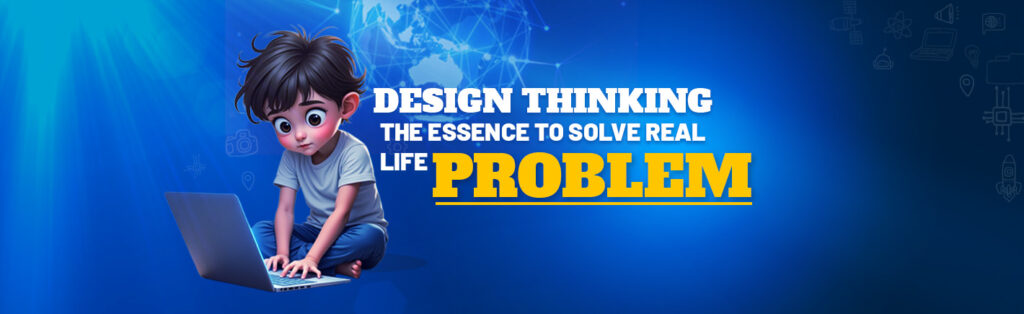
Design Thinking : The Essence To Solve Real Life Problem

In the year of 2025, the world population estimates upto 8.1 billion and India’s alone is 1.43 billion. As the population goes on increasing, so does the problems and the need for easy and accessible solutions. Take, for example, the problem of used flowers from temples, which generate a large amount of biodegradable waste. By thinking outside the box, we can transform these discarded flowers into useful products such as dhoops, candles, perfumes, and more. This is just a small example of problem-solving at work. Across the globe, millions face countless issues that they often accept as inevitable. Unfortunately, many companies fail to see these problems from the user’s perspective, leading to solutions that miss the mark and ultimately fail. This is where the term design thinking comes to play. What Is Design Thinking? Design thinking means solving the problem by putting yourself in the situation, in the shoes of the people really facing the problem. The most required quality for design thinking is awareness and empathy, which are a few constituents of the 21st century skills. By being empathetic, we can really help people make better innovations – low of cost and with less resources. For example :- Q-commerce or Quick commerce which gained huge popularity around the times of covid, when stepping out of ones home was a huge doubt and the revolutionary idea of delivery just at the doorstep was one thing that people embraced quickly, With the hustle and bustle of times, Q-commerce became a big hit in the market. Now the question arises, how and why did it gain huge popularity? The answer in a simple line is – thinking from the root of problem and from the POV of the people facing it. Design Thinking has four main segments to it- The benefits of design thinking is a huge bandwidth. Some of them are – Why Is Design Thinking Important For Students? Starting early should always be encouraged. Habits are developed early on in a person’s life and it is important for the parents to introduce them to quality learning experiences and make them well equipped with the 21st century skills: the skills that would help them adapt in the future. Key Reasons Why Early Learning Matters :- How Stemrobo Is Empowering The Next Generation: At STEMROBO, Design thinking is one of the main segment through which we train the students. We introduce the students to hands-on learning, through which they can learn to create things on their own, become resilient and learn from their mistakes. As a Leading Atal Tinkering Lab Company, we provide everything from the Atal Tinkering Lab setup process to teacher training and STEM project-based learning resources. We empower schools with the tools, training, and kits—like the Robotics syllabus for school students and Artificial Intelligence course for kids—so that every child is equipped to become a changemaker. In conclusion, design thinking is not just a framework—it is a crucial life skill that nurtures empathy, innovation, and resilience. By embedding this mindset early in education, especially through platforms like STEMROBO, we are preparing students to become proactive problem-solvers who can confidently face real-world challenges. As they learn to empathize, ideate, prototype, and test their ideas, they also develop the courage to fail, improve, and ultimately create meaningful impact. With the right guidance and tools, today’s students can become tomorrow’s changemakers—and design thinking is the bridge that gets them there. With the right environment, tools, and support from a STEM education company that believes in innovation, today’s students can become tomorrow’s leaders. Whether it’s through a Tinkering lab in school or a coding and AI platforms providers company, the goal remains the same: equip the next generation with the mindset to imagine, invent, and inspire.

Design Thinking : The Essence To Solve Real Life Problem Read More »

Why Women Leave STEM: A Deep Dive Into the Systemic Barriers

Why Women Leave STEM: A Deep Dive Into the Systemic Barriers

Starting early is everything. Imagine a world where every girl steps into a classroom, knowing that STEM isn’t just a “boys-only zone,” but a playground full of endless and exciting possibilities, from AI to biotech and robotics. With the right robotics syllabus for school students and exposure to real-world problem-solving, this can become a reality. Although the education of women in the world has been raised to a significant level, a substantial gender gap still exists in STEM careers. The UNESCO states that 35% of female graduates are majoring in STEM subjects, representing no change in the number over ten years. However, in real life, their number crashes immediately: only 26% in AI and data science, 15% in engineering, and a mere 12% in cloud computing. India seems to be an example due to nearly 40% of STEM students being females. However, only 14–27% of them continue in the STEM field. Encouraging women to dream big is only one side of the issue. The most significant part is about building a society open to these dreams enough. That’s where Educational Technology Company like STEMROBO come in, offering innovative ideas for school development to support girls in STEM from an early stage. Traditional gender roles and patriarchal norms continue to decide who belongs where, often forcing women to choose between career and conformity. Until the ecosystem evolves, especially that of India, true equality in STEM will remain out of reach. But here’s where the real problem arises: society still decides what’s “acceptable” for women. “Normal” career choices like teaching or nursing are applauded, but when a woman chooses engineering or AI, she’s often questioned or doubted. Flip it around—a man becomes a homemaker or a nurse—and judgment follows him too. These aren’t individual choices anymore; they’re boxed-in expectations built by a patriarchal mindset. Until society stops deciding who belongs where, equality in STEM will stay just a number on paper. The Stereotype People often say, “Women have it easy,” “A man can’t afford to be jobless, he’ll be shamed.” – said by a man. But the real question arises: who has set this system up? “A man should be a breadwinner, a provider.” “A woman should help her in-laws after her marriage.” Well, deep dive into every stereotype, and you will get the very sure answer — they’re man-made expectations born from a deeply rooted patriarchal system, one that sets the standards, defines the roles, and then turns around to question a gender’s potential after burying it under centuries of bias. The Leaky Pipeline: Understanding the Dropout “Leaky Pipeline” means the way women drop out at different stages of the STEM journey, starting strong in classrooms but gradually leaving due to problems like lack of support, mentorship, or exclusive workplaces. It shows how talent is lost before reaching the finish line. Various factors contribute to this attrition: • Lack of Gender-Sensitive Career Guidance: Most girls have joined the STEM field without the correct professionals’ help on how to start. With STEMROBO’s AI and IoT learning Solution for schools, students can now explore career pathways with a futuristic perspective. • Absence of Female Role Models and Mentorship: The small number of women visible in the STEM field makes it difficult for girls to relate or feel motivated. Mentors help teams with a good feeling and open doors for them. Tinker and Innovation Programs for Schools can bridge this gap. • Cultural and Societal Expectations: Gender stereotypes and family pressures are among the reasons which further lead women not to pursue or stay in STEM careers, especially after marriage or childbirth. A woman is judged if she prioritizes her career and dreams. Even if she continues her work after marriage or childbirth, she still has to “multitask”; keep the in-laws happy and the list goes on. This is not the same in the case of the man. • Unwelcoming Work Environments: Prejudices and lack of inclusiveness make professional life uncomfortable; women’s efforts are often doubted or wrongly addressed to men. If a woman makes huge strides in her career, she is often questioned if she is being ethical, or if she even “deserves” an applaud.Quoting a lyric of the hit song “The Man” by pop star Taylor Swift – “I’d be the man. They’d say I hustled. Put in the work They wouldn’t shake their heads and question how much of this I deserve What I was wearing If I was rude Could all be separated from my good ideas and power moves?” The Crucial Role of Teachers and Educational Institutions Teachers’ Attitudes and Support: Educators play a vital role. They are one of the most important segments of a child’s motivation and growth. Even unconscious gender biases can discourage girls from STEM by making them feel unsupported or undervalued in classrooms. Early Gender-Sensitive Career Guidance:Introducing girls early to diverse STEM careers and breaking stereotypes is crucial. Sharing success stories and involving parents builds a strong support system for the girls. That’s why gender-sensitive career guidance needs to begin early. Schools should actively nullify the stereotypes by organizing STEM career days, inviting women role models from the tech and science industries to speak, and promoting hands-on workshops where girls can explore their talents fearlessly. Including parents in this journey is equally important. Coding and AI Platforms providers Company can also contribute by making technology accessible and relatable. Teachers Matter: When teachers encourage equal participation, use inclusive language, and foster hands-on, collaborative learning, they make STEM engaging and empowering for all girls. Using inclusive language, sharing diverse examples, and ensuring every student has a role in group activities, they help build equity in the classroom. Curriculum for Schools must evolve to reflect these values and initiatives. 21st-century skills for students and teachers teach inclusion and diversity. This teaches the students how to build an inclusive society, and encourages teachers to support every learner—regardless of gender or background—equally. Conclusion Despite more girls stepping into STEM classrooms than ever before, too many are still missing

Why Women Leave STEM: A Deep Dive Into the Systemic Barriers Read More »

Robotics syllabus for school students

Robotics Syllabus for School Students

A robotics syllabus for school students typically covers a range of topics to provide students with a comprehensive understanding of robotics concepts and principles. The syllabus may include the following components: Introduction to Robotics: An overview of robotics history, principles, and applications. Students learn about the basic components of robots, such as sensors, actuators, and controllers. Robotics Programming: Introduction to programming languages used in robotics, such as Block-based coding, Scratch, or Python. Students learn to program robots to perform various tasks and solve problems. Robotics Hardware: Understanding the hardware components of robots, including motors, sensors, and microcontrollers. Students learn how these components work together to make a robot move and perform tasks. Robotics Design: Principles of robotics design, including mechanical design, electronics, and software integration. Students learn to design and build their robots using kits or materials provided. Robotics Applications: Exploring real-world applications of robotics, such as in manufacturing, healthcare, and space exploration. Students learn about the impact of robotics on society and the ethical considerations involved. Robotics Challenges and Competitions: Participating in robotics challenges and competitions to apply the concepts learned in class. This hands-on experience allows students to test their skills and creativity in a competitive environment. Advanced Robotics Concepts: Advanced topics in robotics, such as artificial intelligence, machine learning, and autonomous navigation. Students learn about the latest developments in robotics and how they are shaping the future. Understanding the Educational Goals: Before developing a robotics syllabus for school students, it is essential to understand the educational goals you want to achieve. Consider the age group of the students, their prior knowledge of robotics, and the specific skills you want them to develop. Age-Appropriate Curriculum: A robotics syllabus for school students should be tailored to the age and grade level of the students. For younger students, focus on introducing basic concepts such as robotics components, simple programming concepts, and hands-on activities with robotics kits. For older students, you can introduce more advanced topics such as sensors, actuators, and advanced programming languages. Hands-On Learning Activities: One of the key aspects of a robotics syllabus for school students is hands-on learning activities. These activities should allow students to build and program robots, solve real-world problems, and work collaboratively with their peers. Consider using robotics kits that are designed for educational purposes and provide a wide range of activities and challenges. Integration with STEM Subjects : Robotics can be integrated into various STEM subjects such as mathematics, physics, and computer science. Your syllabus should include activities that demonstrate the application of robotics concepts in these subjects, helping students understand the real-world relevance of what they are learning. Project-Based Learning: Project-based learning is an effective way to engage students in robotics. Encourage students to work on projects that require them to design, build, and program robots to solve specific challenges. These projects should be open-ended and allow for creativity and innovation. Introduction to Programming: Programming is a fundamental skill in robotics. Your syllabus should include an introduction to programming concepts using a programming language suitable for the age group of the students. Start with basic concepts such as sequencing, loops, and conditional statements, and gradually progress to more advanced topics. Robotics Competitions: Participating in robotics competitions can be a motivating factor for students. Consider including information about local or national robotics competitions in your syllabus and encourage students to participate. These competitions can provide students with valuable hands-on experience and help them apply what they have learned in a real-world setting. Assessment and Evaluation: Assessment is an essential part of any curriculum. Consider including a mix of formative and summative assessments, such as quizzes, projects, and presentations, to evaluate students’ understanding of robotics concepts and their ability to apply them. Integration with Real-World Applications: Include activities in your robotics syllabus that demonstrate how robotics is used in the real world. This could include examples from industries such as manufacturing, healthcare, and agriculture, showing students the practical applications of robotics and inspiring them to think about how they could use robotics to solve real-world problems. Cross-Curricular Connections: Make connections between robotics and other subjects in the curriculum, such as literature, history, and art. For example, students could research and write about the history of robotics or create an artistic representation of a robot. This interdisciplinary approach can help students see the connections between different subjects and deepen their understanding of robotics. Guest Speakers and Field Trips: Invite guest speakers from the robotics industry or academia to speak to your students about their work and experiences. Organize field trips to robotics labs or companies to give students a firsthand look at how robotics is used in the real world. These experiences can be inspiring for students and help them see the possibilities that robotics offers. Professional Development for Teachers: Provide professional development opportunities for teachers to help them effectively implement the robotics syllabus. This could include workshops on robotics education, training on using robotics kits, and access to resources and curriculum materials. By supporting teachers, you can ensure that they are confident and competent in teaching robotics to students. Continuous Improvement and Feedback: Regularly review and evaluate your Robotics syllabus for school students based on feedback from students, teachers, and other stakeholders. Identify areas for improvement and update your syllabus accordingly to ensure that it remains relevant and effective. Collaboration and Teamwork: Emphasize the importance of collaboration and teamwork in robotics. Encourage students to work in teams on projects, assigning roles and responsibilities to each team member. This not only teaches students valuable teamwork skills but also prepares them for the collaborative nature of many robotics’ projects in the A well-designed robotics syllabus can be a valuable tool for engaging students in STEM education and preparing them for the future. By incorporating hands-on learning activities, real-world applications, and cross-curricular connections, you can create a robotics curriculum that inspires students to explore the exciting world of robotics and develop the skills they need to succeed in the 21st century Skills. Developing a robotics syllabus

Robotics Syllabus for School Students Read More »