Robotics Lab

How Robotics Labs Are Transforming K-12 Education in India

How Robotics Labs Are Transforming K-12 Education in India

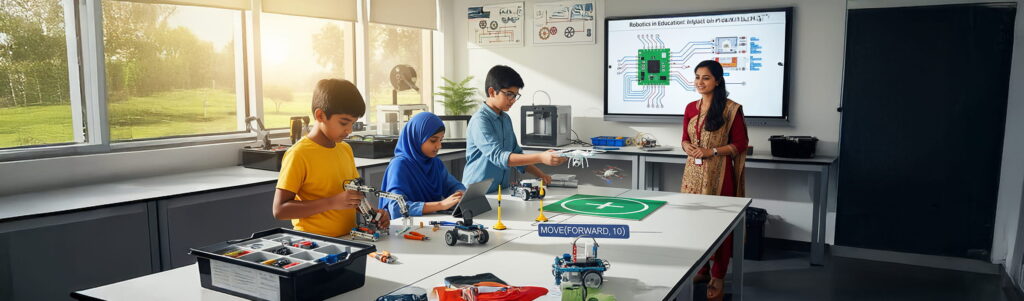
India’s education landscape is evolving at a rapid pace , fueled by technology, innovation, and the growing need to equip students for a future unlike anything before. Today, students have unlimited access to resources that help them enhance their knowledge, sharpen their skills, and develop deeper curiosity. Now Students have unlimited access where they can enhance their Skills, knowledge power , sharpen their skills and develop a deeper curiosity for learning. The classrooms are evolving beyond textbooks and tests into spaces filled with creativity, technology, and active learning. AI & Robotics Labs are leading this shift, giving students the huge opportunity to explore, build, and help them to develop problem solving skills . As a core part of STEM education, these labs are helping schools create learning experiences that focus on curiosity, and real-world application so that students can learn hands- on activities. Robotics lab are no longer limited to elite institutions or higher education. Today, they are becoming a one stop end to end solution for new age schools, especially in the K-12 segment, helping students to , nurturing creativity, experimentation and developing 21st century skills for students and teachers. These labs act as creative learning hubs encouraging curiosity, and learning becomes practical , interactive and engaging. With a young population and rapidly fast evolving tech ecosystem, it needs an education system that focuses on learning and innovation skills, design thinking solutions, and hand on application. Students go beyond exam- centric learning and develop skills that are aligned with future career opportunities in technology-driven fields . Robotics labs play a key role in bridging the gap between theory and real-world application. They introduce students to coding and AI platforms for schools, robotics, automation, and even emerging areas like AI & IoT lab setup, AR / VR lab setup, and Atal Tinkering Labs in schools making learning more relevant and future-ready. What we are seeing today is not just a change in classrooms, but a move toward future-ready learners and a more innovative, adaptable education system in India. What Is a Robotics Lab in K-12 Education? Robotics labs turn ordinary classrooms into lively STEM hubs where ideas are not just only discussed, they come to meet action and provide them results as well . By combining all hardware, software, and structured curriculum, these labs give freedom to all the students to explore robotics, coding, AI, and problem-solving through practical projects rather than just reading the theories and making the experiments from the textbooks. Whether it’s a basic robotics lab for junior level students or an advanced AI and Robotics Lab in senior classes, these systems support all the age groups from the K-12. Students don’t just learn how these robots work, they acquire knowledge about design, build, test, iterate, and innovate, gaining practical skills along the way. This adds excitement in the students while keeping them focused and engaged. Alignment with NEP 2020 and Competency-Based Learning The National Education Policy (NEP) 2020 plays the vital importance of experimental study , multidisciplinary education, critical thinking, and skill development from a junior age group of students. Robotics labs strongly support these goals by promoting learning by doing rather than memorizing the theoretical concepts from the books. Through project-based activities, students build strong skills such as Problem analysis, Original thinking, Cooperative learning, and Practical reasoning. Robotics encourages learning practical knowledge , where students are judged on how well they grasp and apply concepts, not only on exam results. In addition to robotics labs, programs like Atal Tinkering Labs (ATL) and AR/VR-based learning environments play an important role in building up NEP 2020 implementation in schools. ATL encourages New-age solutions, Empathy-driven design, and Activity-based problem-solving by enabling students to experiment and build real-world solutions. AR and VR technologies enhance robotics learning by allowing all the students to understand the complex concepts , explore virtual worlds , and interactive learning . Together, robotics labs, ATL initiatives, and AR/VR tools contribute to learning environments that support NEP 2020 goals. Why Robotics Labs Are Crucial for 21st Century Learning Traditional education focuses on rote learning while Robotics labs shift the focus to doing and experimenting. Through STEM education for students, learners develop skills such as critical thinking, creativity, teamwork, collaboration, and logical reasoning. These labs encourage stem based learning, helping students understand concepts of math, science, coding and technology in a practical way. They‘re preparing the students for 21st century skills which help them to navigate their careers paths. Robotics Labs and Coding: Building Digital Fluency Early Coding has become an essential skill for students of all ages. Robotics labs bring together robotics and AI learning, offering age-appropriate coding platforms for all the students. Students can start with learning block-based coding in early grades and gradually progress to Python, AI models, and automation in higher grades. This structured approach ensures continuity across K-12 and supports an end-to-end solution for K-12 school learning providing a comprehensive solution for school STEM education. AI, IoT, and Future Technologies in School Labs Modern robotics labs are much more than a place for building robots. Schools now adopt AI & IoT lab for schools, AI lab setup in schools, and IoT lab for kids to expose students to smart technologies and prepare them for the emerging tech careers. Here they learn how the sensors detect information , how data is gathered, and how smart systems make decisions. By working straight with these technologies students find confidence in themselves which inspires them to pursue careers in Robotics, AI emerging tech industries in India. Industry-Relevant Skills and Career Readiness Robotics labs give students hands- on experiences that are directly useful in today’s industries as it’ll help them for their future career aspects too like entering in the engineering, data science, automation, and entrepreneurship field . By participating in the project-based activities, students learn how technology is actually applied in real-world application of technology . This experience builds both self assurance and capabilities to expand their career awareness for higher education and professional growth.

How Robotics Labs Are Transforming K-12 Education in India Read More »
Setup Robotics Lab in School

How to Setup Robotics Lab in School – A Complete Guide to Establishing a Robotics Lab

In today’s technology-driven world, robotics education acts as an important asset in equipping students with 21st-century Robotics & AI skills such as critical thinking, problem-solving, and creativity. Robotics lab offers a dedicated space for students to engage in hands-on learning, exploring engineering, machine learning, and artificial intelligence (AI). By providing a well-structured Robotics & AI lab, schools generate our young learner’s interest in the field of STEM (Science, Technology, Engineering, and Mathematics), and make them ready for future careers in further Robotics & AI embedded technology. This will guide our learners in a direct approach to setting up a Robotics lab, and also ensure that students gain maximum educational benefits from this modern learning environment. Defining Objectives and Goals At the foundational stage of setting up Robotics & AI labs in schools, it is essential to clearly define the lab’s objectives and purpose. This helps schools determine whether the focus will be on basic robotics education, competition-driven learning, or innovation through patent-worthy projects. The primary goals include introducing our young learners to Robotics and AI, upgrading with programming and engineering skills, and preparing students for national and international tech. Competitions, and encourage them to become future innovators by learning the combination of innovative projects that combine balanced learning. These objectives will guide schools in planning the necessary resources such as designed curriculum and selecting appropriate equipment while learning the concept in Robotics & AI labs. Securing Budget and Funding Setting up robotics labs in schools involves a significant financial investment, and schools must plan their budgets accordingly. Several funding options are available in the authority, including school budget administration, government permits, corporate partnerships and sponsorship, and community fundraising initiatives. STEM education companies collaborate with the government for support with the education part and the material requirements according to the school for opening robotics & AI Labs in the school. At the same time, STEM education companies also offer sponsorship under several projects, provide teachers training programs by the STEM education companies, and Atal tinkering Labs handled by the robotics lab. CSR approach and alumni contributions can also give financial assistance. Selecting the Right Space Whenever a lab is established in a school, it is essential to carefully select a suitable space. Choosing the right location for the Robotics and AI lab is crucial to ensuring a practical, engaging, and productive learning environment. The lab should be spacious enough to have workstations, practical testing areas, robotics kits, and tool storage. It must also have proper ventilation, lighting, electrical connection, and internet connectivity. A well-setup layout with designated areas for programming, assembly, and testing enhances productivity and safety. Procuring Robotics Kits and Equipment Selecting the right robotics kits and equipment is fundamental for creating an effective robotics lab. The selection of kits should be based on the learners’ age groups and their initial skill levels. For beginners, kits such as mechanical construction kits and block-based power screw kits are ideal. In terms of coding, platforms like Scratch and Code Blocks provide a built-in introduction to robotics and programming. Intermediate classes from 6th to 8th can benefit from Arduino, Raspberry Pi, and other robotics kits, which provide hands-on experience in coding and electronics technology. Students at the senior level can explore AI-powered coding platforms like AI Connect, Drone technology, and IoT-based machine learning projects. With all of this, the Robotics & AI lab will support various robotics innovations going to happen in the future. Developing a Robotics Curriculum A well-organized robotics curriculum ensures progressive growth in learning and development of new advanced skills. Schools should design the curriculum in such a way that it will cover all concepts from beginner to advanced levels, hands-on projects, and advanced robotics applications. In the beginner level from class 3rd to 5th class, learners will focus on basic robotics, easy-to-understand programming concepts, and understandable mechanical design. Then at the intermediate level for 6th to 8th class learners should focus on microcontrollers, robotics, and Machine learning robot programming. Later on at the advanced level, it should include AI, machine learning, IoT embedded, and participation in robotics competitions which motivates the students to do more innovation in the future. Hiring Skilled Educators and Mentors After setting up the lab, the most crucial person is the one who will run it – the ideal role model and mentor. This individual will guide our future learners towards a bright future, equipped with up-to-date knowledge in advanced technology and artificial intelligence. Our STEM companies provide STEM-certified educators, who are the best mentors to help students grasp the concepts of robotics and AI in an engaging and enjoyable way. They are essential for guiding students in this specific direction of gaining knowledge in robotics and AI. As per our advice, schools should recruit STEM-certified educators with expertise in all directions where they should be experts in their fields of Science, Technology, Engineering & Mathematics. Following that, it is important to establish collaborations with university researchers, industry professionals, and robotics organizations to provide students with valuable insights, real-world exposure, and expert mentorship. If some schools want to train their teachers for this subject, then our STEM education companies provide teachers training programs and organize workshops for the teachers to ensure that instructors remain updated with the latest technology in robotics technology. This also encourages students to a learning approach, where senior students can also mentor in the class and it also enhances engagement and knowledge-sharing skills. Implementing Safety Measures In the Robotics & AI lab, we need to ensure that we have proper safety for the students in the robotics lab. It is essential to establish clear guidelines on the Circular Board for handling electronic components and computer systems provided in the lab. Additionally, students must be trained in basic first aid procedures to ensure they are prepared to respond effectively in case of any mishap, emphasizing the importance of safety and preparedness in a lab environment. The essential safety measures include protective gear such as gloves and safety goggles, building fire safety

How to Setup Robotics Lab in School – A Complete Guide to Establishing a Robotics Lab Read More »

Atal Tinkering Lab

The Evolution of Atal Tinkering Labs in India: A Journey of Innovation and Impact

In our modern era, often celebrated as a generation of miracles, we embrace innovation and creativity as powerful tools to inspire young learners. By nurturing their curiosity and encouraging initiative, we help shape the hearts and minds that will drive a progressive and forward-thinking society. While recognizing this, our Indian Government launched Atal Tinkering Labs (ATLs) in 2016 under the Atal Innovation Mission (AIM) to nurture young minds and foster a culture of scientific curiosity where they learn to develop new technologies & gadgets for humankind. Over the years, this initiative has significantly transformed students’ perspectives toward learning. It has encouraged a more engaging and practical approach—especially in the fields of Science, Technology, Engineering, and Mathematics (STEM)—which plays a vital role in their academic development and future career growth.Of course, when we talk about 2025 growth, the concept of Atal Tinkering Labs expands tremendously, reaching thousands of schools in the country.As we reach this pivotal point of exploration, let us delve into the remarkable growth of these labs from 2016 to 2025, the profound impact they have had on our students, and the promising future that lies ahead for this revolutionary, game-changing program. Growth and Expansion of ATLs Over the Years The vision of introducing Atal Tinkering Labs started to implement hands-on, experiential learning to school students. The first goal was to provide the requirement of kits & tools for students such as 3D printing, robotics, artificial intelligence, and IoT (Internet of Things). It helps them enable experimental learning, innovate new gadgets, and solve real-world problems. In 2016 the Indian Government took the initiative where only a handful of schools were part of the program. However, the numbers grew rapidly such as if we study about year 2020, around 5,000 schools had ATLs, covering both urban and rural areas. After the good response from past results, it continues in 2023, and the rate of schools associated with this program is approximately 10,000, making this a big foot play that has been taken as the successful rate. This year, that is, 2025, the government plans target of establishing 50,000 more Labs over the next upcoming years and further plans to expand the reach of the initiative. A significant aspect of this expansion is the inclusion of the program. More than 60% of Atal tinkering labs are in government and rural schools, ensuring that even students from rural areas or as we say underprivileged backgrounds also get access to advanced technology and all the learning resources that help them to grow towards a bright future. Impact on Students and Education The revolution of ATLs has led to a shift in advanced technology and education. With a balanced focus on theory-based learning, students are encouraged by the mentors in the school to experiment, tinker, and innovate. The results of this shift have been fruitful in its way : 1. Student Participation Increased Approximately 1.1 crore students were actively participating in ATL activities. From competing in various competitions at the government level, etc, students now compete at multiple platforms to showcase their innovative projects and ideas to the world. This hands-on learning approach has significantly improved problem-solving skills, and expanded the exposure to critical thinking abilities among young learners. 2. Bridging the Urban-Rural Divide One of the most interesting and remarkable aspects of ATLs is their ability to bridge the gap between urban and rural education where they are trying to break the barrier of education difference and providing the same essential knowledge at both the end. Before this, students in rural schools had limited exposure to advanced technology. However, with the introduction of ATLs, even children in remote villages can now code, build prototypes, and innovate new projects just like their urban counterparts where our young learners doing a fantastic job with the help of their mentors in the school. 3. Future Skill Development In an era rapidly advancing toward automation and digital transformation, it can be challenging for students to acquire future-ready skills within the traditional school framework. Atal Tinkering Labs (ATLs) bridge this gap by offering hands-on training in cutting-edge fields such as robotics, artificial intelligence, 3D printing, and the Internet of Things (IoT), ensuring that Indian students remain globally competitive and future-ready 4. Encouraging Entrepreneurship When we talk about the concept of learning technical skills, it is necessary to understand the initial entrepreneurial mindset in students. Atal Tinkering Labs supports the idea that innovative projects may lead to patents and start-up ideas, proving that innovation at the school level also drives us toward real-world solutions. However, with the introduction of ATLs, even children in remote villages can now code, build prototypes, and innovate new projects just like their urban counterparts where our young learners doing a fantastic job with the help of their mentors in the school.Positive Outcomes of the ATL Initiative Following the early integration of advanced technology through Atal Tinkering Labs (ATLs), the benefits of this initiative have extended far beyond the classroom. One of the most significant outcomes has been the growing student interest in pursuing STEM careers, with early exposure to high-end technologies making such paths more accessible. With the support of STEM educators and dedicated mentorship, ATLs are inspiring students to explore future-focused fields such as engineering, data science, artificial intelligence, and robotics. This initiative not only contributes to individual growth but also strengthens India’s overall technological advancement and research capabilities. By aligning with national visions such as Make in India and Aatmanirbhar Bharat (Self-Reliant India), ATLs are actively fostering homegrown innovation. These government-backed platforms, in collaboration with STEM education companies, encourage students to design and build their own prototypes—reducing dependence on imported technologies and promoting indigenous solutions. The social impact of ATLs is clearly visible in various student-led projects aimed at solving real-world problems. From designing affordable medical devices to developing sustainable energy solutions, students are being equipped with the skills and mindset needed to address everyday challenges and contribute meaningfully to society. The Road Ahead: ATL’s Future in India As India steadily

The Evolution of Atal Tinkering Labs in India: A Journey of Innovation and Impact Read More »

Robotics and AI Lab in Schools

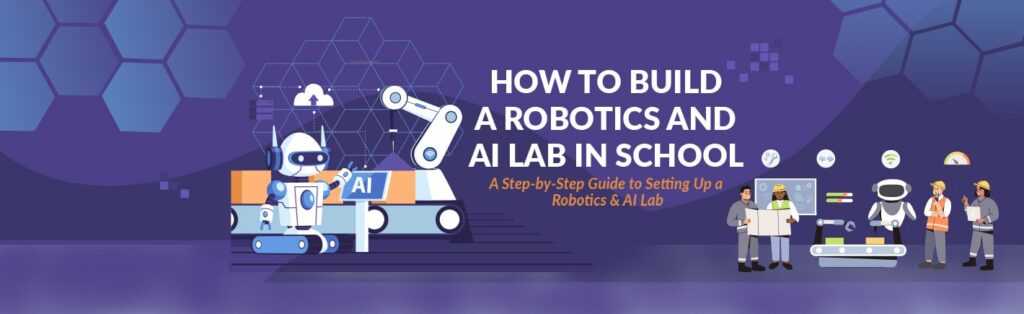
How to Build a Robotics and AI Lab in Schools – A Step-by-Step Guide to Setting Up a Robotics & AI Lab

Building a Robotics and AI Lab in Schools In this modern era where our champs are rapidly growing with their knowledge, they are making too much business and products to stand as entrepreneurs in the market at national and international levels. The important part is our government supports such creators with full responsibility and provides them the platforms to showcase their talent to the whole world. At a very positive end where we have so many young entrepreneurs doing a lot of good business work, we still have several students who are not familiar with such practices as other students. Now the question we need to find is how we may be getting so much difference between our champions and other students at the same age level. The correct answer to this question is the learning gap among our young learners. Let’s discuss this point with a scenario where one student is having the robotics classes outside the school and one of them is in the school learning basic and advanced elements of robotics & science itself. Now, the student is in the robotics lab and learning new concepts daily and getting an expert in his field day by day but on the other hand, another student having conceptual learning from different platforms not reaching anywhere, because of this this difference causes him the bad effect on this studies. To resolve this problem our government and CBSE took the initiative and passed a curriculum for having the Robotics & AI as subject in the school. So, student can find their inner talent by learning the concept of STEM in the school and adapting 21st-century skills of robotics and AI for the students. This will help our students to operate the learning algorithm of Robotics & AI from the basic to advanced level. Defining Objectives and Goals The initial step is to define the lab’s requirement of such lab for the student to get upgraded in the field of education. Schools should focus on adapting STEM education, enhancing students systematic analysis, and preparing students for the 21st-century skills of robotics and AI with the help of what they can get more focus towards their career. By developing a clear mindset & focused goals to encourage creativity, developing problem-solving skills, and introducing students to real-world applications of AI and robotics schools can shape a lab that truly benefits our young minds. So, at last, we can say that our main objective of developing STEM Labs or Robotics & AI Labs is to upgrade the knowledge of our learners and make them future-ready where they will use such skills and develop new technologies that will become favorable for our upcoming generation. Setting Up the Perfect Space After planning to open the lab in the school, the necessary thing is that we need to set up a perfect space in the school where we know about the dimensions and the requirements of computers, cupboards and the no. of kit for the students to learn the basic and advance concept of  Robotics and AI lab should be designed for collaboration and hands-on experiment-based learning. It should have flexible seating for group projects, a good supply of electricity to support multiple robotic & AI-based kits, high-speed internet for cloud-based AI tasks, and secure storage for equipment. Most importantly they require Safety measures, such as proper air-conditioning, and first-aid kits in any case of emergency,  should also be in place. A well-organized workspace that enhances efficiency and spot inspiration by using wallpapers on the lab’s wall. Our labs should be designed for collaboration and hands-on experimentation. It should have flexible seating for group projects, a good source of power supply to support multiple robotic kits, high-speed internet for performing critical AI tasks, and secure storage for equipment. Equipping the Lab with the Right Tools Its necessary for us to equip the right tools because when we use the term tool, we are not talking about the kits we provide but the all over criteria where we have our own LMS(Learning Management System), AI Connect platform for , AR&VR tools, complete mechanical and other electrical kits with this the Lab become fully operated where students can learn the concept of STEM(Science, Technology, Engineering, Mathematics) in an interesting and fun way without any interruption and in this way they have the complete access to the 21st Century Innovation skills Developing a Structured Curriculum To operate the education in the school/institute/college its require to have lesson plan related to that subject and according to that our STEM education companies creates master curriculum and upgraded online Learning Management system that build grade-wise course for students and also for the teachers where they can also prepare the examination and schedule it according to the students level as per the requirement. So in such way we have a structured robotics and AI curriculum for our young learner to grow more with advanced AI & robotics learning. Training Educators However, even the best curriculum isn’t effective without well-trained educators. STEM-based education companies provide well-trained STEM certified educators helping our young minds to gain the required knowledge based on robotics and AI concepts. Schools should invest in professional development, organize workshops, and encourage collaboration with industry experts. When STEM educators are confident with their knowledge, they can inspire the students more effectively by sharing their robotics journey with students, it will inspire them to innovate new gadgets. Engaging Students Through Competitions and Activities Engaging Students with robotics and AI is as important as setting up the lab. Competitions like the STEM Innovation League allow students to showcase their skills. and also encourage them to develop innovative projects. Encouraging students to participate in competitions and research projects increases innovation and problem-solving thinking. Fostering Innovation and Research Robotics and AI labs should not just a places where students come to play with the kits but also places to enhance skills like technical creativity and discovery of their talent by making the innovation happen. Schools can also build robotics clubs

How to Build a Robotics and AI Lab in Schools – A Step-by-Step Guide to Setting Up a Robotics & AI Lab Read More »

Robotics lab setup

How Robotics and AI Can Help Prepare Students for Future Workforce Needs

In the uprising Artificial Intelligence era we have disadvantages and advantages where we are following the roots of our basic subjects like Robotics & AI , Information & Technology, and Computer science. These subjects help us to learn the basic assets of industry where we perform the practicals in colleges and gain the knowledge of programmable languages like JavaScript, C++, Python, SQL, and many more and the interesting part is that we have having very good form-set of the companies in the India where we are giving lot of job opportunities to our youth generation. As we know if we have the advantage of something then we also have the disadvantages too or I say we always need to find new growth in our knowledge assets and need to develop new skills as per the growth of modern technology. Yes, well you understood my point correctly, as the rapid growth of building the future with artificial intelligence is also causing job layoffs. Today’s industries and big companies because of AI’s quick growth firing their employees. The reason is very basic & understandable because the AI can give you the quick result and where it took 36 to 48 hours to complete the team projects the AI can easily complete the project in  6 to 8 hours. Companies can work with engineers remotely by using this modern technology and as per the durability and agility of the work and the fruit full results, the layoffs are happening. Now the question is how can we solve this problem in this daily rapid growth. For this, we just need to learn the mix-up of IT and technology together where students need to take the knowledge of both the software and hardware. So, that they can understand the requirements of the future clients and the organizations. This approach will help the young youth with the complete job profile and the knowledge required to get good opportunities. HOW the STEM education Company Builds the Job Opportunity Well if we look on the positive side of our education industry then we proudly say that our STEM education Company taking the initiative to enhance the modern 21st century skills for students and teachers where they not only give the kits to experiments or provide notes to learn. Our STEM Certified educators help young brains to explore the vision of becoming engineers and experts in their field and when we say engineers that means great engineers if someone pursues a medical course that would also not be a problem because in the modern age era where we are living the doctors also use medical machines for treating the patience and increase the chances of living for them. At the initial stage, they learn all these steps and take humanity on the right path of using the technology correctly. In this ongoing process, STEM Lab or ATAL Tinkering Labs help the students to learn more new concepts where they apply those new concepts in the practicals. Later on, when they understand the importance of the components and the tech. The use in the lab will take them to the path of making innovation and who knows by applying those concepts one day they become entrepreneurs and hold the businesses with the learning they adapt in the  STEM Lab or ATAL Tinkering Labs. Government Initiative for the Future Job Now the important question is what kind of initiatives our government is taking for the future youth like Make in India, skill India Mission, and many more where they encourage the youth to increase their self-esteem for more hard work in different fields.   Not only this but our government started the concept of robotics labs like Atal Tinkering Lab which we all recently observed at its peak in the schools organizing competitions like Inspire Manak Award, ATL Marathon, ATL Tinker Lab, and School Innovation Marathon. These competitions help the students to explore new projects and they make Innovative projects with the help of the ATL & STEM Mentors. Schools can also make these projects patent with the help of government support and in all these pointers one most important thing is this will become the initial and first step for becoming the Engineer who will be like the future workforce required for the future growth of our country. The future of AI gives both immense opportunities and significant challenges to future learners & engineers. On the positive end, it enhances productivity and innovation, disrupts traditional job roles, and initiates the need for continuous learning and skill development. To adapt this, we require a balanced approach that integrates software and hardware knowledge to the upcoming engineers and learners which is essential for them to stay relevant and competitive in the job market. Well, not only this but also the STEM education and Atal Tinkering Labs have proven the invaluable presence in empowering students to adapt to technological advancements. By fostering creativity, problem-solving, and technical expertise, these platforms nurture the young mind, future engineers, innovators, and entrepreneurs. The government programs include Make in India and Skill India. These efforts, provide a robust foundation for the youth to explore various fields related to the tech field, especially artificial intelligence. By equipping our younger generation with the right tools, knowledge, and mindset, we can ensure they become not just contributors but leaders in building a future where technology and humanity coexist together. Searching for the perfect setup for Atal Tinkering Labs, STEM Labs, AI Labs, Robotics lab, AR & VR Labs, or Composite Skill Labs? Look no further! STEMROBO offers a one-stop solution to equip your school with innovative lab setups. Visit STEMROBO today to transform your school’s learning environment with cutting-edge technology and hands-on education solutions!

How Robotics and AI Can Help Prepare Students for Future Workforce Needs Read More »

leading Educational Technology Companies

How Does the STEM Curriculum Cater to Diverse Learning Styles?

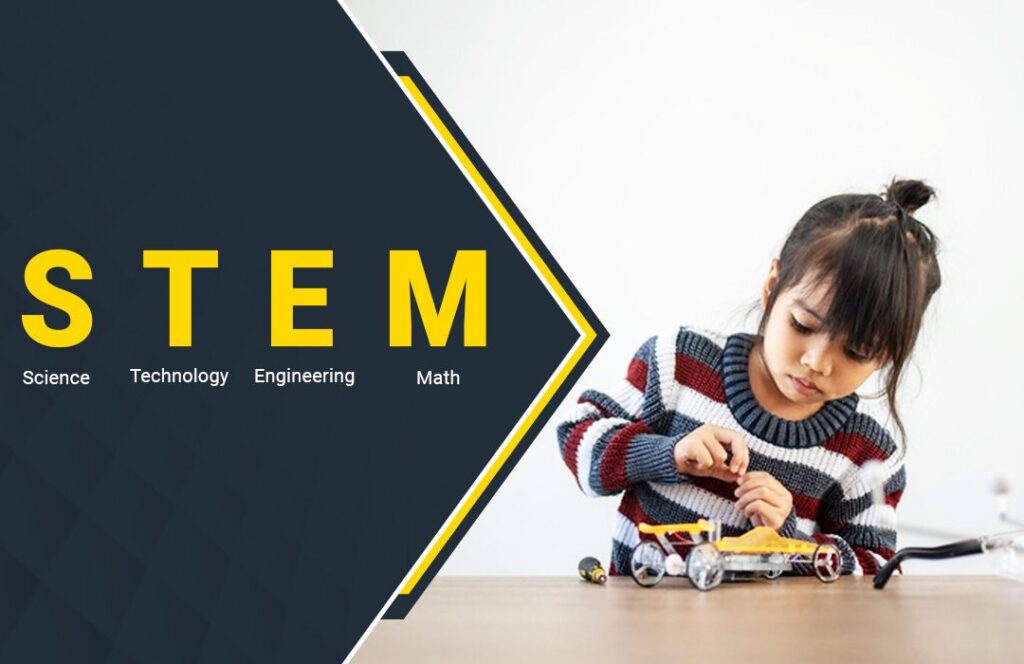
In today’s rapidly evolving world, education isn’t just about textbooks and classrooms—it’s about preparing young minds for a future driven by science, technology, engineering, and mathematics (STEM). STEM Curriculum is a dynamic approach that brings academic concepts to life through real-world applications, especially for K-12 Students. This curriculum is based on learning concepts by doing them practically instead of reading them from textbooks. This learning-by-doing method provides in-depth knowledge about the subject and strengthens their foundations. It is not just a subject—it’s a way of learning that connects classroom knowledge to the world around us. Let Us understand what Diverse Learning Styles are: Since each student has unique ages, grade levels, and learning styles, some tend to learn things more quickly while others take longer to understand the subject fully. STEM education programs have been developed specifically to provide customized education based on each student’s needs. There are many advantages of integrating this STEM Curriculum: Learning by Visualizing: Modern classrooms use smart technologies like Augmented Reality or Virtual Reality and often time smart classrooms to improve the interaction and understandability of students. It can transport them to historical events, distant planets, or even inside the human body, enhancing their understanding of complex subjects. The integration of visual learning will make students more engaging and stimulating, and it also helps them to develop a deeper understanding of STEM subjects. Hands-on learning: It provides practical learning experiences in place of traditional textbook-based education. Here the students get an opportunity to apply what they have learned in the classroom to real-world projects. Through this practical experience, the students discover what they have learned, as well as their faults and the opportunity to fix them right away.  21st Century Skills: It included 21st-century skills such as (critical thinking, teamwork, time management, logical thinking, communication skills, and many more) in the curriculum, which is crucial for students to learn if they want to succeed in their careers. Contribution of STEMROBO in providing STEM education: STEMROBO is one of the leading Educational Technology Companies providing end-to-end solutions to K-12 students. STEMROBO’s primary goal is to enhance education methods by upgrading individual development through professional expertise in the fields of STEM, Robotics, Coding, and AI. We provide innovative STEM education programs that develop 21st-century skills. We provide AR/VR labs where students can visualize complex concepts in 3-D form and learn through them. We also provide different types of labs such as AI/IoT labs Robotics lab AR/VR labs STEM lab The students can put the knowledge they have learned in the classroom to use and see how it is applied in real-world situations. Additionally, we provide customized learning platforms such as LMS (Learning Management System) For Schools LMS is one of the leading platforms of STEMROBO, it is one of the most essential platforms for schools, students, teachers as well as parents. Learning Management System is one of the best online Platforms, which provides all the courses, lectures, quizzes, and other things in an online format. AI Connect AI Connect platform is a revolutionary learning space that brings coding to life through a variety of innovative features and activities. Its integration into the academic curriculum has revolutionized how students learn and understand the complex concepts of AI and ML. These are some of the amazing features: Block-Based Python Programming Block-to-Text Conversion Graphical Python Activities Easy and User-Friendly Platform It is a very easy-to-use platform for all ages of students, it’s like having a friendly guide that explains step-by-step in detail how to use code to build amazing things. Even for new learners, this makes learning easy and enjoyable. By using this method of education, we help students become more creative and engaged learners. Additionally, students get a solid foundation in STEM subjects through practical experience. Our methodologies We follow two approaches; one is the CIC approach while the other is Design and Thinking. CIC Approach We follow a unique methodology enabling students to evolve from Consumer-to-Innovator-to-Creator. The student initiates this journey by working with various kits and platforms to gain a complete skill set. The students gradually become capable of innovating and bringing change to the world. In the last step, students create a product that can be introduced to the market and help the world become a better place. Design Thinking Approach We have a curriculum designed for the exponential growth of students from taking baby steps to achieving milestones in the fields of Science, Technology, Engineering, Mathematics, and Robotics. Our curriculum has an emphasis on design and thinking and is academic-relevant as per your education boards. We also offer customized curriculums by following the skill set of students. STEMROBO is reshaping education’s future with innovation and dedication to empower the next generation of leaders. we’re all about inspiring students to become super-smart problem solvers. Through our dedicated STEM learning approach, we redefine education as a gateway to creation and innovation. We believe in empowering students to become active participants in their learning journey, where theoretical knowledge converges with practical application.

How Does the STEM Curriculum Cater to Diverse Learning Styles? Read More »

AI and Robotics Lab

STEMROBO’s Unique Approach to Hands-On Learning: Differentiating from Traditional Classrooms

First of all, let’s know what is meant by Hands-on learning. Hands-on learning is a way of educating students where they may apply what they have learned in the classroom to real-world situations. This experiential learning strategy has the following advantages:       collaboration, problem-solving abilities, leadership qualities, and critical thinking. Now, let’s see how this Approach to Hands-On Learning is different from the Traditional education system: · Traditional education system was just based on learning the concepts by the method of rote memorization, this is not an effective learning method as students are not able to memorize the concepts for a longer time But through the Hands-on learning approach the students get to apply the knowledge in the real world and be able to learn the concepts for a longer time. · Traditional teaching methods only include following a predetermined curriculum but through this modern approach, teachers help students acquire other abilities rather than just focusing on teaching the theoretical syllabus. Modern classrooms include modern technologies like Smart Board which enables students to visualize things in real life for example if a student learned a concept of science such as how fish lay eggs just by reading by reading about it once or twice but on the other hand if he gets to watch that situation on smart board then it will make them learn more effectively. Similarly, if a student wants to memorize any mathematical formula, we make him understand from where this formula is derived so that he can make that formula on its own All these reasons make modern classrooms more effective than traditional classrooms. Now, Let’s understand how STEMROBO helps in providing a hands-on learning approach One of India’s top providers of STEM education is STEMROBO. We provide a platform where students can learn through experiential education. To this end, we offer a variety of labs and curriculums, including AI/Robotics, AR/VR Lab setup , and STEM labs, where students can put the knowledge they have learned in the classroom to use and see how it is applied in real-world situations. How scientific knowledge is employed in the actual world to create practical applications? For instance, if a student has learned the theory behind how a bulb glows in a classroom, he can now apply that knowledge in our robotics lab by using it to light a bulb on his own. We also supply robotic kits to labs so that students may acquire everything in one place. This will help the student retain the knowledge and comprehend it more effectively. Students learn teamwork Since the employment market will demand it from them in the future. Working on real-world projects allows you to use the knowledge you gain in real-world situations, which goes beyond just studying. Safety is our top priority so for that we provide a well-organized lab with all the necessary safety precautions. STEMROBO provides students with End-to-end solutions regardless of their location background or education stream. Our platform enables k-12 students to explore, experience, and innovate through STEAM, AI, Robotics Lab, and Coding curriculums By using this method of education, we help students become more creative and engaged learners. Additionally, students get a solid foundation in STEM subjects through practical experience. So, this way of educating students through Hands-on learning makes modern classrooms more engaging and effective than traditional classrooms.

STEMROBO’s Unique Approach to Hands-On Learning: Differentiating from Traditional Classrooms Read More »