The current educational system exists at a significant moment of transformation. Educational institutions have used textbooks and chalkboards and lectures for several decades to deliver knowledge from teachers to students. The traditional methods of education have created multiple generations of students who learned with those methods, but current students face a new world which differs from the educational system of their parents’ time. Nowadays, people use artificial intelligence and automation and smart devices together with digital ecosystems for their daily activities. The situation creates a fundamental inquiry because interactive and immersive experiences exist outside school, which makes classroom learning need to change.
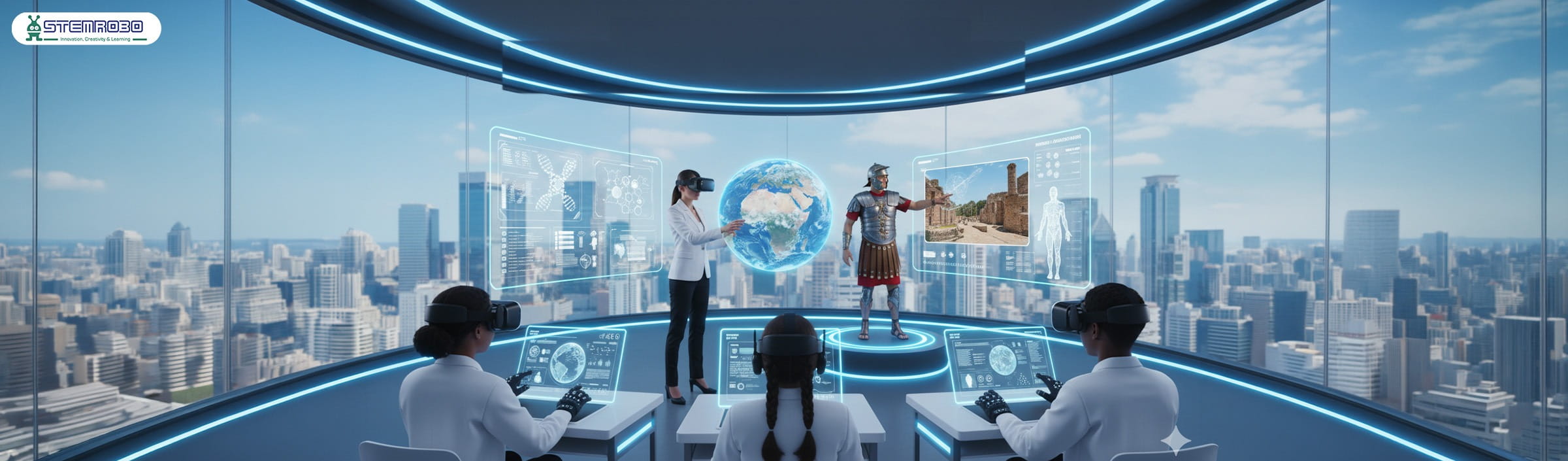
Augmented Reality (AR) and Virtual Reality (VR) create solutions to that problem through their advanced capabilities. The technologies function as more than system enhancements because they change student learning patterns. Students today can experience a concept through active participation, rather than just reading about it. Students gain the ability to examine complex systems because they can now view them through three-dimensional models. The experience of immersive learning enables teachers to transform their teaching methods into hands-on learning activities.
From Imagination to Experience
You should recall the moment when you first learned about the solar system during your studies. You likely studied a two-dimensional diagram from a textbook, which required you to memorize planet names, and then you attempted to visualize their size and movement patterns. Static images simply cannot show the true scale and vastness of space. Through Virtual Reality, students gain the ability to travel across the galaxy and see planets move in actual size while they learn about gravitational relationships through visual means. The lesson becomes a journey of discovery rather than just something to memorize for exams.
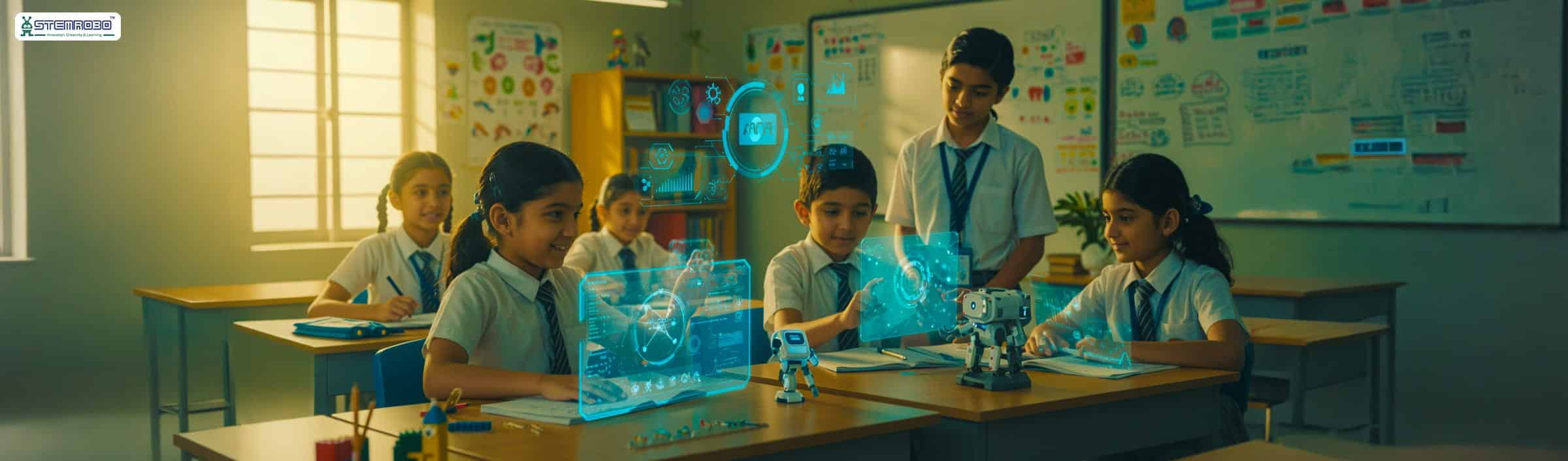
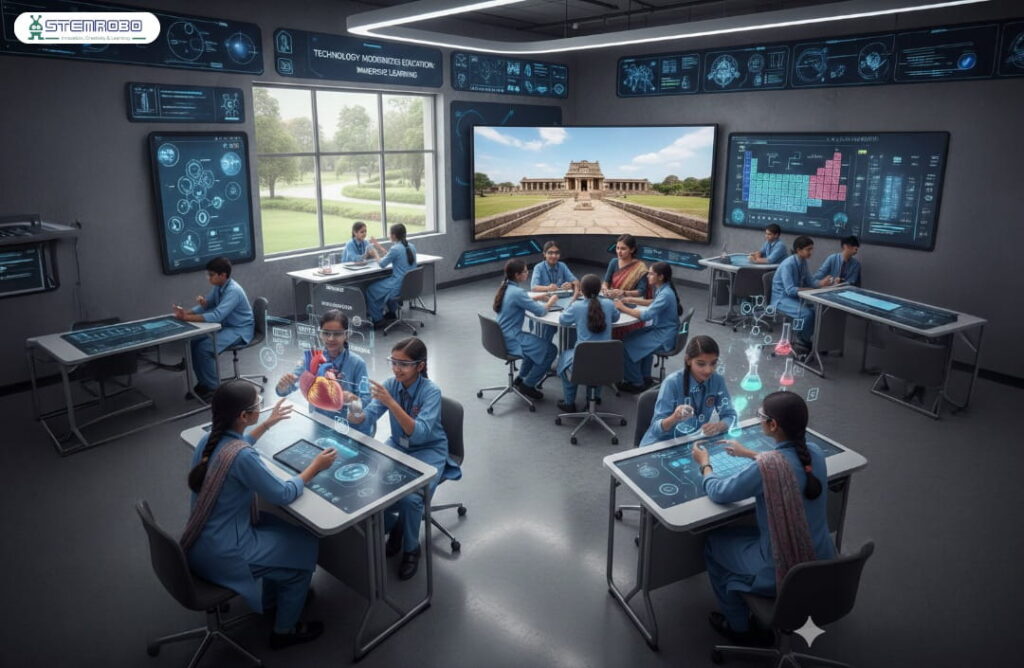
Through Augmented Reality, students can see digital elements layered onto their real classroom environment. A basic human heart diagram transforms into a three-dimensional animated heart model which displays its heartbeat above the desk. Students can rotate the model, zoom in, and clearly observe how blood flows through each chamber. Theoretical knowledge in biology transforms into actual experience for students.
When imagination turns into real experience, learning becomes easier to understand and remember. When students see and interact with concepts, they connect emotionally and intellectually. When students experience authentic learning, the process creates enduring memories for them.
Real-Life Learning in Action
A real-life classroom scenario should be examined. In one school, students studying environmental science were learning about coral reefs and marine ecosystems. The teacher used virtual reality technology to show students an underwater reef environment while he showed them real-world footage through the UV system. The students examined marine organisms while they tracked coral deterioration which they linked to human activities that affect oceans. The discussion that followed went much deeper than typical classroom instruction. The students developed critical thinking abilities through their ability to ask questions which they addressed with work-based solutions. That immersive experience helped students feel genuinely connected to the environment and more responsible toward it.
A history teacher employed augmented reality tools to reconstruct historical building designs inside his educational space. Students could explore the three-dimensional representation of monuments while they studied architectural elements and building methods. The lesson changed from studying historical facts to learning about the development of different cultures. Isn’t this the kind of learning that stays with students long after their final exams are over?
Empowering Teachers, Not Replacing Them
Improving technology in classrooms should never mean replacing teachers. The usage of AR and VR technology enables educators to work more effectively with their students. Educators control the learning path which technology creates through its defined learning space. Teachers guide the learning process through classroom discussions which connect students’ immersive learning experiences to their required curriculum goals while developing their analytical skills.
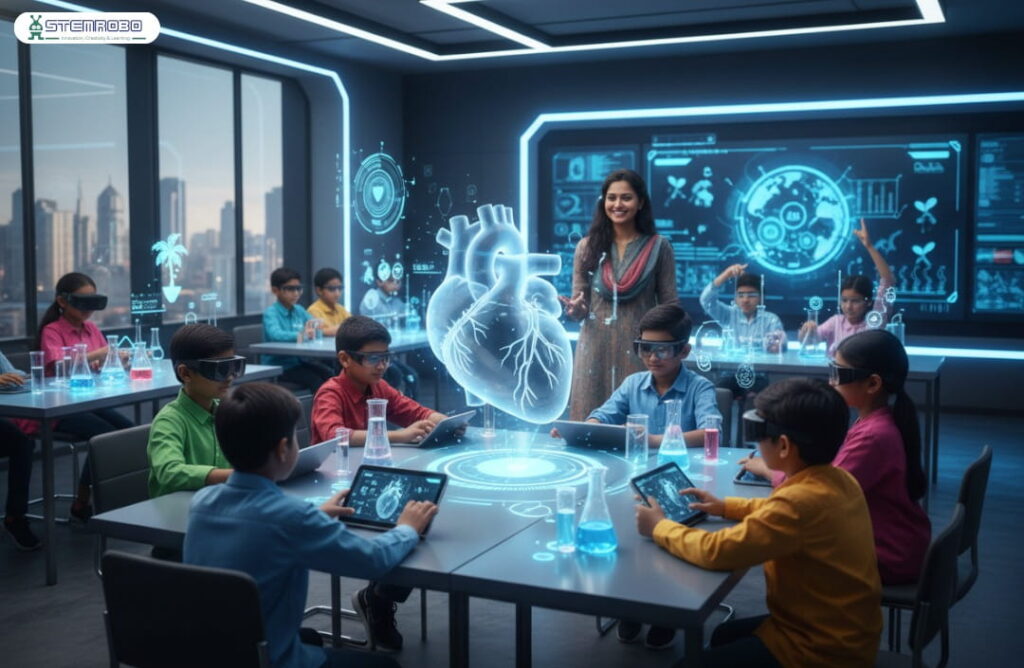
The virtual chemistry lab enables students to conduct experiments which scientists would use to test difficult chemical reactions. The focus shifts to analyzing results and understanding reactions without worrying about handling dangerous substances. Teachers use simulation software to create learning opportunities where they can stop the experience to ask students challenging questions while students work together to find solutions. The interactive teaching space allows students to participate fully while teachers maintain their role as main instructors.
Building 21st-Century Skills
Modern education systems aim to achieve more than just teaching students information. The program provides students with educational experiences which develop their ability to think creatively and work collaboratively while communicating effectively and solving problems. The process of immersive learning activities naturally develops these skills because they need students to learn through practical experience. Students who enter a simulated learning space will learn through the process of observing and analyzing information to make choices. Students usually participate in group work where they share ideas and evaluate their results together.
The STEM programs use AR and VR together with their coding and robotics training. Some schools have implemented organized ecosystems which combine immersive learning experiences with their overall innovation development programs.
For instance: Stemrobo Technologies Smartly provides platforms that enable schools to integrate AR and VR technology with their robotics and coding educational programs. The process of immersive learning operates as a complete digital system which enables learning through innovation and sustainable development of problem-solving abilities.
Careful planning is essential because successful implementation depends on it. The combination of immersive technology with curriculum objectives creates a learning environment that enhances student engagement and academic achievement.
Accessibility and Inclusion
AR and VR provide their most important benefit through their ability to make content accessible to users. Many schools lack resources to organize field trips which require access to advanced laboratories or historical landmarks or global institutions. Virtual Reality enables students to discover remote locations while they remain in their school environment.
The implementation of immersive tools allows students with different learning preferences to choose their preferred learning approach. Visual learners gain advantages from 3D visualizations whereas kinesthetic learners develop skills through interactive virtual reality experiences. Experiential learning provides understanding to students who find it difficult to comprehend traditional text-based teaching methods. The educational system uses this inclusive approach to create learning environments that meet students’ needs instead of requiring students to conform to standard educational practices.
Responsible and Balanced Integration
The implementation of immersive learning requires responsible execution despite its impressive possibilities. Schools must ensure that AR and VR sessions are meaningful and aligned with clear learning goals. The educational materials should support existing teaching methods instead of acting as a complete educational solution. The schedule requires equal time for screen activities and activities which involve both discussion and project work.
Educator training programs require equal funding as teacher training programs. Educators require both assurance and understanding of how to implement immersive technology in their classrooms. When educators receive appropriate training together with curriculum alignment AR and VR technologies become effective teaching tools instead of becoming classroom interruptions.
People frequently mention cost as an obstacle. Schools can implement initial small test projects because technology now offers systems that people can utilize from their beginning stages until full development. Schools should see immersive technology as a long-term investment that strengthens engagement and builds future-ready skills.
A Glimpse into the Future Classroom
Students in this classroom environment have the ability to investigate the human nervous system through its interior structure while they conduct space mission simulations and virtual auditorium public speaking practice. The learning experiences provide students with preparation for both their upcoming exams and the practical situations they will face in life. The program helps students develop three essential abilities needed for success in a world that keeps changing.
Education exists to spark student curiosity about academic fields and to show students what they can achieve. Students work harder when they see learning as an adventure instead of a duty according to research. AR and VR technology creates experiences that foster feelings of amazement.
Conclusion: Experience is the New Textbook
The educational use of AR and VR technology represents a fundamental change from traditional educational methods toward practical learning methods. The program establishes a learning environment where students acquire knowledge through practical experience while teachers receive support in their professional development and students learn essential skills needed for success in a world dependent on technology. The combination of immersive educational tools with organized curriculum materials and educational support enables schools to establish interactive educational environments that create active learning spaces.
When students remove a VR headset after exploring ancient civilizations or scientific models, they walk away with deeper understanding. All modern learners acquire knowledge through their personal experiences which create the foundation of their understanding.