Why Schools Need STEM Innovation Centers for Experiential Learning
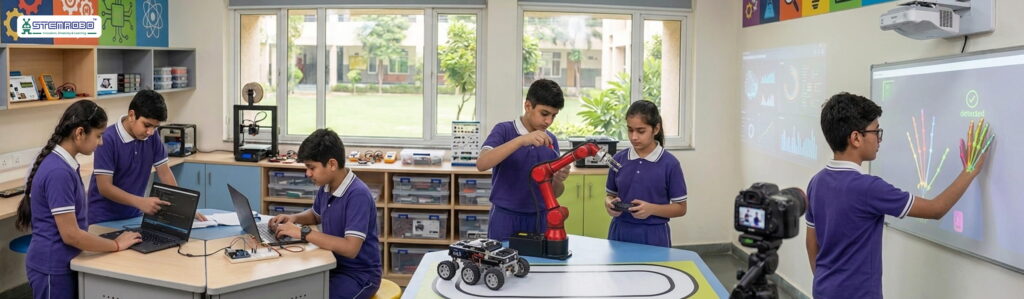
A Classroom That Feels Different A group of students is in the middle of building a smart traffic signal during a STEM class. Suddenly, the lights cease to change automatically. Rather than throwing in the towel, the kids immediately start troubleshooting. One checks the wires, another checks the coding, and others try out the sensors again. After several attempts, the traffic lights begin to function properly. The entire class chimes with excitement and discussion. Now imagine this, when was the last time that students felt even remotely involved when reading answers from a textbook? This is the reason why we are seeing education evolve. The current generation does not merely need theoretical knowledge. They need to have the opportunity to build, experiment, tackle challenges and derive experiences by themselves. The Problem with Traditional LearningThe Problem With Traditional Learning Years went by with schools stuck in a loop – lectures filled the hours; minds soaked up facts just long enough to pass tests. That setup did pile on book-smarts, yet somehow squeezed out chances to invent, question, or actually apply ideas. Though learning stayed rigid, curiosity rarely found space to stretch. Most learning happens through doing, yet some classrooms skip that part. Imagine memorizing equations while never testing them in experiments. Picture reading about programming but never building anything yourself. Understanding often clicks only when hands get involved. What good is knowledge if it stays on paper? Right now, machines that think are changing everything. Schools teach ideas from books – yet jobs need real skills. Because computers are doing tasks once done by people, classrooms must adapt. When lessons stay stuck on paper, young minds miss chances. Since robots handle more work every year, education cannot stay the same. Learning without practice falls short. As tech moves fast, old ways lag. Without hands-on training, students aren’t ready. With factories run by software, knowing facts isn’t enough. If school stays just lectures, graduates won’t match job needs. Why Experiential Learning Matters Most of the time, doing things yourself helps understand faster. Building a robot beats just reading about how it works. When code makes something move right away, attention tends to stick longer. Experiential STEM learning turns class time into a space full of movement, where problem solving grows through group work. One idea leads to another when students try things out, make mistakes, then adjust their approach. The usual question – will this be on the test – fades as curiosity takes over. New thoughts spark: what could we create next? Curiosity steps into classrooms, shifting how things work. Everything alters once it arrives because true learning begins right there. What Are STEM Innovation Centers? Inside these bright rooms, kids dig into science, tech, engineering, math – doing things, building stuff. Learning happens by making, testing, failing, trying again. Projects connect ideas to life beyond school walls. Instead of just listening, they touch, move, ask. Real problems spark curiosity here. Tools sit nearby – wires, screens, blocks, sensors – all waiting. Discovery rolls forward when thinking meets doing. Young minds test what works, why it does not. Each space runs on questions more than answers. Working inside these hubs, kids dive into robotics education while exploring code.Not just reading about ideas, they build things that actually run. Tinkering with sensors ties into how circuits behave when powered up. Some start designing shapes in three dimensions before testing them physically. Others link devices together so machines talk across networks. Solving problems pops up naturally once a gadget fails mid-trial. Experimenting leads straight into fixes nobody expected at first. Each project-based learning activity pushes thinking beyond textbooks through doing. Organizations like STEMROBO Technologies are helping schools establish these future-focused ecosystems through robotics labs, AI-powered learning environments, coding programs, and experiential STEM education initiatives that encourage innovation and creativity from an early stage. These innovation ecosystems combine practical STEM activities with modern AI integration solutions for schools. Innovation Begins Beyond Textbooks Inside classrooms built on rote recall, does fresh thinking stand a chance? Real invention often needs room to question – something rarely invited when correct answers matter most. Probably not. When kids try things out, mess up, fix what went wrong, then rethink their approach – growth happens. That kind of space is built into STEM Innovation Centers. What happens if learners create gadgets that sense their surroundings? Numbers start making sense once they decide how a robot turns or stops. Imagine adjusting actual models, not just reading about them on paper. Out of nowhere, knowledge stops being something you just sit through. It becomes alive. How Robotics Builds Confidence Robots make learning come alive when kids watch their ideas move. When code shifts just a bit, actions change fast. Mistakes in wires? Everything halts right there. This is when true issue resolution starts. Fixing mistakes teaches students how to wait calmly. Working on tasks with others shows them how to share effort. When tries keep falling short until one works, they discover what it feels like to push through. What really matters is how they start trusting themselves to build something real without help. Technology Is Reshaping Education Out here, tech isn’t some extra gadget tossed into lessons – it’s shaping how classrooms work from the ground up. These days, schools lean on Personalized Learning AI, AI classroom tools, and smart learning environments that adapt to students, virtual labs where ideas come alive, rooms wired to respond in real time, along with AI tools for teachers and shared online spaces where teamwork finds new ways to grow. Yet tools by themselves won’t fix anything. Change begins only when learners shape tools rather than just watch them. When making replaces passive viewing, new ideas emerge. Screens become useful once hands build behind them. Thinking shifts when doing takes over. Real learning sparks not from tapping but from building. What matters is motion beyond scrolling. For this reason, hands-on science education keeps showing up more often in today’s classrooms. Creating Future Innovators
Why Schools Need STEM Innovation Centers for Experiential Learning Read More »