Click For Schools

AR/VR LAB

AR VR Education in Schools

The Future of AR VR Education in Schools

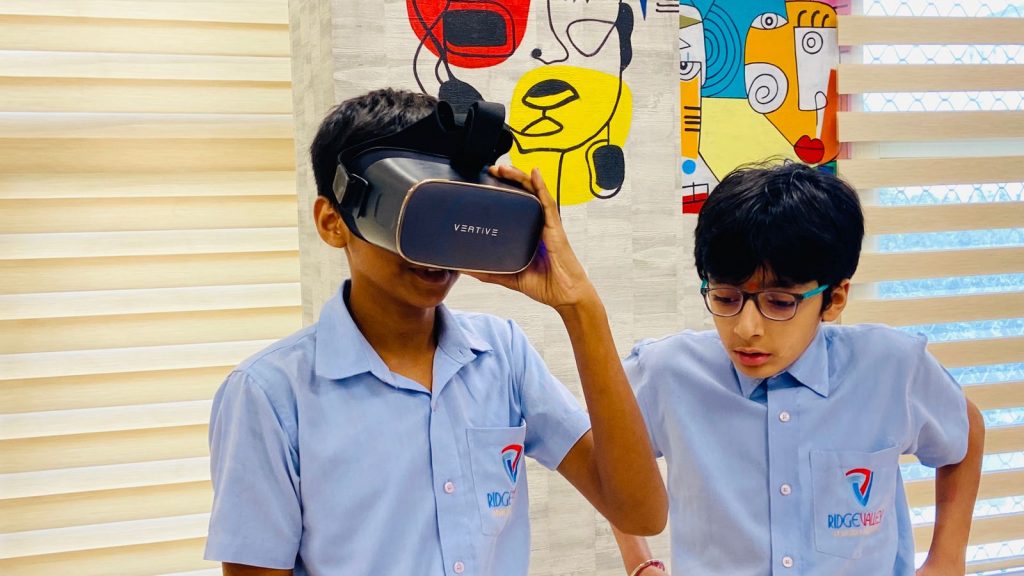
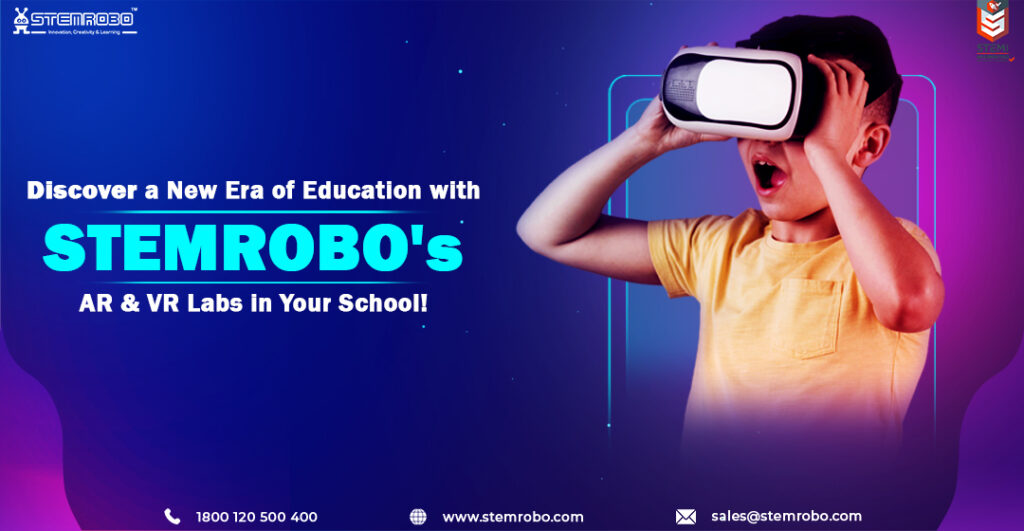
Education in the upcoming future will be based on advanced Technologies like AR (Augmented Reality) and VR (Virtual Reality). These two cutting-edge technologies have created a positive impact on our educational system. Integrating AR/VR-based instruction in the present curriculum has several advantages, such as: Children of today want to learn either by doing practically or by visualizing things in the real world; they are not that much interested in studying from textbooks. students of new age desire to learn everything by doing or by observing things in the real world so they tend to retain knowledge for a longer time. As an example, if we watch an animated cartoon with them and ask them a question about a particular scene, they will be able to answer us very easily. However, if we give them a book with a story in it, they won’t be able to respond to us with the full answer because their minds learn things more quickly from watching than from reading. AR is a platform that takes students on a virtual trip so that they can get an in-depth knowledge of a particular subject. The potential of AR and VR Education to create incredibly exciting and engaging learning environments is one of its main benefits for education. Passive learning occurs when teachers are unable to hold students’ attention in traditional classroom settings. With the use of 3-D models, virtual field trips, and interactive experiments, AR and VR technologies make learning more engaging for students. In addition to developing deeper knowledge, this experiential learning method inspires students’ curiosity and makes learning enjoyable. STEMROBO plays an important role in transforming traditional education into new educational methods by providing various platforms that offer end-to-end solutions to K -12 Students. We offer an engaging learning environment, where students can utilize the equipment and can practice Hands-on learning, this helps them to apply the theoretical knowledge to real-world applications. Let us see how our labs may transform this educational system and how successful they are: We set up a variety of labs including VR labs, AI/IoT labs, Robotics labs, and STEM labs. In addition to these labs, we give students access to resources like VR headsets, Arduino kits, and other necessary equipment in one convenient location, enabling them to learn efficiently and quickly. We also provide different types of instruction manuals so students may follow the step-by-step procedure and build creative projects. We provide students with a customized learning environment that helps them to study according to their speed, level of understanding, and ability to learn the concept. It helps in the development of the 21st century skills including computational thinking, creativity, logical reasoning, problem-solving, and teamwork. AR/VR technologies have the capacity to revolutionize education by catering to individual learning styles. With these advanced technologies, we can give each student a platform based on their interests, capacity to learn, and speed. Our goal is to support K–12 children worldwide in developing their innovative and 21st-century skills. We provide students with incredible opportunities to study, explore, and experiment in order to develop into future creators and innovators. We follow a CIC (Consumer>Innovator>Creator) approach. With the help of our knowledgeable teachers and VR labs, we first teach students concepts in the classroom. Later, they apply what they have learned in the classroom to our labs, which helps them create creative projects and improves their academic performance because visualizing concepts helps them retain them for longer. They will now be able to design their own projects and acquire non-academic skills through this technique, preparing them for the workforce of the future.

The Future of AR VR Education in Schools Read More »
future of VR Lab and Education in schools

The future of VR Lab and Education in schools

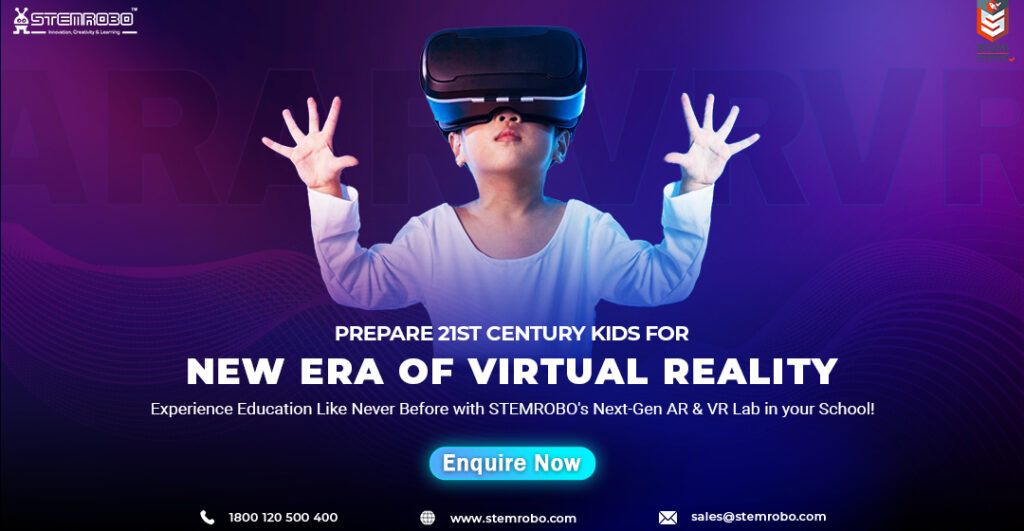
In today’s tech-driven world, VR Lab (Virtual Reality) is one of the most important and effective platforms in the field of education. Virtual reality (VR) is an innovative tool that revolutionizes several industries, including healthcare, architecture, gaming, and education, where technological innovation is widespread. Virtual reality’s immersive experiences extend beyond entertainment and significantly impact industries where simulation and visualization are essential. VR integration in the classroom becomes essential as we approach the start of the new industrial revolution. Children of today want to learn either by doing practically or by experience things in the real world; they are not that much interested in studying from textbooks. students of the new age desire to learn everything by doing or by observing things in the real world so they tend to retain knowledge for a longer time. Students need to learn VR and related skills at an early age for many reasons such as : STEMROBO provides students with End-to-end solutions regardless of their location or curriculum. Our platform enables k-12 students to explore, experience, and innovate through VR labs setup, STEM labs, and AI/robotic labs. We integrate our VR labs in schools providing students with the practical experiences of every subject. For example, if we want to make students learn about any specific topic of science, history, or other subject. Let’s take the history topic of WORLD WAR and if we help students visualize the World War environment in real life when teaching them about it, it would be easier and more interesting for them to learn about the subject. These labs are very useful for both students as well as for teachers as they help students learn effectively as well as free up teachers’ time, which they may use to engage with students or complete other crucial tasks. The adoption of VR labs in School classrooms, made possible by innovative companies such as STEMROBO, is proof of our dedication to preparing the next generation for a tech-driven future. As Virtual reality Lab(VR Lab) grows increasingly integrated into our everyday lives, teachers must provide their students with the information and skills to understand, interact with, and contribute to this technology. STEMROBO’s Virtual reality education efforts are fostering a new generation of critical thinkers, problem solvers, and innovators who are going to lead the way in a Tech-driven world, in addition to preparing the next generation of engineers and scientists. We also arrange a teacher’s training program so that they may get an idea of using these labs effectively to make students succeed in their learning journey. In addition to academics, it fosters 21st-century abilities like creativity, inventiveness, and cooperation. Students may also learn the value of these cutting-edge technologies in the modern world. Through our dedicated visual learning approach, we redefine education as a gateway to creation and innovation. We believe in empowering students to become active participants in their learning journey, where theoretical knowledge converges with practical application. Our dedication to transforming the educational landscape extends to nurturing a generation adept at exploring, questioning, and creating. We foster a learning environment that encourages students to delve deeper into subjects, where learning becomes interactive and effective.

The future of VR Lab and Education in schools Read More »

AR VR lab in schools

The future of virtual learning in education in India

In the ever-evolving landscape of education, the integration of Virtual Reality (VR) has emerged as a transformative tool, reshaping the way students engage with learning content. Introduction: A Virtual Leap in Learning Virtual Reality, once confined to the realms of gaming and entertainment, has now permeated the educational sphere, offering an immersive and interactive learning experience. The incorporation of VR technology in classrooms is transforming traditional teaching methods, creating a dynamic and engaging environment for students. The Immersive Classroom Experience One of the primary advantages of Virtual Reality in education is its ability to create immersive classroom experiences. Imagine history coming to life as students virtually explore ancient civilizations, or biology lessons taking a leap as students dive into the intricacies of the human anatomy. The immersive nature of VR captivates students, making learning a multisensory adventure. Breaking Geographical Barriers Virtual Reality has the power to break down geographical barriers, providing students with virtual field trips to historical landmarks, scientific laboratories, and cultural institutions. Students can explore the wonders of the world without leaving the classroom, broadening their perspectives and enriching their understanding of various subjects. Hands-On Learning in a Virtual Realm The concept of hands-on learning takes a leap forward with Virtual Reality. Whether it’s dissecting a virtual frog in biology class or experimenting with chemical reactions in a simulated laboratory, VR Lab in Schools allows students to engage in practical activities without the constraints of physical resources. This not only enhances the learning experience but also fosters a sense of curiosity and experimentation. Adapting to Diverse Learning Styles One of the strengths of Virtual Reality lies in its adaptability to diverse learning styles. Visual learners can benefit from the vivid and lifelike simulations, while kinesthetic learners can actively participate in virtual experiments. This personalized approach to learning ensures that students can absorb information in a way that resonates with their individual preferences and strengths. Enhancing Collaboration and Communication Virtual Reality creates a collaborative space where students can interact with each other and their virtual surroundings. Collaborative projects, virtual group discussions, and shared learning experiences foster a sense of community in the virtual realm. This enhances communication skills and prepares students for the collaborative nature of the modern workplace. Overcoming Challenges with Virtual Learning While the benefits of Virtual Reality in education are undeniable, it is essential to address potential challenges. Issues such as access to VR devices, the learning curve for educators, and the need for consistent technological advancements must be acknowledged. However, as technology evolves, these challenges can be mitigated, ensuring a more inclusive and accessible virtual learning environment. Looking Ahead: The Future of Virtual Learning As Virtual Reality continues to make inroads into education, the future looks promising. The ongoing development of VR applications, content, and devices will further enhance the educational experience. The integration of Artificial Intelligence (AI) and Augmented Reality (AR) with VR holds the potential to create even more sophisticated and interactive learning environments. The integration of Virtual Reality in education marks a significant paradigm shift in the way we approach learning. While STEMROBO’s contributions to education are notable, the broader implications of VR in diverse educational contexts showcase its potential to revolutionize learning experiences globally. As we navigate this exciting frontier of virtual learning, the possibilities for innovative and immersive education are limitless.

The future of virtual learning in education in India Read More »

AR VR Lab SETUP

Importance of VR lab in Education

A Virtual Reality (VR) lab in education can play a crucial role in transforming traditional teaching methods and providing students with immersive and interactive learning experiences. Here are some key reasons why a VR lab is important in education: 1. Enhanced Engagement: 2. Experiential Learning: 3. Visualization of Abstract Concepts: 4. Accessibility and Inclusivity: 5. Global Learning Opportunities: 6. Skill Development: 7. Personalized Learning: 8. Motivation and Curiosity: 9. Problem-Solving and Critical Thinking: 10. Preparation for the Future: 11. Innovative Teaching Practices: 12. Continuous Improvement and Updates: A VR lab in education can significantly enrich the learning process by providing students with immersive, experiential, and engaging educational opportunities, fostering a deeper understanding of subjects and preparing them for the challenges of the future. STEMROBO Setup AR/VR lab In Schools and Colleges in India Setting up a Virtual Reality (VR) lab involves creating an environment where students can explore and engage with virtual worlds using VR technology AR/VR  lab setup in School and Colleges Setting up an Augmented Reality (AR) and Virtual Reality (VR) lab in schools and colleges can be an exciting initiative to enhance learning experiences. Here’s a guide to help you establish an AR/VR lab: 1. Define Objectives: 2. Budget Planning: 3. Hardware Requirements: 4. Software and Content: 5. Physical Space: 6. Safety Measures: 7. Training for Educators: 8. Integration with Curriculum: 9. Technical Support: 10. User Feedback and Evaluation: 11. Collaboration Opportunities: 12. Community Engagement: 13. Updates and Upgrades: 14. Legal and Ethical Considerations: By carefully planning and implementing these steps, you can create a vibrant AR/VR lab that enhances the educational experience for students in schools and colleges. For Setup AR. VR Lab in schools and Colleges visit on : https://www.stemrobo.com/ar-vr-lab/

Importance of VR lab in Education Read More »